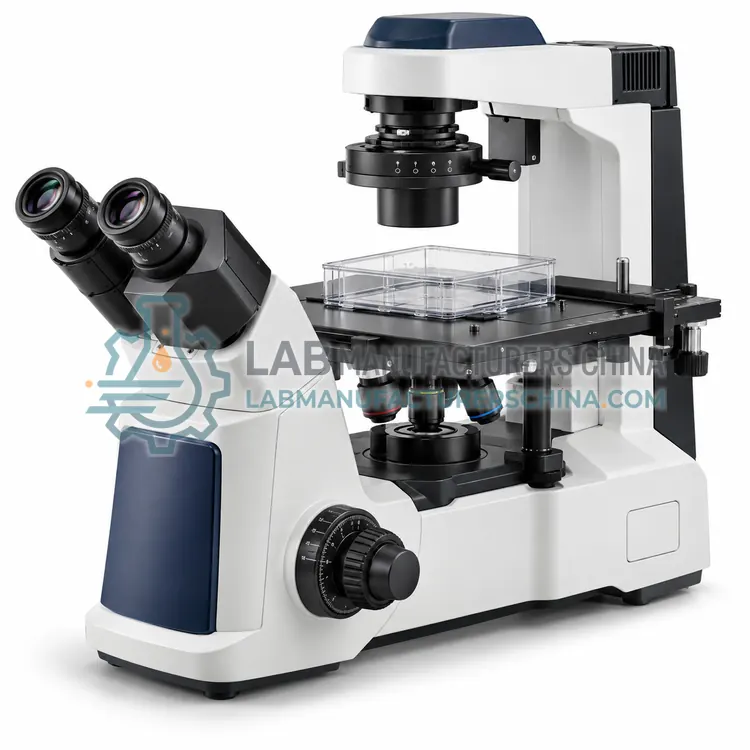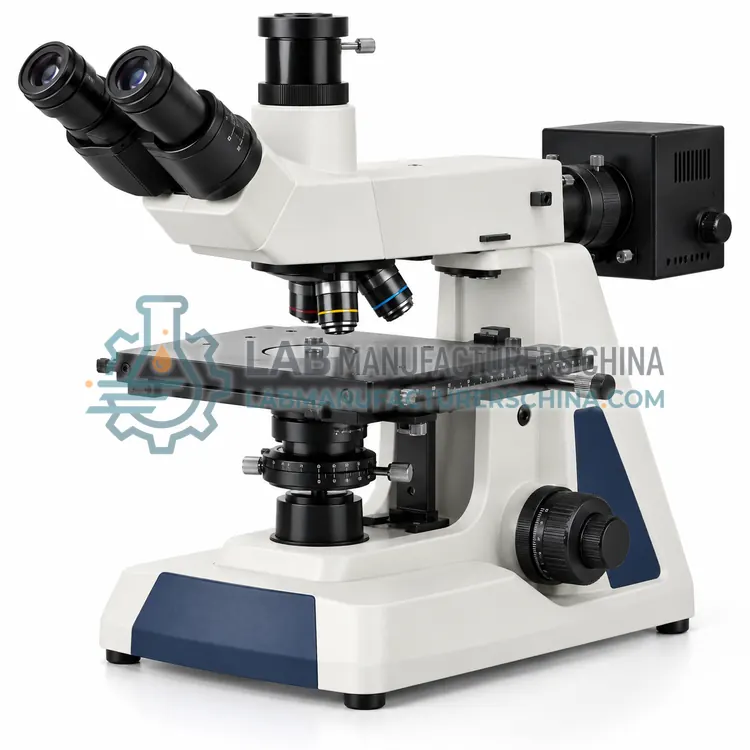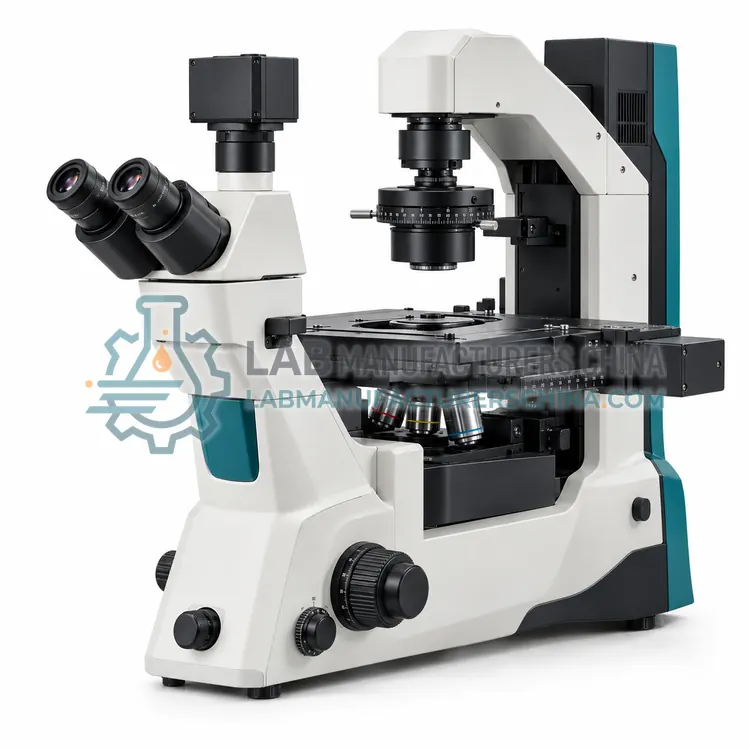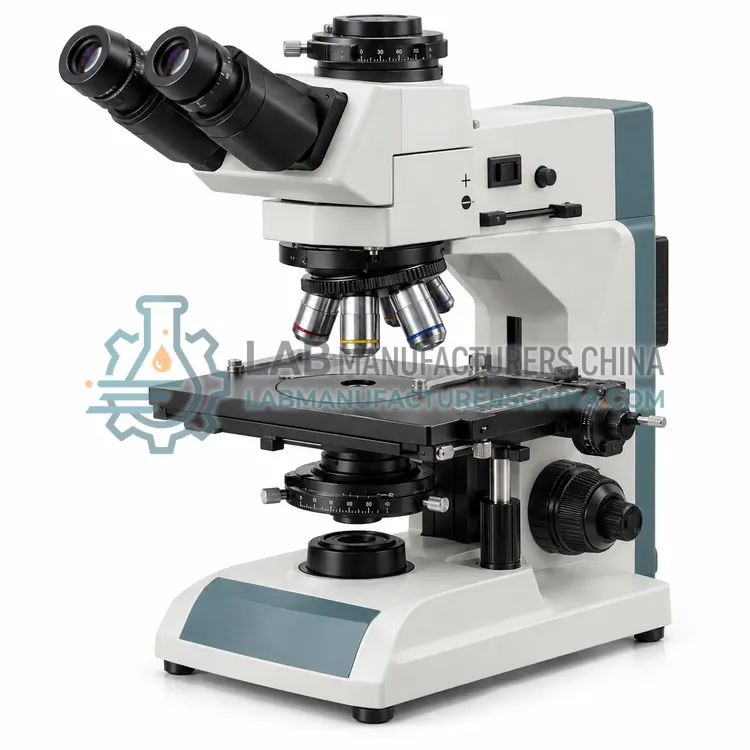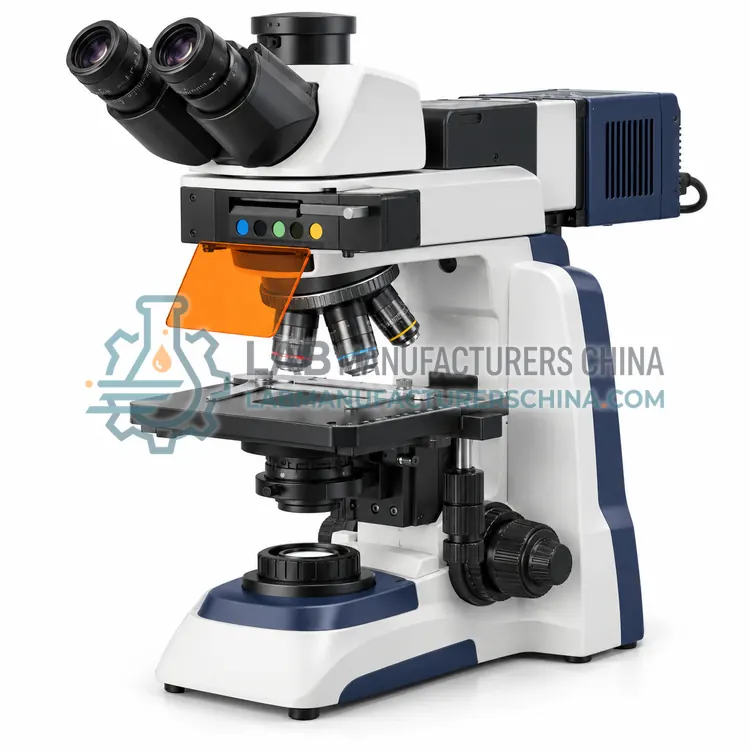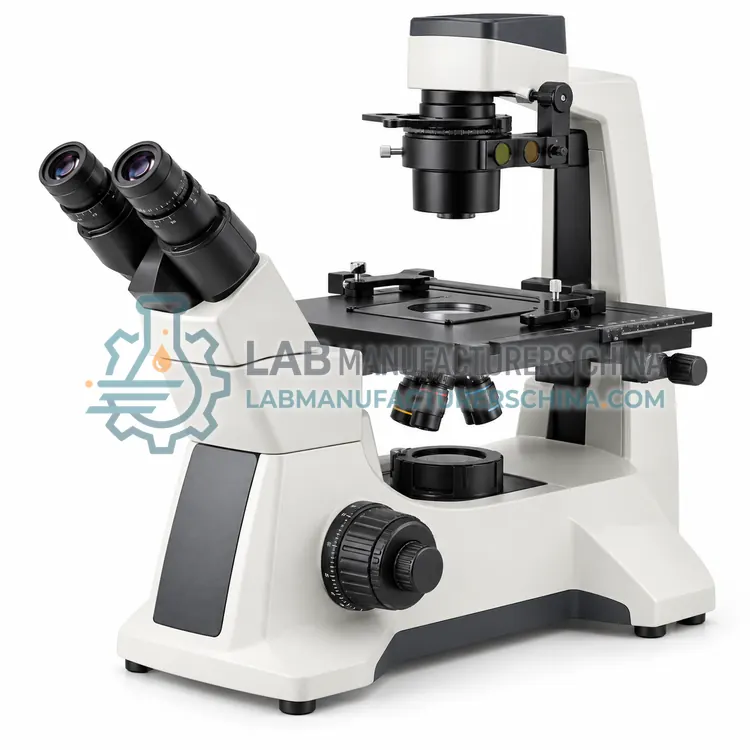
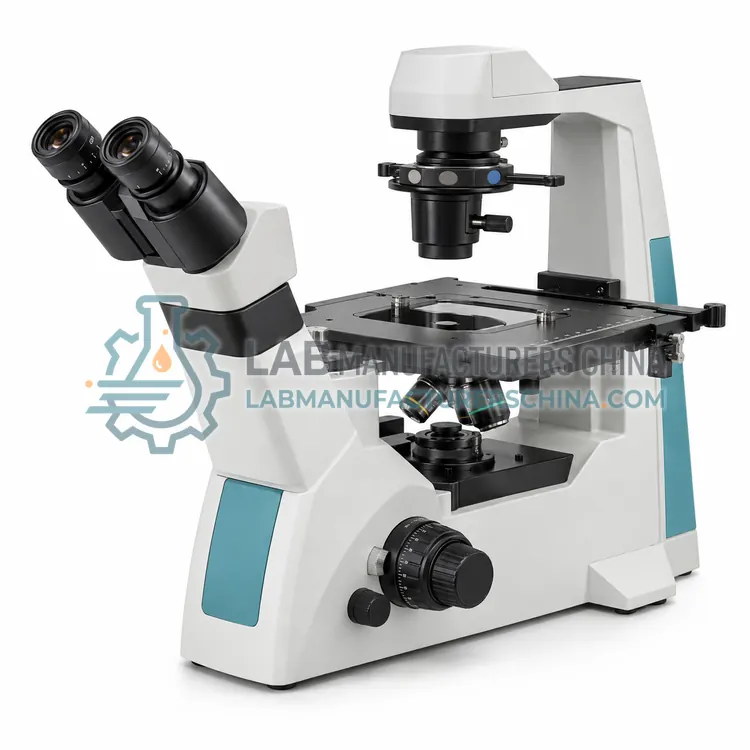
Inverted Phase Contrast Microscope
倒置相差显微镜
- SKU INM-0002
- Inverted Microscopes
- CE (to be confirmed)
- ISO 9001 manufacturing (to be confirmed)
Price on request — FOB / CIF quoted per order
Prices depend on configuration, quantity and destination port.
Key specifications
| Optical system | Infinite corrected |
|---|---|
| Magnification range | 40×–400× |
| Phase objectives | 4×, 10×, 20×, 40× Ph1/Ph2 |
| Eyepiece | 10× widefield |
| Working distance | Up to 6 mm |
| Condenser | Long working distance turret phase |
Request a quote Download brochure · to be provided
By Lab Manufacturers China Technical TeamLast reviewed Standards: ISO 8036, ISO 19012-1, ISO 9345-1
What is the Inverted Phase Contrast Microscope?
An inverted phase contrast microscope converts refractive index differences into contrast, making unstained living cells clearly visible in culture vessels. It is the standard tool for observing cell morphology and behaviour in vitro.
What is the Inverted Phase Contrast Microscope?
An inverted phase contrast microscope converts refractive index differences into contrast, making unstained living cells clearly visible in culture vessels. It is the standard tool for observing cell morphology and behaviour in vitro.
Overview
An inverted phase contrast microscope combines an objective below the stage with a long working distance condenser annulus above it. Phase objectives and matched annuli shift the phase of light passing through the specimen so that transparent cells appear with good contrast against the medium. A turret condenser allows switching between annuli and brightfield, and a centring telescope aligns the rings. Plan phase objectives reduce halo artefacts. The configuration is ideal for monitoring attachment, spreading, division and motility of living cells without staining, and it integrates well with heated stages and environmental chambers for extended observation.
How does it work?
An inverted microscope reverses the usual arrangement so the objective looks upward from beneath the stage while the light source and condenser sit above. The specimen remains in a flask, dish or multi-well plate, so it need not be transferred to a slide. Long working distance objectives focus through the plastic or glass base of the vessel. Transmitted brightfield and phase contrast provide morphology, while episcopic illumination through the objective allows fluorescence. Ambient conditions can be controlled with heated stages and carbon dioxide chambers. The design supports observations of living material, micromanipulation and time-lapse imaging without disturbing the specimen.
What are the key features?
- Long working distance phase condenser
- Matched phase objectives and annuli
- Turret for phase and brightfield switching
- Plan phase objectives to reduce halos
- Compatible with heated stages and chambers
What are the technical specifications?
A typical inverted phase contrast microscope configuration offers optical system of Infinite corrected, magnification range of 40×–400×, phase objectives of 4×, 10×, 20×, 40× Ph1/Ph2, eyepiece of 10× widefield, working distance of Up to 6 mm and condenser of Long working distance turret phase. Values are indicative of the product class; the exact figures for each configuration are confirmed on the quotation and the calibration documents supplied with the instrument.
Which applications is it used for?
The Inverted Phase Contrast Microscope is used in cell morphology and behaviour studies, live-cell culture monitoring, in vitro fertilisation and embryo grading and microbiology and motility analysis. Across the wider Inverted Microscopes class, laboratories also deploy it for live-cell and tissue culture microscopy, cell biology and stem-cell research and in vitro fertilisation and embryo work.
Which standards and certifications apply?
Relevant standards and methods include ISO 8036, ISO 19012-1, ISO 9345-1, ISO 8255-1 and IEC 61010-1. Certification candidates for this model are CE and ISO 9001 manufacturing; each is to be confirmed for the specific configuration before shipment, and certificates are supplied only where they have been issued.
Keep the vessel base clean and free of condensation, which scatters light and blurs the image. For phase contrast, centre the annulus with the matching objective. Maintain temperature and gas conditions for live cells, and minimise light exposure to reduce phototoxicity and bleaching. Long working distance objectives are exposed to the sample and medium, so clean them gently and avoid immersion of non-immersion optics. Calibrate measurements for each objective and vessel thickness, and record the setup with images. Service the stage and focus mechanisms regularly for stable time-lapse work.
How do I select the right Inverted Phase Contrast Microscope?
Select an inverted phase contrast microscope for unstained living cells in vessels. Confirm that the phase objectives cover the required magnifications and that the condenser annuli match. A turret condenser speeds switching, and plan phase optics reduce halos for clearer morphology. Add environmental control if observation must continue for long periods.
How does it compare with other Inverted Microscopes variants?
Choose an inverted microscope whenever the specimen must stay in its vessel, especially living cells. Decide the observation method first: brightfield for stained or dense samples, phase contrast for unstained living cells, and fluorescence for labelled molecules. Confirm the working distance suits the vessel base and whether an environmental chamber or heated stage is required. For multi-well plates and automated imaging, a motorised stage reduces handling. For wafer or component inspection, an inverted metallurgical version with reflected illumination is used. Match objectives, condenser and camera to the required resolution.
Full specifications
| Optical system | Infinite corrected |
|---|---|
| Magnification range | 40×–400× |
| Phase objectives | 4×, 10×, 20×, 40× Ph1/Ph2 |
| Eyepiece | 10× widefield |
| Working distance | Up to 6 mm |
| Condenser | Long working distance turret phase |
| Centering telescope | Supplied |
| Stage | Mechanical, for flasks and dishes |
| Illumination | 3 W LED, adjustable |
| Power supply | 100–240 V AC |
Indicative values for this product class. Final specifications are confirmed on the quotation and in the calibration documents supplied with the instrument.
Applications
- Cell morphology and behaviour studies
- Live-cell culture monitoring
- In vitro fertilisation and embryo grading
- Microbiology and motility analysis
Key features
- Long working distance phase condenser
- Matched phase objectives and annuli
- Turret for phase and brightfield switching
- Plan phase objectives to reduce halos
- Compatible with heated stages and chambers
Frequently asked questions about Inverted Phase Contrast Microscope
Living cells are transparent and show little contrast in brightfield. Phase contrast converts small refractive index differences into brightness differences, so cell boundaries, nuclei and processes become visible without any staining or fixing that could harm the cells.
A centring telescope replaces one eyepiece, and the condenser turret is adjusted so the bright annulus image aligns with the phase ring in the objective. Each phase objective has a matching annulus, and centring is repeated for the objective in use to obtain optimal contrast.
Phase contrast uses the same light as brightfield and does not itself damage cells, but prolonged illumination can cause phototoxicity. Keep intensity modest, limit exposure time and avoid unnecessary observation to protect living specimens during long experiments.
With the objective below, the specimen stays in its culture vessel and the space above the stage is free for medium, tools and perfusion. This allows living cells to be observed without transferring them to a slide, and gives room for micromanipulation and environmental control.
Yes. Episcopic illumination passes through the objective from below, so fluorescence filter cubes work as in an upright microscope. This allows live cells in dishes to be imaged for labelled molecules while remaining in culture conditions.
The objective must focus through the plate base, typically about 1 mm thick, without touching it. Working distances of several millimetres are common for inverted objectives, and the best value depends on the vessel, the required numerical aperture and whether tools must also access the sample.
Related models