Lab Manufacturers China

Turbidity Meters

浊度计

TUM · Analytical Instruments · 5 models

By Lab Manufacturers China Technical TeamLast reviewed Standards: ISO 7027-1, USEPA Method 180.1, GB/T 13200

Standards referenced

  • ISO 7027-1
  • USEPA Method 180.1
  • GB/T 13200
  • Standard Methods 2130 B
  • ASBC Beer-9
  • EBC Method 9.29

What are Turbidity Meters?

Turbidity meters measure the cloudiness of a liquid caused by suspended particles by detecting light scattered at a defined angle, usually 90°. Analytical laboratories in beverage, pharmaceutical, chemical and environmental testing use them to quantify clarity, monitor filtration and verify product specifications in NTU, FNU or EBC units.

5 models of Turbidity Meters

The 5 models below are current configurations; specifications are confirmed on quotation.

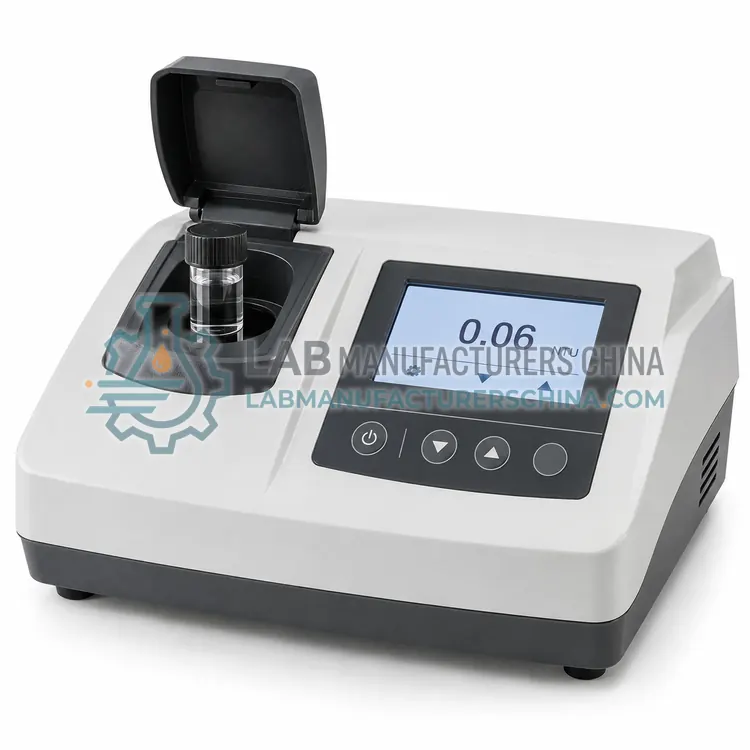
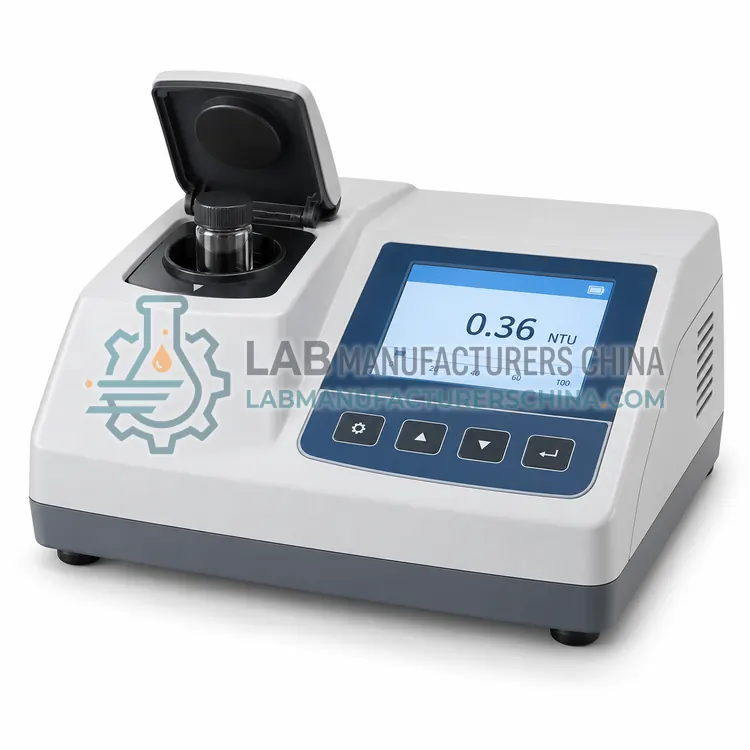
Benchtop Ratio Nephelometric Turbidity Meter

台式比率散射浊度计

  • TUM-0001
  • Turbidity Meters
  • CE (to be confirmed)
  • ISO 9001 manufacturing (to be confirmed)
  • IEC 61010-1 safety (to be confirmed)
Measuring range:
0–4000 NTU (auto-ranging)
Resolution:
0.001 NTU (0–10 NTU)
Accuracy:
±2% of reading + 0.01 NTU
Stray light:
≤0.01 NTU
Light source:
Tungsten lamp or LED, 400–600 nm / 860 nm
Detection geometry:
90° scatter, forward scatter, transmitted

A benchtop ratio turbidity meter uses a white-light tungsten or LED source with 90°, forward-scatter and transmitted detectors to compensate for color and lamp drift. It is the standard laboratory choice for accurate readings from 0.01 to 4000 NTU on clear to moderately turbid samples.

Request a quote
View details

Low-Range Turbidity Meter for Pharmaceutical and Filtered Water

药用及过滤水低量程浊度计

  • TUM-0002
  • Turbidity Meters
  • CE (to be confirmed)
  • ISO 9001 manufacturing (to be confirmed)
Measuring range:
0–40 NTU
Resolution:
0.001 NTU
Accuracy:
±2% of reading or 0.005 NTU
Stray light:
≤0.005 NTU
Light source:
Laser diode, 660 nm, or LED, 860 nm
Detection angle:
90° ratio

A low-range turbidity meter is optimized for clear liquids below 10 NTU, with stray light under 0.01 NTU and 0.001 NTU resolution. It is the suitable instrument for filtered drinking water, purified water and injectable solutions where subtle changes in clarity matter.

Request a quote
View details

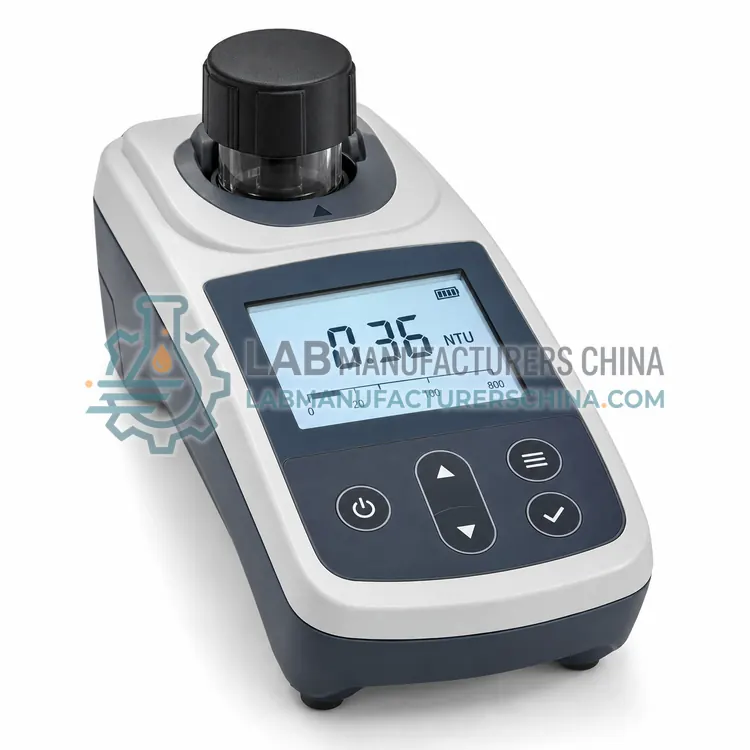
Portable Field Turbidity Meter

便携式现场浊度计

  • TUM-0003
  • Turbidity Meters
  • CE (to be confirmed)
  • RoHS (to be confirmed)
  • ISO 9001 manufacturing (to be confirmed)
Measuring range:
0–1000 NTU/FNU
Resolution:
0.01 NTU (0–10 NTU)
Accuracy:
±2% of reading or 0.05 NTU
Light source:
Infrared LED, 860 nm
Stray light:
≤0.02 NTU
Ingress protection:
IP67

A portable field turbidity meter is a battery-powered, ruggedized nephelometer for on-site measurement of surface water, wastewater and drinking water. It typically reads 0–1000 NTU, conforms to ISO 7027 with an infrared source, and is housed in an IP67 casing with an on-board data logger.

Request a quote
View details

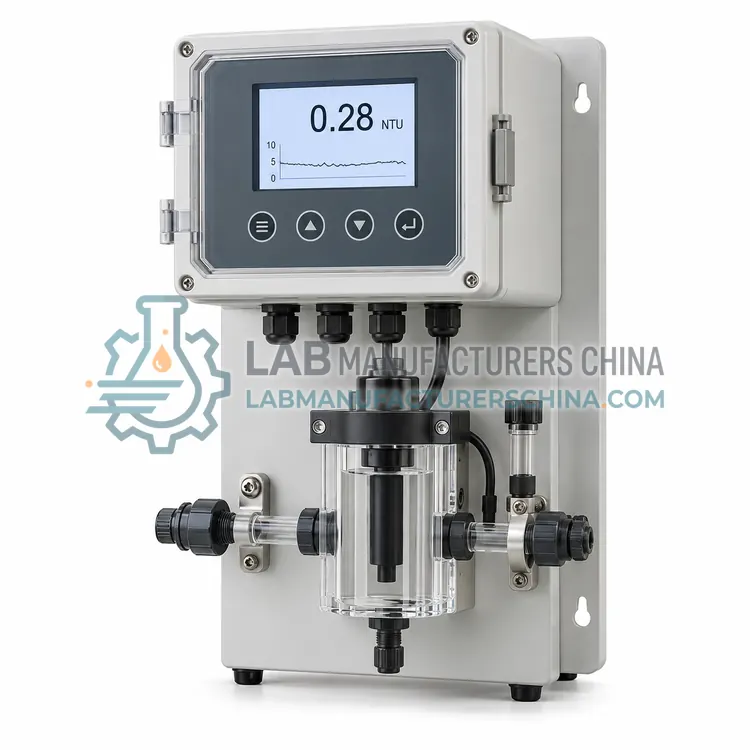
Online Process Turbidity Analyzer

在线过程浊度分析仪

  • TUM-0004
  • Turbidity Meters
  • CE (to be confirmed)
  • ISO 9001 manufacturing (to be confirmed)
  • IEC 61010-1 safety (to be confirmed)
Measuring range:
0–100 NTU or 0–4000 NTU
Resolution:
0.001 NTU (low range)
Accuracy:
±2% of reading or 0.02 NTU
Response time:
≤60 s (T90)
Sample flow rate:
0.25–1 L/min
Sample pressure:
0.1–0.6 MPa

An online process turbidity analyzer continuously measures turbidity of a flowing sample in filtration, water treatment or production lines. It uses a flow cell with bubble trap, automatic cleaning and 4–20 mA output to give real-time readings without manual sampling.

Request a quote
View details

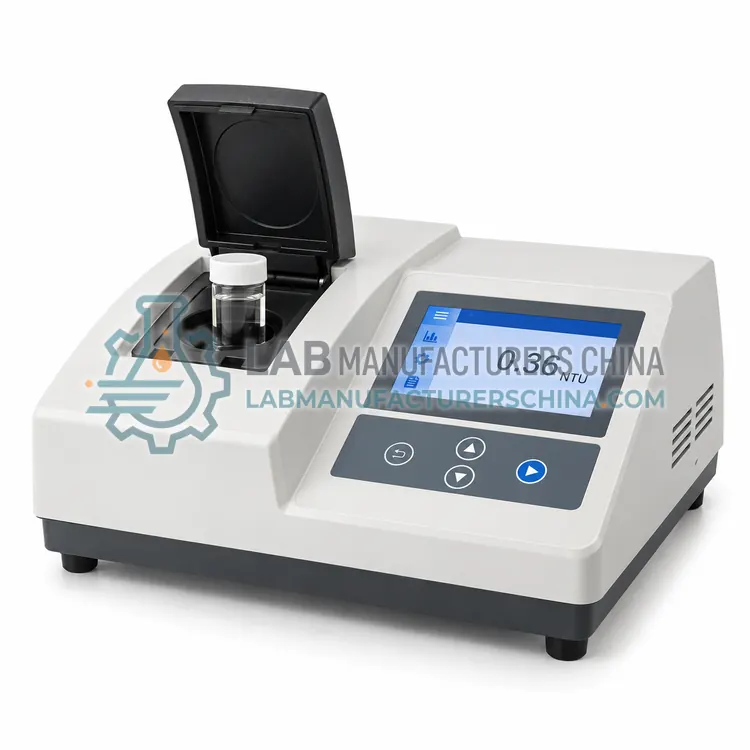
Beverage and Brewing Haze Turbidity Meter

饮料及酿造雾度浊度计

  • TUM-0005
  • Turbidity Meters
  • CE (to be confirmed)
  • ISO 9001 manufacturing (to be confirmed)
Measuring range:
0–100 EBC (0–400 NTU)
Resolution:
0.01 EBC
Accuracy:
±2% of reading + 0.02 EBC
Detection angles:
90° and 25°
Light source:
Tungsten or LED, 400–600 nm
Units:
EBC, ASBC, NTU

A beverage haze turbidity meter measures forward and 90° scatter at two angles, reporting results in EBC or ASBC units for beer, wine, juice and other clear drinks. It is chosen for brewery and beverage laboratories that specify haze according to brewing method standards.

Request a quote
View details

Compare Turbidity Meters models

ModelMeasuring rangeResolutionAccuracyStray lightLight source
Benchtop Ratio Nephelometric Turbidity MeterTUM-00010–4000 NTU (auto-ranging)0.001 NTU (0–10 NTU)±2% of reading + 0.01 NTU≤0.01 NTUTungsten lamp or LED, 400–600 nm / 860 nm
Low-Range Turbidity Meter for Pharmaceutical and Filtered WaterTUM-00020–40 NTU0.001 NTU±2% of reading or 0.005 NTU≤0.005 NTULaser diode, 660 nm, or LED, 860 nm
Portable Field Turbidity MeterTUM-00030–1000 NTU/FNU0.01 NTU (0–10 NTU)±2% of reading or 0.05 NTU≤0.02 NTUInfrared LED, 860 nm
Online Process Turbidity AnalyzerTUM-00040–100 NTU or 0–4000 NTU0.001 NTU (low range)±2% of reading or 0.02 NTU——
Beverage and Brewing Haze Turbidity MeterTUM-00050–100 EBC (0–400 NTU)0.01 EBC±2% of reading + 0.02 EBC—Tungsten or LED, 400–600 nm

Indicative values for this product class. Final specifications are confirmed on the quotation and in the calibration documents supplied with the instrument.

How do Turbidity Meters work?

A turbidity meter directs a beam of light through a sample and measures the portion scattered by suspended particles. In nephelometry the detector sits at 90° to the incident beam, and the signal is proportional to particle concentration within the linear range. Tungsten lamps at 400–600 nm are described in USEPA Method 180.1 and reported in NTU, while infrared LEDs at 860 nm are specified in ISO 7027 and reported in FNU. Ratio designs combine the 90° signal with transmitted and forward-scatter detectors to compensate for color and lamp drift. Calibration uses formazin or stabilized polymer standards such as 0.1, 20, 100 and 800 NTU. Some beverage instruments add a 25° detector to measure beer haze in EBC units, because larger particles scatter predominantly forward.

Which Turbidity Meters variants are available?

  • Benchtop Ratio Nephelometric Turbidity Meter — A benchtop ratio turbidity meter uses a white-light tungsten or LED source with 90°, forward-scatter and transmitted detectors to compensate for color and lamp drift.
  • Low-Range Turbidity Meter for Pharmaceutical and Filtered Water — A low-range turbidity meter is optimized for clear liquids below 10 NTU, with stray light under 0.01 NTU and 0.001 NTU resolution.
  • Portable Field Turbidity Meter — A portable field turbidity meter is a battery-powered, ruggedized nephelometer for on-site measurement of surface water, wastewater and drinking water.
  • Online Process Turbidity Analyzer — An online process turbidity analyzer continuously measures turbidity of a flowing sample in filtration, water treatment or production lines.
  • Beverage and Brewing Haze Turbidity Meter — A beverage haze turbidity meter measures forward and 90° scatter at two angles, reporting results in EBC or ASBC units for beer, wine, juice and other clear drinks.

How do I choose the right variant?

Choose a turbidity meter by measuring range, regulatory method, sample type and portability. Low-level clarity work below 1 NTU, such as filtered pharmaceutical water, requires a ratio benchtop instrument with stray light below 0.01 NTU and a resolution of 0.001 NTU. Wide-range industrial samples up to 4000 NTU suit a robust ratio design. Choose a white-light instrument for USEPA reporting and an infrared instrument for ISO 7027 compliance and colored samples. Beverage laboratories need EBC or ASBC units and a 25° channel. Field work favors portable, battery-powered models with IP67 housing. Online measurement needs a bubble trap and automatic cleaning. Specify vial or flow-cell format, calibration standards supplied and data output requirements.

Where are Turbidity Meters used?

Turbidity Meters are specified in filtered beverage and beer haze testing, pharmaceutical water clarity control, drinking water and wastewater monitoring, chemical and polymer solution clarity, filtration performance verification and environmental field surveys.

Which standards and certifications apply?

Work with Turbidity Meters is commonly governed by ISO 7027-1, USEPA Method 180.1, GB/T 13200, Standard Methods 2130 B, ASBC Beer-9 and EBC Method 9.29. Instrument certifications such as CE marking are confirmed per configuration and never assumed.

What are the key considerations before purchase?

Use clean, scratch-free and indexed sample vials, and wipe them with lint-free cloth and a thin film of silicone oil to hide minor imperfections. Degas samples and avoid bubbles, which produce false high readings. Calibrate with fresh formazin or certified stabilized standards, following the manufacturer's sequence, and verify with a secondary gel standard daily. Keep the optical chamber free of condensation by allowing cold samples to reach room temperature. Replace tungsten lamps according to hours of operation. Document calibration and verification records for GLP or ISO 17025 laboratories, and dispose of formazin according to local regulations because it contains hydrazine sulfate.

Frequently asked questions about Turbidity Meters

Both report scattered light at 90° calibrated against formazin. NTU is used with white-light instruments as in USEPA Method 180.1, while FNU is used with 860 nm infrared instruments under ISO 7027. Values are close for colorless samples but may differ for colored or particulate-rich samples.

Need help specifying Turbidity Meters?

Request a quote