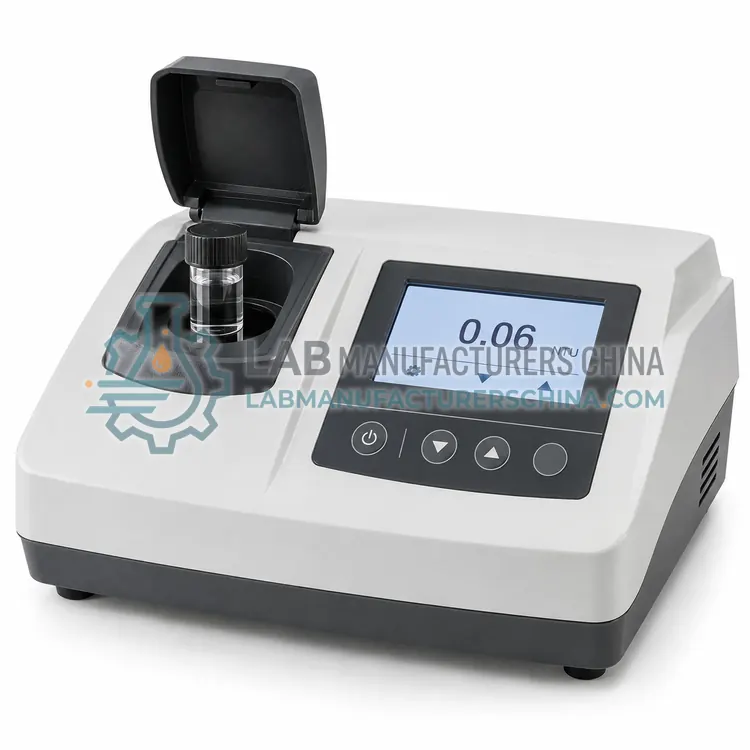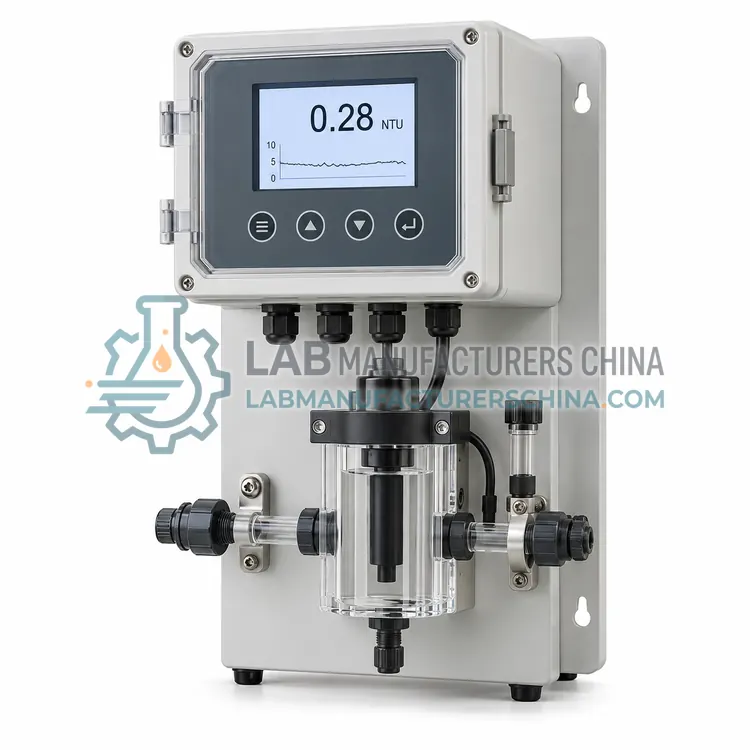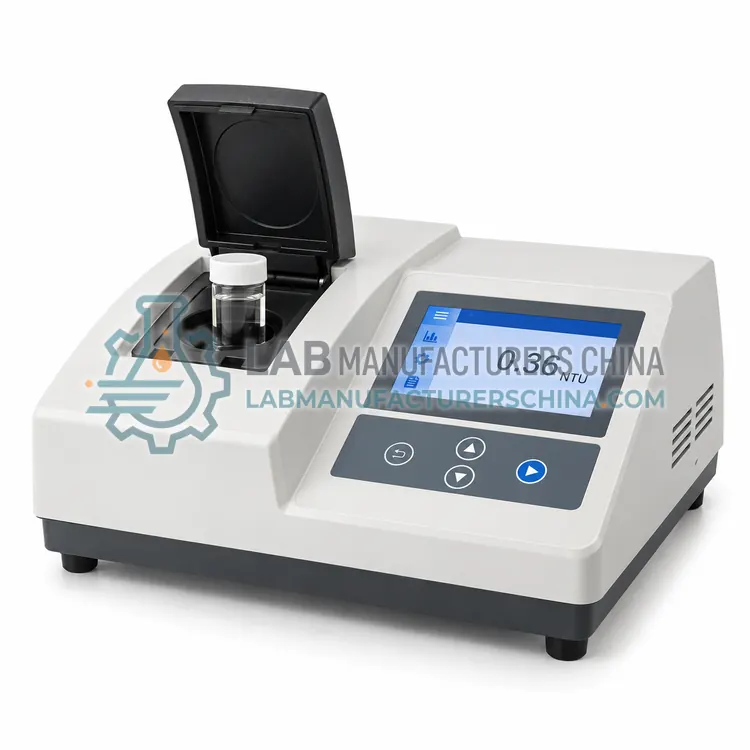
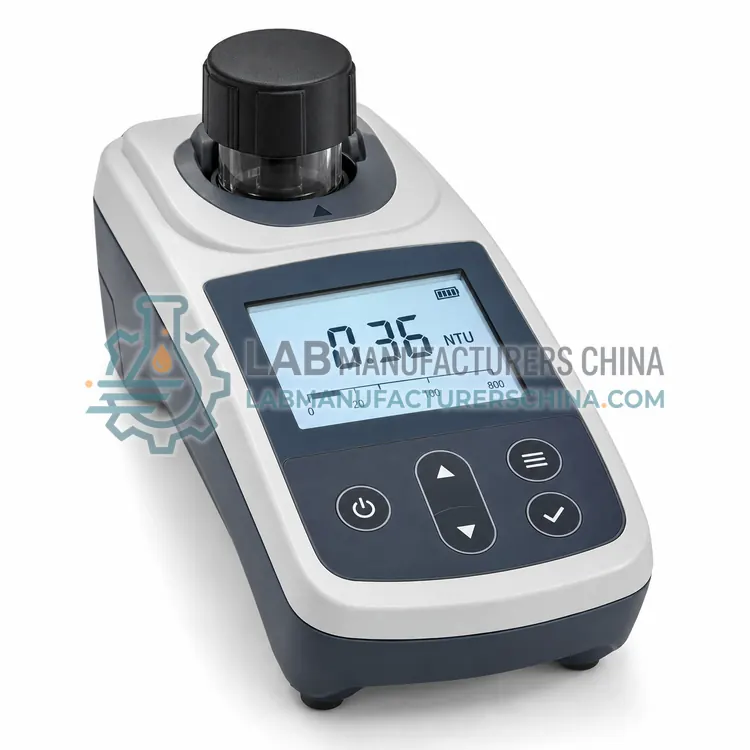
Portable Field Turbidity Meter
便携式现场浊度计
- SKU TUM-0003
- Turbidity Meters
- CE (to be confirmed)
- RoHS (to be confirmed)
- ISO 9001 manufacturing (to be confirmed)
Price on request — FOB / CIF quoted per order
Prices depend on configuration, quantity and destination port.
Key specifications
| Measuring range | 0–1000 NTU/FNU |
|---|---|
| Resolution | 0.01 NTU (0–10 NTU) |
| Accuracy | ±2% of reading or 0.05 NTU |
| Light source | Infrared LED, 860 nm |
| Stray light | ≤0.02 NTU |
| Ingress protection | IP67 |
Request a quote Download brochure · to be provided
By Lab Manufacturers China Technical TeamLast reviewed Standards: ISO 7027-1, USEPA Method 180.1, GB/T 13200
What is the Portable Field Turbidity Meter?
A portable field turbidity meter is a battery-powered, ruggedized nephelometer for on-site measurement of surface water, wastewater and drinking water. It typically reads 0–1000 NTU, conforms to ISO 7027 with an infrared source, and is housed in an IP67 casing with an on-board data logger.
What is the Portable Field Turbidity Meter?
A portable field turbidity meter is a battery-powered, ruggedized nephelometer for on-site measurement of surface water, wastewater and drinking water. It typically reads 0–1000 NTU, conforms to ISO 7027 with an infrared source, and is housed in an IP67 casing with an on-board data logger.
Overview
The portable turbidity meter combines an 860 nm infrared LED, a 90° detector and a transmitted-light detector in a compact handheld body. Operating from AA batteries or a rechargeable pack for over 100 hours, it offers a range of 0–1000 NTU, resolution of 0.01 NTU below 10 NTU and accuracy of ±2% of reading. The IP67 housing tolerates rain and brief immersion, and a GPS-tagged data logger stores thousands of measurements for field survey work. Calibration is performed with sealed stabilized standards carried in the field kit, and a simple verification with a gel standard confirms performance before each campaign. Stray light is higher than in benchtop instruments, typically 0.02 NTU, so ultra-low measurements are better done in the laboratory. Field use demands careful sample vial handling and protection from sunlight during reading.
How does it work?
A turbidity meter directs a beam of light through a sample and measures the portion scattered by suspended particles. In nephelometry the detector sits at 90° to the incident beam, and the signal is proportional to particle concentration within the linear range. Tungsten lamps at 400–600 nm are described in USEPA Method 180.1 and reported in NTU, while infrared LEDs at 860 nm are specified in ISO 7027 and reported in FNU. Ratio designs combine the 90° signal with transmitted and forward-scatter detectors to compensate for color and lamp drift. Calibration uses formazin or stabilized polymer standards such as 0.1, 20, 100 and 800 NTU. Some beverage instruments add a 25° detector to measure beer haze in EBC units, because larger particles scatter predominantly forward.
What are the key features?
- 860 nm infrared source follows ISO 7027 for colored and natural water samples.
- IP67 housing tolerates rain, dust and brief immersion during field work.
- Battery operation exceeds 100 hours on standard AA cells.
- GPS-tagged data logger stores thousands of readings for survey records.
- Carrying case includes standards, vials and quick-start guide.
- Simple one-touch measurement with automatic ranging and stability indication.
What are the technical specifications?
A typical portable field turbidity meter configuration offers measuring range of 0–1000 NTU/FNU, resolution of 0.01 NTU (0–10 NTU), accuracy of ±2% of reading or 0.05 NTU, light source of Infrared LED, 860 nm, stray light of ≤0.02 NTU and ingress protection of IP67. Values are indicative of the product class; the exact figures for each configuration are confirmed on the quotation and the calibration documents supplied with the instrument.
Which applications is it used for?
The Portable Field Turbidity Meter is used in surface water and stream surveys, wastewater discharge checks, construction site runoff monitoring, drinking water distribution sampling and aquaculture water quality. Across the wider Turbidity Meters class, laboratories also deploy it for filtered beverage and beer haze testing, pharmaceutical water clarity control and drinking water and wastewater monitoring.
Which standards and certifications apply?
Relevant standards and methods include ISO 7027-1, USEPA Method 180.1, GB/T 13200, Standard Methods 2130 B, ASBC Beer-9 and EBC Method 9.29. Certification candidates for this model are CE, RoHS and ISO 9001 manufacturing; each is to be confirmed for the specific configuration before shipment, and certificates are supplied only where they have been issued.
Use clean, scratch-free and indexed sample vials, and wipe them with lint-free cloth and a thin film of silicone oil to hide minor imperfections. Degas samples and avoid bubbles, which produce false high readings. Calibrate with fresh formazin or certified stabilized standards, following the manufacturer's sequence, and verify with a secondary gel standard daily. Keep the optical chamber free of condensation by allowing cold samples to reach room temperature. Replace tungsten lamps according to hours of operation. Document calibration and verification records for GLP or ISO 17025 laboratories, and dispose of formazin according to local regulations because it contains hydrazine sulfate.
How do I select the right Portable Field Turbidity Meter?
Select the portable turbidity meter for on-site testing where a laboratory is not available and results above 0.1 NTU are sufficient. It is less sensitive than a low-range benchtop model. In an RFQ, specify range, light source standard, ingress protection, battery type, data logging and GPS capability, and the standards included in the field kit.
How does it compare with other Turbidity Meters variants?
Choose a turbidity meter by measuring range, regulatory method, sample type and portability. Low-level clarity work below 1 NTU, such as filtered pharmaceutical water, requires a ratio benchtop instrument with stray light below 0.01 NTU and a resolution of 0.001 NTU. Wide-range industrial samples up to 4000 NTU suit a robust ratio design. Choose a white-light instrument for USEPA reporting and an infrared instrument for ISO 7027 compliance and colored samples. Beverage laboratories need EBC or ASBC units and a 25° channel. Field work favors portable, battery-powered models with IP67 housing. Online measurement needs a bubble trap and automatic cleaning. Specify vial or flow-cell format, calibration standards supplied and data output requirements.
Full specifications
| Measuring range | 0–1000 NTU/FNU |
|---|---|
| Resolution | 0.01 NTU (0–10 NTU) |
| Accuracy | ±2% of reading or 0.05 NTU |
| Light source | Infrared LED, 860 nm |
| Stray light | ≤0.02 NTU |
| Ingress protection | IP67 |
| Battery life | ≥100 h (4 × AA) |
| Data storage | ≥1000 records with GPS |
| Operating temperature | 0–50 °C |
| Weight | ≤0.6 kg |
Indicative values for this product class. Final specifications are confirmed on the quotation and in the calibration documents supplied with the instrument.
Applications
- Surface water and stream surveys
- Wastewater discharge checks
- Construction site runoff monitoring
- Drinking water distribution sampling
- Aquaculture water quality
Key features
- 860 nm infrared source follows ISO 7027 for colored and natural water samples.
- IP67 housing tolerates rain, dust and brief immersion during field work.
- Battery operation exceeds 100 hours on standard AA cells.
- GPS-tagged data logger stores thousands of readings for survey records.
- Carrying case includes standards, vials and quick-start guide.
- Simple one-touch measurement with automatic ranging and stability indication.
Frequently asked questions about Portable Field Turbidity Meter
Typical portable models run over 100 hours on four AA batteries or a rechargeable pack, depending on backlight use and measurement frequency. Carry spare batteries for extended campaigns and store the meter with batteries removed during long periods of storage.
It can if the instrument's optical design complies with the required method, such as ISO 7027 for infrared models, and if calibration and verification records are maintained. Check the regulator's accepted methods and keep documented calibration with traceable standards.
Direct sunlight entering the sample chamber can raise readings. Close the meter cover fully, shade the sample vial with your body while filling and capping, and avoid warming the sample in a vehicle. Use the same vial orientation for every measurement.
Both report scattered light at 90° calibrated against formazin. NTU is used with white-light instruments as in USEPA Method 180.1, while FNU is used with 860 nm infrared instruments under ISO 7027. Values are close for colorless samples but may differ for colored or particulate-rich samples.
Formazin is the primary reference, but many laboratories use certified stabilized polymer standards that are safer and stable for months. Use standards traceable to the manufacturer's certified values and a multi-point calibration covering your measurement range, including a low standard near 0.1 NTU.
Common causes are air bubbles, scratched or dirty vials, condensation on cold samples, settling particles and lamp aging. Degas the sample, clean and index the vial, allow temperature equilibration, mix gently before reading and check lamp hours if drift continues.