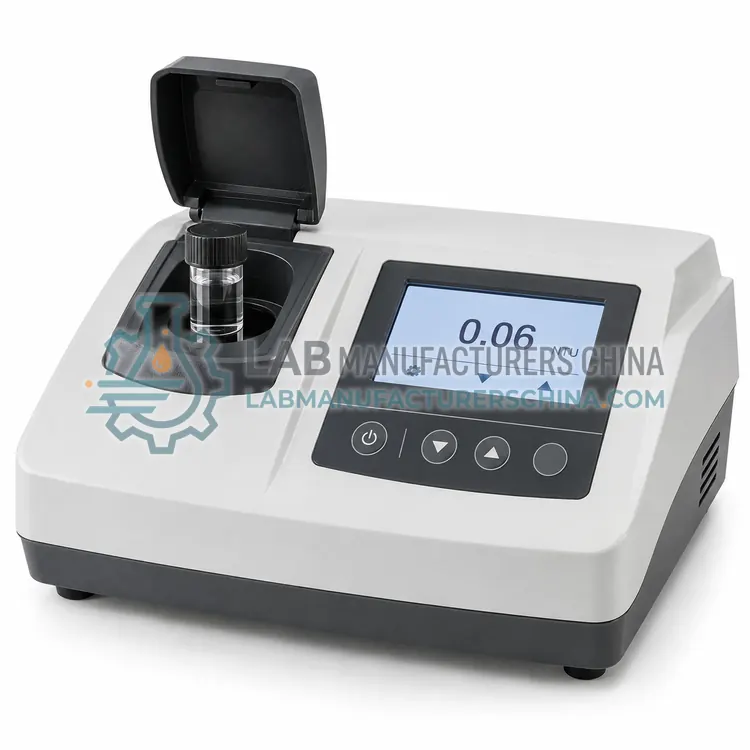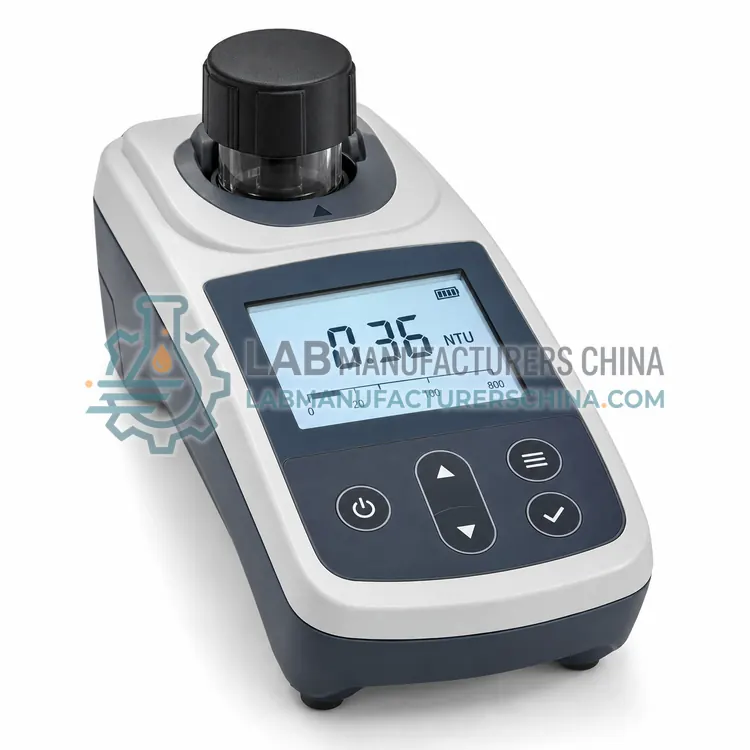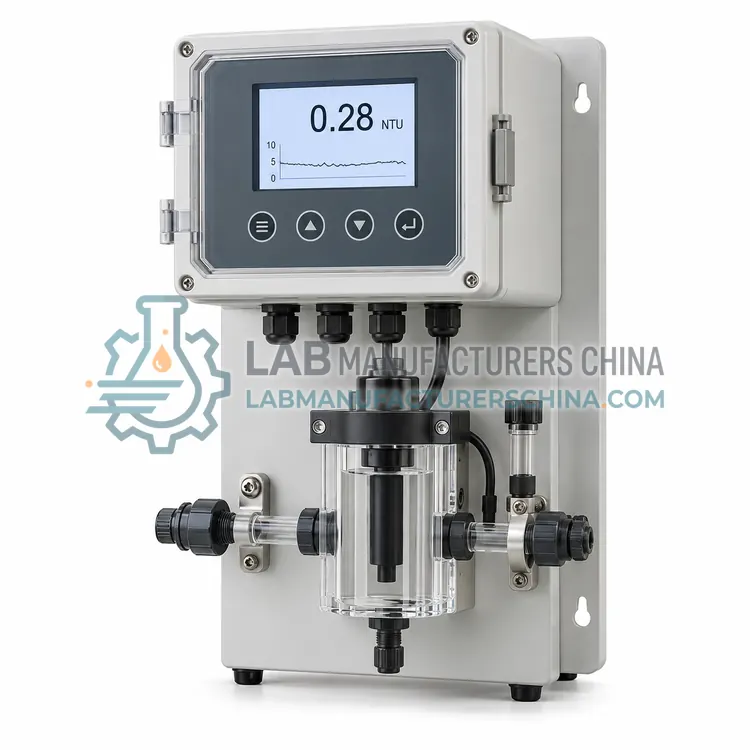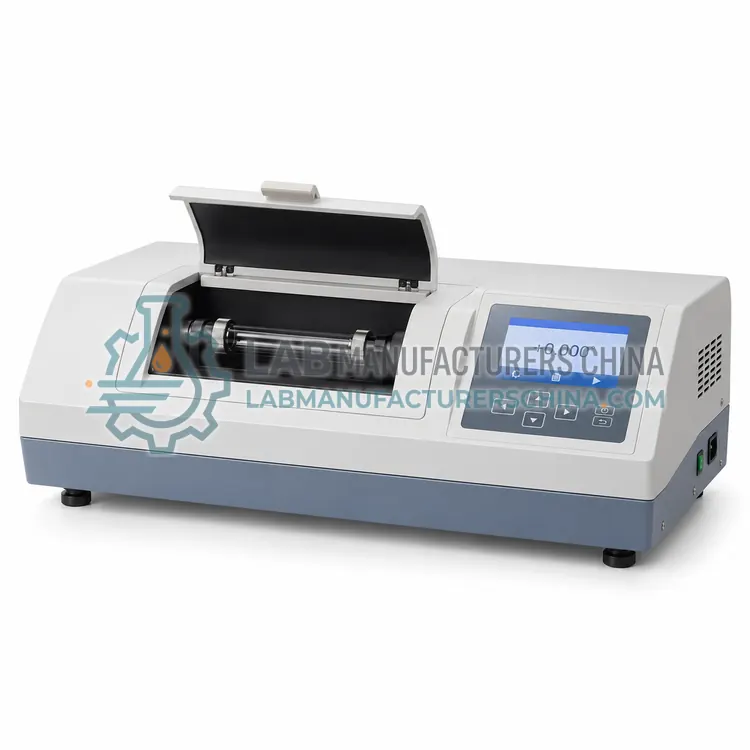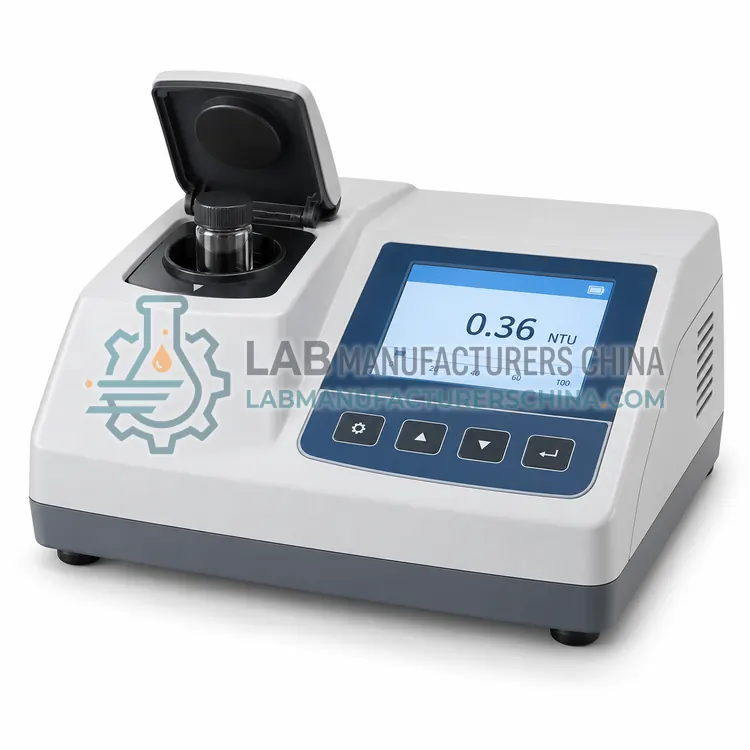
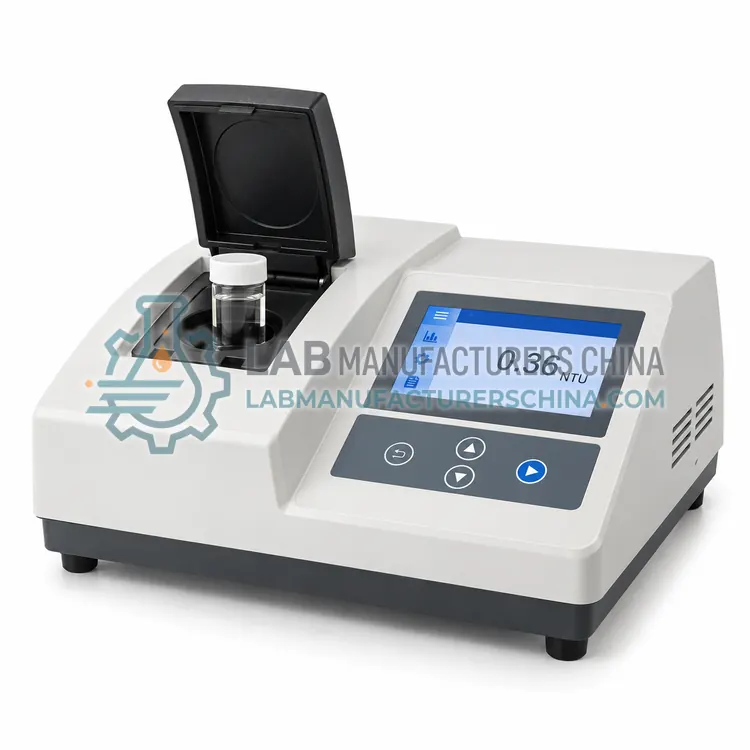
Beverage and Brewing Haze Turbidity Meter
饮料及酿造雾度浊度计
- SKU TUM-0005
- Turbidity Meters
- CE (to be confirmed)
- ISO 9001 manufacturing (to be confirmed)
Price on request — FOB / CIF quoted per order
Prices depend on configuration, quantity and destination port.
Key specifications
| Measuring range | 0–100 EBC (0–400 NTU) |
|---|---|
| Resolution | 0.01 EBC |
| Accuracy | ±2% of reading + 0.02 EBC |
| Detection angles | 90° and 25° |
| Light source | Tungsten or LED, 400–600 nm |
| Units | EBC, ASBC, NTU |
Request a quote Download brochure · to be provided
By Lab Manufacturers China Technical TeamLast reviewed Standards: ISO 7027-1, USEPA Method 180.1, GB/T 13200
What is the Beverage and Brewing Haze Turbidity Meter?
A beverage haze turbidity meter measures forward and 90° scatter at two angles, reporting results in EBC or ASBC units for beer, wine, juice and other clear drinks. It is chosen for brewery and beverage laboratories that specify haze according to brewing method standards.
What is the Beverage and Brewing Haze Turbidity Meter?
A beverage haze turbidity meter measures forward and 90° scatter at two angles, reporting results in EBC or ASBC units for beer, wine, juice and other clear drinks. It is chosen for brewery and beverage laboratories that specify haze according to brewing method standards.
Overview
The beverage haze meter uses a 90° detector and a 25° forward-scatter detector so that both small and large haze-forming particles are captured, as required for brewing analysis. Readings are expressed in EBC, ASBC or NTU, with a range of 0–100 EBC and resolution of 0.01 EBC. Temperature control or temperature measurement is typically included because haze in cold beer is affected by chill haze formation and dissolved gas. Some instruments include a forced-haze test module, which holds the sample at 60 °C for 24 hours and then at 0 °C, to predict shelf life. A degassing function or cell pressurizing step prevents CO2 bubbles from disturbing results. Sample cells of 25 mm or 50 mm and a formazin-based calibration certificate are provided. Use it for packaged beer quality control and finished wine clarity checks.
How does it work?
A turbidity meter directs a beam of light through a sample and measures the portion scattered by suspended particles. In nephelometry the detector sits at 90° to the incident beam, and the signal is proportional to particle concentration within the linear range. Tungsten lamps at 400–600 nm are described in USEPA Method 180.1 and reported in NTU, while infrared LEDs at 860 nm are specified in ISO 7027 and reported in FNU. Ratio designs combine the 90° signal with transmitted and forward-scatter detectors to compensate for color and lamp drift. Calibration uses formazin or stabilized polymer standards such as 0.1, 20, 100 and 800 NTU. Some beverage instruments add a 25° detector to measure beer haze in EBC units, because larger particles scatter predominantly forward.
What are the key features?
- Dual 90° and 25° scatter detectors capture small and large haze particles.
- Direct reporting in EBC, ASBC and NTU units.
- Sample temperature measurement or control supports chill haze assessment.
- Degassing or cell pressurizing step limits CO2 bubble interference.
- Forced haze test accessory supports shelf-life prediction workflows.
- Calibration certificate traceable to formazin standards.
What are the technical specifications?
A typical beverage and brewing haze turbidity meter configuration offers measuring range of 0–100 EBC (0–400 NTU), resolution of 0.01 EBC, accuracy of ±2% of reading + 0.02 EBC, detection angles of 90° and 25°, light source of Tungsten or LED, 400–600 nm and units of EBC, ASBC, NTU. Values are indicative of the product class; the exact figures for each configuration are confirmed on the quotation and the calibration documents supplied with the instrument.
Which applications is it used for?
The Beverage and Brewing Haze Turbidity Meter is used in brewery quality control, wine and cider clarity, fruit juice and soft drink haze and shelf-life prediction studies. Across the wider Turbidity Meters class, laboratories also deploy it for filtered beverage and beer haze testing, pharmaceutical water clarity control and drinking water and wastewater monitoring.
Which standards and certifications apply?
Relevant standards and methods include ISO 7027-1, USEPA Method 180.1, GB/T 13200, Standard Methods 2130 B, ASBC Beer-9 and EBC Method 9.29. Certification candidates for this model are CE and ISO 9001 manufacturing; each is to be confirmed for the specific configuration before shipment, and certificates are supplied only where they have been issued.
Use clean, scratch-free and indexed sample vials, and wipe them with lint-free cloth and a thin film of silicone oil to hide minor imperfections. Degas samples and avoid bubbles, which produce false high readings. Calibrate with fresh formazin or certified stabilized standards, following the manufacturer's sequence, and verify with a secondary gel standard daily. Keep the optical chamber free of condensation by allowing cold samples to reach room temperature. Replace tungsten lamps according to hours of operation. Document calibration and verification records for GLP or ISO 17025 laboratories, and dispose of formazin according to local regulations because it contains hydrazine sulfate.
How do I select the right Beverage and Brewing Haze Turbidity Meter?
Select the beverage haze meter when the method requires EBC or ASBC units and a 25° channel, as in brewing. A standard NTU turbidimeter cannot reproduce these values accurately for beer. In an RFQ, specify units, angles, temperature control, degassing need, cell length and the method standard, such as EBC 9.29.
How does it compare with other Turbidity Meters variants?
Choose a turbidity meter by measuring range, regulatory method, sample type and portability. Low-level clarity work below 1 NTU, such as filtered pharmaceutical water, requires a ratio benchtop instrument with stray light below 0.01 NTU and a resolution of 0.001 NTU. Wide-range industrial samples up to 4000 NTU suit a robust ratio design. Choose a white-light instrument for USEPA reporting and an infrared instrument for ISO 7027 compliance and colored samples. Beverage laboratories need EBC or ASBC units and a 25° channel. Field work favors portable, battery-powered models with IP67 housing. Online measurement needs a bubble trap and automatic cleaning. Specify vial or flow-cell format, calibration standards supplied and data output requirements.
Full specifications
| Measuring range | 0–100 EBC (0–400 NTU) |
|---|---|
| Resolution | 0.01 EBC |
| Accuracy | ±2% of reading + 0.02 EBC |
| Detection angles | 90° and 25° |
| Light source | Tungsten or LED, 400–600 nm |
| Units | EBC, ASBC, NTU |
| Sample cell | 25 mm or 50 mm cylindrical |
| Sample temperature | 0–40 °C measured or controlled |
| Sample volume | 30–60 mL |
| Data output | USB, RS-232, printer |
Indicative values for this product class. Final specifications are confirmed on the quotation and in the calibration documents supplied with the instrument.
Applications
- Brewery quality control
- Wine and cider clarity
- Fruit juice and soft drink haze
- Shelf-life prediction studies
Key features
- Dual 90° and 25° scatter detectors capture small and large haze particles.
- Direct reporting in EBC, ASBC and NTU units.
- Sample temperature measurement or control supports chill haze assessment.
- Degassing or cell pressurizing step limits CO2 bubble interference.
- Forced haze test accessory supports shelf-life prediction workflows.
- Calibration certificate traceable to formazin standards.
Frequently asked questions about Beverage and Brewing Haze Turbidity Meter
Large haze particles such as protein-polyphenol complexes and yeast scatter light mainly in the forward direction. A 25° detector captures this signal in addition to 90° scatter from small particles, giving a fuller haze value matched to brewing standards.
EBC and ASBC units are brewing haze scales based on formazin standards, where 1 EBC is approximately 0.25 NTU for 90° measurement. They are defined by brewing methods and differ in instrument geometry, so conversions are approximate.
Dissolved CO2 forms bubbles that scatter light and inflate readings. Samples are degassed gently by pouring or brief stirring, or the cell is pressurized slightly. The instrument method should state the sample temperature and degassing step for repeatable results.
Both report scattered light at 90° calibrated against formazin. NTU is used with white-light instruments as in USEPA Method 180.1, while FNU is used with 860 nm infrared instruments under ISO 7027. Values are close for colorless samples but may differ for colored or particulate-rich samples.
Formazin is the primary reference, but many laboratories use certified stabilized polymer standards that are safer and stable for months. Use standards traceable to the manufacturer's certified values and a multi-point calibration covering your measurement range, including a low standard near 0.1 NTU.
Common causes are air bubbles, scratched or dirty vials, condensation on cold samples, settling particles and lamp aging. Degas the sample, clean and index the vial, allow temperature equilibration, mix gently before reading and check lamp hours if drift continues.