Lab Manufacturers China

Spectrophotometers

分光光度计

SPE · Analytical Instruments · 6 models

By Lab Manufacturers China Technical TeamLast reviewed Standards: USP <857>, Ph. Eur. 2.2.25, ASTM E275

Standards referenced

  • USP <857>
  • Ph. Eur. 2.2.25
  • ASTM E275
  • ASTM E308
  • JJG 178
  • IEC 61010-1

What are Spectrophotometers?

Spectrophotometers are analytical instruments that measure how much light a sample absorbs, transmits or reflects at selected wavelengths. The readings are used to quantify concentration, purity, color or reaction progress. Laboratories in chemistry, life science, environmental testing, food and manufacturing quality control use them for routine photometric analysis.

6 models of Spectrophotometers

The 6 models below are current configurations; specifications are confirmed on quotation.

Visible Range Spectrophotometer

可见分光光度计

  • SPE-0001
  • Spectrophotometers
  • CE (to be confirmed)
  • ISO 9001 manufacturing (to be confirmed)
Wavelength range:
320–1100 nm
Spectral bandwidth:
2–4 nm
Wavelength accuracy:
±2 nm
Wavelength repeatability:
≤1 nm
Photometric range:
0–2 A; 0–200 %T
Photometric accuracy:
±0.004 A at 1 A

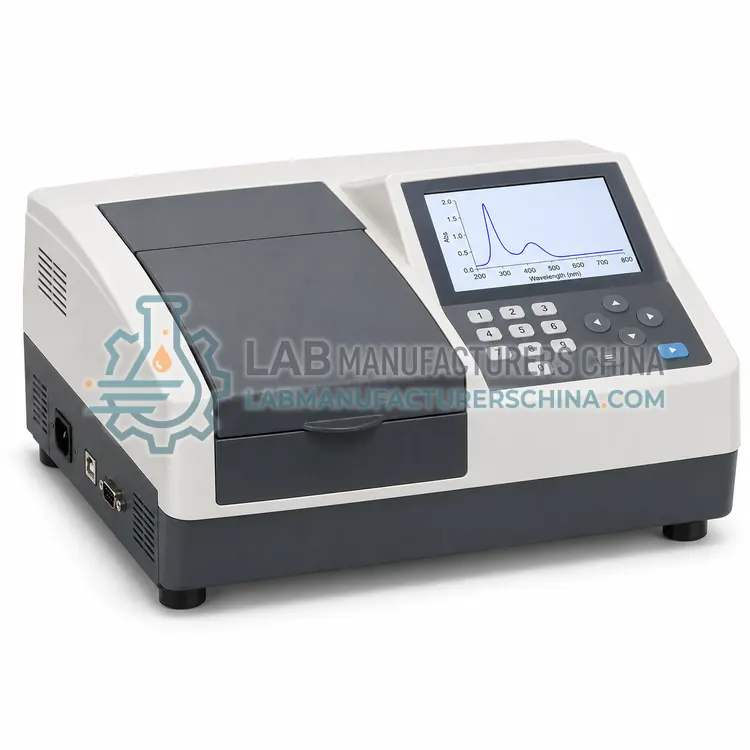
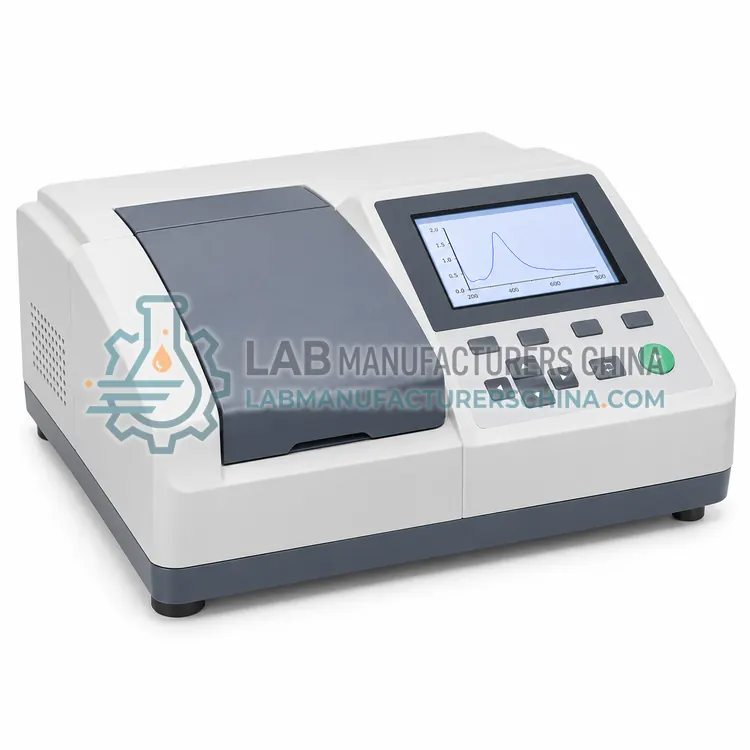
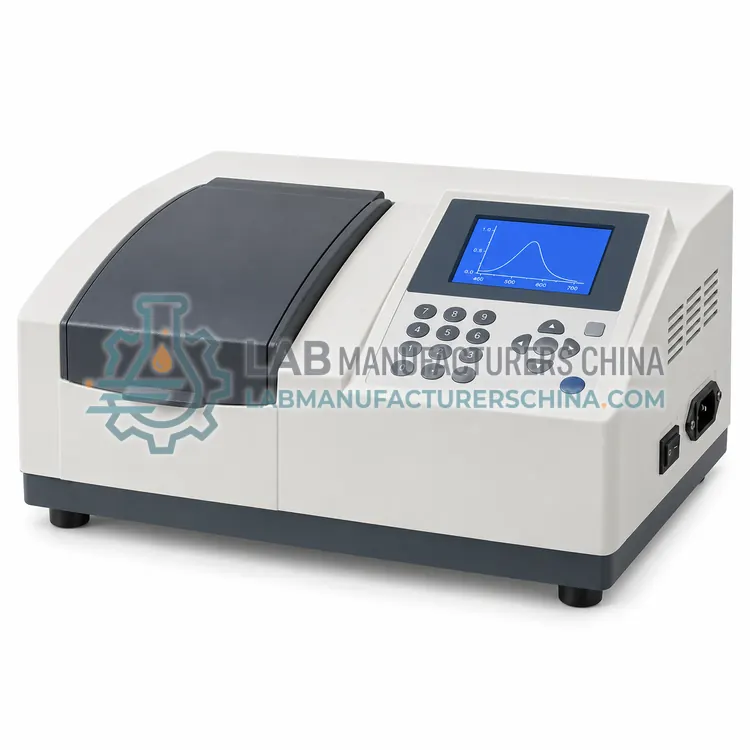
A visible range spectrophotometer measures absorbance and transmittance between roughly 320 and 1100 nm using a tungsten-halogen lamp. It is the economical choice for colorimetric assays, water analysis kits and teaching laboratories, where ultraviolet measurement is not required.

Request a quote
View details

Single-Beam UV-Vis Spectrophotometer

单光束紫外可见分光光度计

  • SPE-0002
  • Spectrophotometers
  • CE (to be confirmed)
  • ISO 9001 manufacturing (to be confirmed)
Wavelength range:
190–1100 nm
Spectral bandwidth:
1 nm or 2 nm
Wavelength accuracy:
±0.5 nm
Wavelength repeatability:
≤0.2 nm
Photometric range:
−0.3 to 3.0 A
Photometric accuracy:
±0.003 A at 0.5–1 A

A single-beam UV-Vis spectrophotometer measures absorbance from about 190 to 1100 nm with one optical path, using a deuterium and a tungsten lamp. It provides accurate routine quantitation at moderate cost when a reference is re-zeroed before measurement.

Request a quote
View details

Double-Beam Scanning UV-Vis Spectrophotometer

双光束扫描紫外可见分光光度计

  • SPE-0003
  • Spectrophotometers
  • CE (to be confirmed)
  • ISO 9001 manufacturing (to be confirmed)
Wavelength range:
190–1100 nm
Spectral bandwidth:
0.1, 0.2, 0.5, 1, 2, 5 nm (selectable)
Wavelength accuracy:
±0.3 nm
Wavelength repeatability:
≤0.1 nm
Photometric range:
−4 to 4 A
Photometric accuracy:
±0.002 A at 0–0.5 A

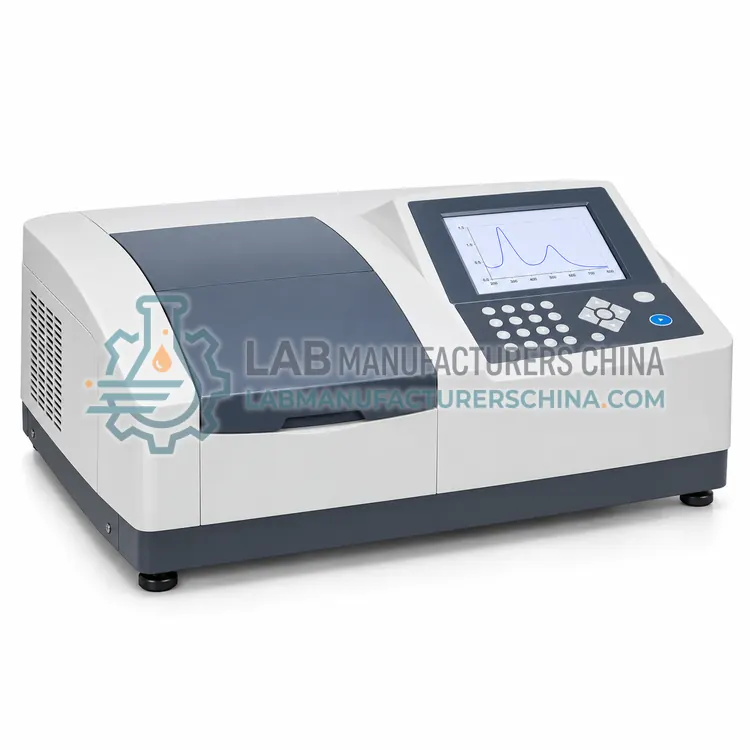
A double-beam scanning UV-Vis spectrophotometer splits the light into reference and sample paths measured simultaneously, cancelling lamp drift. It offers lower stray light, higher photometric range and better stability for method validation, long scans and regulated quality control.

Request a quote
View details

Microvolume Nucleic Acid Spectrophotometer

微量核酸分光光度计

  • SPE-0004
  • Spectrophotometers
  • CE (to be confirmed)
  • ISO 9001 manufacturing (to be confirmed)
Sample volume:
0.5–2 µL
Wavelength range:
190–840 nm
Path length:
0.05–1 mm (automatic)
Wavelength accuracy:
±1 nm
Absorbance range (10 mm equivalent):
0.02–300 A
dsDNA concentration range:
2–15,000 ng/µL

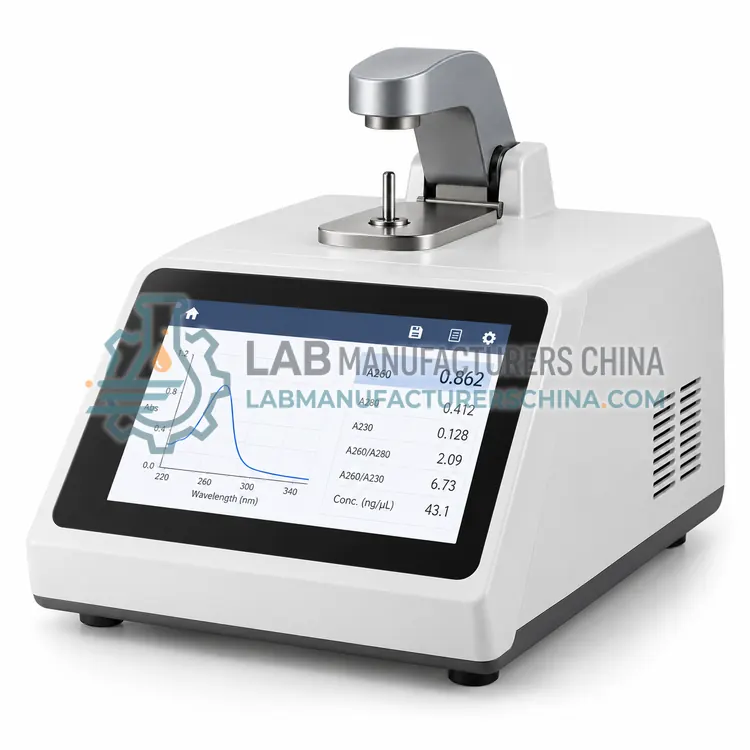
A microvolume nucleic acid spectrophotometer measures 0.5–2 µL samples directly on a pedestal or in a short-path cell without cuvettes. It quantifies DNA, RNA and proteins at 230, 260 and 280 nm and is used in molecular biology laboratories for rapid sample checks.

Request a quote
View details

Portable Field Spectrophotometer

便携式现场分光光度计

  • SPE-0005
  • Spectrophotometers
  • CE (to be confirmed)
  • ISO 9001 manufacturing (to be confirmed)
Wavelength range:
340–900 nm (grating type) or 6 fixed LED wavelengths
Wavelength accuracy:
±1.5 nm
Photometric range:
0–3.5 A
Photometric accuracy:
±0.01 A
Light source:
LED array or tungsten lamp
Detector:
Silicon photodiode

A portable field spectrophotometer is a battery-powered, ruggedized instrument for on-site colorimetric and UV-Vis measurements. It uses LED or lamp sources with preprogrammed methods for water quality parameters, making it suited to environmental monitoring, industrial water and field sampling.

Request a quote
View details

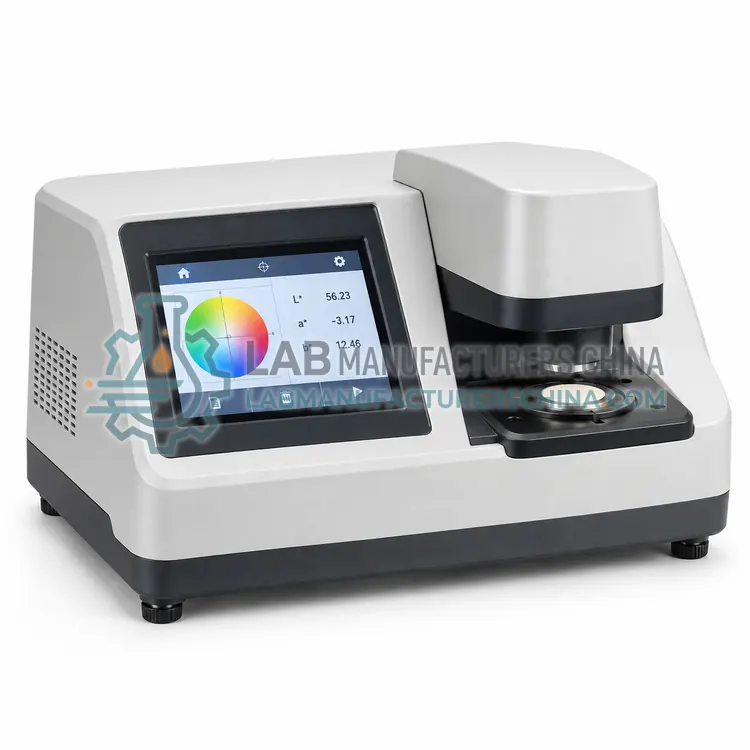
Color Measurement Spectrophotometer

色度分光光度计

  • SPE-0006
  • Spectrophotometers
  • CE (to be confirmed)
  • ISO 9001 manufacturing (to be confirmed)
Wavelength range:
360–780 nm
Spectral interval:
10 nm (5 nm optional output)
Measurement geometry:
d/8° (SCI/SCE) or 45°/0°
Measurement aperture:
Ø 4, 8, 16 mm (interchangeable)
Repeatability:
ΔE*ab ≤0.03 (standard deviation, white tile)
Inter-instrument agreement:
ΔE*ab ≤0.15 (average on 12 BCRA tiles)

A color measurement spectrophotometer measures diffuse reflectance or transmittance of surfaces and liquids across 400–700 nm to calculate CIE color coordinates. It is used in coatings, plastics, textiles, food and packaging to set tolerances and compare batches against a standard.

Request a quote
View details

Compare Spectrophotometers models

ModelWavelength rangeSpectral bandwidthWavelength accuracyWavelength repeatabilityPhotometric range
Visible Range SpectrophotometerSPE-0001320–1100 nm2–4 nm±2 nm≤1 nm0–2 A; 0–200 %T
Single-Beam UV-Vis SpectrophotometerSPE-0002190–1100 nm1 nm or 2 nm±0.5 nm≤0.2 nm−0.3 to 3.0 A
Double-Beam Scanning UV-Vis SpectrophotometerSPE-0003190–1100 nm0.1, 0.2, 0.5, 1, 2, 5 nm (selectable)±0.3 nm≤0.1 nm−4 to 4 A
Microvolume Nucleic Acid SpectrophotometerSPE-0004190–840 nm—±1 nm——
Portable Field SpectrophotometerSPE-0005340–900 nm (grating type) or 6 fixed LED wavelengths—±1.5 nm—0–3.5 A
Color Measurement SpectrophotometerSPE-0006360–780 nm————

Indicative values for this product class. Final specifications are confirmed on the quotation and in the calibration documents supplied with the instrument.

How do Spectrophotometers work?

A spectrophotometer passes light from a lamp through a monochromator, which selects a narrow wavelength band using a diffraction grating or filter. The band then crosses a sample held in a cuvette, and a detector such as a silicon photodiode or photomultiplier tube records the transmitted intensity. Absorbance is calculated as the negative logarithm of transmittance, and the Beer–Lambert law relates it linearly to analyte concentration within a limited range. Light sources are typically a tungsten-halogen lamp for the visible range and a deuterium lamp for the ultraviolet. Single-beam designs measure reference and sample sequentially, while double-beam designs split the beam to compensate for lamp drift. Reflectance instruments replace the cuvette with an integrating sphere or a fixed 45/0 geometry to capture color data.

Which Spectrophotometers variants are available?

  • Visible Range Spectrophotometer — A visible range spectrophotometer measures absorbance and transmittance between roughly 320 and 1100 nm using a tungsten-halogen lamp.
  • Single-Beam UV-Vis Spectrophotometer — A single-beam UV-Vis spectrophotometer measures absorbance from about 190 to 1100 nm with one optical path, using a deuterium and a tungsten lamp.
  • Double-Beam Scanning UV-Vis Spectrophotometer — A double-beam scanning UV-Vis spectrophotometer splits the light into reference and sample paths measured simultaneously, cancelling lamp drift.
  • Microvolume Nucleic Acid Spectrophotometer — A microvolume nucleic acid spectrophotometer measures 0.5–2 µL samples directly on a pedestal or in a short-path cell without cuvettes.
  • Portable Field Spectrophotometer — A portable field spectrophotometer is a battery-powered, ruggedized instrument for on-site colorimetric and UV-Vis measurements.
  • Color Measurement Spectrophotometer — A color measurement spectrophotometer measures diffuse reflectance or transmittance of surfaces and liquids across 400–700 nm to calculate CIE color coordinates.

How do I choose the right variant?

Start with the wavelength range: visible-only instruments cover roughly 320–1100 nm and suit colorimetric assays, while UV-capable models extend to 190 nm for nucleic acids, proteins and organic compounds. Next consider photometric stability and stray light, which determine the usable absorbance range; double-beam optics give lower drift for long kinetic runs and method validation. Spectral bandwidth matters for sharp absorption peaks, with 1–2 nm adequate for most quantitative work. Sample volume and format separate standard cuvette models from microvolume and portable designs. Regulated laboratories should check for software audit trails, electronic records support and verification routines. Finally, consider throughput, accessories such as Peltier cell holders or autosamplers, and whether the instrument must operate outside the laboratory.

Where are Spectrophotometers used?

Spectrophotometers are specified in nucleic acid and protein quantification, water and environmental colorimetric analysis, pharmaceutical and chemical QC, color measurement of coatings and textiles and educational and teaching laboratories.

Which standards and certifications apply?

Work with Spectrophotometers is commonly governed by USP <857>, Ph. Eur. 2.2.25, ASTM E275, ASTM E308, JJG 178 and IEC 61010-1. Instrument certifications such as CE marking are confirmed per configuration and never assumed.

What are the key considerations before purchase?

Place the instrument on a vibration-free bench away from direct sunlight and strong air currents, and allow 15–30 minutes of warm-up for lamp stabilization. Verify wavelength accuracy, photometric accuracy, stray light and baseline noise at defined intervals using certified reference filters or solutions. Keep cuvettes clean, matched and free of scratches, and use quartz cells below 340 nm. Deuterium and tungsten lamps have finite lifetimes, so record lamp hours and schedule replacement. Keep the sample compartment dry and protected from spills. In regulated environments, apply installation, operational and performance qualification and maintain calibration records.

Frequently asked questions about Spectrophotometers

A spectrophotometer measures the intensity of light after it passes through or reflects from a sample at specific wavelengths. From this it reports transmittance, absorbance or reflectance, which can be converted to concentration using a calibration curve or to color coordinates such as CIE L*a*b*.

Need help specifying Spectrophotometers?

Request a quote