Lab Manufacturers China

Photometers

光度计

PHO · Analytical Instruments · 5 models

By Lab Manufacturers China Technical TeamLast reviewed Standards: ISO 8655-related photometric checks, ISO 6060 (chemical oxygen demand), ISO 7150-1 (ammonium)

Standards referenced

  • ISO 8655-related photometric checks
  • ISO 6060 (chemical oxygen demand)
  • ISO 7150-1 (ammonium)
  • GB/T 6682
  • JJG 1032 (flame photometer verification)
  • IEC 61010-1

What are Photometers?

Photometers are analytical instruments that measure light intensity, absorbed or emitted, at one or a few fixed wavelengths using filters or LEDs. They quantify analytes through absorbance or emission, such as alkali metals in flame photometry or colored reaction products. Clinical, water, agricultural and industrial laboratories use them for routine, targeted measurements.

5 models of Photometers

The 5 models below are current configurations; specifications are confirmed on quotation.

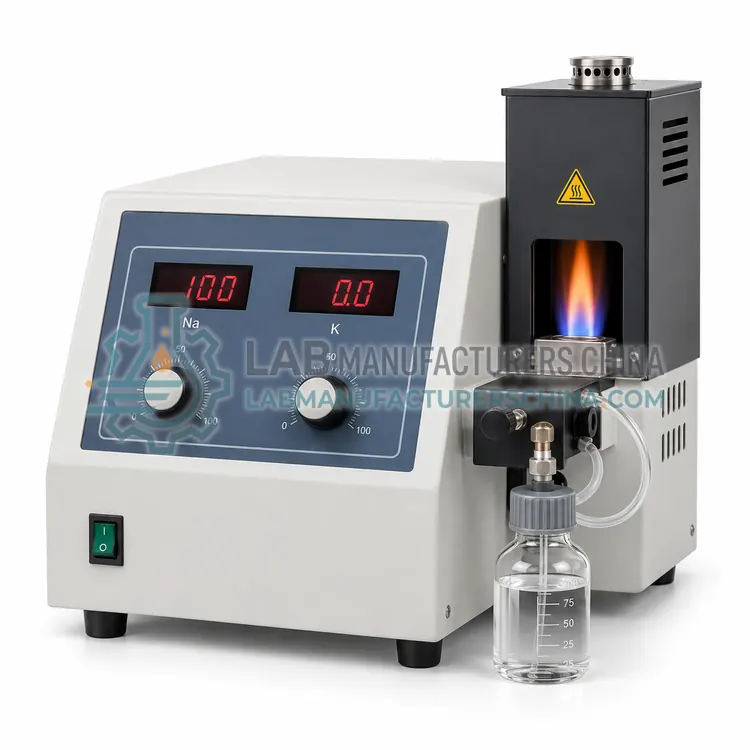
Flame Photometer

火焰光度计

  • PHO-0001
  • Photometers
  • CE (to be confirmed)
  • ISO 9001 manufacturing (to be confirmed)
Measured elements:
Na, K, Li, Ca (Ba optional)
Detection limit, Na and K:
≤0.1 mg/L
Linear range:
0–100 mg/L (Na, K); 0–20 mg/L (Li)
Repeatability:
RSD ≤2 %
Stability:
≤3 % over 10 min
Fuel gas:
LPG, propane or natural gas

A flame photometer measures the emission intensity of sodium, potassium, lithium, calcium and barium atoms in a gas flame using narrow-band filters. It is the established, low-cost method for alkali metals in biological fluids, water, soil extracts, fertilizers and cement.

Request a quote
View details

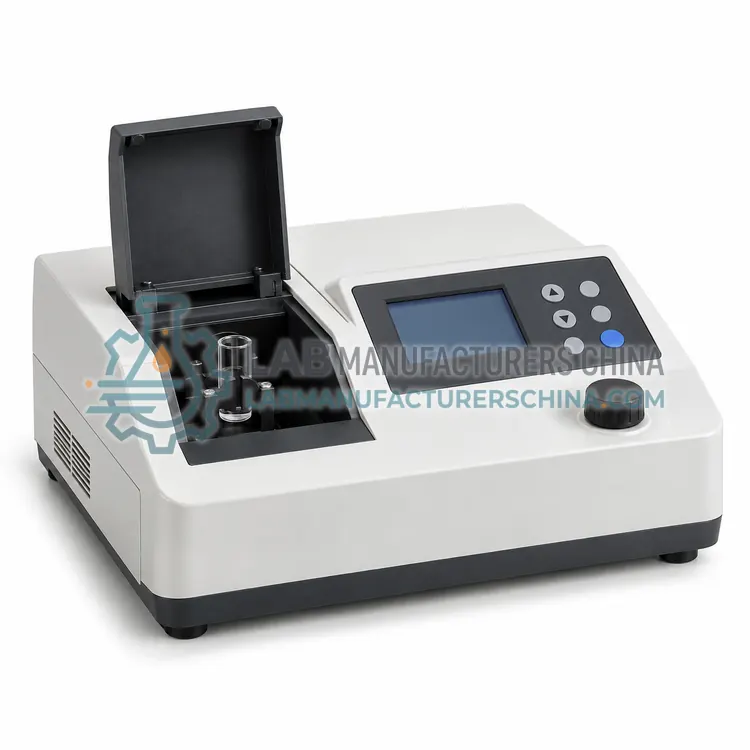
Benchtop Filter Photometer

台式滤光片光度计

  • PHO-0002
  • Photometers
  • CE (to be confirmed)
  • ISO 9001 manufacturing (to be confirmed)
Wavelength selection:
6–8 interference filters, e.g. 340, 405, 505, 546, 578, 620, 660 nm
Filter bandwidth:
5–10 nm (FWHM)
Photometric range:
0–3.0 A
Photometric accuracy:
±0.005 A at 1 A
Photometric linearity:
≤1 % to 2.0 A
Flow cell volume:
32 µL (10 mm path)

A benchtop filter photometer measures absorbance at fixed wavelengths set by interchangeable interference filters, typically 340–700 nm. It offers a simple, low-maintenance and reliable solution for dedicated colorimetric and enzymatic assays in teaching, clinical and industrial laboratories.

Request a quote
View details

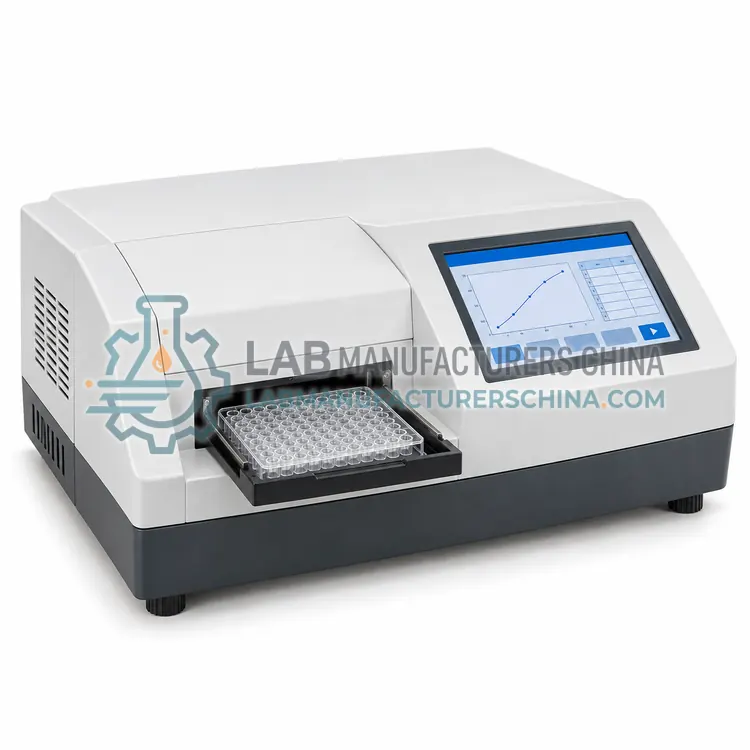
Microplate Absorbance Photometer

微孔板吸光度光度计

  • PHO-0003
  • Photometers
  • CE (to be confirmed)
  • ISO 9001 manufacturing (to be confirmed)
Plate formats:
96-well and 384-well (SBS standard)
Wavelength range:
340–750 nm (filter-based)
Filters supplied:
405, 450, 492, 620 nm (extendable to 8 filters)
Absorbance range:
0–4.0 A
Accuracy:
±1 % ±0.010 A at 0–3 A
Repeatability:
≤0.5 % ±0.005 A

A microplate absorbance photometer reads 96- or 384-well plates at filter-selected wavelengths from 340 to 750 nm, measuring each well in seconds. It is the standard detector for ELISA, protein and cell viability assays, and other plate-based colorimetric methods.

Request a quote
View details

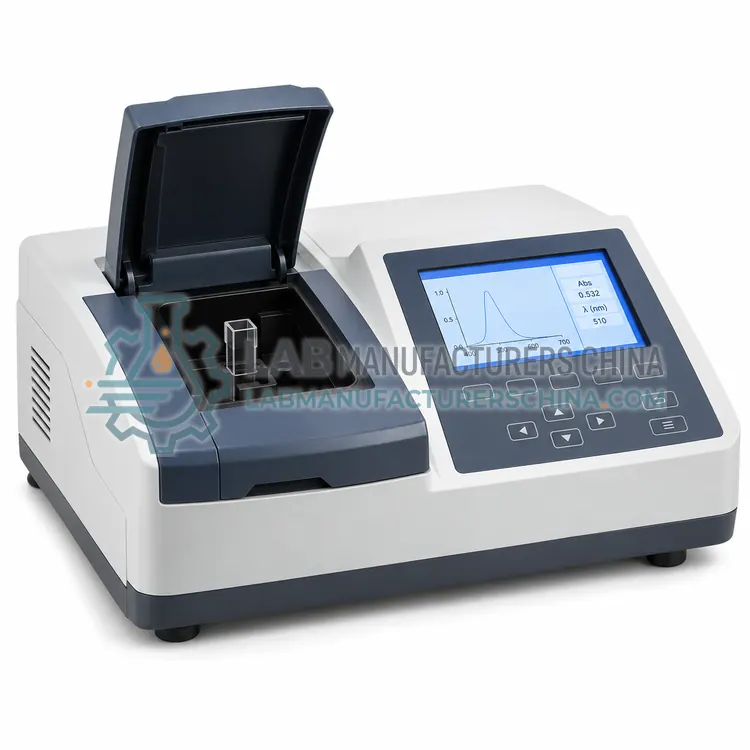
Multiparameter Photometer for Water Analysis

水质多参数光度计

  • PHO-0004
  • Photometers
  • CE (to be confirmed)
  • ISO 9001 manufacturing (to be confirmed)
Wavelengths:
420, 525, 575, 610, 690 nm (LED)
Number of methods:
≥90 preprogrammed, user methods extendable
Photometric range:
0–3.5 A
Photometric accuracy:
±0.005 A at 1 A
Wavelength accuracy:
±2 nm
Vial type:
16 mm round vial; 10, 20 and 50 mm cuvettes

A multiparameter photometer for water analysis performs colorimetric tests for parameters such as chlorine, ammonia, nitrate, phosphate, COD and heavy metals using preprogrammed methods and vial or tablet reagents. It is used by water utilities, environmental laboratories and industrial plants.

Request a quote
View details

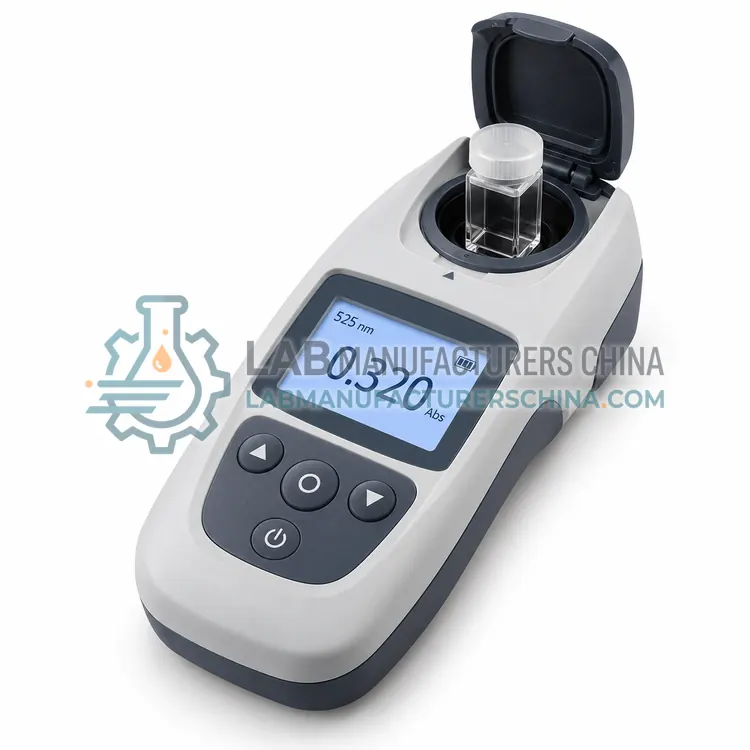
Handheld Portable Photometer

手持便携式光度计

  • PHO-0005
  • Photometers
  • CE (to be confirmed)
  • ISO 9001 manufacturing (to be confirmed)
Measurement principle:
LED absorbance photometry
Typical range (free chlorine):
0.00–5.00 mg/L
Resolution:
0.01 mg/L (low range)
Accuracy:
±3 % of reading ±0.03 mg/L
Wavelength:
525 nm (LED, ±2 nm)
Sample volume:
10 mL in 16 mm vial

A handheld portable photometer is a compact, battery-powered instrument with LED optics for single-parameter on-site tests such as free chlorine, pH by indicator or ammonia. It provides fast, low-training measurements outside the laboratory where a full spectrophotometer is impractical.

Request a quote
View details

Compare Photometers models

ModelRepeatabilityDisplayPowerPhotometric rangePhotometric accuracy
Flame PhotometerPHO-0001RSD ≤2 %LCD with concentration readoutAC 220 V, 50 Hz, ≤100 W (without compressor)——
Benchtop Filter PhotometerPHO-0002———0–3.0 A±0.005 A at 1 A
Microplate Absorbance PhotometerPHO-0003≤0.5 % ±0.005 A————
Multiparameter Photometer for Water AnalysisPHO-0004—Color LCD, 3.5–5 inchAC 100–240 V and rechargeable battery option0–3.5 A±0.005 A at 1 A
Handheld Portable PhotometerPHO-0005——2 × AAA alkaline cells——

Indicative values for this product class. Final specifications are confirmed on the quotation and in the calibration documents supplied with the instrument.

How do Photometers work?

A photometer consists of a light source, a wavelength-selecting element, a sample compartment and a detector. Unlike a spectrophotometer, wavelength selection is fixed, using interference filters or narrow-band LEDs, which makes the optical path simple, robust and inexpensive. In absorbance photometry, the detector measures the light transmitted through a colored solution, and concentration is found from a calibration curve using the Beer–Lambert relationship. In flame photometry, a nebulized sample is burned in a fuel and air flame, where sodium, potassium, lithium and calcium atoms emit characteristic light at 589, 766, 671 and 622 nm; a filter isolates the line and a photodetector measures intensity. Microplate photometers read 96- or 384-well plates in seconds by measuring absorbance at filter-selected wavelengths through each well from above.

Which Photometers variants are available?

  • Flame Photometer — A flame photometer measures the emission intensity of sodium, potassium, lithium, calcium and barium atoms in a gas flame using narrow-band filters.
  • Benchtop Filter Photometer — A benchtop filter photometer measures absorbance at fixed wavelengths set by interchangeable interference filters, typically 340–700 nm.
  • Microplate Absorbance Photometer — A microplate absorbance photometer reads 96- or 384-well plates at filter-selected wavelengths from 340 to 750 nm, measuring each well in seconds.
  • Multiparameter Photometer for Water Analysis — A multiparameter photometer for water analysis performs colorimetric tests for parameters such as chlorine, ammonia, nitrate, phosphate, COD and heavy metals using preprogrammed methods and vial or tablet reagents.
  • Handheld Portable Photometer — A handheld portable photometer is a compact, battery-powered instrument with LED optics for single-parameter on-site tests such as free chlorine, pH by indicator or ammonia.

How do I choose the right variant?

The first decision is the measurement principle: flame emission for alkali and alkaline-earth metals, absorbance for colorimetric assays, or plate-based absorbance for high throughput. Check that the filter set or LED wavelengths match your methods, since these cannot be changed freely afterward. Consider the analyte range and detection limit; for example, flame photometers for serum sodium and potassium need resolution of about 0.1 mmol/L. Sample format matters: cuvette, test vial or microplate. Consider reagent ecosystems and whether preprogrammed methods exist for your parameters. For regulated or clinical use, look at data handling, calibration storage and quality control features. Finally, evaluate fuel and gas supply for flame systems, and portability and ingress protection for field units.

Where are Photometers used?

Photometers are specified in serum sodium and potassium analysis, water quality colorimetric testing, soil and plant nutrient analysis, ELISA plate reading and industrial and process chemistry.

Which standards and certifications apply?

Work with Photometers is commonly governed by ISO 8655-related photometric checks, ISO 6060 (chemical oxygen demand), ISO 7150-1 (ammonium), GB/T 6682, JJG 1032 (flame photometer verification) and IEC 61010-1. Instrument certifications such as CE marking are confirmed per configuration and never assumed.

What are the key considerations before purchase?

Install flame photometers in ventilated areas with regulated LPG, propane or natural gas supply and compressed air, and fit leak detection. Use deionized water and clean glassware to avoid sodium contamination. Calibrate with at least three standards bracketing the expected range and run a check standard regularly. For absorbance photometers, keep filters and optics free of dust and condensation, and verify with neutral-density or solution standards on schedule. Follow local rules for gas cylinder storage and documented calibration intervals. Clinical users should check local regulations regarding analyzer quality control.

Frequently asked questions about Photometers

A photometer measures light at fixed wavelengths selected by filters or LEDs, while a spectrophotometer uses a monochromator to select any wavelength across a range. Photometers are simpler, cheaper and more rugged, but less flexible than spectrophotometers.

Need help specifying Photometers?

Request a quote