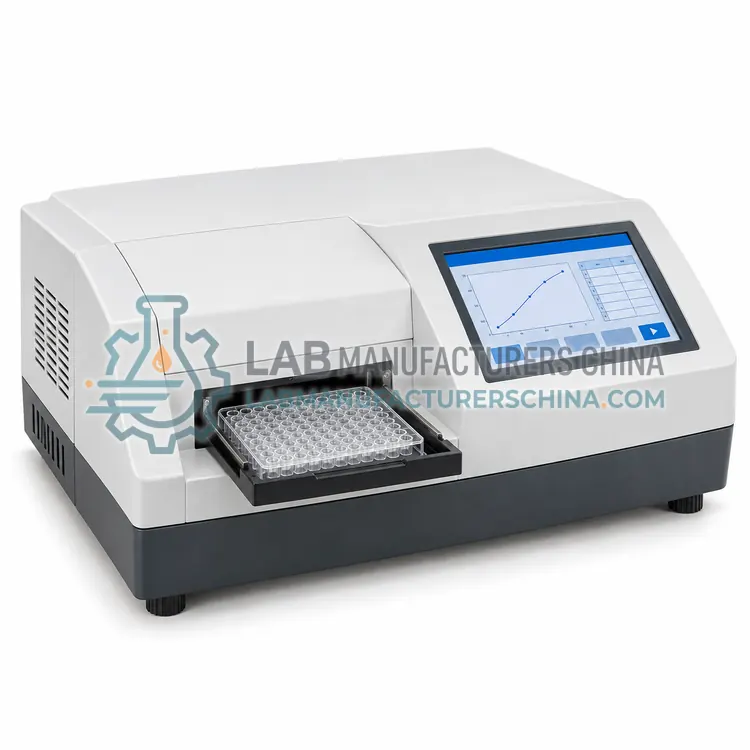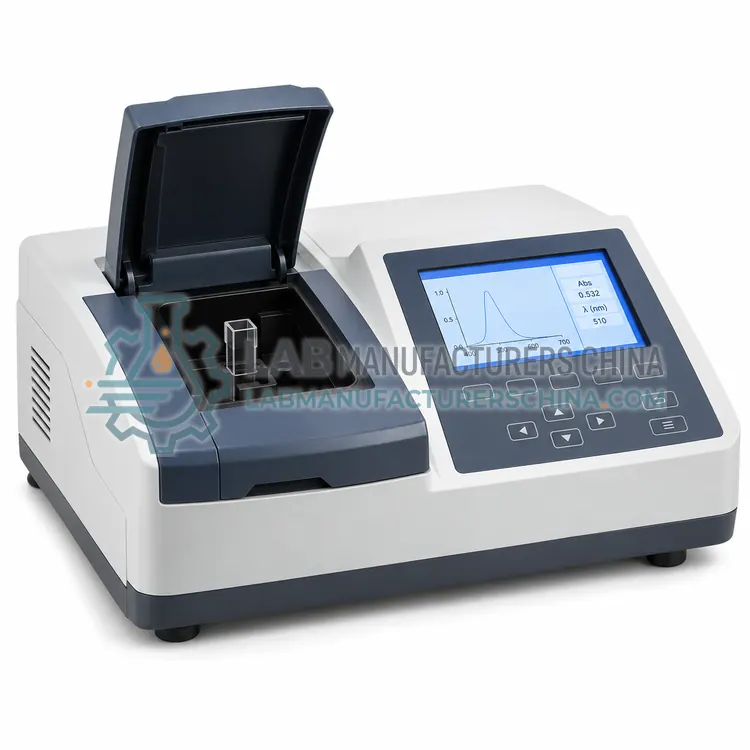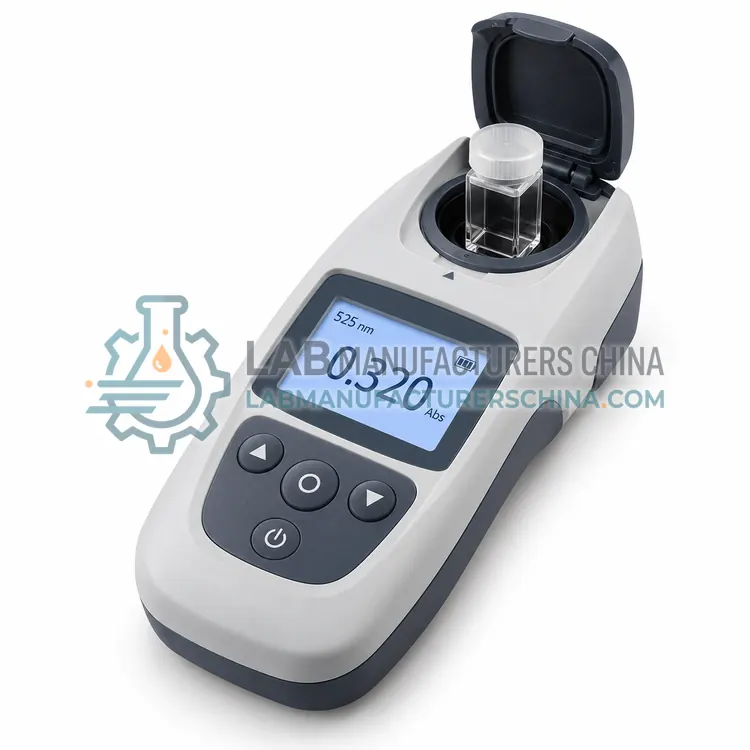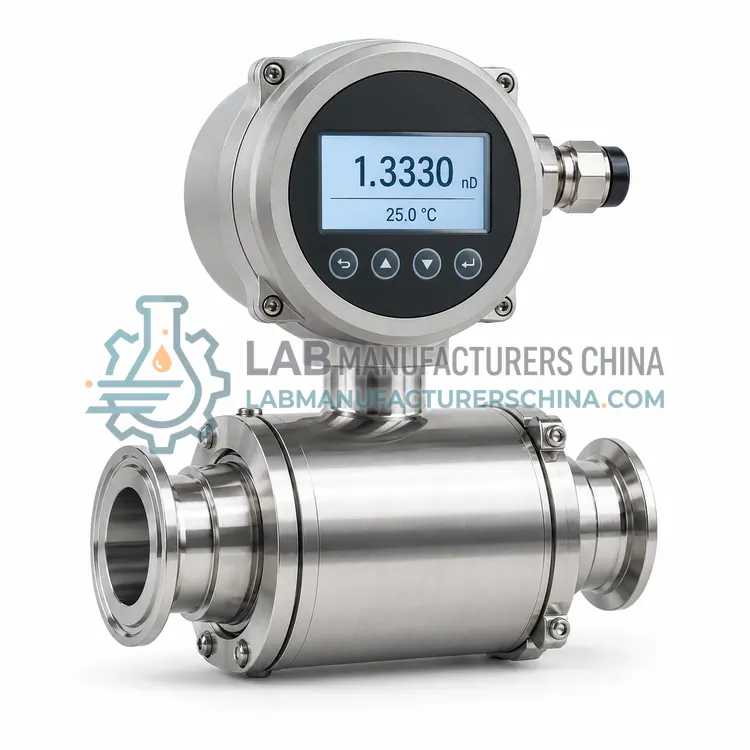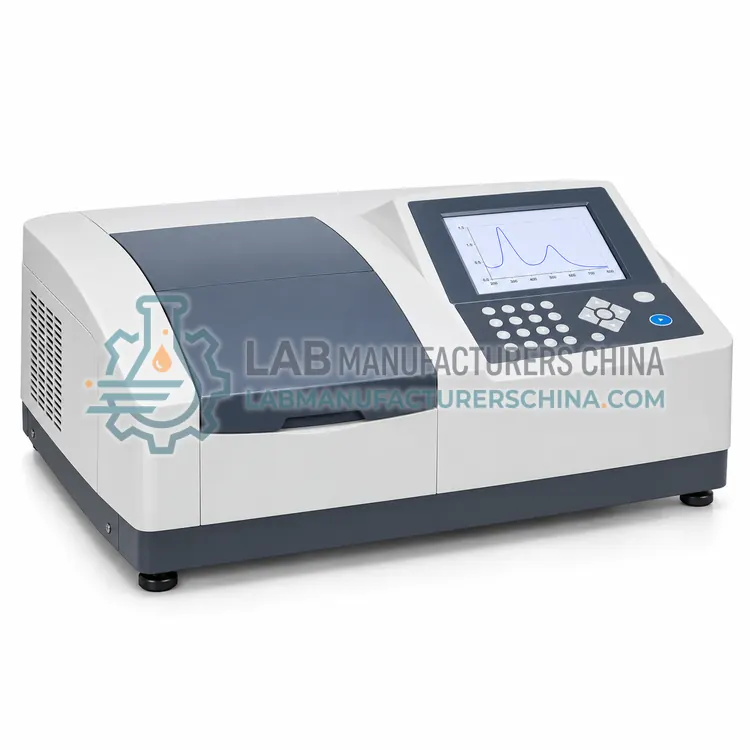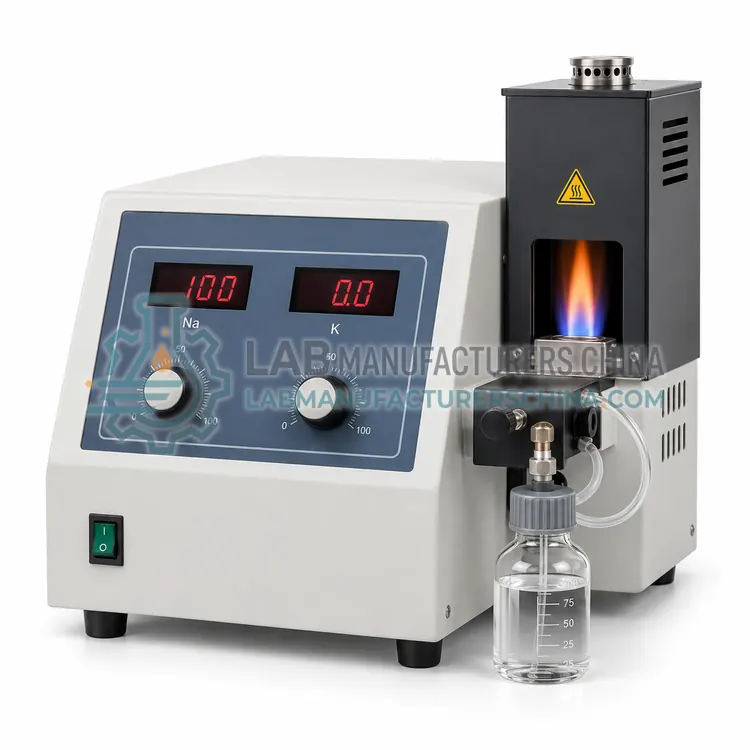
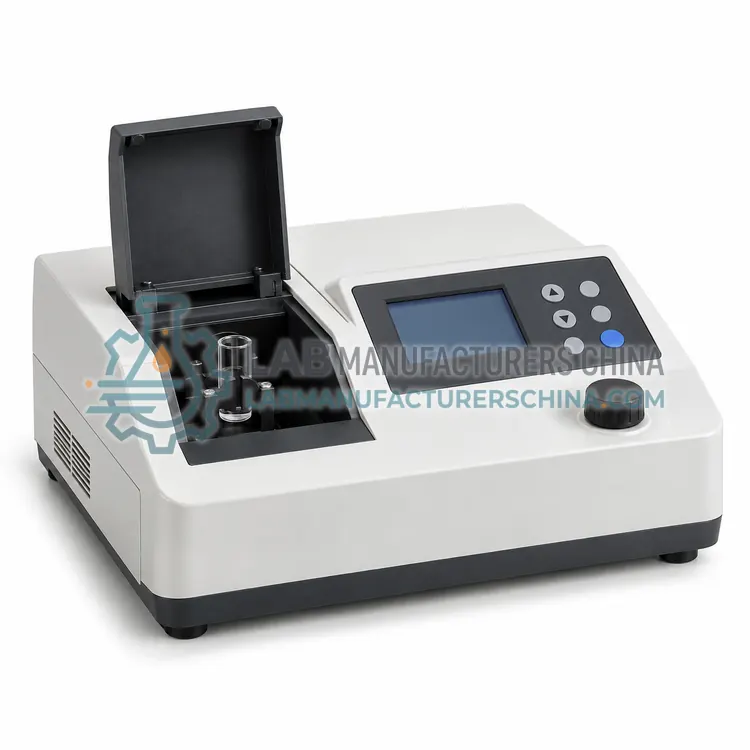
Benchtop Filter Photometer
台式滤光片光度计
- SKU PHO-0002
- Photometers
- CE (to be confirmed)
- ISO 9001 manufacturing (to be confirmed)
Price on request — FOB / CIF quoted per order
Prices depend on configuration, quantity and destination port.
Key specifications
| Wavelength selection | 6–8 interference filters, e.g. 340, 405, 505, 546, 578, 620, 660 nm |
|---|---|
| Filter bandwidth | 5–10 nm (FWHM) |
| Photometric range | 0–3.0 A |
| Photometric accuracy | ±0.005 A at 1 A |
| Photometric linearity | ≤1 % to 2.0 A |
| Flow cell volume | 32 µL (10 mm path) |
Request a quote Download brochure · to be provided
By Lab Manufacturers China Technical TeamLast reviewed Standards: ISO 8655-related photometric checks, ISO 6060 (chemical oxygen demand), ISO 7150-1 (ammonium)
What is the Benchtop Filter Photometer?
A benchtop filter photometer measures absorbance at fixed wavelengths set by interchangeable interference filters, typically 340–700 nm. It offers a simple, low-maintenance and reliable solution for dedicated colorimetric and enzymatic assays in teaching, clinical and industrial laboratories.
What is the Benchtop Filter Photometer?
A benchtop filter photometer measures absorbance at fixed wavelengths set by interchangeable interference filters, typically 340–700 nm. It offers a simple, low-maintenance and reliable solution for dedicated colorimetric and enzymatic assays in teaching, clinical and industrial laboratories.
Overview
In a filter photometer, light from a halogen lamp passes through a filter wheel holding four to eight interference filters, each typically with a bandwidth of 5–10 nm. The selected band traverses a flow cell or cuvette and a silicon photodiode records the transmitted light. Because no moving grating is needed, wavelength accuracy is stable and alignment is not a concern. The instrument typically offers absorbance, transmittance and concentration modes with factor or standard-based calculations, and kinetic modes for enzymes such as ALT, AST and creatinine at 340 nm or 405 nm. Semi-automatic biochemistry analyzers are a common example, including a thermostatted flow cell at 25, 30 or 37 °C and a peristaltic pump that aspirates small volumes of 200–500 µL. The design favors throughput and reproducibility for repeated assays, and filters can be added to cover new methods.
How does it work?
A photometer consists of a light source, a wavelength-selecting element, a sample compartment and a detector. Unlike a spectrophotometer, wavelength selection is fixed, using interference filters or narrow-band LEDs, which makes the optical path simple, robust and inexpensive. In absorbance photometry, the detector measures the light transmitted through a colored solution, and concentration is found from a calibration curve using the Beer–Lambert relationship. In flame photometry, a nebulized sample is burned in a fuel and air flame, where sodium, potassium, lithium and calcium atoms emit characteristic light at 589, 766, 671 and 622 nm; a filter isolates the line and a photodetector measures intensity. Microplate photometers read 96- or 384-well plates in seconds by measuring absorbance at filter-selected wavelengths through each well from above.
What are the key features?
- Filter wheel with 6 to 8 interference filters selects fixed measurement wavelengths.
- Thermostatted flow cell at 25, 30 or 37 °C supports enzyme kinetics.
- Peristaltic pump aspirates 200–500 µL samples directly into the flow cell.
- Programmable methods store factors, blanks and calibration curves.
- Thermal printer or USB output supports result reporting.
- No moving grating reduces maintenance and improves wavelength stability.
What are the technical specifications?
A typical benchtop filter photometer configuration offers wavelength selection of 6–8 interference filters, e.g. 340, 405, 505, 546, 578, 620, 660 nm, filter bandwidth of 5–10 nm (FWHM), photometric range of 0–3.0 A, photometric accuracy of ±0.005 A at 1 A, photometric linearity of ≤1 % to 2.0 A and flow cell volume of 32 µL (10 mm path). Values are indicative of the product class; the exact figures for each configuration are confirmed on the quotation and the calibration documents supplied with the instrument.
Which applications is it used for?
The Benchtop Filter Photometer is used in clinical enzyme and substrate assays, teaching biochemistry laboratories, veterinary and small-clinic testing and industrial colorimetric QC. Across the wider Photometers class, laboratories also deploy it for serum sodium and potassium analysis, water quality colorimetric testing and soil and plant nutrient analysis.
Which standards and certifications apply?
Relevant standards and methods include ISO 8655-related photometric checks, ISO 6060 (chemical oxygen demand), ISO 7150-1 (ammonium), GB/T 6682, JJG 1032 (flame photometer verification) and IEC 61010-1. Certification candidates for this model are CE and ISO 9001 manufacturing; each is to be confirmed for the specific configuration before shipment, and certificates are supplied only where they have been issued.
Install flame photometers in ventilated areas with regulated LPG, propane or natural gas supply and compressed air, and fit leak detection. Use deionized water and clean glassware to avoid sodium contamination. Calibrate with at least three standards bracketing the expected range and run a check standard regularly. For absorbance photometers, keep filters and optics free of dust and condensation, and verify with neutral-density or solution standards on schedule. Follow local rules for gas cylinder storage and documented calibration intervals. Clinical users should check local regulations regarding analyzer quality control.
How do I select the right Benchtop Filter Photometer?
Choose a filter photometer for a defined set of assays where fixed wavelengths are sufficient and reliability is prioritized. A scanning spectrophotometer is better for method development. In an RFQ, list the required wavelengths, temperature settings, minimum sample volume, number of programmable methods and whether a printer or LIS connection is needed.
How does it compare with other Photometers variants?
The first decision is the measurement principle: flame emission for alkali and alkaline-earth metals, absorbance for colorimetric assays, or plate-based absorbance for high throughput. Check that the filter set or LED wavelengths match your methods, since these cannot be changed freely afterward. Consider the analyte range and detection limit; for example, flame photometers for serum sodium and potassium need resolution of about 0.1 mmol/L. Sample format matters: cuvette, test vial or microplate. Consider reagent ecosystems and whether preprogrammed methods exist for your parameters. For regulated or clinical use, look at data handling, calibration storage and quality control features. Finally, evaluate fuel and gas supply for flame systems, and portability and ingress protection for field units.
Full specifications
| Wavelength selection | 6–8 interference filters, e.g. 340, 405, 505, 546, 578, 620, 660 nm |
|---|---|
| Filter bandwidth | 5–10 nm (FWHM) |
| Photometric range | 0–3.0 A |
| Photometric accuracy | ±0.005 A at 1 A |
| Photometric linearity | ≤1 % to 2.0 A |
| Flow cell volume | 32 µL (10 mm path) |
| Sample volume | 200–500 µL |
| Temperature control | 25, 30, 37 °C (±0.2 °C) |
| Light source | Halogen lamp, 6 V/10 W |
| Detector | Silicon photodiode |
| Interface | USB, RS-232, thermal printer |
Indicative values for this product class. Final specifications are confirmed on the quotation and in the calibration documents supplied with the instrument.
Applications
- Clinical enzyme and substrate assays
- Teaching biochemistry laboratories
- Veterinary and small-clinic testing
- Industrial colorimetric QC
Key features
- Filter wheel with 6 to 8 interference filters selects fixed measurement wavelengths.
- Thermostatted flow cell at 25, 30 or 37 °C supports enzyme kinetics.
- Peristaltic pump aspirates 200–500 µL samples directly into the flow cell.
- Programmable methods store factors, blanks and calibration curves.
- Thermal printer or USB output supports result reporting.
- No moving grating reduces maintenance and improves wavelength stability.
Frequently asked questions about Benchtop Filter Photometer
It is limited by the filters installed, typically 6 to 8 wavelengths in the 340–700 nm range. Additional filters can often be ordered for new methods, but the wavelength cannot be changed continuously as in a spectrophotometer.
Enzyme reaction rates depend strongly on temperature, so kinetic assays require a stable 25, 30 or 37 °C. A thermostatted cell holds temperature within ±0.2 °C and gives reproducible reaction rates between runs and laboratories.
Carryover is limited by rinsing the flow cell with distilled water or a wash solution between samples and by using small tubing volumes. Specifications often quote carryover below 1 %, which should be verified with a high-low sample sequence.
A photometer measures light at fixed wavelengths selected by filters or LEDs, while a spectrophotometer uses a monochromator to select any wavelength across a range. Photometers are simpler, cheaper and more rugged, but less flexible than spectrophotometers.
A flame photometer measures the intensity of light emitted by excited metal atoms in a flame, mainly sodium, potassium, lithium, calcium and barium. Emission intensity is proportional to concentration over a limited range and is read against calibration standards.
Interference filters transmit a narrow band of wavelengths, typically 2 to 10 nm wide, around the target wavelength. They give simple, stable wavelength selection without moving parts, which keeps photometers robust and low in cost.
Related models