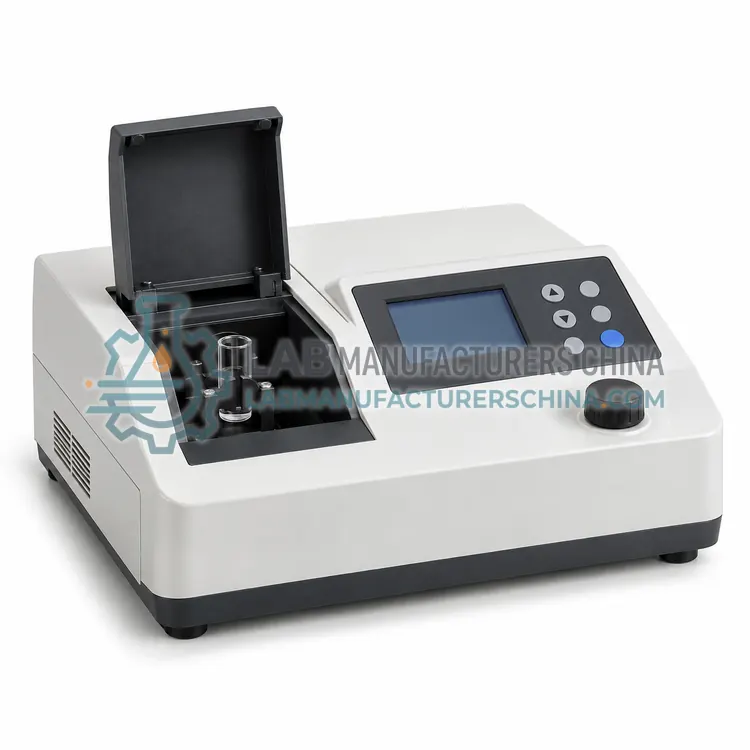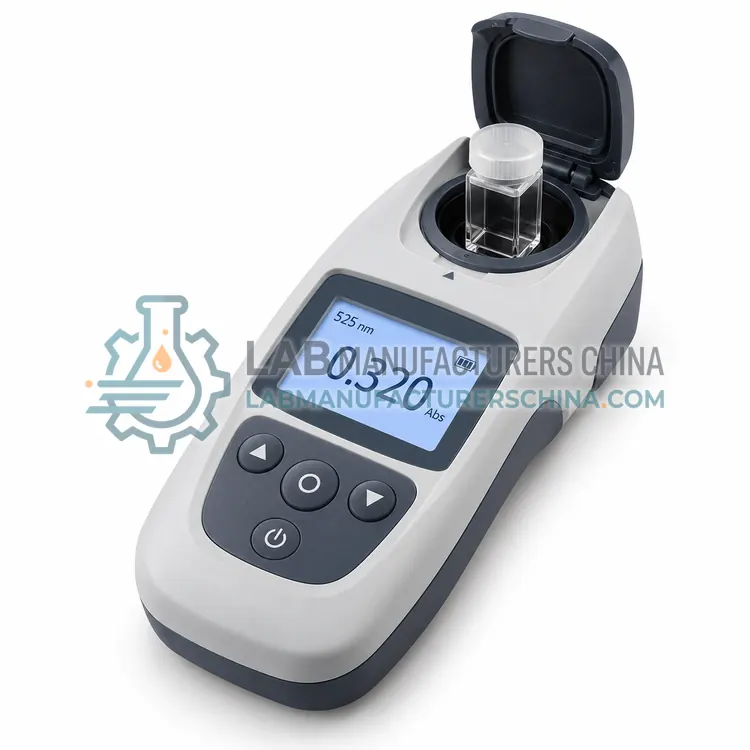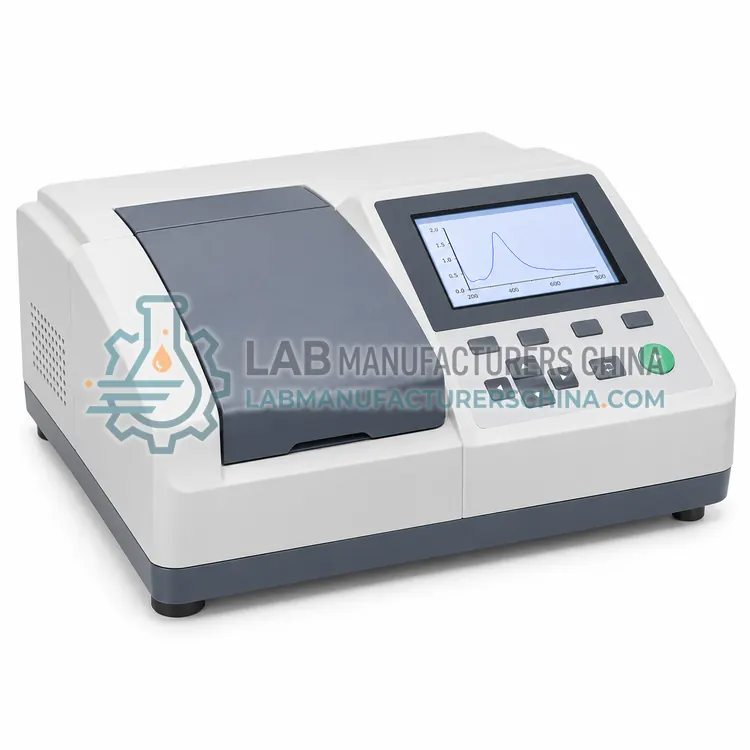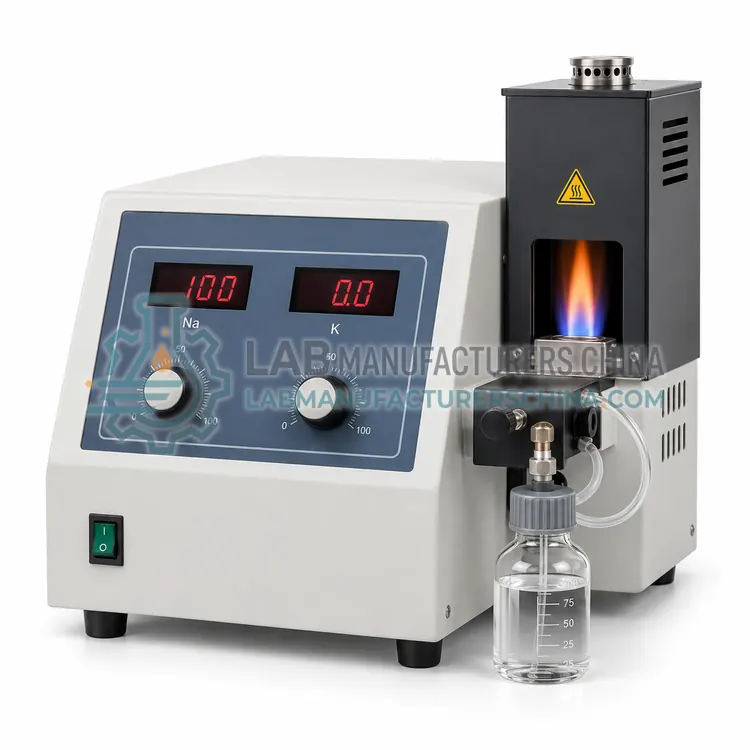
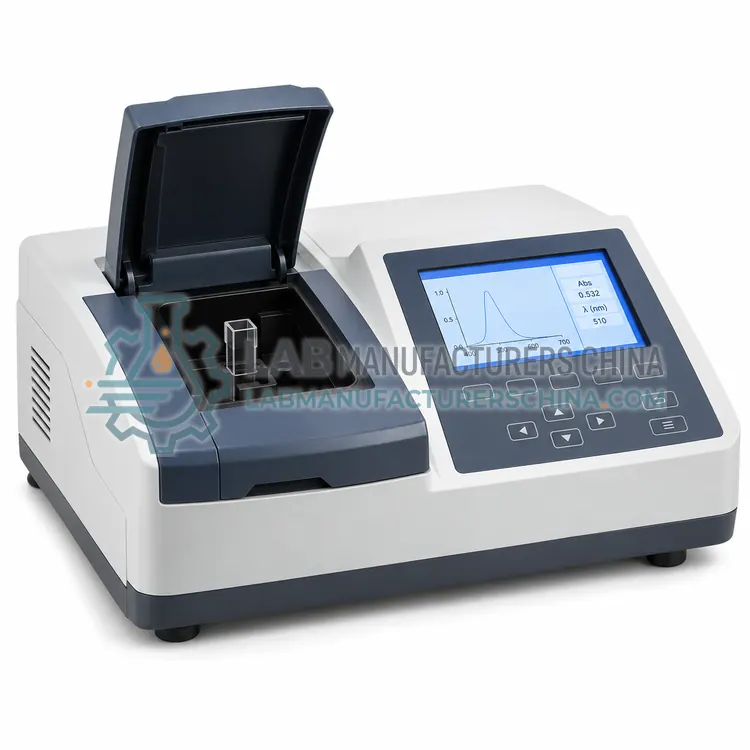
Multiparameter Photometer for Water Analysis
水质多参数光度计
- SKU PHO-0004
- Photometers
- CE (to be confirmed)
- ISO 9001 manufacturing (to be confirmed)
Price on request — FOB / CIF quoted per order
Prices depend on configuration, quantity and destination port.
Key specifications
| Wavelengths | 420, 525, 575, 610, 690 nm (LED) |
|---|---|
| Number of methods | ≥90 preprogrammed, user methods extendable |
| Photometric range | 0–3.5 A |
| Photometric accuracy | ±0.005 A at 1 A |
| Wavelength accuracy | ±2 nm |
| Vial type | 16 mm round vial; 10, 20 and 50 mm cuvettes |
Request a quote Download brochure · to be provided
By Lab Manufacturers China Technical TeamLast reviewed Standards: ISO 8655-related photometric checks, ISO 6060 (chemical oxygen demand), ISO 7150-1 (ammonium)
What is the Multiparameter Photometer for Water Analysis?
A multiparameter photometer for water analysis performs colorimetric tests for parameters such as chlorine, ammonia, nitrate, phosphate, COD and heavy metals using preprogrammed methods and vial or tablet reagents. It is used by water utilities, environmental laboratories and industrial plants.
What is the Multiparameter Photometer for Water Analysis?
A multiparameter photometer for water analysis performs colorimetric tests for parameters such as chlorine, ammonia, nitrate, phosphate, COD and heavy metals using preprogrammed methods and vial or tablet reagents. It is used by water utilities, environmental laboratories and industrial plants.
Overview
A multiparameter water photometer uses LEDs or filtered lamp optics at wavelengths such as 420, 525, 575, 610 and 690 nm to read reaction products formed by standard reagents. The instrument stores 60 to 150 methods covering free and total chlorine, ammonia-nitrogen, nitrite, nitrate, phosphate, COD, total iron, copper, manganese, silica and fluoride, and selects wavelength and calibration automatically when the operator chooses a method number. Reagents are supplied as liquid vials, powder pillows or tablets, and digestion reactors at 150 °C are used for COD and total nitrogen or phosphorus. Results are displayed in mg/L with range and detection limit information, and data can be logged with date, operator and sample ID. The analytical principles follow established methods, such as DPD for chlorine, salicylate for ammonia and dichromate for COD.
How does it work?
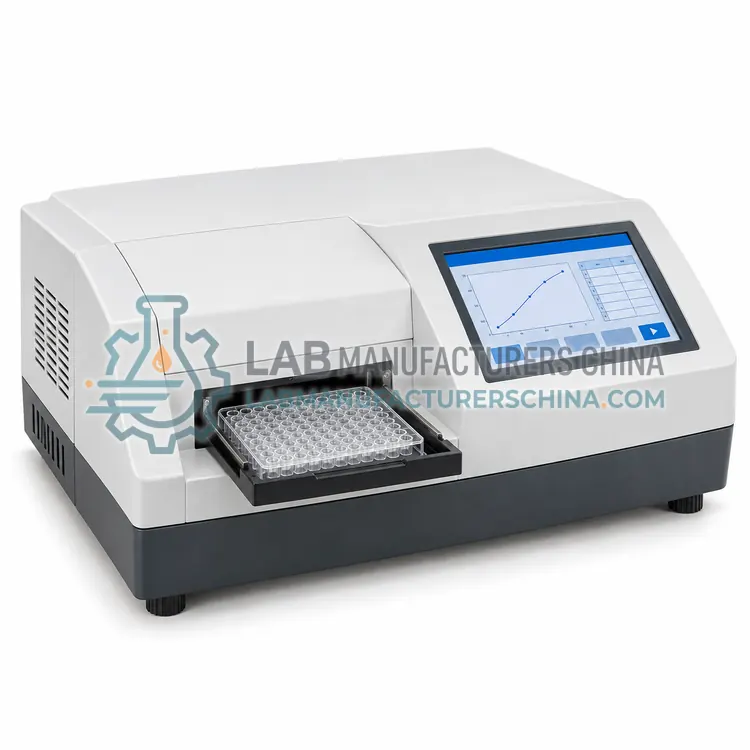
A photometer consists of a light source, a wavelength-selecting element, a sample compartment and a detector. Unlike a spectrophotometer, wavelength selection is fixed, using interference filters or narrow-band LEDs, which makes the optical path simple, robust and inexpensive. In absorbance photometry, the detector measures the light transmitted through a colored solution, and concentration is found from a calibration curve using the Beer–Lambert relationship. In flame photometry, a nebulized sample is burned in a fuel and air flame, where sodium, potassium, lithium and calcium atoms emit characteristic light at 589, 766, 671 and 622 nm; a filter isolates the line and a photodetector measures intensity. Microplate photometers read 96- or 384-well plates in seconds by measuring absorbance at filter-selected wavelengths through each well from above.
What are the key features?
- Stores 60 to 150 preprogrammed methods for common water and wastewater parameters.
- LED light sources at five to seven wavelengths provide stable, long-life illumination.
- Integrated 150 °C digestion reactor supports COD, total nitrogen and phosphorus.
- Barcode or method-number selection reduces operator error.
- Data logging stores over 1000 results with date, time and sample ID.
- Zero calibration and user calibration functions allow adaptation to local reagents.
What are the technical specifications?
A typical multiparameter photometer for water analysis configuration offers wavelengths of 420, 525, 575, 610, 690 nm (LED), number of methods of ≥90 preprogrammed, user methods extendable, photometric range of 0–3.5 A, photometric accuracy of ±0.005 A at 1 A, wavelength accuracy of ±2 nm and vial type of 16 mm round vial; 10, 20 and 50 mm cuvettes. Values are indicative of the product class; the exact figures for each configuration are confirmed on the quotation and the calibration documents supplied with the instrument.
Which applications is it used for?
The Multiparameter Photometer for Water Analysis is used in drinking water quality monitoring, wastewater treatment plant control, boiler and cooling water management and aquaculture and swimming pool testing. Across the wider Photometers class, laboratories also deploy it for serum sodium and potassium analysis, water quality colorimetric testing and soil and plant nutrient analysis.
Which standards and certifications apply?
Relevant standards and methods include ISO 8655-related photometric checks, ISO 6060 (chemical oxygen demand), ISO 7150-1 (ammonium), GB/T 6682, JJG 1032 (flame photometer verification) and IEC 61010-1. Certification candidates for this model are CE and ISO 9001 manufacturing; each is to be confirmed for the specific configuration before shipment, and certificates are supplied only where they have been issued.
Install flame photometers in ventilated areas with regulated LPG, propane or natural gas supply and compressed air, and fit leak detection. Use deionized water and clean glassware to avoid sodium contamination. Calibrate with at least three standards bracketing the expected range and run a check standard regularly. For absorbance photometers, keep filters and optics free of dust and condensation, and verify with neutral-density or solution standards on schedule. Follow local rules for gas cylinder storage and documented calibration intervals. Clinical users should check local regulations regarding analyzer quality control.
How do I select the right Multiparameter Photometer for Water Analysis?
Select a multiparameter photometer if a laboratory or plant must run many common water parameters with minimal training. Choose a full spectrophotometer for flexible methods. In an RFQ, list all parameters and ranges, digestion needs, reagent format, data export and any regulatory method that requires a specific reagent or reporting format.
How does it compare with other Photometers variants?
The first decision is the measurement principle: flame emission for alkali and alkaline-earth metals, absorbance for colorimetric assays, or plate-based absorbance for high throughput. Check that the filter set or LED wavelengths match your methods, since these cannot be changed freely afterward. Consider the analyte range and detection limit; for example, flame photometers for serum sodium and potassium need resolution of about 0.1 mmol/L. Sample format matters: cuvette, test vial or microplate. Consider reagent ecosystems and whether preprogrammed methods exist for your parameters. For regulated or clinical use, look at data handling, calibration storage and quality control features. Finally, evaluate fuel and gas supply for flame systems, and portability and ingress protection for field units.
Full specifications
| Wavelengths | 420, 525, 575, 610, 690 nm (LED) |
|---|---|
| Number of methods | ≥90 preprogrammed, user methods extendable |
| Photometric range | 0–3.5 A |
| Photometric accuracy | ±0.005 A at 1 A |
| Wavelength accuracy | ±2 nm |
| Vial type | 16 mm round vial; 10, 20 and 50 mm cuvettes |
| Digestion reactor | 150 °C, 25-vial capacity |
| Data storage | ≥1000 results, USB export |
| Display | Color LCD, 3.5–5 inch |
| Operating temperature | 5–40 °C |
| Power | AC 100–240 V and rechargeable battery option |
Indicative values for this product class. Final specifications are confirmed on the quotation and in the calibration documents supplied with the instrument.
Applications
- Drinking water quality monitoring
- Wastewater treatment plant control
- Boiler and cooling water management
- Aquaculture and swimming pool testing
Key features
- Stores 60 to 150 preprogrammed methods for common water and wastewater parameters.
- LED light sources at five to seven wavelengths provide stable, long-life illumination.
- Integrated 150 °C digestion reactor supports COD, total nitrogen and phosphorus.
- Barcode or method-number selection reduces operator error.
- Data logging stores over 1000 results with date, time and sample ID.
- Zero calibration and user calibration functions allow adaptation to local reagents.
Frequently asked questions about Multiparameter Photometer for Water Analysis
DPD (N,N-diethyl-p-phenylenediamine) reacts with free chlorine to form a magenta compound measured near 515–530 nm. Adding iodide allows total chlorine determination. It is a widely used colorimetric method for drinking and pool water.
Photometric COD with a closed-reflux digestion and dichromate measurement is widely used and correlates well with titration when the method range and interferences such as chloride are controlled. Regulatory acceptance depends on the local standard method.
A reagent blank should be prepared with deionized water and the same reagents, then used to zero the instrument or be subtracted in the calculation. Fresh blanks are needed for each reagent lot because some reagents carry a small background absorbance.
A photometer measures light at fixed wavelengths selected by filters or LEDs, while a spectrophotometer uses a monochromator to select any wavelength across a range. Photometers are simpler, cheaper and more rugged, but less flexible than spectrophotometers.
A flame photometer measures the intensity of light emitted by excited metal atoms in a flame, mainly sodium, potassium, lithium, calcium and barium. Emission intensity is proportional to concentration over a limited range and is read against calibration standards.
Interference filters transmit a narrow band of wavelengths, typically 2 to 10 nm wide, around the target wavelength. They give simple, stable wavelength selection without moving parts, which keeps photometers robust and low in cost.
Related models