How do Analytical Analyzers work?
Analytical analyzers combine a sample handling stage, a selective sensor or measurement principle and a data system that converts the raw signal to a reported value. Examples include thermogravimetric drying with a balance for moisture, coulometric or volumetric titration for water, catalytic oxidation with infrared detection for organic carbon, light scattering for particle size and ion-selective electrodes for electrochemical parameters. Each design is optimized for one analyte class and sample matrix, which improves speed, repeatability and ease of use over general-purpose instruments. Calibration against certified reference materials links the output to SI units. Automation such as autosamplers, dosing units and validated software methods reduces operator variation. Results are stored with audit trails so that measurements can be traced to instrument, method and operator during regulatory inspection.
Which Analytical Analyzers variants are available?
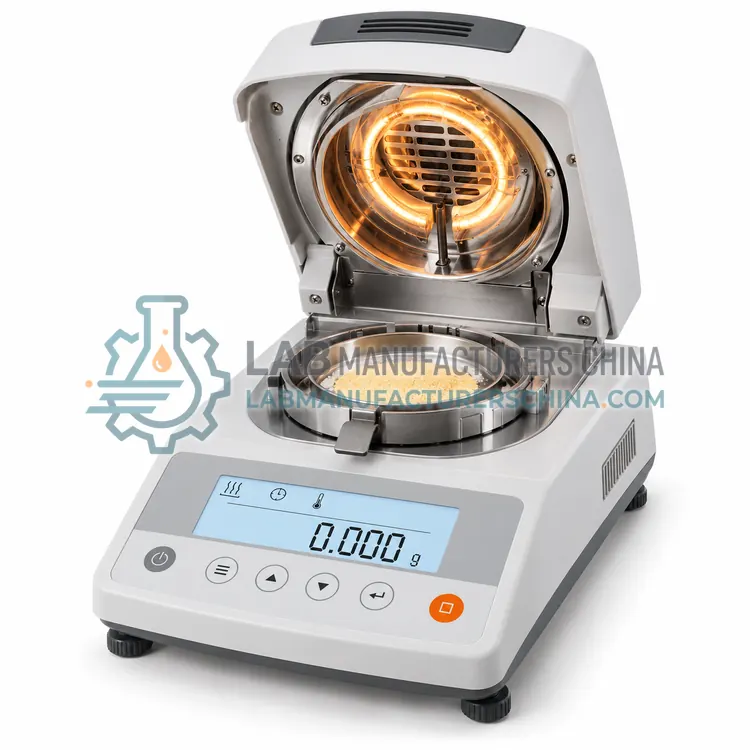
- Halogen Moisture Analyzer — A halogen moisture analyzer combines a precision balance with a halogen heating lamp to dry a sample and calculate moisture content from weight loss.
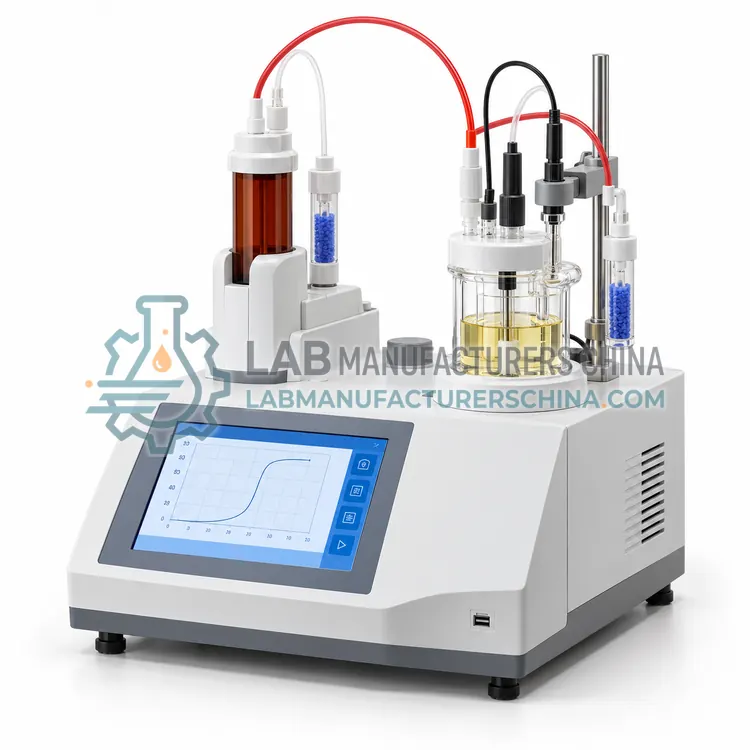
- Automatic Karl Fischer Titrator — An automatic Karl Fischer titrator determines water content specifically by reaction with iodine and sulfur dioxide, using volumetric or coulometric titration.
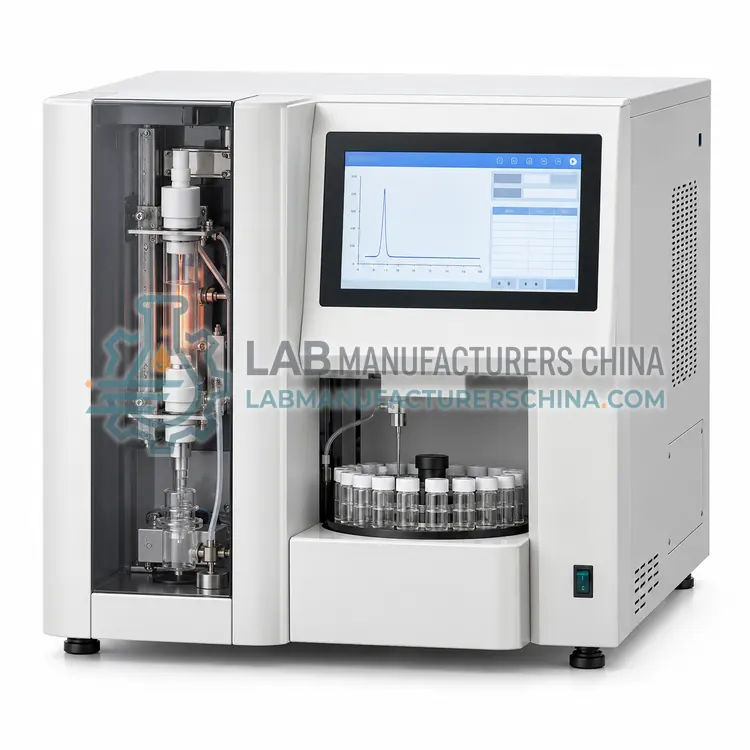
- Laboratory TOC Analyzer — A laboratory TOC analyzer measures total organic carbon by oxidizing carbon compounds to CO2 and detecting it by non-dispersive infrared.
- Laser Diffraction Particle Size Analyzer — A laser diffraction particle size analyzer measures particle size distributions from about 0.01 to 3500 µm by detecting the angular pattern of scattered laser light.
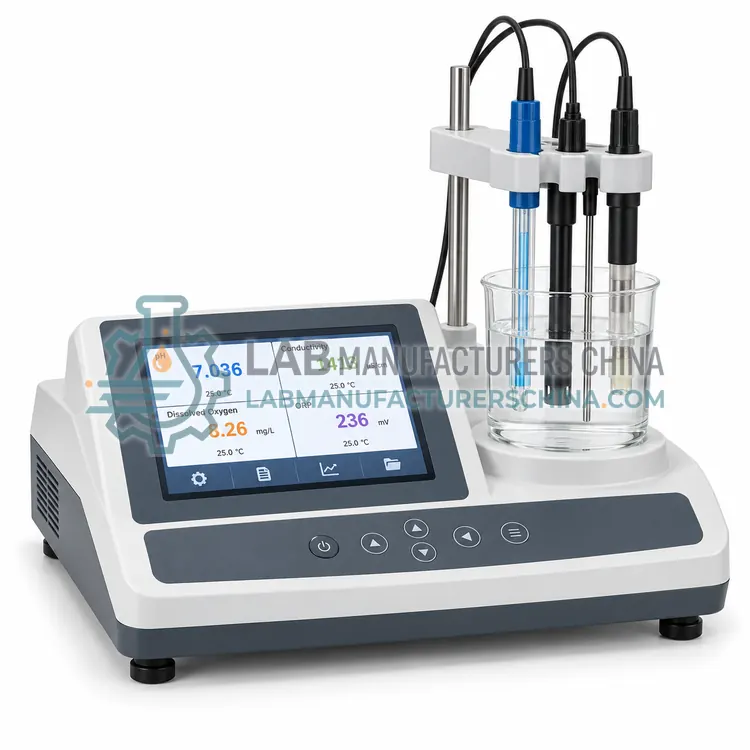
- Benchtop Multiparameter Electrochemical Analyzer — A benchtop multiparameter electrochemical analyzer measures pH, conductivity, dissolved oxygen, ORP and ion concentration with interchangeable electrodes.
How do I choose the right variant?
Start from the measurand and the sample matrix. Determine the required concentration range, accuracy, sample throughput and regulatory method, then select the analyzer type that natively meets them. For water in solids and liquids at ppm levels, a Karl Fischer titrator is the reference, while a halogen moisture analyzer suits fast loss-on-drying checks above 0.1%. TOC analyzers should be matched to the expected range and the presence of particulates or salts. Laser diffraction covers 0.01 to 3500 µm for dry or wet dispersions. Benchtop multiparameter analyzers suit labs measuring pH, conductivity and dissolved oxygen together. Also consider sample preparation needs, consumables, software compliance, automation level and local service support.
Where are Analytical Analyzers used?
Analytical Analyzers are specified in pharmaceutical and API quality control, food and beverage composition testing, chemical and polymer characterization, water and environmental monitoring, battery and materials research and cosmetics and personal care QC.
Which standards and certifications apply?
Work with Analytical Analyzers is commonly governed by USP <921>, USP <643>, Ph. Eur. 2.5.12, ISO 760, ISO 13320, ASTM E203, ASTM D7573 and GB/T 6283. Instrument certifications such as CE marking are confirmed per configuration and never assumed.
What are the key considerations before purchase?
Install analyzers on stable benches with controlled temperature and humidity, away from drafts and vibration. Follow manufacturer requirements for gases, reagents, waste handling and ventilation. Calibrate and verify routinely using certified reference materials relevant to the matrix, and schedule preventive maintenance for consumables such as electrodes, lamps, catalysts and dispersion units. Validate methods for accuracy, repeatability and linearity before release testing, and record them under a quality system such as ISO 17025 or GMP. Use software with user levels, audit trail and electronic signatures where regulated. Provide training for sample preparation, because sampling error is usually the largest contributor to measurement uncertainty.