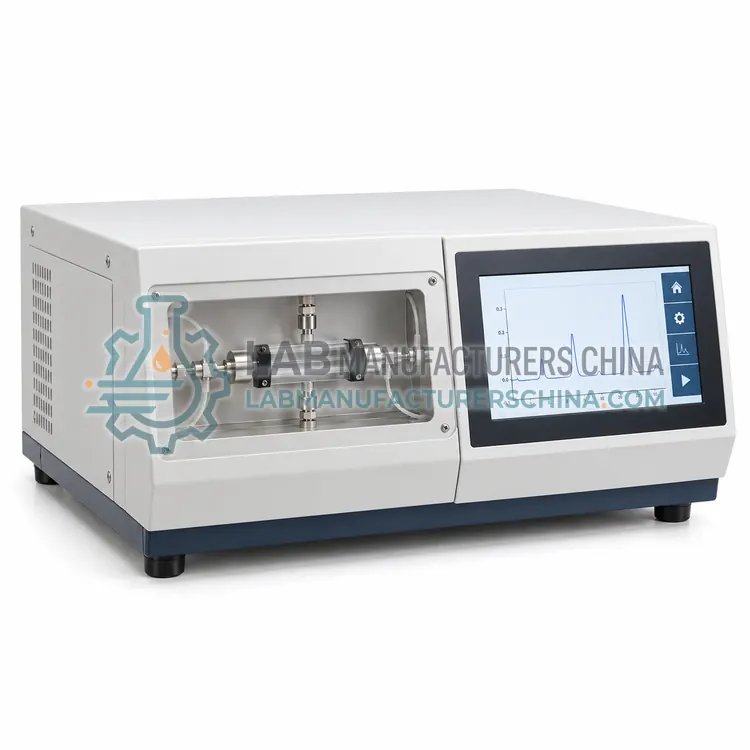
How do Polarimeters work?
A polarimeter passes monochromatic light, usually from a sodium D line source at 589.3 nm or an LED with a filter, through a polarizer, a sample tube and an analyzer. An optically active sample rotates the plane of polarization by an angle proportional to path length, concentration and specific rotation, following Biot's law. Manual instruments rely on the operator matching a split field visually, while automatic instruments use a Faraday modulator or a rotating analyzer with a photodetector to find the null position. Temperature strongly affects rotation, so many models include a thermostatted sample chamber, often Peltier controlled to 20.0 °C or 25.0 °C. Results are reported as optical rotation in degrees, specific rotation, concentration, or sugar scale such as °Z or ISS. Some models add multiple wavelengths to allow measurement of optical rotatory dispersion.
Which Polarimeters variants are available?
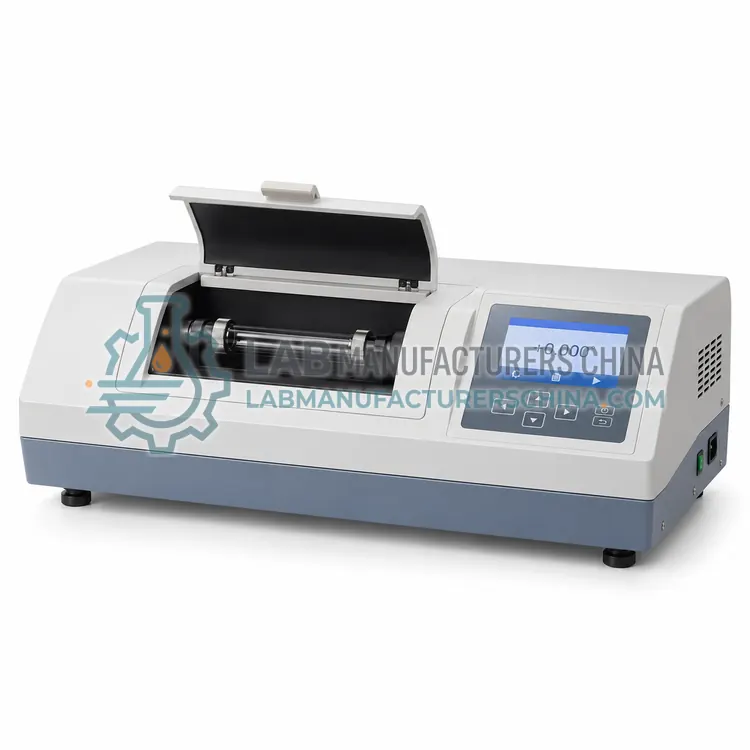
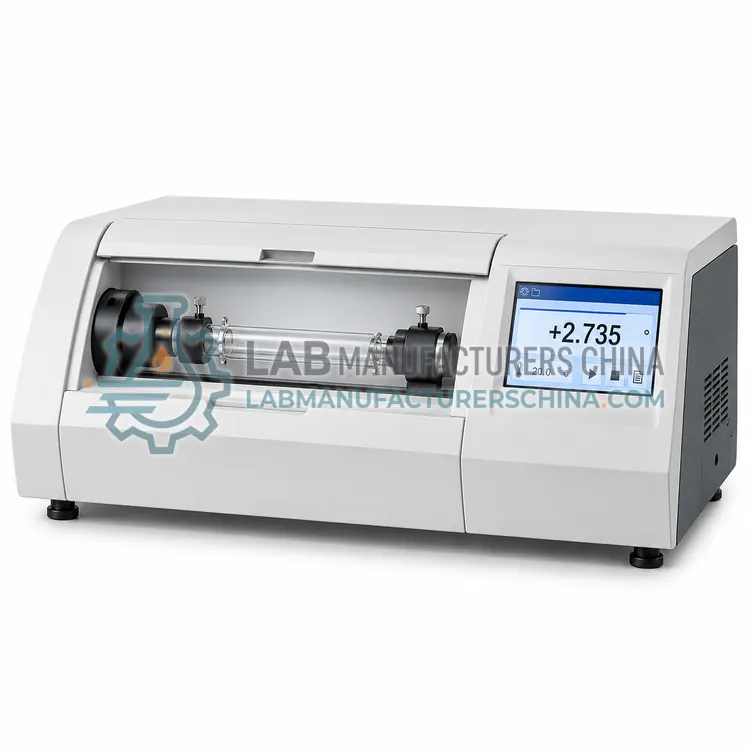
- Automatic Digital Polarimeter — An automatic digital polarimeter finds the optical null electronically and displays rotation, specific rotation or concentration without visual matching.
- Peltier-Controlled Automatic Polarimeter — A Peltier-controlled automatic polarimeter combines high-resolution optical rotation measurement with a thermostatted sample chamber held within ±0.1 °C.
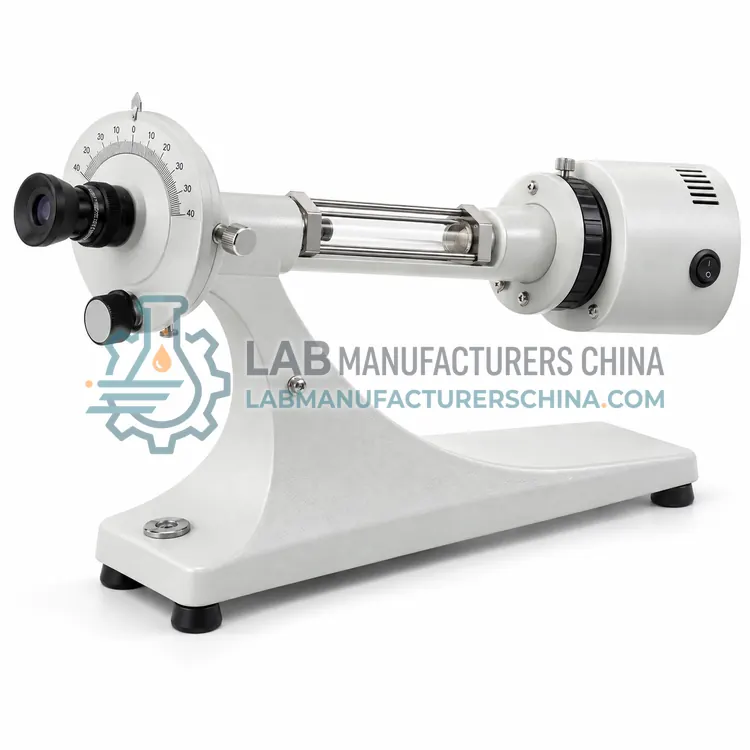
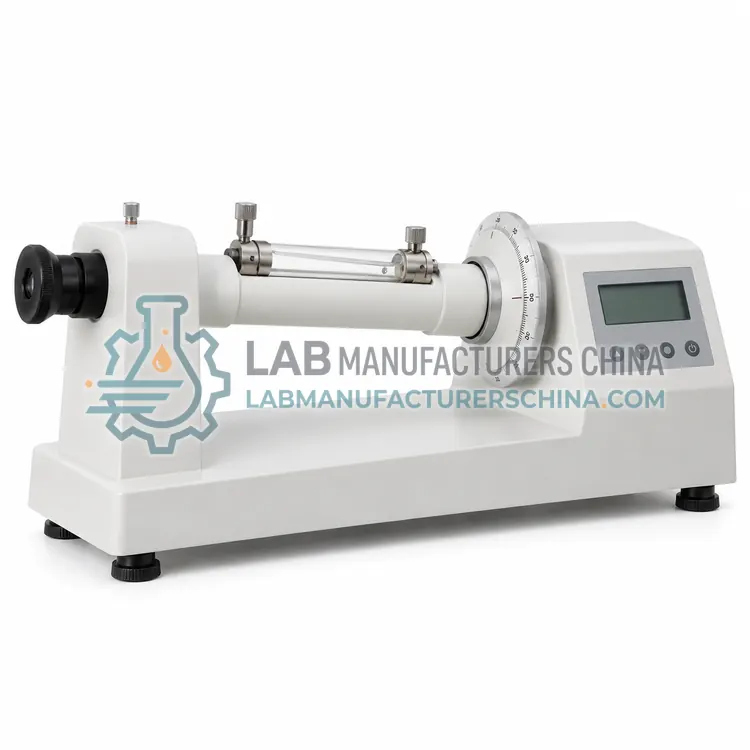
- Manual Visual Polarimeter — A manual visual polarimeter requires the operator to match the brightness of a split field through an eyepiece and read the angle on a circular scale with a vernier.
- Saccharimeter for Sugar Analysis — A saccharimeter is a polarimeter with an ICUMSA-traceable sugar scale in °Z or °S, often operating at 589 nm or 546 nm with quartz wedge or digital compensation.
- Flow-Through Polarimeter for Online and HPLC Detection — A flow-through polarimeter uses a low-volume cell connected to a process line or HPLC outlet to monitor optical rotation continuously.
How do I choose the right variant?
Choose a polarimeter by the required accuracy, measurement wavelength, temperature control and regulatory context. Pharmacopoeial testing of drug substances needs an automatic instrument with readability of 0.001° or better, Peltier control within ±0.1 °C and audit-trail software. Sugar and food quality control can use a saccharimeter with an ICUMSA-traceable scale and tolerates ±0.01° accuracy. Manual instruments suit teaching and low-volume checks where budget dominates. Samples that are dark or turbid need a polarimeter with high light throughput and short tubes. Chiral detection in chromatography requires a flow-through cell with a small volume. Also specify tube lengths, including 100 mm and 200 mm, sample volume and whether multiple wavelengths such as 436 nm or 546 nm are required for research work.
Where are Polarimeters used?
Polarimeters are specified in pharmaceutical QC of chiral drug substances, sugar and syrup concentration testing, essential oil and flavor purity checks, amino acid and vitamin assay, chemical synthesis enantiomer monitoring and teaching laboratories.
Which standards and certifications apply?
Work with Polarimeters is commonly governed by USP <781>, Ph. Eur. 2.2.7, JP 2.49, ICUMSA GS2/3-1, OIML R 14 and GB/T 613. Instrument certifications such as CE marking are confirmed per configuration and never assumed.
What are the key considerations before purchase?
Place the polarimeter on a vibration-free bench away from direct sunlight and strong electromagnetic fields. Allow the light source to warm up for 15–30 minutes before use. Verify performance with certified quartz control plates or a sucrose solution at defined concentration, and record results in the calibration log. Keep sample tubes clean and free of air bubbles, as bubbles cause unstable readings. Replace tube windows and seals when scratched or leaking. Confirm temperature at the sample, not only at the chamber setpoint. For regulated work, ensure 21 CFR Part 11 compatible software, scheduled calibration against traceable standards and documented installation and operational qualification.