Lab Manufacturers China

Oil Analysis

油品分析仪器

OIA · Oil Testing Equipment · 5 models

By Lab Manufacturers China Technical TeamLast reviewed Standards: ASTM D5185, ASTM D6595, ASTM E2412

Standards referenced

  • ASTM D5185
  • ASTM D6595
  • ASTM E2412
  • ASTM D7889
  • ASTM D7647
  • ISO 4406
  • ASTM D664
  • ASTM D2896

What are Oil Analysis?

Oil analysis instruments measure the composition, contamination and degradation of lubricating and industrial oils. They quantify wear metals, additive elements, water, particles, acidity and oxidation in small samples. Laboratories and maintenance teams use the results to verify new oil, assess machine health and decide oil-change intervals.

5 models of Oil Analysis

The 5 models below are current configurations; specifications are confirmed on quotation.

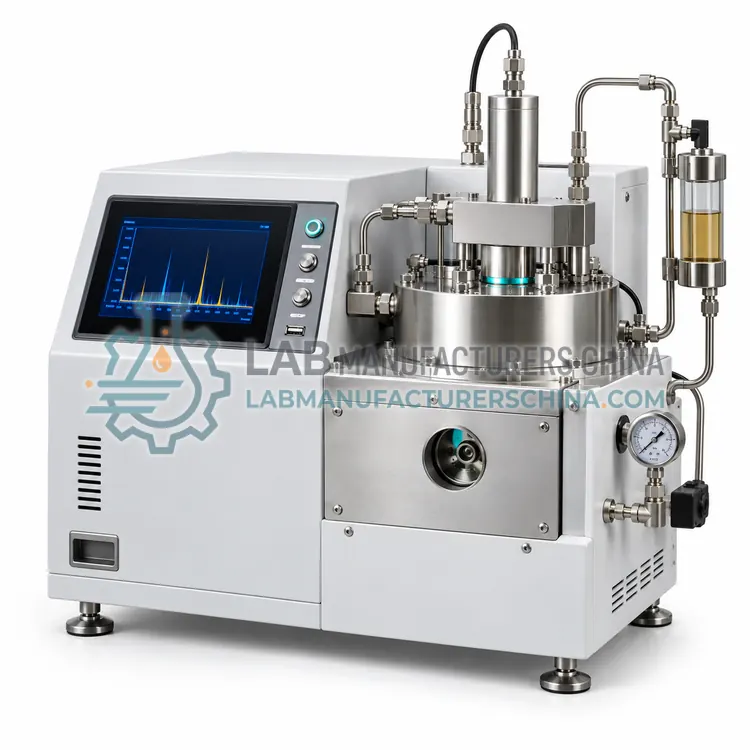
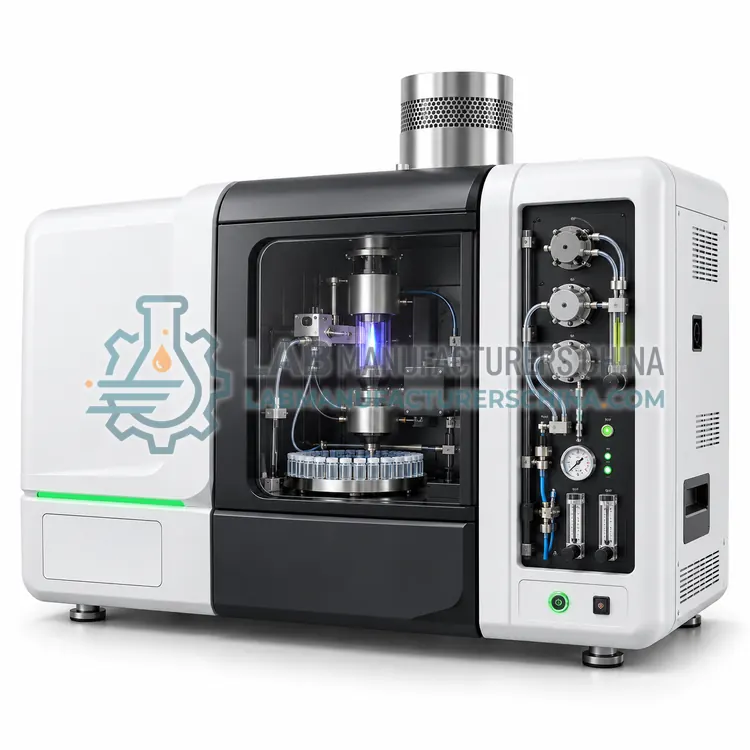
ICP-OES Used Oil Elemental Analyzer

ICP-OES 在用油元素分析仪

  • OIA-0001
  • Oil Analysis
  • CE (to be confirmed)
  • ISO 9001 manufacturing (to be confirmed)
Wavelength range:
165–800 nm
Detector:
CCD or CID array
RF generator power:
1.2–1.6 kW
Plasma argon flow:
12–18 L/min
Detection limit (typical):
0.01–0.5 mg/kg
Sample dilution:
1:10 to 1:20 in solvent

An ICP-OES used oil analyzer excites a diluted oil sample in argon plasma and reads emission lines to quantify wear metals, contaminants and additive elements. It suits laboratories that need broad element coverage and method compliance with ASTM D5185 across varied oil types.

Request a quote
View details

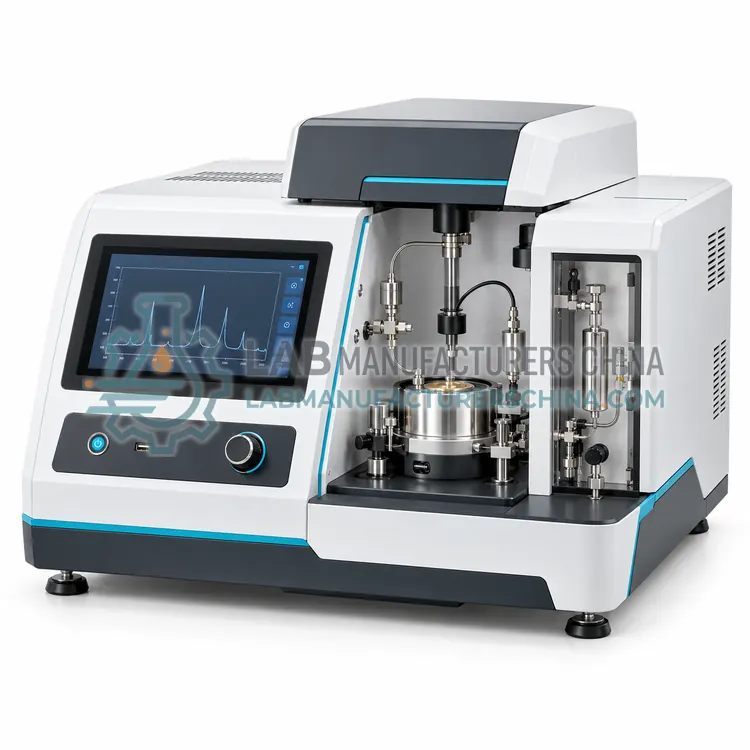
Rotating Disk Electrode OES Oil Spectrometer

旋转圆盘电极油液光谱仪

  • OIA-0002
  • Oil Analysis
  • CE (to be confirmed)
  • ISO 9001 manufacturing (to be confirmed)
Elements measured:
Fe, Cu, Pb, Al, Cr, Sn, Ni, Si, Na, Zn, P, Ca, Mg and others
Wavelength range:
200–480 nm
Excitation source:
High-energy arc/spark discharge
Analysis time:
≈ 30 s per sample
Sample volume:
≈ 2–5 mL
Detection limit (typical):
0.1–1 mg/kg

A rotating disk electrode OES oil spectrometer burns a thin film of neat oil between a rotating graphite disk and a rod electrode to quantify wear metals in seconds. It is suited to high-volume used-oil laboratories wanting fast results without dilution or solvents.

Request a quote
View details

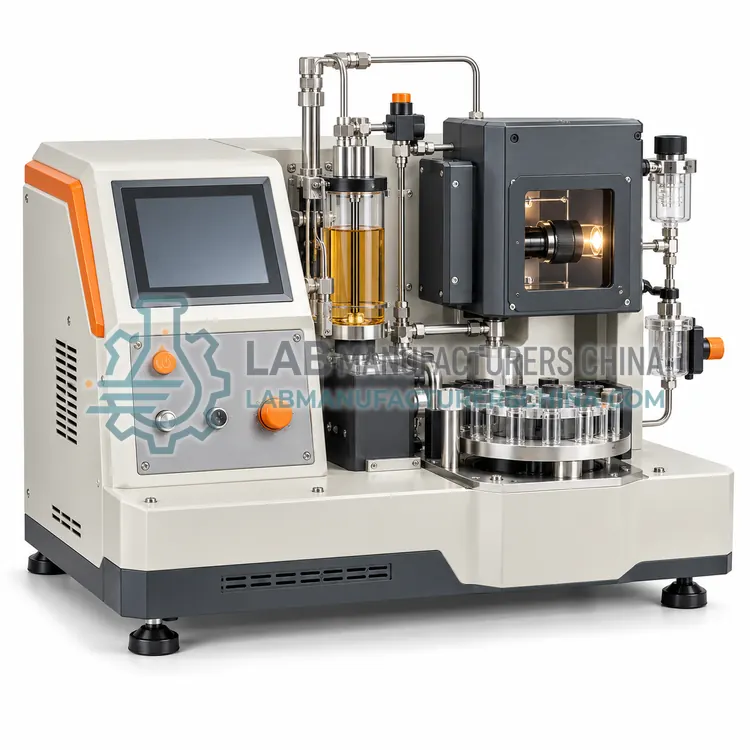
FTIR Oil Condition Analyzer

FTIR 油液状态分析仪

  • OIA-0003
  • Oil Analysis
  • CE (to be confirmed)
  • ISO 9001 manufacturing (to be confirmed)
Spectral range:
4000–650 cm-1
Spectral resolution:
4 cm-1
Cell path length:
≈ 100 µm (transmission) or ATR
Detector:
DTGS
Signal-to-noise ratio:
> 20,000:1 (peak-to-peak, 1 min)
Sample volume:
≈ 2–3 mL

An FTIR oil condition analyzer measures infrared absorbance of used oil in a thin cell to report oxidation, nitration, soot, sulfation, glycol and water. It is the most common first-line screening tool for engine and gearbox oil programs.

Request a quote
View details

Automatic Oil Particle Counter

油液自动颗粒计数器

  • OIA-0004
  • Oil Analysis
  • CE (to be confirmed)
  • ISO 9001 manufacturing (to be confirmed)
Particle size channels:
≥ 4, 6, 14, 21 µm(c) and finer
Counting range:
1–24,000 particles/mL
Flow rate:
10–100 mL/min
Coincidence limit:
≈ 10,000–24,000 particles/mL
Oil viscosity range:
1–400 mm²/s (with dilution)
Sample volume:
10–50 mL

An automatic oil particle counter uses a laser light-extinction sensor to size and count particles in hydraulic, lubricating and turbine oils, and reports ISO 4406 cleanliness codes. It is used for contamination control, filter performance checks and cleanliness certification of fluids.

Request a quote
View details

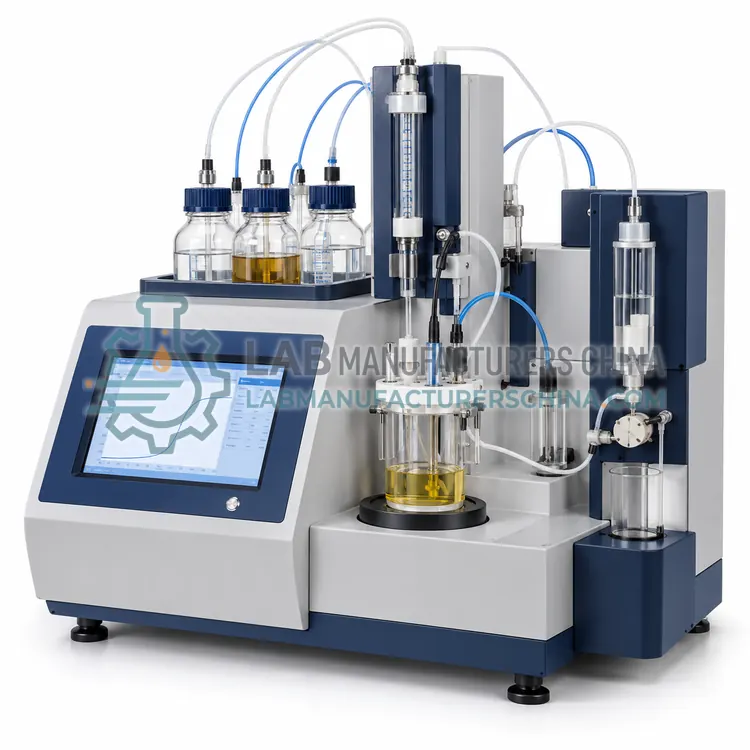
Potentiometric TAN/TBN Titrator for Oil

油品酸值碱值电位滴定仪

  • OIA-0005
  • Oil Analysis
  • CE (to be confirmed)
  • ISO 9001 manufacturing (to be confirmed)
Titration modes:
Dynamic, monotonic, preset endpoint
Burette volume:
10 mL or 20 mL
Burette resolution:
1/20,000 of volume
Measurement range:
TAN 0.01–250 mg KOH/g
Potential resolution:
0.1 mV
Electrode:
Non-aqueous combination glass

A potentiometric TAN/TBN titrator determines total acid number and total base number of lubricants by titrating a dissolved sample with a standard reagent and detecting endpoints with a glass electrode. It is used for oil specification and additive depletion checks.

Request a quote
View details

Compare Oil Analysis models

ModelWavelength rangeDetectorDetection limit (typical)Repeatability (RSD)Power supply
ICP-OES Used Oil Elemental AnalyzerOIA-0001165–800 nmCCD or CID array0.01–0.5 mg/kg≤ 2 %220 V AC, 50 Hz, 3 kVA
Rotating Disk Electrode OES Oil SpectrometerOIA-0002200–480 nm—0.1–1 mg/kg≤ 3 %220 V AC, 50 Hz, 1.5 kVA
FTIR Oil Condition AnalyzerOIA-0003—DTGS——100–240 V AC, 50/60 Hz
Automatic Oil Particle CounterOIA-0004————220 V AC, 50 Hz
Potentiometric TAN/TBN Titrator for OilOIA-0005———≤ 1 % (typical)100–240 V AC, 50/60 Hz

Indicative values for this product class. Final specifications are confirmed on the quotation and in the calibration documents supplied with the instrument.

How do Oil Analysis work?

Oil analysis combines several measurement principles, each targeting a different failure indicator. Atomic emission spectrometry, using plasma or an arc-spark source, excites metal atoms in a diluted or neat sample and reads emission lines at characteristic wavelengths to give iron, copper, aluminum and additive concentrations. Fourier transform infrared spectroscopy measures absorbance of oil in a thin transmission cell and calculates soot, oxidation, nitration, sulfation, glycol and water from defined spectral regions. Laser light-extinction counters size and count particles as they pass a detection cell at a controlled flow rate. Potentiometric titration follows the electrode potential while a reagent is added, locating the endpoints for acid and base number. Together these methods describe wear, contamination and chemical condition.

Which Oil Analysis variants are available?

  • ICP-OES Used Oil Elemental Analyzer — An ICP-OES used oil analyzer excites a diluted oil sample in argon plasma and reads emission lines to quantify wear metals, contaminants and additive elements.
  • Rotating Disk Electrode OES Oil Spectrometer — A rotating disk electrode OES oil spectrometer burns a thin film of neat oil between a rotating graphite disk and a rod electrode to quantify wear metals in seconds.
  • FTIR Oil Condition Analyzer — An FTIR oil condition analyzer measures infrared absorbance of used oil in a thin cell to report oxidation, nitration, soot, sulfation, glycol and water.
  • Automatic Oil Particle Counter — An automatic oil particle counter uses a laser light-extinction sensor to size and count particles in hydraulic, lubricating and turbine oils, and reports ISO 4406 cleanliness codes.
  • Potentiometric TAN/TBN Titrator for Oil — A potentiometric TAN/TBN titrator determines total acid number and total base number of lubricants by titrating a dissolved sample with a standard reagent and detecting endpoints with a glass electrode.

How do I choose the right variant?

Choose the variant from the question you need answered. Elemental spectrometers answer wear and additive depletion questions; ICP-OES handles dissolved metals and larger particles after digestion or dilution, while RDE-OES is faster and needs no sample preparation but under-reads particles above a few micrometers. FTIR answers chemical degradation and contamination questions and is usually the most cost-effective first screen. Particle counters address cleanliness codes for hydraulic and turbine systems. Titrators cover acid and base number for oils with additive packages. Consider daily sample volume, required method (ASTM D5185, D7889, D7647, D664), operator skill, consumables such as argon and solvents, and whether your laboratory reports to customer-defined alarm limits.

Where are Oil Analysis used?

Oil Analysis are specified in used-oil wear metal analysis, new oil additive verification, hydraulic fluid cleanliness control, fleet and engine maintenance programs and turbine oil monitoring.

Which standards and certifications apply?

Work with Oil Analysis is commonly governed by ASTM D5185, ASTM D6595, ASTM E2412, ASTM D7889, ASTM D7647, ISO 4406, ASTM D664 and ASTM D2896. Instrument certifications such as CE marking are confirmed per configuration and never assumed.

What are the key considerations before purchase?

Place spectrometers on a stable bench with controlled temperature, ventilation for exhaust and a clean argon supply where required. Calibrate with certified oil-based standards and verify with a check sample at the start of each batch. Keep sample bottles clean and homogenize samples by shaking or ultrasonic mixing before analysis, since settling biases metal results. Replace pump tubing, nebulizer parts, electrodes and optical windows on the manufacturer's schedule. Record results with sample ID, unit hours and oil age so trends can be evaluated. Follow local rules for waste solvent and used-oil disposal.

Frequently asked questions about Oil Analysis

Oil analysis measures wear metals, additive elements, contaminants such as water, fuel, soot and glycol, particle counts, viscosity and acid or base number. Together these indicators show machine wear, oil degradation and contamination sources, allowing maintenance decisions to be based on data rather than fixed drain intervals.

Need help specifying Oil Analysis?

Request a quote