Potentiometric TAN/TBN Titrator for Oil
油品酸值碱值电位滴定仪
- SKU OIA-0005
- Oil Analysis
- CE (to be confirmed)
- ISO 9001 manufacturing (to be confirmed)
Price on request — FOB / CIF quoted per order
Prices depend on configuration, quantity and destination port.
Key specifications
| Titration modes | Dynamic, monotonic, preset endpoint |
|---|---|
| Burette volume | 10 mL or 20 mL |
| Burette resolution | 1/20,000 of volume |
| Measurement range | TAN 0.01–250 mg KOH/g |
| Potential resolution | 0.1 mV |
| Electrode | Non-aqueous combination glass |
Request a quote Download brochure · to be provided
By Lab Manufacturers China Technical TeamLast reviewed Standards: ASTM D5185, ASTM D6595, ASTM E2412
What is the Potentiometric TAN/TBN Titrator for Oil?
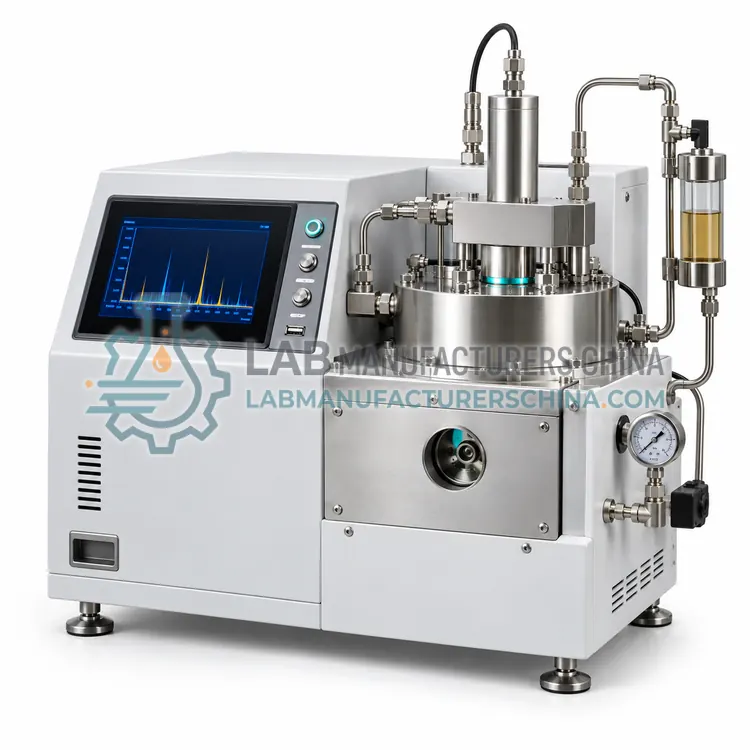
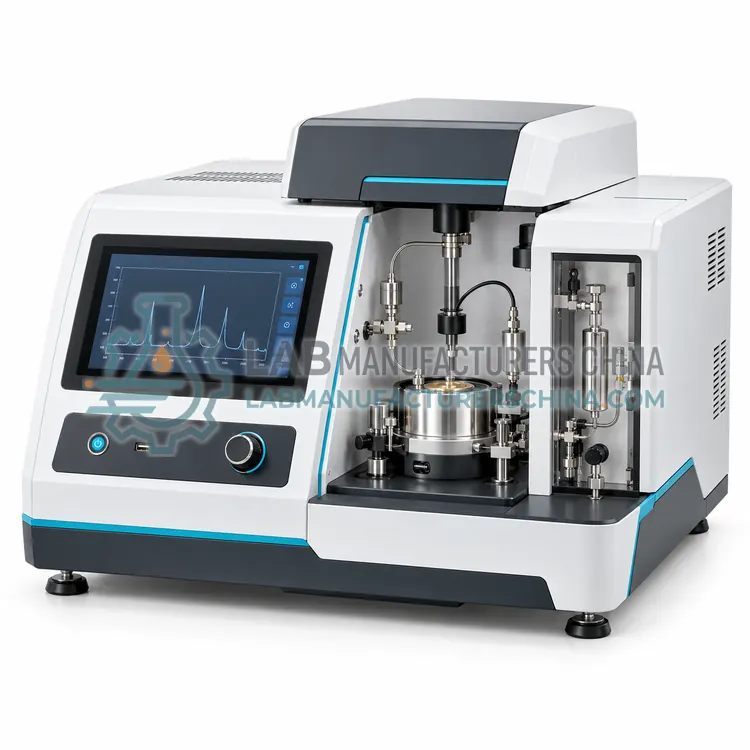
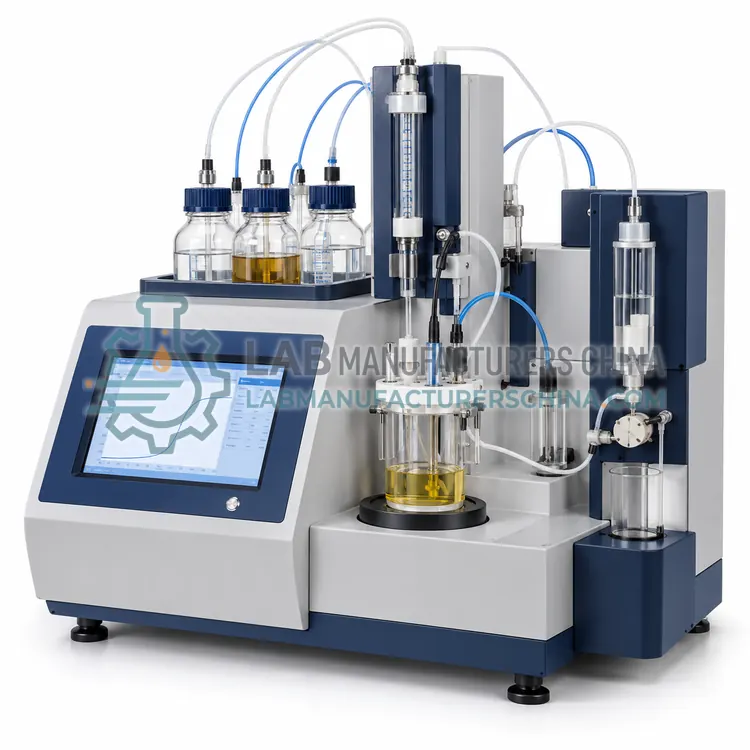
A potentiometric TAN/TBN titrator determines total acid number and total base number of lubricants by titrating a dissolved sample with a standard reagent and detecting endpoints with a glass electrode. It is used for oil specification and additive depletion checks.
What is the Potentiometric TAN/TBN Titrator for Oil?
A potentiometric TAN/TBN titrator determines total acid number and total base number of lubricants by titrating a dissolved sample with a standard reagent and detecting endpoints with a glass electrode. It is used for oil specification and additive depletion checks.
Overview
The titrator dispenses a standard reagent, potassium hydroxide in isopropanol for acid number or perchloric acid in acetic acid for base number, into a sample dissolved in a titration solvent. A combination glass or non-aqueous electrode follows the potential as reagent is added. The instrument identifies the inflection point or a preset endpoint potential in the titration curve and calculates mg KOH/g from the reagent volume, titrant concentration and sample mass. ASTM D664 uses inflection points in aqueous-alcohol media, while ASTM D2896 measures base number in a glacial acetic acid medium. Electrode condition, stirring, and solvent blank corrections significantly influence results, so routine electrode conditioning and standardization of titrants are part of the method.
How does it work?
Oil analysis combines several measurement principles, each targeting a different failure indicator. Atomic emission spectrometry, using plasma or an arc-spark source, excites metal atoms in a diluted or neat sample and reads emission lines at characteristic wavelengths to give iron, copper, aluminum and additive concentrations. Fourier transform infrared spectroscopy measures absorbance of oil in a thin transmission cell and calculates soot, oxidation, nitration, sulfation, glycol and water from defined spectral regions. Laser light-extinction counters size and count particles as they pass a detection cell at a controlled flow rate. Potentiometric titration follows the electrode potential while a reagent is added, locating the endpoints for acid and base number. Together these methods describe wear, contamination and chemical condition.
What are the key features?
- Automatic burette with 10 or 20 mL exchangeable unit
- Non-aqueous combination pH electrode for ASTM D664 and D2896
- Dynamic endpoint and preset-potential titration modes
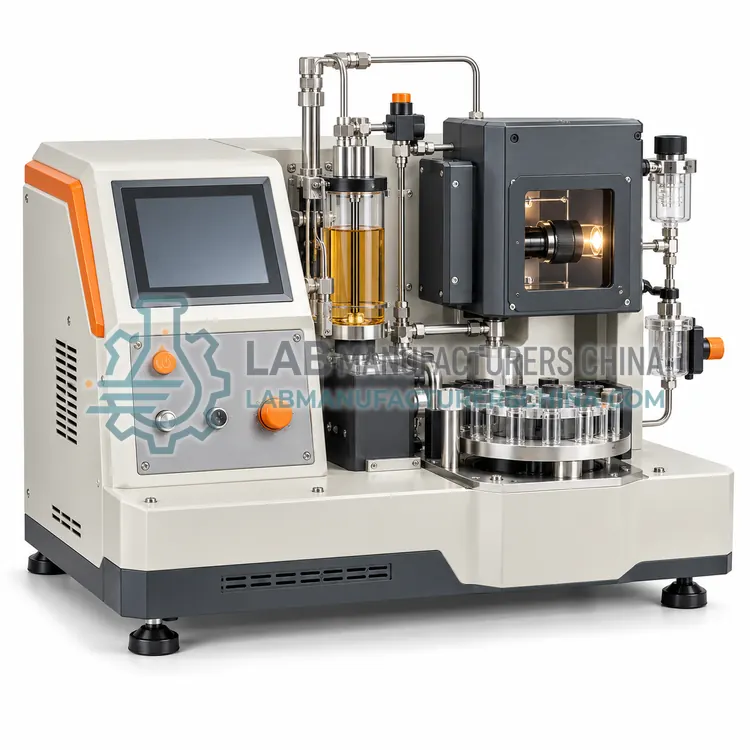
- Sample changer option for batch titration
- Automatic blank and titer determination routines
What are the technical specifications?
A typical potentiometric tan/tbn titrator for oil configuration offers titration modes of Dynamic, monotonic, preset endpoint, burette volume of 10 mL or 20 mL, burette resolution of 1/20,000 of volume, measurement range of TAN 0.01–250 mg KOH/g, potential resolution of 0.1 mV and electrode of Non-aqueous combination glass. Values are indicative of the product class; the exact figures for each configuration are confirmed on the quotation and the calibration documents supplied with the instrument.
Which applications is it used for?
The Potentiometric TAN/TBN Titrator for Oil is used in lubricant acceptance testing, additive depletion monitoring in engine oil and transformer and turbine oil acidity control. Across the wider Oil Analysis class, laboratories also deploy it for used-oil wear metal analysis, new oil additive verification and hydraulic fluid cleanliness control.
Which standards and certifications apply?
Relevant standards and methods include ASTM D5185, ASTM D6595, ASTM E2412, ASTM D7889, ASTM D7647, ISO 4406, ASTM D664 and ASTM D2896. Certification candidates for this model are CE and ISO 9001 manufacturing; each is to be confirmed for the specific configuration before shipment, and certificates are supplied only where they have been issued.
Place spectrometers on a stable bench with controlled temperature, ventilation for exhaust and a clean argon supply where required. Calibrate with certified oil-based standards and verify with a check sample at the start of each batch. Keep sample bottles clean and homogenize samples by shaking or ultrasonic mixing before analysis, since settling biases metal results. Replace pump tubing, nebulizer parts, electrodes and optical windows on the manufacturer's schedule. Record results with sample ID, unit hours and oil age so trends can be evaluated. Follow local rules for waste solvent and used-oil disposal.
How do I select the right Potentiometric TAN/TBN Titrator for Oil?
Select a potentiometric titrator when your customers specify acid or base number limits and need method-compliant results for engine, turbine or industrial oils. In an RFQ, state the methods required (ASTM D664, D2896, D4739), burette volume, electrode type and whether a sample changer is needed.
How does it compare with other Oil Analysis variants?
Choose the variant from the question you need answered. Elemental spectrometers answer wear and additive depletion questions; ICP-OES handles dissolved metals and larger particles after digestion or dilution, while RDE-OES is faster and needs no sample preparation but under-reads particles above a few micrometers. FTIR answers chemical degradation and contamination questions and is usually the most cost-effective first screen. Particle counters address cleanliness codes for hydraulic and turbine systems. Titrators cover acid and base number for oils with additive packages. Consider daily sample volume, required method (ASTM D5185, D7889, D7647, D664), operator skill, consumables such as argon and solvents, and whether your laboratory reports to customer-defined alarm limits.
Full specifications
| Titration modes | Dynamic, monotonic, preset endpoint |
|---|---|
| Burette volume | 10 mL or 20 mL |
| Burette resolution | 1/20,000 of volume |
| Measurement range | TAN 0.01–250 mg KOH/g |
| Potential resolution | 0.1 mV |
| Electrode | Non-aqueous combination glass |
| Sample mass | 0.1–20 g (by expected value) |
| Repeatability (RSD) | ≤ 1 % (typical) |
| Power supply | 100–240 V AC, 50/60 Hz |
Indicative values for this product class. Final specifications are confirmed on the quotation and in the calibration documents supplied with the instrument.
Applications
- Lubricant acceptance testing
- Additive depletion monitoring in engine oil
- Transformer and turbine oil acidity control
Key features
- Automatic burette with 10 or 20 mL exchangeable unit
- Non-aqueous combination pH electrode for ASTM D664 and D2896
- Dynamic endpoint and preset-potential titration modes
- Sample changer option for batch titration
- Automatic blank and titer determination routines
Frequently asked questions about Potentiometric TAN/TBN Titrator for Oil
Total acid number (TAN) measures acidic components, including oxidation products, in mg KOH/g. Total base number (TBN) measures alkaline reserve from detergent additives that neutralize combustion acids. Falling TBN and rising TAN both indicate an oil nearing the end of useful life.
Colorimetric endpoints are hard to see in dark, used oils. Potentiometric detection follows electrode potential instead of color, so it works with opaque samples and gives objective, repeatable endpoints across operators.
Titrants should be standardized at least weekly and whenever a new batch is prepared, using potassium hydrogen phthalate for KOH or potassium hydrogen phthalate in acetic acid for perchloric acid. Documenting titer values supports traceability and audit requirements.
Oil analysis measures wear metals, additive elements, contaminants such as water, fuel, soot and glycol, particle counts, viscosity and acid or base number. Together these indicators show machine wear, oil degradation and contamination sources, allowing maintenance decisions to be based on data rather than fixed drain intervals.
Wear metals in used oil are usually determined by ICP-OES following ASTM D5185 or by rotating disk electrode optical emission spectrometry following ASTM D6595. Both report iron, copper, lead, aluminum and other elements in mg/kg, with differences in particle-size response.
Scheduled sampling builds a trend for each machine. A single result may be normal, but a rising iron or oxidation trend shows developing wear or degradation early. Consistent sampling points, intervals and methods are what make the trend reliable.
Related models