Automatic Oil Particle Counter
油液自动颗粒计数器
- SKU OIA-0004
- Oil Analysis
- CE (to be confirmed)
- ISO 9001 manufacturing (to be confirmed)
Price on request — FOB / CIF quoted per order
Prices depend on configuration, quantity and destination port.
Key specifications
| Particle size channels | ≥ 4, 6, 14, 21 µm(c) and finer |
|---|---|
| Counting range | 1–24,000 particles/mL |
| Flow rate | 10–100 mL/min |
| Coincidence limit | ≈ 10,000–24,000 particles/mL |
| Oil viscosity range | 1–400 mm²/s (with dilution) |
| Sample volume | 10–50 mL |
Request a quote Download brochure · to be provided
By Lab Manufacturers China Technical TeamLast reviewed Standards: ASTM D5185, ASTM D6595, ASTM E2412
What is the Automatic Oil Particle Counter?
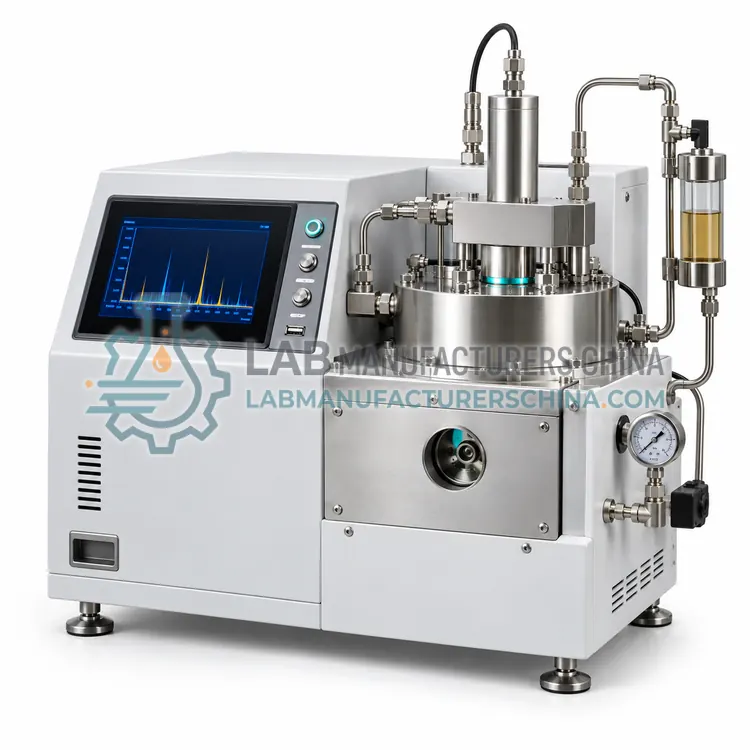
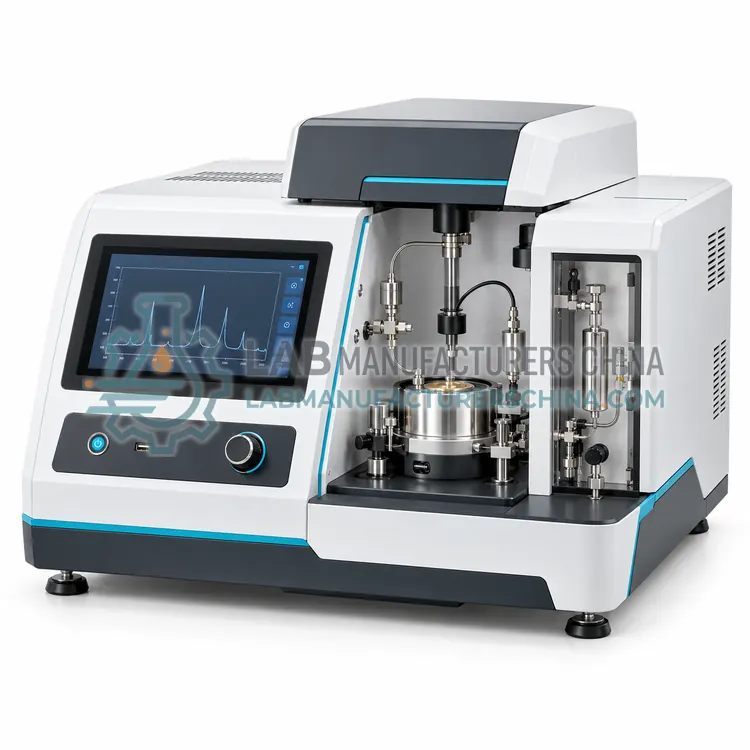
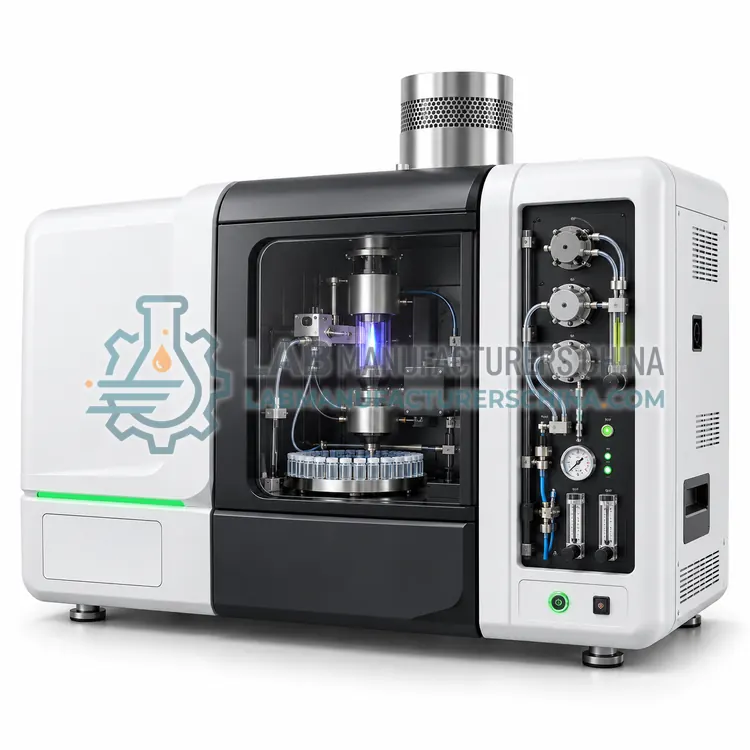
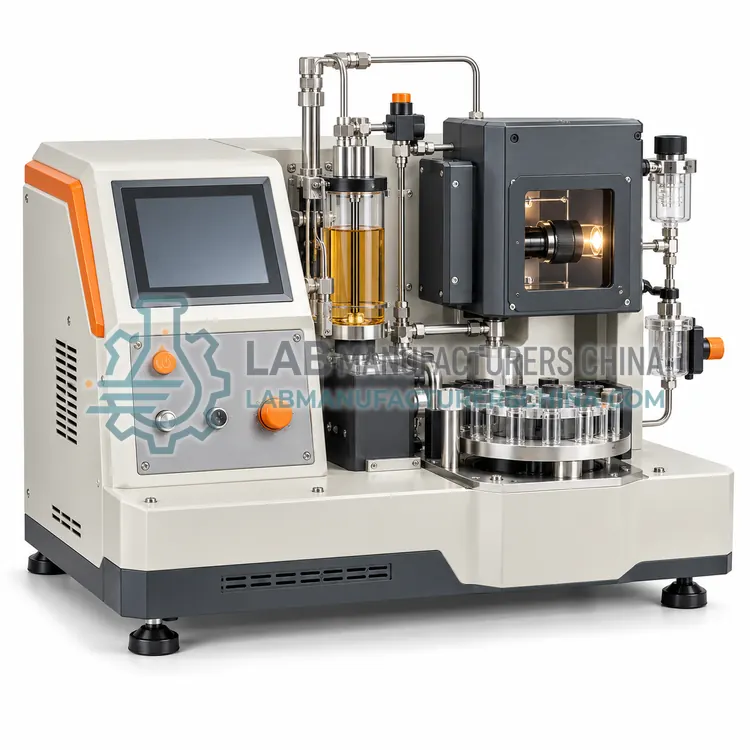
An automatic oil particle counter uses a laser light-extinction sensor to size and count particles in hydraulic, lubricating and turbine oils, and reports ISO 4406 cleanliness codes. It is used for contamination control, filter performance checks and cleanliness certification of fluids.
What is the Automatic Oil Particle Counter?
An automatic oil particle counter uses a laser light-extinction sensor to size and count particles in hydraulic, lubricating and turbine oils, and reports ISO 4406 cleanliness codes. It is used for contamination control, filter performance checks and cleanliness certification of fluids.
Overview
A sample is drawn through a narrow sensing cell at a controlled flow rate, typically 10 to 100 mL/min, by a syringe or pressure-driven system. A laser diode illuminates the stream and a photodiode behind the cell measures light blocked by each passing particle. Pulse height is proportional to projected area, and calibration with ISO 11171 reference suspensions converts pulse height to equivalent diameter at 4, 6, 14 and 21 micrometers or finer channels. Counts per milliliter are converted to an ISO 4406 or NAS 1638 code. Air bubbles and water droplets cause false counts, so samples are degassed by ultrasonic or vacuum treatment and diluted for dark or viscous oils. Sensors are calibrated periodically with ISO medium test dust suspensions.
How does it work?
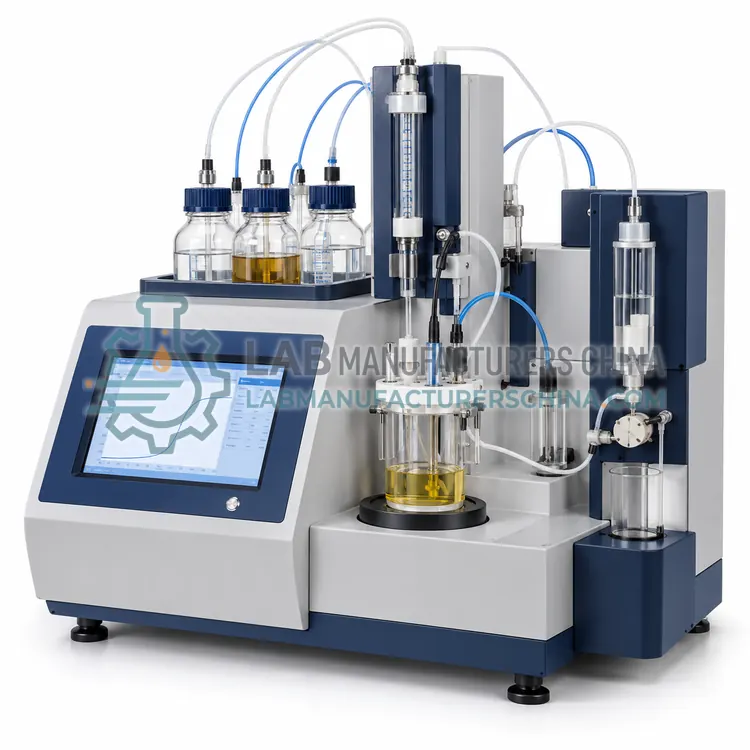
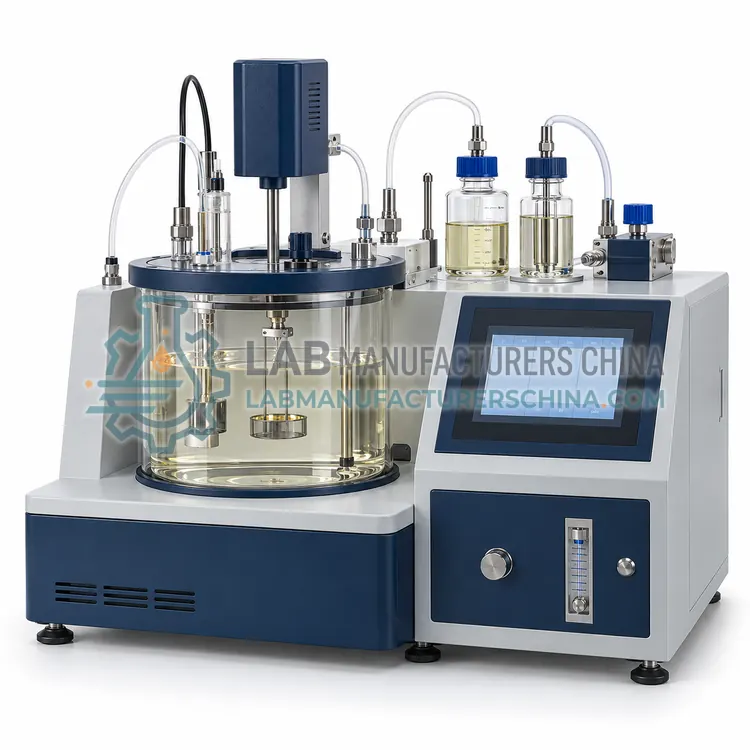
Oil analysis combines several measurement principles, each targeting a different failure indicator. Atomic emission spectrometry, using plasma or an arc-spark source, excites metal atoms in a diluted or neat sample and reads emission lines at characteristic wavelengths to give iron, copper, aluminum and additive concentrations. Fourier transform infrared spectroscopy measures absorbance of oil in a thin transmission cell and calculates soot, oxidation, nitration, sulfation, glycol and water from defined spectral regions. Laser light-extinction counters size and count particles as they pass a detection cell at a controlled flow rate. Potentiometric titration follows the electrode potential while a reagent is added, locating the endpoints for acid and base number. Together these methods describe wear, contamination and chemical condition.
What are the key features?
- Laser light-extinction sensor calibrated to ISO 11171
- Reports ISO 4406, NAS 1638 and SAE AS4059 codes
- Bottle sampler with stirring and optional vacuum degassing
- Built-in dilution handling for viscous oils
- Stored results with printer and USB data export
What are the technical specifications?
A typical automatic oil particle counter configuration offers particle size channels of ≥ 4, 6, 14, 21 µm(c) and finer, counting range of 1–24,000 particles/mL, flow rate of 10–100 mL/min, coincidence limit of ≈ 10,000–24,000 particles/mL, oil viscosity range of 1–400 mm²/s (with dilution) and sample volume of 10–50 mL. Values are indicative of the product class; the exact figures for each configuration are confirmed on the quotation and the calibration documents supplied with the instrument.
Which applications is it used for?
The Automatic Oil Particle Counter is used in hydraulic system cleanliness checks, turbine and compressor oil monitoring and filter efficiency validation. Across the wider Oil Analysis class, laboratories also deploy it for used-oil wear metal analysis, new oil additive verification and hydraulic fluid cleanliness control.
Which standards and certifications apply?
Relevant standards and methods include ASTM D5185, ASTM D6595, ASTM E2412, ASTM D7889, ASTM D7647, ISO 4406, ASTM D664 and ASTM D2896. Certification candidates for this model are CE and ISO 9001 manufacturing; each is to be confirmed for the specific configuration before shipment, and certificates are supplied only where they have been issued.
Place spectrometers on a stable bench with controlled temperature, ventilation for exhaust and a clean argon supply where required. Calibrate with certified oil-based standards and verify with a check sample at the start of each batch. Keep sample bottles clean and homogenize samples by shaking or ultrasonic mixing before analysis, since settling biases metal results. Replace pump tubing, nebulizer parts, electrodes and optical windows on the manufacturer's schedule. Record results with sample ID, unit hours and oil age so trends can be evaluated. Follow local rules for waste solvent and used-oil disposal.
How do I select the right Automatic Oil Particle Counter?
Select a particle counter when cleanliness control of hydraulic, turbine or transmission fluid is the main goal, because it provides direct ISO codes that spectrometry cannot. In an RFQ, specify size channels, viscosity range, dilution needs, calibration certificate to ISO 11171 and the cleanliness code standard your customers require.
How does it compare with other Oil Analysis variants?
Choose the variant from the question you need answered. Elemental spectrometers answer wear and additive depletion questions; ICP-OES handles dissolved metals and larger particles after digestion or dilution, while RDE-OES is faster and needs no sample preparation but under-reads particles above a few micrometers. FTIR answers chemical degradation and contamination questions and is usually the most cost-effective first screen. Particle counters address cleanliness codes for hydraulic and turbine systems. Titrators cover acid and base number for oils with additive packages. Consider daily sample volume, required method (ASTM D5185, D7889, D7647, D664), operator skill, consumables such as argon and solvents, and whether your laboratory reports to customer-defined alarm limits.
Full specifications
| Particle size channels | ≥ 4, 6, 14, 21 µm(c) and finer |
|---|---|
| Counting range | 1–24,000 particles/mL |
| Flow rate | 10–100 mL/min |
| Coincidence limit | ≈ 10,000–24,000 particles/mL |
| Oil viscosity range | 1–400 mm²/s (with dilution) |
| Sample volume | 10–50 mL |
| Calibration | ISO 11171 (ISO MTD) |
| Cleanliness codes | ISO 4406, NAS 1638, SAE AS4059 |
| Power supply | 220 V AC, 50 Hz |
Indicative values for this product class. Final specifications are confirmed on the quotation and in the calibration documents supplied with the instrument.
Applications
- Hydraulic system cleanliness checks
- Turbine and compressor oil monitoring
- Filter efficiency validation
Key features
- Laser light-extinction sensor calibrated to ISO 11171
- Reports ISO 4406, NAS 1638 and SAE AS4059 codes
- Bottle sampler with stirring and optional vacuum degassing
- Built-in dilution handling for viscous oils
- Stored results with printer and USB data export
Frequently asked questions about Automatic Oil Particle Counter
An ISO 4406 code such as 18/16/13 gives three numbers for particle counts per milliliter above 4, 6 and 14 micrometers(c). Each number is a scale index where one step roughly doubles the particle count, so lower codes mean cleaner oil.
Air bubbles and micro-emulsified water scatter light like particles and inflate counts. Ultrasonic or vacuum degassing and adequate settling time remove them, and sample agitation before analysis ensures particles are evenly suspended.
Yes, within limits. Light extinction counters work with translucent and moderately dark oils, but very dark or opaque samples require dilution or a different method such as pore-blockage counting or patch microscopy.
Oil analysis measures wear metals, additive elements, contaminants such as water, fuel, soot and glycol, particle counts, viscosity and acid or base number. Together these indicators show machine wear, oil degradation and contamination sources, allowing maintenance decisions to be based on data rather than fixed drain intervals.
Wear metals in used oil are usually determined by ICP-OES following ASTM D5185 or by rotating disk electrode optical emission spectrometry following ASTM D6595. Both report iron, copper, lead, aluminum and other elements in mg/kg, with differences in particle-size response.
Scheduled sampling builds a trend for each machine. A single result may be normal, but a rising iron or oxidation trend shows developing wear or degradation early. Consistent sampling points, intervals and methods are what make the trend reliable.
Related models