
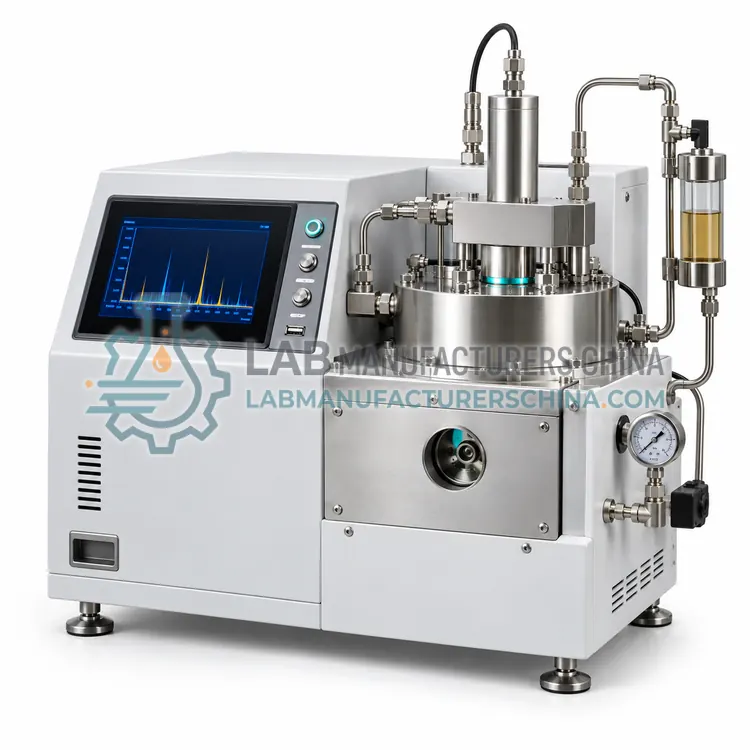
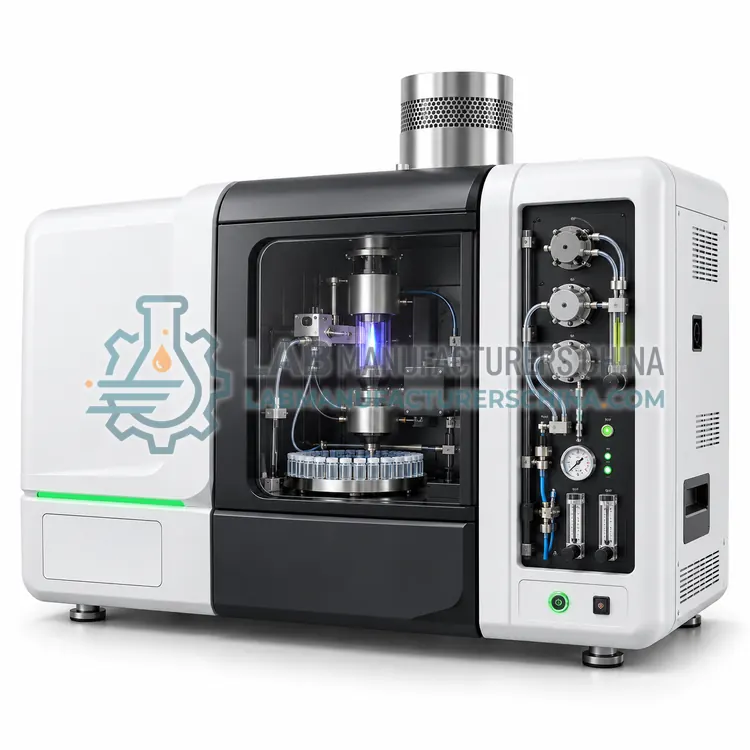
ICP-OES Used Oil Elemental Analyzer
ICP-OES 在用油元素分析仪
- SKU OIA-0001
- Oil Analysis
- CE (to be confirmed)
- ISO 9001 manufacturing (to be confirmed)
Price on request — FOB / CIF quoted per order
Prices depend on configuration, quantity and destination port.
Key specifications
| Wavelength range | 165–800 nm |
|---|---|
| Detector | CCD or CID array |
| RF generator power | 1.2–1.6 kW |
| Plasma argon flow | 12–18 L/min |
| Detection limit (typical) | 0.01–0.5 mg/kg |
| Sample dilution | 1:10 to 1:20 in solvent |
Request a quote Download brochure · to be provided
By Lab Manufacturers China Technical TeamLast reviewed Standards: ASTM D5185, ASTM D6595, ASTM E2412
What is the ICP-OES Used Oil Elemental Analyzer?
An ICP-OES used oil analyzer excites a diluted oil sample in argon plasma and reads emission lines to quantify wear metals, contaminants and additive elements. It suits laboratories that need broad element coverage and method compliance with ASTM D5185 across varied oil types.
What is the ICP-OES Used Oil Elemental Analyzer?
An ICP-OES used oil analyzer excites a diluted oil sample in argon plasma and reads emission lines to quantify wear metals, contaminants and additive elements. It suits laboratories that need broad element coverage and method compliance with ASTM D5185 across varied oil types.
Overview
This variant uses a radio-frequency argon plasma operating near 6,000 to 10,000 K, which atomizes and excites elements with high efficiency. Samples are diluted 1:10 to 1:20 in kerosene or a similar solvent, introduced by peristaltic pump and a solvent-resistant nebulizer, and measured with a simultaneous echelle or Paschen-Runge spectrometer. Organic loading requires higher plasma power, a cooled spray chamber and sometimes oxygen addition to avoid carbon deposits. Detection limits reach the sub-mg/kg range for most elements, and the dynamic range covers several orders of magnitude. The instrument tolerates larger particles better than arc-spark systems after proper dilution, but throughput is slower and argon consumption is higher, typically 12 to 18 L/min.
How does it work?
Oil analysis combines several measurement principles, each targeting a different failure indicator. Atomic emission spectrometry, using plasma or an arc-spark source, excites metal atoms in a diluted or neat sample and reads emission lines at characteristic wavelengths to give iron, copper, aluminum and additive concentrations. Fourier transform infrared spectroscopy measures absorbance of oil in a thin transmission cell and calculates soot, oxidation, nitration, sulfation, glycol and water from defined spectral regions. Laser light-extinction counters size and count particles as they pass a detection cell at a controlled flow rate. Potentiometric titration follows the electrode potential while a reagent is added, locating the endpoints for acid and base number. Together these methods describe wear, contamination and chemical condition.
What are the key features?
- Radio-frequency argon plasma with organic-solvent torch configuration
- Simultaneous detection of 20 or more elements in one read
- Cooled spray chamber and oxygen addition for organic matrices
- Autosampler with rinse station for 50 to 100 vials
- Software templates for ASTM D5185 reporting and alarm limits
What are the technical specifications?
A typical icp-oes used oil elemental analyzer configuration offers wavelength range of 165–800 nm, detector of CCD or CID array, RF generator power of 1.2–1.6 kW, plasma argon flow of 12–18 L/min, detection limit (typical) of 0.01–0.5 mg/kg and sample dilution of 1:10 to 1:20 in solvent. Values are indicative of the product class; the exact figures for each configuration are confirmed on the quotation and the calibration documents supplied with the instrument.
Which applications is it used for?
The ICP-OES Used Oil Elemental Analyzer is used in commercial used-oil laboratories, engine manufacturer test facilities and wear metal trending for large fleets. Across the wider Oil Analysis class, laboratories also deploy it for used-oil wear metal analysis, new oil additive verification and hydraulic fluid cleanliness control.
Which standards and certifications apply?
Relevant standards and methods include ASTM D5185, ASTM D6595, ASTM E2412, ASTM D7889, ASTM D7647, ISO 4406, ASTM D664 and ASTM D2896. Certification candidates for this model are CE and ISO 9001 manufacturing; each is to be confirmed for the specific configuration before shipment, and certificates are supplied only where they have been issued.
Place spectrometers on a stable bench with controlled temperature, ventilation for exhaust and a clean argon supply where required. Calibrate with certified oil-based standards and verify with a check sample at the start of each batch. Keep sample bottles clean and homogenize samples by shaking or ultrasonic mixing before analysis, since settling biases metal results. Replace pump tubing, nebulizer parts, electrodes and optical windows on the manufacturer's schedule. Record results with sample ID, unit hours and oil age so trends can be evaluated. Follow local rules for waste solvent and used-oil disposal.
How do I select the right ICP-OES Used Oil Elemental Analyzer?
Select ICP-OES when broad element coverage, low detection limits and ASTM D5185 compliance matter more than speed or solvent-free operation. In an RFQ, specify the element list, required detection limits, argon supply, autosampler capacity, sample viscosity range and whether additive elements such as phosphorus, zinc and calcium must be reported.
How does it compare with other Oil Analysis variants?
Choose the variant from the question you need answered. Elemental spectrometers answer wear and additive depletion questions; ICP-OES handles dissolved metals and larger particles after digestion or dilution, while RDE-OES is faster and needs no sample preparation but under-reads particles above a few micrometers. FTIR answers chemical degradation and contamination questions and is usually the most cost-effective first screen. Particle counters address cleanliness codes for hydraulic and turbine systems. Titrators cover acid and base number for oils with additive packages. Consider daily sample volume, required method (ASTM D5185, D7889, D7647, D664), operator skill, consumables such as argon and solvents, and whether your laboratory reports to customer-defined alarm limits.
Full specifications
| Wavelength range | 165–800 nm |
|---|---|
| Detector | CCD or CID array |
| RF generator power | 1.2–1.6 kW |
| Plasma argon flow | 12–18 L/min |
| Detection limit (typical) | 0.01–0.5 mg/kg |
| Sample dilution | 1:10 to 1:20 in solvent |
| Analysis time per sample | 60–90 s |
| Repeatability (RSD) | ≤ 2 % |
| Power supply | 220 V AC, 50 Hz, 3 kVA |
Indicative values for this product class. Final specifications are confirmed on the quotation and in the calibration documents supplied with the instrument.
Applications
- Commercial used-oil laboratories
- Engine manufacturer test facilities
- Wear metal trending for large fleets
Key features
- Radio-frequency argon plasma with organic-solvent torch configuration
- Simultaneous detection of 20 or more elements in one read
- Cooled spray chamber and oxygen addition for organic matrices
- Autosampler with rinse station for 50 to 100 vials
- Software templates for ASTM D5185 reporting and alarm limits
Frequently asked questions about ICP-OES Used Oil Elemental Analyzer
Samples are homogenized, then diluted by mass or volume, typically 1:10 to 1:20, in kerosene or a similar solvent with an internal standard such as cobalt or yttrium. Calibration standards are matrix-matched with oil-soluble organometallic standards to reduce viscosity effects.
ICP-OES responds well to dissolved metals and particles up to a few micrometers. Larger particles may not be fully transported or atomized, so results can under-read severe wear. Acid digestion or microwave preparation can improve recovery but is slower.
Typical argon consumption is 12 to 18 L/min while the plasma is on, covering plasma, auxiliary and nebulizer flows. Laboratories running daily should plan for bulk liquid argon or a manifold of cylinders instead of single cylinders.
Oil analysis measures wear metals, additive elements, contaminants such as water, fuel, soot and glycol, particle counts, viscosity and acid or base number. Together these indicators show machine wear, oil degradation and contamination sources, allowing maintenance decisions to be based on data rather than fixed drain intervals.
Wear metals in used oil are usually determined by ICP-OES following ASTM D5185 or by rotating disk electrode optical emission spectrometry following ASTM D6595. Both report iron, copper, lead, aluminum and other elements in mg/kg, with differences in particle-size response.
Scheduled sampling builds a trend for each machine. A single result may be normal, but a rising iron or oxidation trend shows developing wear or degradation early. Consistent sampling points, intervals and methods are what make the trend reliable.
Related models
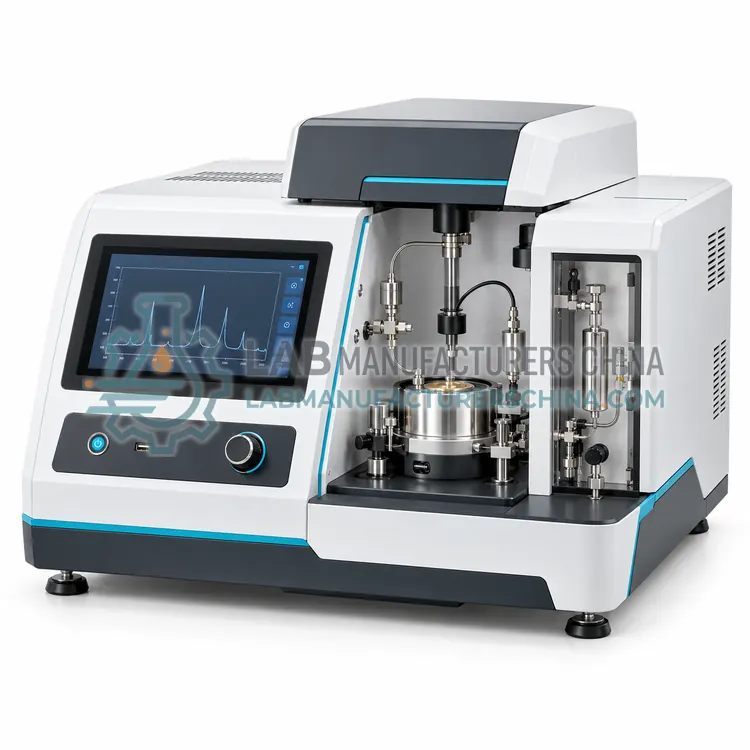
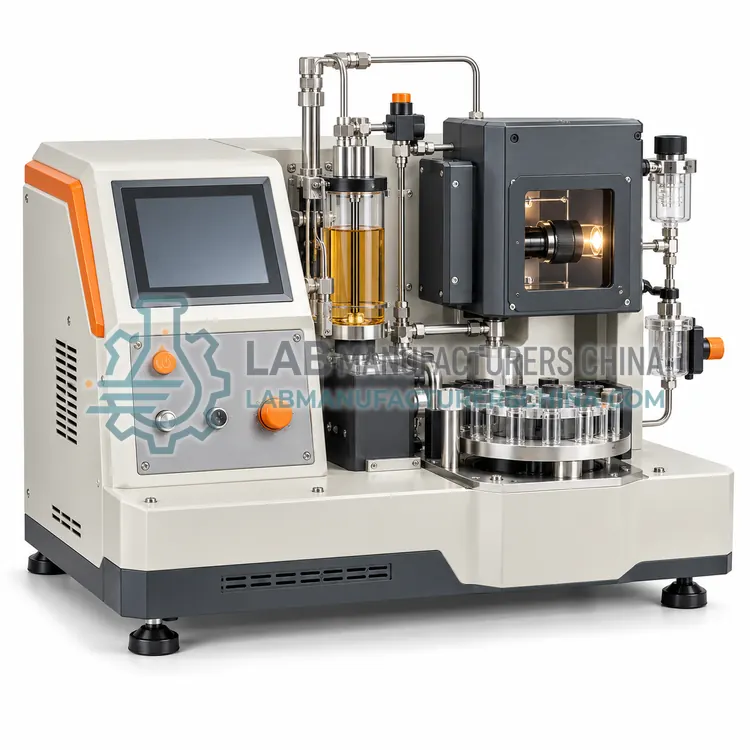
Gas Chromatograph for Dissolved Gas Analysis in Transformer Oil
变压器油溶解气体分析气相色谱仪
- CE (to be confirmed)
- +1