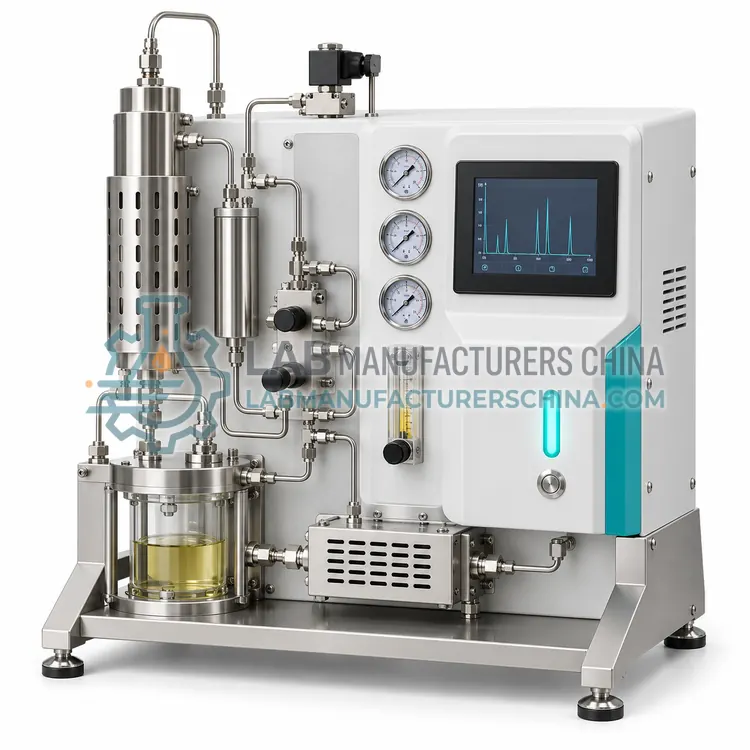
Gas Chromatograph for Dissolved Gas Analysis in Transformer Oil
变压器油溶解气体分析气相色谱仪
- CE (to be confirmed)
- +1
Welcome to Lab Manufacturers China — laboratory instruments direct from a Chinese manufacturer
绝缘油自动击穿电压测试仪
Price on request — FOB / CIF quoted per order
Prices depend on configuration, quantity and destination port.
| Test voltage range | 0–80 kV or 0–100 kV AC |
|---|---|
| Voltage accuracy | ± 1 % |
| Rate of rise | 0.5–5 kV/s (2.0 kV/s default) |
| Electrode gap | 2.5 mm (adjustable 1–5 mm) |
| Cell volume | ≈ 350–500 mL |
| Number of tests per sample | 1–9 (programmable) |
By Lab Manufacturers China Technical TeamLast reviewed Standards: IEC 60156, ASTM D1816, ASTM D877
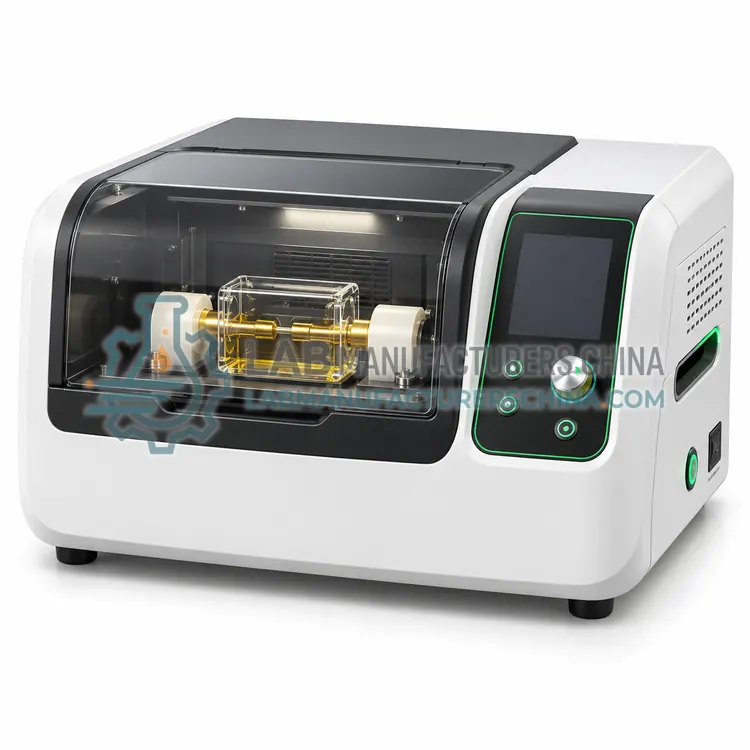
An automatic oil breakdown voltage tester raises AC voltage at a controlled rate across standard electrodes in a stirred oil cell until discharge occurs, then repeats and averages the result. It is used for routine screening and acceptance testing of transformer oil.
An automatic oil breakdown voltage tester raises AC voltage at a controlled rate across standard electrodes in a stirred oil cell until discharge occurs, then repeats and averages the result. It is used for routine screening and acceptance testing of transformer oil.
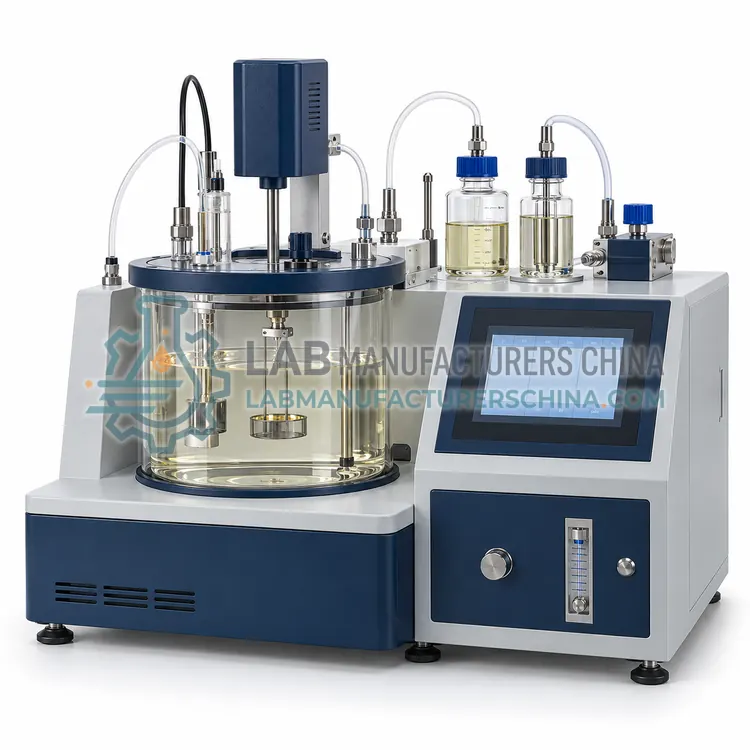
The tester combines a high-voltage transformer, a programmable control unit, a stirring test cell and a shut-off circuit that cuts supply within microseconds of breakdown to limit carbon formation. Voltage rises at 2 kV/s, as specified in IEC 60156, or another rate for ASTM D1816 or D877 configurations. Six breakdowns are typically performed with stirring and rest periods between, and the mean and standard deviation are calculated automatically. Electrode sets are interchangeable between VDE mushroom, spherical and ASTM disk types. A gap gauge ensures spacing of 2.5 mm for IEC 60156. Test voltage ranges of 0 to 80 or 100 kV cover service and new oil, and built-in safety interlocks, grounding and overcurrent protection keep the operator safe.
Insulating oil must resist electrical stress, remove heat and protect paper insulation, so testing targets each of these functions. Dielectric breakdown voltage is measured by increasing AC voltage at a fixed rate between standard electrodes in a stirred test cell until a discharge occurs. Dissolved gas analysis extracts gases from oil by headspace, vacuum or stripping and separates hydrogen, methane, ethane, ethylene, acetylene, carbon monoxide and carbon dioxide by gas chromatography with thermal conductivity and flame ionization detectors. Karl Fischer coulometry titrates water electrochemically. Dissipation factor and resistivity are measured in a three-terminal cell heated to 90 degrees Celsius. Interfacial tension uses a platinum ring that is pulled through the oil-water interface, and the pulling force gives the tension in mN/m.
A typical automatic oil dielectric breakdown voltage tester configuration offers test voltage range of 0–80 kV or 0–100 kV AC, voltage accuracy of ± 1 %, rate of rise of 0.5–5 kV/s (2.0 kV/s default), electrode gap of 2.5 mm (adjustable 1–5 mm), cell volume of ≈ 350–500 mL and number of tests per sample of 1–9 (programmable). Values are indicative of the product class; the exact figures for each configuration are confirmed on the quotation and the calibration documents supplied with the instrument.
The Automatic Oil Dielectric Breakdown Voltage Tester is used in transformer oil acceptance testing, routine field and laboratory screening and oil filtration plant quality check. Across the wider Transformer Oil Testing class, laboratories also deploy it for transformer acceptance and commissioning tests, routine insulating oil monitoring for utilities and fault diagnosis by dissolved gas analysis.
Relevant standards and methods include IEC 60156, ASTM D1816, ASTM D877, IEC 60599, ASTM D3612, IEC 60814, IEC 60247, ASTM D971 and GB/T 507. Certification candidates for this model are CE and ISO 9001 manufacturing; each is to be confirmed for the specific configuration before shipment, and certificates are supplied only where they have been issued.
Sampling is as critical as analysis: use clean, dry glass syringes or sampling bottles, avoid air exposure for dissolved gas samples and record oil temperature. Test cells and electrodes must be cleaned and rinsed with the test oil, and gap distance verified with a gauge. High-voltage testers need grounded benches, interlocked lids and periodic verification of voltage and rate of rise. Gas chromatographs require carrier gas purity, column conditioning and calibration with certified gas mixtures. Karl Fischer reagents are replaced per usage. Follow facility safety rules, and dispose of oil and halogenated waste according to regulations.
Select this tester when the main need is fast dielectric screening to IEC 60156 or ASTM D1816. Specify voltage class, electrode types, standard(s), rate of rise, stirring requirement and whether a portable case is needed. It does not replace dissolved gas or moisture testing for diagnostics.
Choose equipment by the decisions it supports. A breakdown voltage tester is the minimum for acceptance and routine screening; select the test voltage class (80 kV for most service oil, 100 kV or higher for new oil and EHV equipment) and the electrode type that your standard requires, VDE or spherical for IEC 60156, or ASTM D1816 or D877 types. Dissolved gas analysis is the key diagnostic for fault detection and suits utilities with many assets. Coulometric Karl Fischer is needed because moisture strongly affects paper insulation life. Tan delta and resistivity testers help detect polar contaminants and aging, while IFT indicates sludge precursors. Also check sample volume, automation level, test-cell cleaning, data logging and safe high-voltage interlocks.
| Test voltage range | 0–80 kV or 0–100 kV AC |
|---|---|
| Voltage accuracy | ± 1 % |
| Rate of rise | 0.5–5 kV/s (2.0 kV/s default) |
| Electrode gap | 2.5 mm (adjustable 1–5 mm) |
| Cell volume | ≈ 350–500 mL |
| Number of tests per sample | 1–9 (programmable) |
| Output power | ≥ 1 kVA |
| Frequency | 50 Hz (or 60 Hz) |
| Power supply | 220 V AC, 50 Hz |
Indicative values for this product class. Final specifications are confirmed on the quotation and in the calibration documents supplied with the instrument.
Acceptable values depend on the standard and voltage class. Under IEC 60156, new oil typically should exceed 70 kV and in-service oil in higher-voltage equipment should exceed about 50 to 60 kV; consult IEC 60422 or customer specifications for exact limits.
Gentle stirring keeps contaminants and moisture evenly distributed and removes products of previous breakdowns from the gap. Standards specify stirring speed and rest periods so successive breakdowns are statistically independent and repeatable between laboratories.
Verify rate of rise, voltage accuracy and electrode gap before each series, and calibrate the voltage measuring system at least annually by an accredited laboratory. Cleaning the cell between oils prevents cross-contamination and false low readings.
Standard tests include dielectric breakdown voltage, water content, acidity, dissipation factor, resistivity, interfacial tension and dissolved gas analysis. Together they assess insulating strength, contamination, aging and incipient faults, with frequency depending on transformer voltage class and criticality.
Dissolved gas analysis extracts gases from transformer oil and measures hydrogen, hydrocarbons and carbon oxides by gas chromatography. Gas ratios and concentrations indicate fault types such as partial discharge, overheating or arcing, using interpretation methods in IEC 60599 or IEEE C57.104.
Water lowers dielectric strength and accelerates cellulose degradation, shortening transformer life. Because most water resides in the paper insulation, oil moisture is interpreted together with temperature, using equilibrium curves to estimate paper moisture content.
变压器油溶解气体分析气相色谱仪
绝缘油介质损耗及体积电阻率测试仪