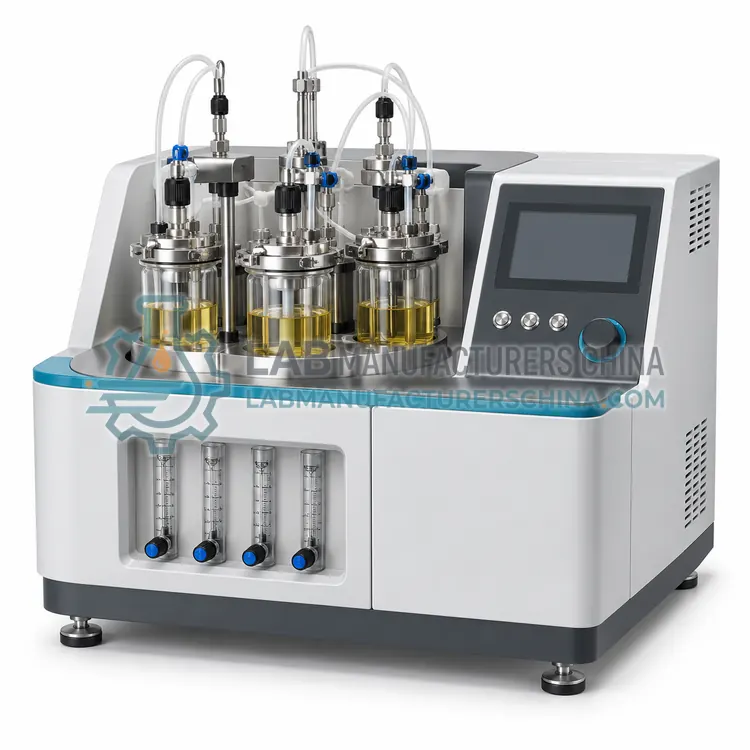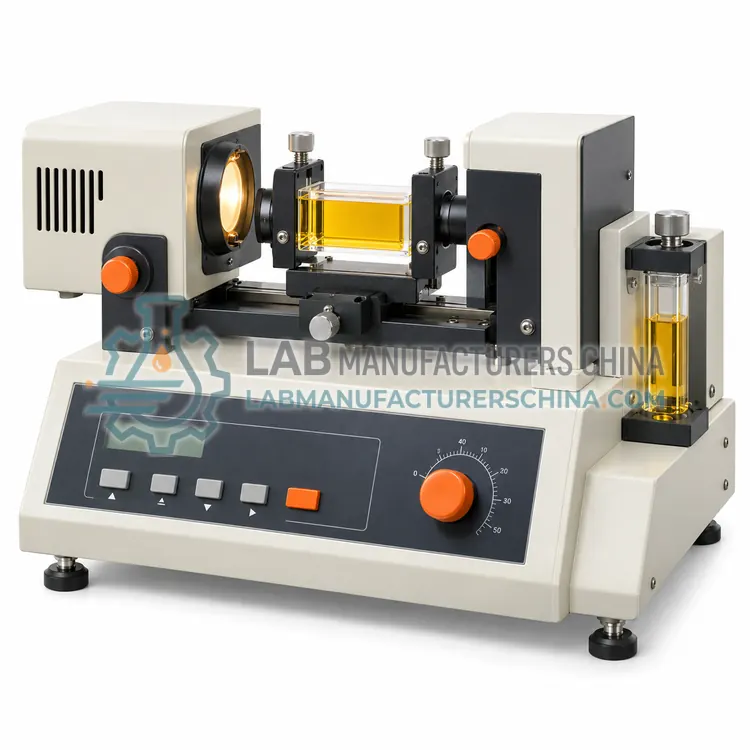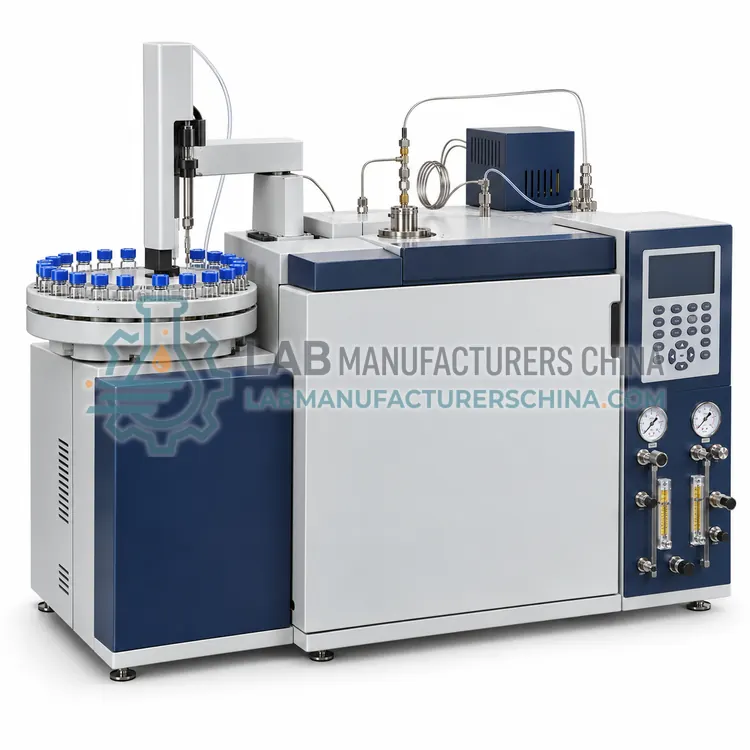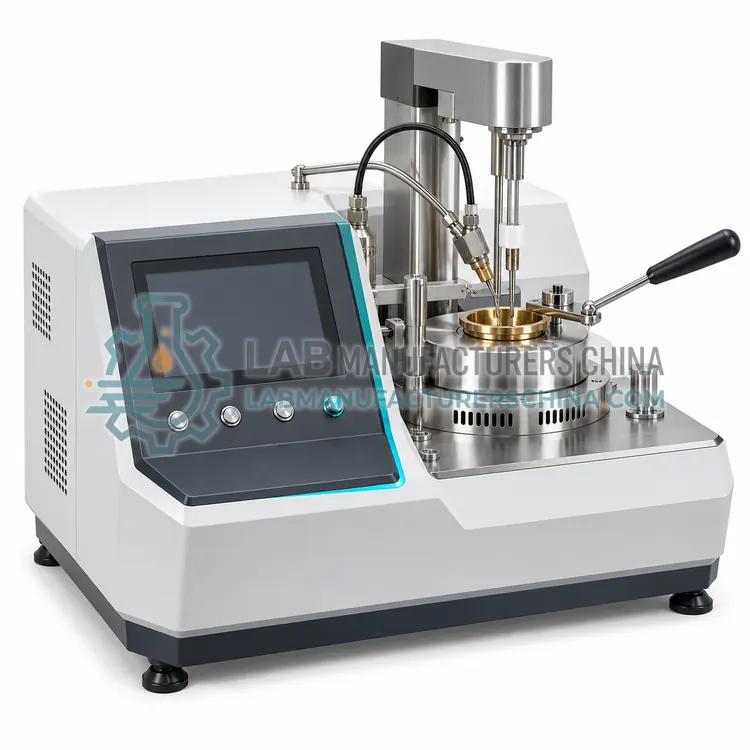
Frying Oil Total Polar Compounds Meter
煎炸油总极性组分检测仪
- SKU EOA-0002
- Edible Oil Analysis
- CE (to be confirmed)
- ISO 9001 manufacturing (to be confirmed)
Price on request — FOB / CIF quoted per order
Prices depend on configuration, quantity and destination port.
Key specifications
| Measurement range | 0–40 % TPM |
|---|---|
| Resolution | 0.5 % TPM |
| Accuracy | ± 2 % TPM (typical) |
| Oil temperature range | 40–200 °C |
| Response time | ≈ 5–10 s |
| Probe material | Stainless steel |
Request a quote Download brochure · to be provided
By Lab Manufacturers China Technical TeamLast reviewed Standards: ISO 660, ISO 3960, ISO 6886
What is the Frying Oil Total Polar Compounds Meter?
A frying oil total polar compounds meter measures changes in the dielectric constant of hot oil to estimate total polar compound percentage. It lets food service operators decide quickly when to replace frying oil, and can be verified periodically against reference column chromatography.
What is the Frying Oil Total Polar Compounds Meter?
A frying oil total polar compounds meter measures changes in the dielectric constant of hot oil to estimate total polar compound percentage. It lets food service operators decide quickly when to replace frying oil, and can be verified periodically against reference column chromatography.
Overview
During frying, triglycerides oxidize, polymerize and hydrolyze, forming polar compounds that increase the dielectric constant of the oil. The handheld meter has a capacitive probe that is immersed in oil at 40 to 200 degrees Celsius; a microcontroller measures capacitance, corrects for oil temperature and converts the result into percentage total polar material using calibrations for common oils such as palm, rapeseed and sunflower oil. Results appear within seconds, and the probe needs only wiping between measurements. Many regulations, including those in Germany, France and Belgium, use 24 to 27 percent as the discard limit. Sensors are secondary indicators, so periodic verification with ISO 8420 column chromatography and calibration with reference oils are recommended.
How does it work?
Edible oil quality is defined by hydrolytic, oxidative and compositional indicators. Free fatty acids are measured by titrating the oil dissolved in an ethanol-ether or isopropanol mixture with standard potassium hydroxide, and expressed as acid value in mg KOH/g. Peroxide value is determined by iodometric titration of the iodine liberated from potassium iodide by hydroperoxides, expressed in meq O2/kg. Fatty acid composition is obtained by converting triglycerides to methyl esters and separating them on a polar capillary GC column with flame ionization detection. Oxidative stability is tested by bubbling heated air through the oil and monitoring conductivity of volatile acids formed. Total polar compounds in frying oil are estimated from dielectric constant changes or measured by silica column chromatography. Color is graded by transmittance against Lovibond or CIE scales.
What are the key features?
- Capacitive probe for direct measurement in oil at 40–200 °C
- Automatic temperature compensation with stainless steel probe
- Preloaded calibration curves for common frying oils
- Reading within a few seconds with hold function
- Rugged handheld housing with battery operation
What are the technical specifications?
A typical frying oil total polar compounds meter configuration offers measurement range of 0–40 % TPM, resolution of 0.5 % TPM, accuracy of ± 2 % TPM (typical), oil temperature range of 40–200 °C, response time of ≈ 5–10 s and probe material of Stainless steel. Values are indicative of the product class; the exact figures for each configuration are confirmed on the quotation and the calibration documents supplied with the instrument.
Which applications is it used for?
The Frying Oil Total Polar Compounds Meter is used in restaurant and fast-food fryer management, food factory frying line monitoring and food safety inspections. Across the wider Edible Oil Analysis class, laboratories also deploy it for oil refinery batch quality control, shelf-life and storage studies and frying oil change decisions in food service.
Which standards and certifications apply?
Relevant standards and methods include ISO 660, ISO 3960, ISO 6886, ISO 12966-2, ISO 6320, AOCS Cd 12b-92, AOCS Cd 20-91, GB 5009.229 and GB 5009.227. Certification candidates for this model are CE and ISO 9001 manufacturing; each is to be confirmed for the specific configuration before shipment, and certificates are supplied only where they have been issued.
Keep edible oil samples cool, dark and sealed, since light, air and metal contact accelerate oxidation and distort peroxide results. Use reagents of specified grade and prepare titrants fresh; standardize potassium hydroxide and sodium thiosulfate regularly. Electrodes for titration need conditioning for nonaqueous media. GC columns, septa and liners need routine replacement, and methylation reagents such as boron trifluoride require fume-hood handling. Oxidative stability testers need accurate heating-block temperature calibration and clean reaction vessels. Frying oil sensors should be verified against reference oil or column chromatography. Follow laboratory safety rules for solvents and food-sample hygiene.
How do I select the right Frying Oil Total Polar Compounds Meter?
Select this meter for quick on-site decisions on frying oil change at the fryer. Specify the oil types, temperature range, calibration method and whether readings must be traceable to ISO 8420. Choose laboratory chromatography when the result will be used in legal or dispute contexts.
How does it compare with other Edible Oil Analysis variants?
Decide first which decision the result supports. Refiners and oil mills need acid value, peroxide value, color and moisture for every batch; an automatic titrator reduces subjectivity compared with color-indicator titration. Frying operators need fast total polar compound readings at the fryer, where a handheld sensor is enough and a laboratory method confirms disputes. Shelf-life and formulation work need a conductometric oxidative stability tester that runs several samples at defined temperatures. Authenticity, nutritional labeling and trans-fat determination need GC fatty acid analysis. Match the instrument to the standard used in your market, such as ISO 660, ISO 3960, ISO 6886, ISO 12966 or GB 5009, and check sample throughput, detection limits, operator skill requirement and reagent costs.
Full specifications
| Measurement range | 0–40 % TPM |
|---|---|
| Resolution | 0.5 % TPM |
| Accuracy | ± 2 % TPM (typical) |
| Oil temperature range | 40–200 °C |
| Response time | ≈ 5–10 s |
| Probe material | Stainless steel |
| Calibration | Reference oil or column method |
| Memory | ≥ 100 readings |
| Power | 2 × AA batteries |
Indicative values for this product class. Final specifications are confirmed on the quotation and in the calibration documents supplied with the instrument.
Applications
- Restaurant and fast-food fryer management
- Food factory frying line monitoring
- Food safety inspections
Key features
- Capacitive probe for direct measurement in oil at 40–200 °C
- Automatic temperature compensation with stainless steel probe
- Preloaded calibration curves for common frying oils
- Reading within a few seconds with hold function
- Rugged handheld housing with battery operation
Frequently asked questions about Frying Oil Total Polar Compounds Meter
Many national rules set the discard limit at 24 to 27 percent total polar material. Operators often use an internal limit of 20 to 22 percent, because flavor and oil absorption worsen before the legal limit is reached.
Handheld meters correlate well with column chromatography for common oils, typically within 2 to 3 percentage points. They are designed for screening and should be checked periodically against reference oil or the ISO 8420 method.
Most probes are designed for oil between about 40 and 200 degrees Celsius. Below this range, the viscosity and temperature compensation may be unreliable, so measure hot oil at frying temperature or follow the manufacturer's recommended range.
Key parameters are acid value, peroxide value, moisture, color, fatty acid composition, oxidative stability and, for frying oil, total polar compounds. Each reflects hydrolysis, oxidation or composition, and together they show freshness, processing quality and suitability for consumption.
Acid value is the milligrams of potassium hydroxide needed to neutralize free fatty acids in one gram of oil. It rises as triglycerides hydrolyze, so it is used to monitor crude oil quality, refining efficiency and storage deterioration.
Frying oil is assessed by total polar compounds, typically discarded at 24 to 27 percent in many regulations. Handheld dielectric sensors give quick readings at the fryer, and column chromatography according to ISO 8420 provides the reference result.
Related models