Lab Manufacturers China

Edible Oil Analysis

食用油分析仪器

EOA · Oil Testing Equipment · 5 models

By Lab Manufacturers China Technical TeamLast reviewed Standards: ISO 660, ISO 3960, ISO 6886

Standards referenced

  • ISO 660
  • ISO 3960
  • ISO 6886
  • ISO 12966-2
  • ISO 6320
  • AOCS Cd 12b-92
  • AOCS Cd 20-91
  • GB 5009.229
  • GB 5009.227

What are Edible Oil Analysis?

Edible oil analysis instruments measure quality and stability parameters of vegetable oils and fats, including acid value, peroxide value, fatty acid profile, color, oxidative stability and polar compounds in frying oil. Refiners, food manufacturers, quality laboratories and regulators use them to control freshness, authenticity and compliance.

5 models of Edible Oil Analysis

The 5 models below are current configurations; specifications are confirmed on quotation.

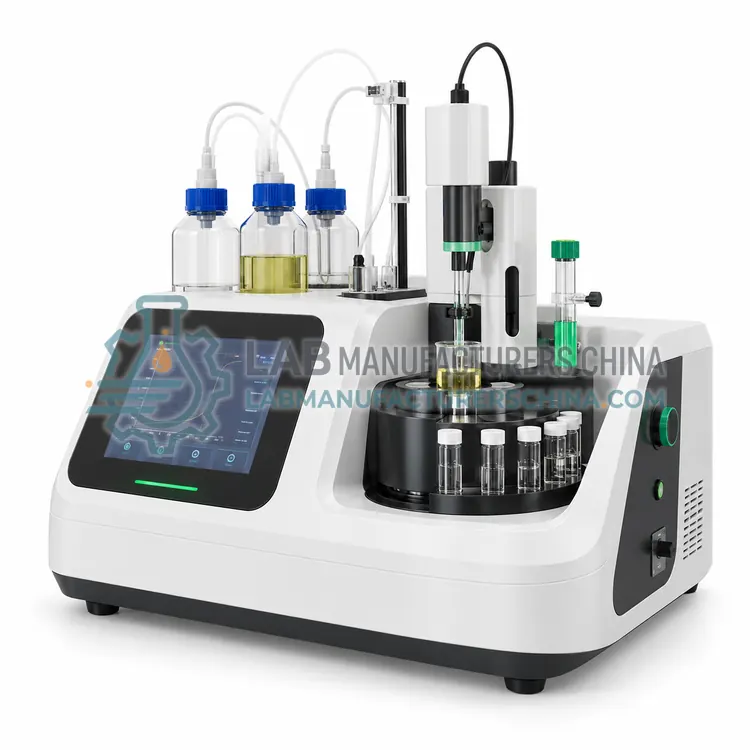
Automatic Potentiometric Titrator for Acid and Peroxide Value

酸价过氧化值自动电位滴定仪

  • EOA-0001
  • Edible Oil Analysis
  • CE (to be confirmed)
  • ISO 9001 manufacturing (to be confirmed)
Burette volume:
10 mL or 20 mL
Dosing resolution:
1/20,000 of burette volume
Acid value range:
0.05–50 mg KOH/g
Peroxide value range:
0.1–100 meq O2/kg
Potential resolution:
0.1 mV
Sample mass:
1–20 g

An automatic potentiometric titrator determines acid value and peroxide value in edible oils by detecting endpoints with electrodes instead of color indicators. It gives objective results for dark or turbid oils and supports batch testing in refinery and quality laboratories.

Request a quote
View details

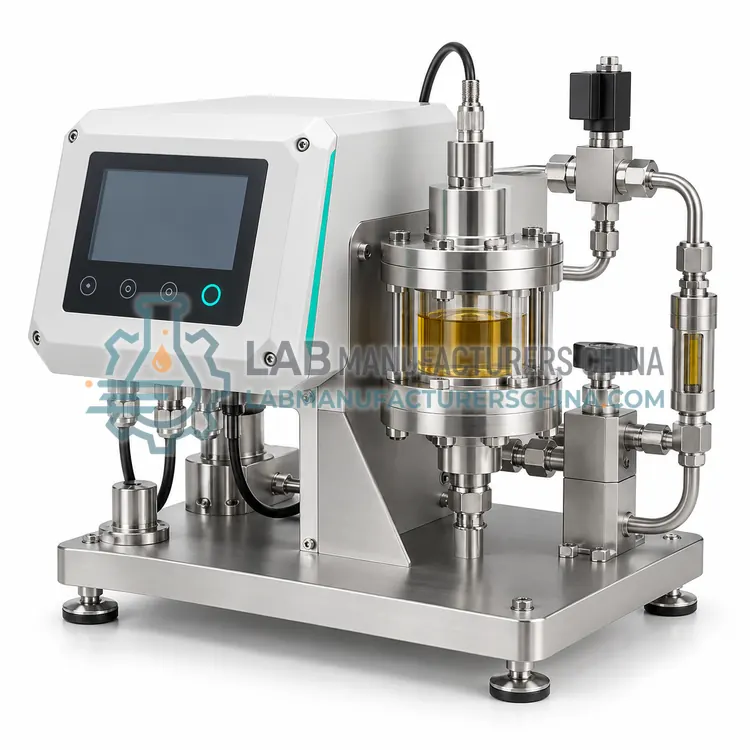
Frying Oil Total Polar Compounds Meter

煎炸油总极性组分检测仪

  • EOA-0002
  • Edible Oil Analysis
  • CE (to be confirmed)
  • ISO 9001 manufacturing (to be confirmed)
Measurement range:
0–40 % TPM
Resolution:
0.5 % TPM
Accuracy:
± 2 % TPM (typical)
Oil temperature range:
40–200 °C
Response time:
≈ 5–10 s
Probe material:
Stainless steel

A frying oil total polar compounds meter measures changes in the dielectric constant of hot oil to estimate total polar compound percentage. It lets food service operators decide quickly when to replace frying oil, and can be verified periodically against reference column chromatography.

Request a quote
View details

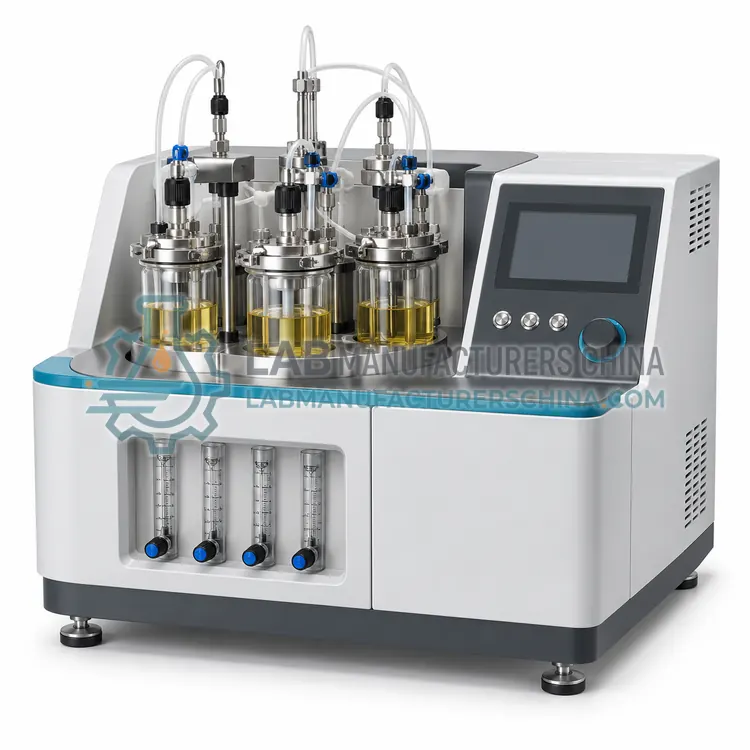
Conductometric Oxidative Stability Tester for Fats and Oils

油脂电导法氧化稳定性测定仪

  • EOA-0003
  • Edible Oil Analysis
  • CE (to be confirmed)
  • ISO 9001 manufacturing (to be confirmed)
Number of positions:
2, 4, 6 or 8
Temperature range:
50–220 °C
Temperature accuracy:
± 0.2 °C
Air flow rate:
7–25 L/h
Sample size:
≈ 3 g (oils), 5 g (fats)
Conductivity range:
0–400 µS/cm

A conductometric oxidative stability tester ages oil samples under heat and airflow and detects the induction time at which volatile acids sharply raise water conductivity. It measures oxidation resistance and antioxidant effect for shelf-life prediction, storage comparison and formulation studies in oil and food laboratories.

Request a quote
View details

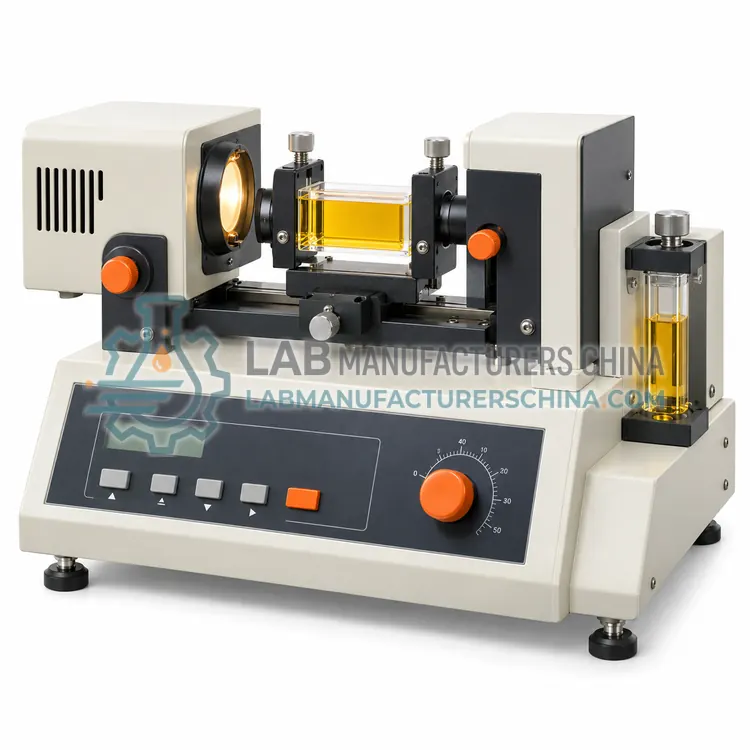
Edible Oil Colorimeter for Lovibond Color Grading

食用油 Lovibond 色泽测定仪

  • EOA-0004
  • Edible Oil Analysis
  • CE (to be confirmed)
  • ISO 9001 manufacturing (to be confirmed)
Wavelength range:
400–700 nm
Lovibond range:
Red 0–70, Yellow 0–70
Cell path lengths:
5.25 in, 1 in, 0.5 in
Photometric accuracy:
± 0.5 %T
Sample temperature:
Ambient to 60 °C
Measurement time:
< 10 s

An edible oil colorimeter measures oil color by transmittance through a fixed cell and reports Lovibond red and yellow units or CIE values. It is used for refining control, bleaching efficiency checks and grading of crude and refined oils against trade specifications and customer contracts.

Request a quote
View details

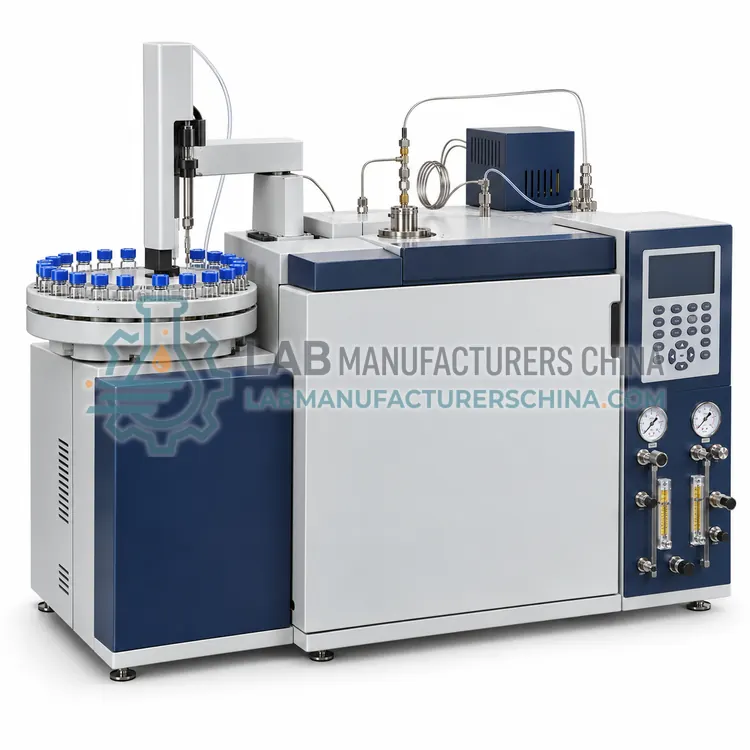
Gas Chromatograph for Fatty Acid Methyl Ester Profiling

脂肪酸甲酯分析气相色谱仪

  • EOA-0005
  • Edible Oil Analysis
  • CE (to be confirmed)
  • ISO 9001 manufacturing (to be confirmed)
Detector:
Flame ionization (FID)
Oven temperature range:
Ambient +5 to 450 °C
Oven ramp rate:
0.1–120 °C/min
Inlet type:
Split/splitless, up to 400 °C
FID sensitivity:
≤ 1.5 pg C/s
Column (typical):
100 m × 0.25 mm × 0.20 µm cyanopropyl

A fatty acid methyl ester gas chromatograph separates methylated triglyceride fatty acids on a polar capillary column and quantifies them by flame ionization detection. It supports oil authentication, nutritional labeling, trans-fat determination and composition checks for refineries and food laboratories.

Request a quote
View details

Compare Edible Oil Analysis models

ModelRepeatability (RSD)Power supply
Automatic Potentiometric Titrator for Acid and Peroxide ValueEOA-0001≤ 1 % (acid value)100–240 V AC, 50/60 Hz
Frying Oil Total Polar Compounds MeterEOA-0002——
Conductometric Oxidative Stability Tester for Fats and OilsEOA-0003≤ 3 %220 V AC, 50 Hz
Edible Oil Colorimeter for Lovibond Color GradingEOA-0004—100–240 V AC, 50/60 Hz
Gas Chromatograph for Fatty Acid Methyl Ester ProfilingEOA-0005—220 V AC, 50 Hz

Indicative values for this product class. Final specifications are confirmed on the quotation and in the calibration documents supplied with the instrument.

How do Edible Oil Analysis work?

Edible oil quality is defined by hydrolytic, oxidative and compositional indicators. Free fatty acids are measured by titrating the oil dissolved in an ethanol-ether or isopropanol mixture with standard potassium hydroxide, and expressed as acid value in mg KOH/g. Peroxide value is determined by iodometric titration of the iodine liberated from potassium iodide by hydroperoxides, expressed in meq O2/kg. Fatty acid composition is obtained by converting triglycerides to methyl esters and separating them on a polar capillary GC column with flame ionization detection. Oxidative stability is tested by bubbling heated air through the oil and monitoring conductivity of volatile acids formed. Total polar compounds in frying oil are estimated from dielectric constant changes or measured by silica column chromatography. Color is graded by transmittance against Lovibond or CIE scales.

Which Edible Oil Analysis variants are available?

  • Automatic Potentiometric Titrator for Acid and Peroxide Value — An automatic potentiometric titrator determines acid value and peroxide value in edible oils by detecting endpoints with electrodes instead of color indicators.
  • Frying Oil Total Polar Compounds Meter — A frying oil total polar compounds meter measures changes in the dielectric constant of hot oil to estimate total polar compound percentage.
  • Conductometric Oxidative Stability Tester for Fats and Oils — A conductometric oxidative stability tester ages oil samples under heat and airflow and detects the induction time at which volatile acids sharply raise water conductivity.
  • Edible Oil Colorimeter for Lovibond Color Grading — An edible oil colorimeter measures oil color by transmittance through a fixed cell and reports Lovibond red and yellow units or CIE values.
  • Gas Chromatograph for Fatty Acid Methyl Ester Profiling — A fatty acid methyl ester gas chromatograph separates methylated triglyceride fatty acids on a polar capillary column and quantifies them by flame ionization detection.

How do I choose the right variant?

Decide first which decision the result supports. Refiners and oil mills need acid value, peroxide value, color and moisture for every batch; an automatic titrator reduces subjectivity compared with color-indicator titration. Frying operators need fast total polar compound readings at the fryer, where a handheld sensor is enough and a laboratory method confirms disputes. Shelf-life and formulation work need a conductometric oxidative stability tester that runs several samples at defined temperatures. Authenticity, nutritional labeling and trans-fat determination need GC fatty acid analysis. Match the instrument to the standard used in your market, such as ISO 660, ISO 3960, ISO 6886, ISO 12966 or GB 5009, and check sample throughput, detection limits, operator skill requirement and reagent costs.

Where are Edible Oil Analysis used?

Edible Oil Analysis are specified in oil refinery batch quality control, shelf-life and storage studies, frying oil change decisions in food service, fatty acid profile and authenticity testing and regulatory compliance testing.

Which standards and certifications apply?

Work with Edible Oil Analysis is commonly governed by ISO 660, ISO 3960, ISO 6886, ISO 12966-2, ISO 6320, AOCS Cd 12b-92, AOCS Cd 20-91, GB 5009.229 and GB 5009.227. Instrument certifications such as CE marking are confirmed per configuration and never assumed.

What are the key considerations before purchase?

Keep edible oil samples cool, dark and sealed, since light, air and metal contact accelerate oxidation and distort peroxide results. Use reagents of specified grade and prepare titrants fresh; standardize potassium hydroxide and sodium thiosulfate regularly. Electrodes for titration need conditioning for nonaqueous media. GC columns, septa and liners need routine replacement, and methylation reagents such as boron trifluoride require fume-hood handling. Oxidative stability testers need accurate heating-block temperature calibration and clean reaction vessels. Frying oil sensors should be verified against reference oil or column chromatography. Follow laboratory safety rules for solvents and food-sample hygiene.

Frequently asked questions about Edible Oil Analysis

Key parameters are acid value, peroxide value, moisture, color, fatty acid composition, oxidative stability and, for frying oil, total polar compounds. Each reflects hydrolysis, oxidation or composition, and together they show freshness, processing quality and suitability for consumption.

Need help specifying Edible Oil Analysis?

Request a quote