Lab Manufacturers China

Oil Condition Monitoring

油液状态监测设备

OCM · Oil Testing Equipment · 5 models

By Lab Manufacturers China Technical TeamLast reviewed Standards: ISO 4406, ISO 4407, ISO 11171

Standards referenced

  • ISO 4406
  • ISO 4407
  • ISO 11171
  • ISO 17359
  • ISO 13374
  • ASTM D7647
  • ASTM D7917
  • IEC 60079-0

What are Oil Condition Monitoring?

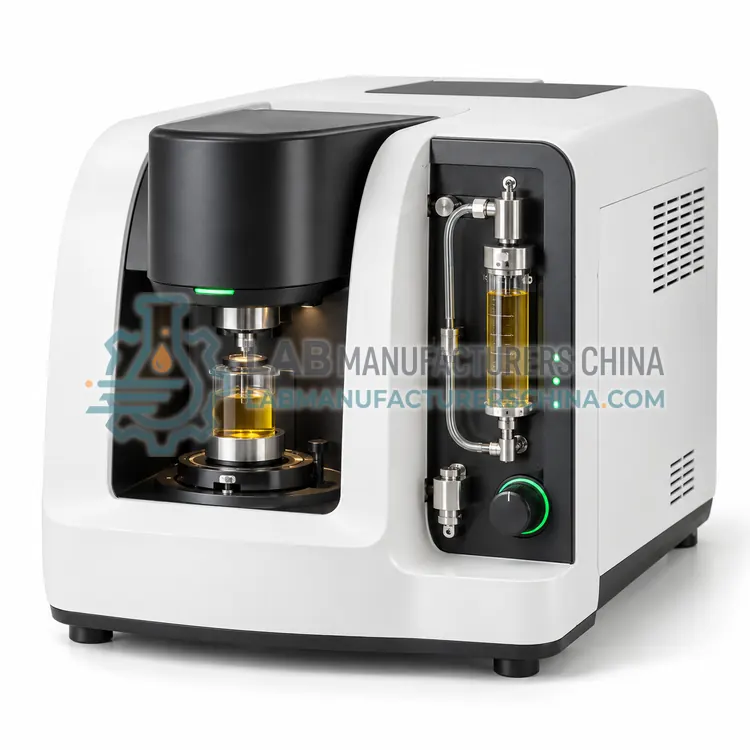
Oil condition monitoring equipment uses online, inline and portable sensors to track water content, particle contamination, wear debris, viscosity and dielectric properties of oil in operating machinery. Maintenance teams use the trends to detect problems early, extend oil life and prevent unplanned downtime.

5 models of Oil Condition Monitoring

The 5 models below are current configurations; specifications are confirmed on quotation.

Online Oil Moisture Sensor

在线油液水分传感器

  • OCM-0001
  • Oil Condition Monitoring
  • CE (to be confirmed)
  • ISO 9001 manufacturing (to be confirmed)
Measurement range:
0–100 % relative saturation
Accuracy:
± 3 % RS
Temperature range:
−40 to 100 °C
Operating pressure:
≤ 50 bar
Response time (T90):
≈ 2–5 min
Output:
4–20 mA, Modbus RTU

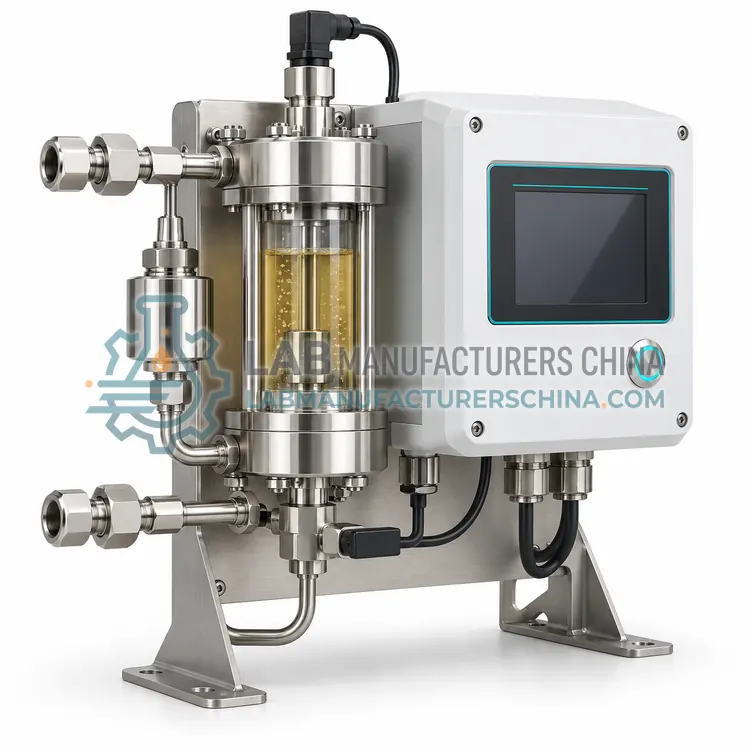
An online oil moisture sensor measures the relative saturation of water in oil with a capacitive polymer element and temperature probe. It gives continuous warning of water ingress in hydraulic, turbine and gearbox systems before free water forms and damages bearings.

Request a quote
View details

Inline Oil Particle Monitor

管路内油液颗粒监测仪

  • OCM-0002
  • Oil Condition Monitoring
  • CE (to be confirmed)
  • ISO 9001 manufacturing (to be confirmed)
Particle size channels:
≥ 4, 6, 14 µm(c)
Cleanliness code range:
ISO 4406 7/5/3 to 25/23/21
Flow rate:
50–400 mL/min
Operating pressure:
≤ 350 bar
Oil viscosity range:
≤ 350 mm²/s
Oil temperature:
−20 to 80 °C

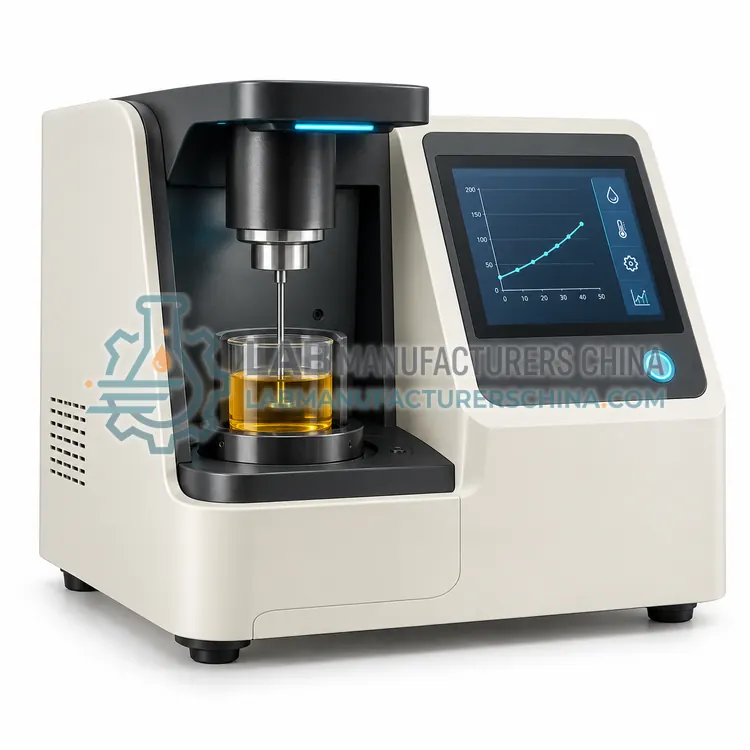
An inline oil particle monitor counts and sizes particles in a bypass flow using light extinction and reports ISO 4406 codes continuously. It supports cleanliness control of hydraulic, lubrication and transmission systems where contamination is a major cause of wear.

Request a quote
View details

Online Wear Debris Sensor

在线磨损碎屑传感器

  • OCM-0003
  • Oil Condition Monitoring
  • CE (to be confirmed)
  • ISO 9001 manufacturing (to be confirmed)
Detection threshold, ferrous:
≈ 50–100 µm
Detection threshold, non-ferrous:
≈ 200–300 µm
Flow rate range:
0.5–20 L/min (by tube size)
Operating pressure:
≤ 350 bar
Oil temperature:
−40 to 120 °C
Output:
4–20 mA, RS-485, Modbus, CAN

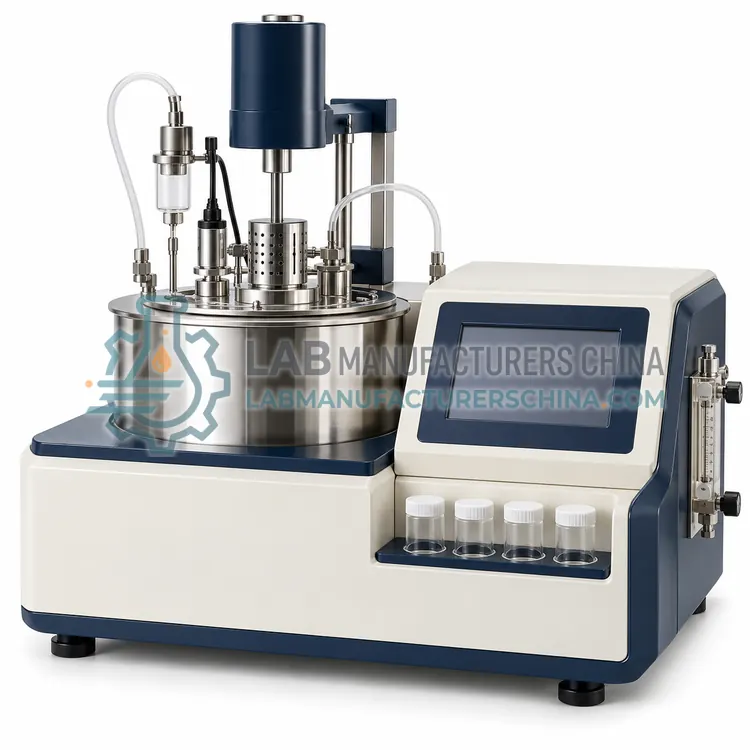
An online wear debris sensor detects and sizes ferrous and non-ferrous metallic particles in flowing oil using inductive coils. It provides early warning of component wear in gearboxes, engines and turbines by counting individual particles and trending cumulative mass.

Request a quote
View details

Multi-Parameter Online Oil Quality Sensor

多参数在线油品质量传感器

  • OCM-0004
  • Oil Condition Monitoring
  • CE (to be confirmed)
  • ISO 9001 manufacturing (to be confirmed)
Viscosity range:
1–1000 mPa·s
Viscosity accuracy:
± 5 % of reading
Density range:
0.7–1.2 g/cm³
Dielectric constant range:
1.5–6
Temperature range:
−40 to 150 °C
Operating pressure:
≤ 100 bar

A multi-parameter online oil quality sensor measures dielectric constant, conductivity, viscosity, density and temperature in one probe. It calculates an oil health index that signals oxidation, contamination and incorrect oil top-up in engines, gearboxes and hydraulic systems.

Request a quote
View details

Portable Oil Condition Analysis Kit

便携式油液状态分析套件

  • OCM-0005
  • Oil Condition Monitoring
  • CE (to be confirmed)
  • ISO 9001 manufacturing (to be confirmed)
Water detection:
≈ 500 ppm or 0–100 % RS
Viscosity range:
10–1000 mm²/s at 40 °C
Viscosity accuracy:
± 5–10 %
Particle estimate:
Patch test, ISO 4406 equivalent
TAN screening:
0.1–4 mg KOH/g
Sample volume:
≈ 2–20 mL per test

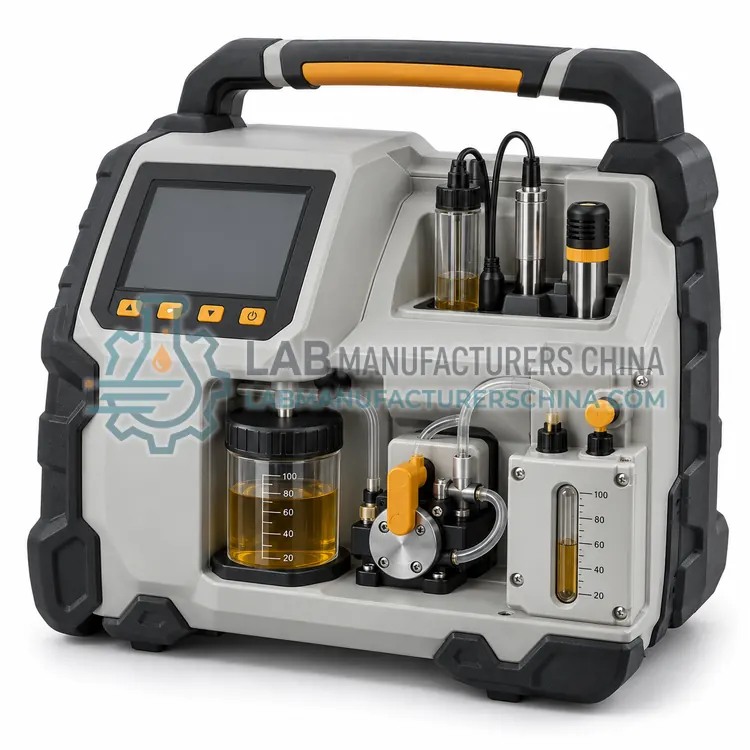
A portable oil condition analysis kit bundles handheld instruments for on-site checks of water, viscosity, particles, acidity and oil type. It lets technicians screen lubricant health at the machine and decide whether to send a sample to the laboratory.

Request a quote
View details

Compare Oil Condition Monitoring models

ModelTemperature rangeOperating pressureOutputIngress protectionSupply voltage
Online Oil Moisture SensorOCM-0001−40 to 100 °C≤ 50 bar4–20 mA, Modbus RTUIP679–30 V DC
Inline Oil Particle MonitorOCM-0002—≤ 350 bar4–20 mA, CAN, Modbus, EthernetIP679–36 V DC
Online Wear Debris SensorOCM-0003—≤ 350 bar4–20 mA, RS-485, Modbus, CANIP679–36 V DC
Multi-Parameter Online Oil Quality SensorOCM-0004−40 to 150 °C≤ 100 barCAN, Modbus, 4–20 mA—9–32 V DC
Portable Oil Condition Analysis KitOCM-0005—————

Indicative values for this product class. Final specifications are confirmed on the quotation and in the calibration documents supplied with the instrument.

How do Oil Condition Monitoring work?

Condition monitoring sensors convert a physical property of oil into an electrical signal. Capacitive polymer sensors measure relative humidity of oil, expressed as percent saturation, because water absorbs into a polymer film and changes its capacitance. Light-blocking or light-scattering sensors count particles in a small flow cell, from which ISO 4406 cleanliness codes are derived. Inductive coil sensors detect ferrous and non-ferrous metal particles passing through a coil by the perturbation they cause in a magnetic field. Multi-sensor probes combine dielectric constant, conductivity, temperature and viscosity, computed from resonant tuning fork or quartz crystal oscillation, to produce an oil health index. Data is logged in a controller and transmitted to a condition monitoring platform through 4-20 mA, Modbus or other protocols, where alarm thresholds and trends are evaluated.

Which Oil Condition Monitoring variants are available?

  • Online Oil Moisture Sensor — An online oil moisture sensor measures the relative saturation of water in oil with a capacitive polymer element and temperature probe.
  • Inline Oil Particle Monitor — An inline oil particle monitor counts and sizes particles in a bypass flow using light extinction and reports ISO 4406 codes continuously.
  • Online Wear Debris Sensor — An online wear debris sensor detects and sizes ferrous and non-ferrous metallic particles in flowing oil using inductive coils.
  • Multi-Parameter Online Oil Quality Sensor — A multi-parameter online oil quality sensor measures dielectric constant, conductivity, viscosity, density and temperature in one probe.
  • Portable Oil Condition Analysis Kit — A portable oil condition analysis kit bundles handheld instruments for on-site checks of water, viscosity, particles, acidity and oil type.

How do I choose the right variant?

Match the sensor to the failure modes that matter for the asset. Hydraulic and turbine systems suffer mostly from particle and water contamination, so a particle monitor and moisture sensor are the priority. Gearboxes and engines exhibit wear and oil degradation, where a wear-debris sensor and a multi-parameter probe give earlier warning. Decide between inline permanent installation and portable devices: inline gives continuous trends and alarms, while portable gives flexible coverage of many assets. Check operating pressure and temperature, installation port threads, output signals, hazardous-area approvals, calibration method and whether the sensor reports absolute values, such as ppm water, or relative trends only. Integration with existing SCADA or CMMS systems should be confirmed before purchase.

Where are Oil Condition Monitoring used?

Oil Condition Monitoring are specified in hydraulic system cleanliness monitoring, wind turbine gearbox oil condition monitoring, turbine lube oil water detection, mobile equipment and mining fleet maintenance and industrial gearbox and compressor monitoring.

Which standards and certifications apply?

Work with Oil Condition Monitoring is commonly governed by ISO 4406, ISO 4407, ISO 11171, ISO 17359, ISO 13374, ASTM D7647, ASTM D7917 and IEC 60079-0. Instrument certifications such as CE marking are confirmed per configuration and never assumed.

What are the key considerations before purchase?

Install sensors at representative locations, typically in a flowing return line downstream of the component and upstream of the filter, where oil is well mixed and pressure is moderate. Avoid dead legs and ensure flow within the sensor's specified range. Configure alarms based on baseline data from new or healthy oil, not generic limits alone. Periodically verify sensor output against laboratory samples, since sensors drift or fouling can occur. Protect cables and connectors from vibration and heat, and follow hazardous-area requirements such as ATEX or IECEx where applicable. Document installation, calibration and alarm settings.

Frequently asked questions about Oil Condition Monitoring

Oil condition monitoring tracks the health of lubricating or hydraulic oil using sensors or periodic tests, measuring water, particles, wear debris, viscosity and chemistry. Trends reveal contamination, wear or degradation early so maintenance can be planned before failure.

Need help specifying Oil Condition Monitoring?

Request a quote