Lab Manufacturers China

Fuel Oil Analysis

燃料油分析仪器

FOA · Oil Testing Equipment · 5 models

By Lab Manufacturers China Technical TeamLast reviewed Standards: ISO 8217, ASTM D396, ASTM D4052

Standards referenced

  • ISO 8217
  • ASTM D396
  • ASTM D4052
  • ASTM D4294
  • ISO 8754
  • ASTM D93
  • ISO 2719
  • ASTM D4530
  • ASTM D4007

What are Fuel Oil Analysis?

Fuel oil analysis instruments measure density, sulfur, flash point, carbon residue, water and sediment in residual and distillate fuel oils. Refiners, bunker suppliers, ship operators, power plants and independent inspectors use them to verify specification compliance, combustion behavior and safe handling before purchase, transfer or burning.

5 models of Fuel Oil Analysis

The 5 models below are current configurations; specifications are confirmed on quotation.

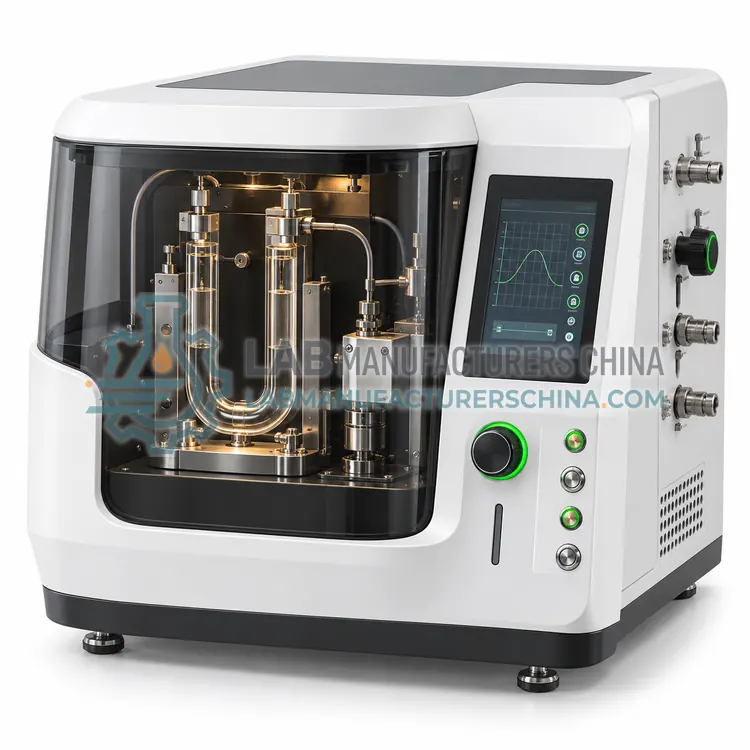
Fuel Oil Density Meter with Oscillating U-Tube

燃料油振荡 U 型管密度计

  • FOA-0001
  • Fuel Oil Analysis
  • CE (to be confirmed)
  • ISO 9001 manufacturing (to be confirmed)
Density range:
0–3 g/cm³
Density resolution:
0.0001 g/cm³
Accuracy:
± 0.0001 g/cm³ (typical)
Repeatability:
0.00005 g/cm³
Temperature range:
0–100 °C
Temperature accuracy:
± 0.02 °C

A fuel oil density meter measures density by oscillating a U-shaped tube filled with sample and converting the oscillation period to density at reference temperature. It provides rapid, precise density for bunker and industrial fuels and is used for mass-to-volume conversion and specification checks.

Request a quote
View details

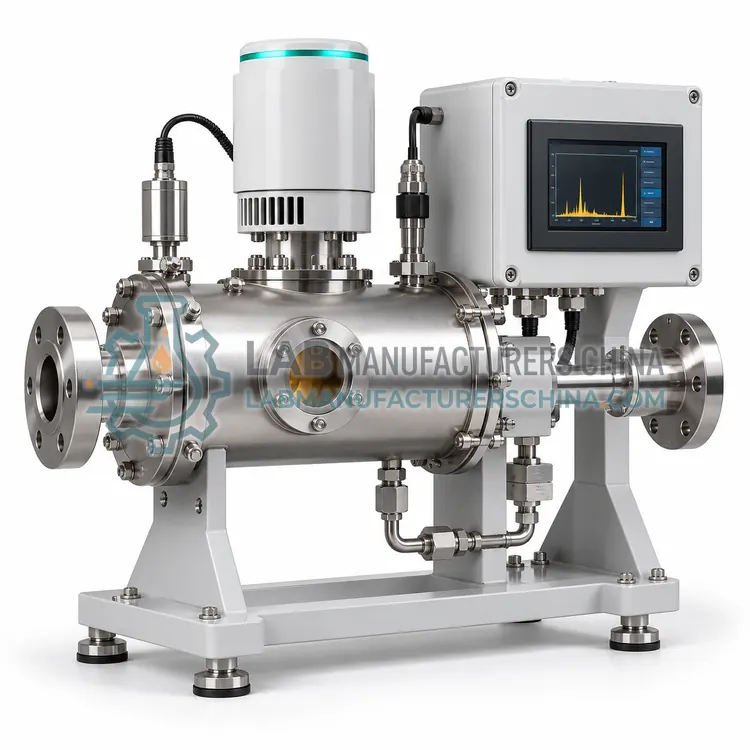
ED-XRF Sulfur Analyzer for Fuel Oil

燃料油 ED-XRF 硫含量分析仪

  • FOA-0002
  • Fuel Oil Analysis
  • CE (to be confirmed)
  • ISO 9001 manufacturing (to be confirmed)
Measurement range:
0.0015–5 % m/m S
Detection limit:
≈ 10 mg/kg
X-ray tube:
4–50 kV, ≤ 50 W
Detector:
Silicon drift or proportional
Measurement time:
30–300 s
Repeatability (r) at 1 % S:
≈ 0.03 % m/m

An ED-XRF sulfur analyzer for fuel oil irradiates a sample in a cell with X-rays and measures the sulfur fluorescence intensity to determine total sulfur. It gives results in minutes and is widely used for marine fuel compliance and refinery blending control.

Request a quote
View details

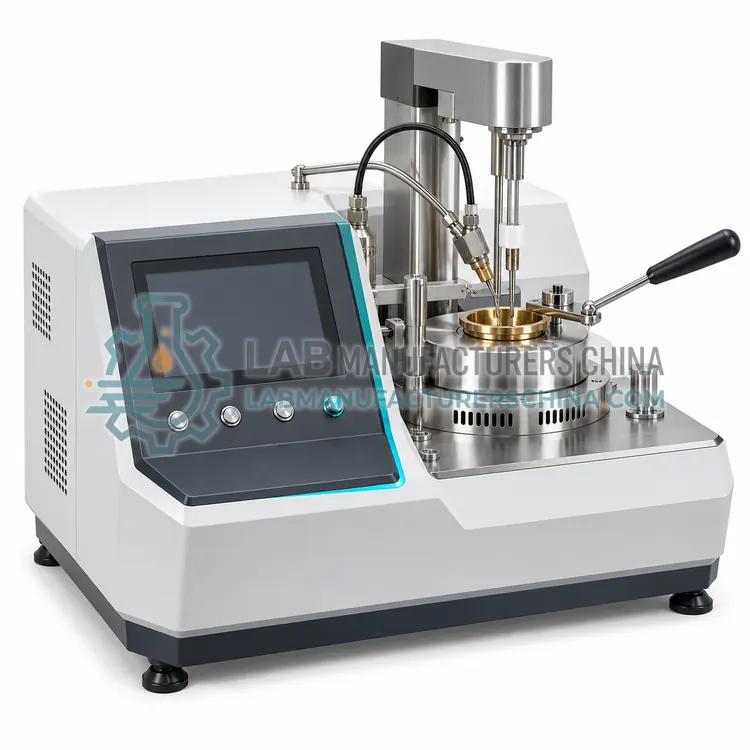
Automatic Pensky-Martens Closed Cup Flash Point Tester

自动彭斯基-马丁闭口闪点测定仪

  • FOA-0003
  • Fuel Oil Analysis
  • CE (to be confirmed)
  • ISO 9001 manufacturing (to be confirmed)
Temperature range:
Ambient to 370 °C
Temperature resolution:
0.1 °C
Heating rate:
1–5.5 °C/min (per procedure)
Stirring speed:
90–250 rpm
Ignition source:
Gas flame or electric igniter
Cup volume:
≈ 70 mL

An automatic Pensky-Martens closed cup tester heats stirred fuel oil at a controlled rate and applies an ignition source until vapor flashes. It automates flash point detection for residual fuels, where safety and regulations such as SOLAS require a minimum of 60 degrees Celsius.

Request a quote
View details

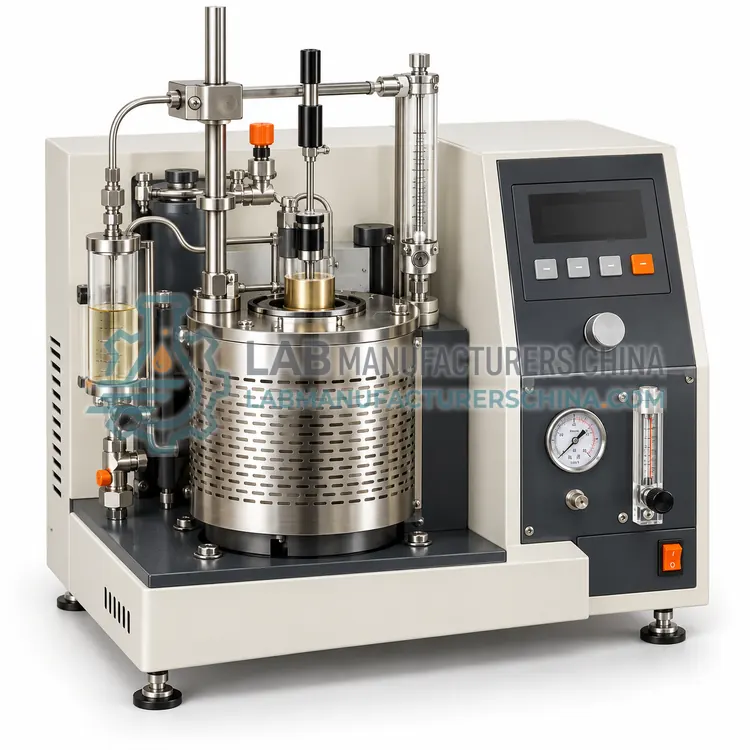
Micro Carbon Residue Tester for Fuel Oil

燃料油微量残炭测定仪

  • FOA-0004
  • Fuel Oil Analysis
  • CE (to be confirmed)
  • ISO 9001 manufacturing (to be confirmed)
Residue range:
0.01–30 % m/m
Final temperature:
500 °C
Temperature accuracy:
± 2 °C
Nitrogen flow:
600 ± 50 mL/min
Number of positions:
6 or 12
Sample mass:
≈ 0.15–5 g (by residue level)

A micro carbon residue tester thermally cracks a weighed fuel sample under nitrogen at 500 degrees Celsius and weighs the remaining carbonaceous residue. It predicts deposit-forming tendency in engines and boilers and is required by ISO 8217 for residual marine fuels.

Request a quote
View details

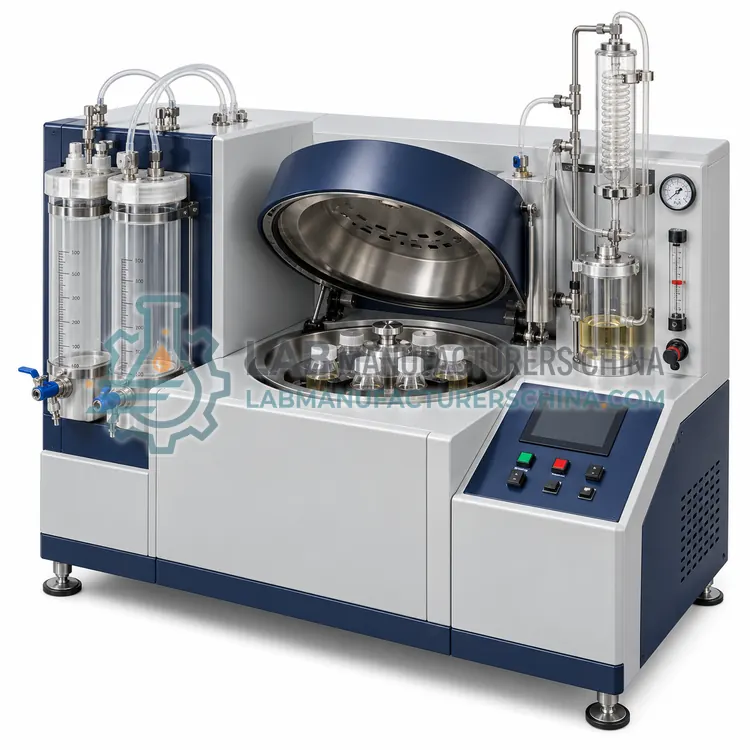
Water and Sediment Centrifuge for Fuel Oil

燃料油水分沉淀物离心机

  • FOA-0005
  • Fuel Oil Analysis
  • CE (to be confirmed)
  • ISO 9001 manufacturing (to be confirmed)
Number of tubes:
4, 6 or 8 × 100 mL
Relative centrifugal force:
≥ 800 at tip (up to 1500)
Speed range:
500–4000 rpm
Temperature control:
Ambient to 65 °C, ± 3 °C
Timer:
1–99 min
Tube readability:
0.05 mL (0–1 mL), 0.1 mL beyond

A water and sediment centrifuge spins fuel oil mixed with solvent and demulsifier in graduated tubes to separate free water and sediment, which are read directly as volume percent. It is used at terminals, refineries and ships for acceptance and quantity adjustment.

Request a quote
View details

Compare Fuel Oil Analysis models

ModelRepeatabilityTemperature rangeTemperature accuracySample volumeMeasurement time
Fuel Oil Density Meter with Oscillating U-TubeFOA-00010.00005 g/cm³0–100 °C± 0.02 °C≈ 1–2 mL≈ 2–4 min
ED-XRF Sulfur Analyzer for Fuel OilFOA-0002———≈ 4–10 mL30–300 s
Automatic Pensky-Martens Closed Cup Flash Point TesterFOA-0003per ASTM D93 (≈ 5 °C at 100 °C)Ambient to 370 °C———
Micro Carbon Residue Tester for Fuel OilFOA-0004per ASTM D4530—± 2 °C——
Water and Sediment Centrifuge for Fuel OilFOA-0005———50 mL fuel per tube—

Indicative values for this product class. Final specifications are confirmed on the quotation and in the calibration documents supplied with the instrument.

How do Fuel Oil Analysis work?

Fuel oil specifications rely on a set of physical and chemical tests. Density is obtained by oscillating U-tube: the natural frequency of a tube filled with oil depends on its mass, so period is converted to density at 15 degrees Celsius. Sulfur is measured by energy-dispersive X-ray fluorescence, where X-rays excite sulfur atoms and the intensity of the S K-alpha line, calibrated against standards, gives mass percent. Flash point is determined by heating oil in a closed Pensky-Martens cup with stirring and applying an ignition source at intervals until the vapor flashes. Micro carbon residue is obtained by thermally decomposing a weighed sample under nitrogen at 500 degrees Celsius. Water and sediment are separated by centrifuging fuel with solvent and reading the volume of the settled layer.

Which Fuel Oil Analysis variants are available?

  • Fuel Oil Density Meter with Oscillating U-Tube — A fuel oil density meter measures density by oscillating a U-shaped tube filled with sample and converting the oscillation period to density at reference temperature.
  • ED-XRF Sulfur Analyzer for Fuel Oil — An ED-XRF sulfur analyzer for fuel oil irradiates a sample in a cell with X-rays and measures the sulfur fluorescence intensity to determine total sulfur.
  • Automatic Pensky-Martens Closed Cup Flash Point Tester — An automatic Pensky-Martens closed cup tester heats stirred fuel oil at a controlled rate and applies an ignition source until vapor flashes.
  • Micro Carbon Residue Tester for Fuel Oil — A micro carbon residue tester thermally cracks a weighed fuel sample under nitrogen at 500 degrees Celsius and weighs the remaining carbonaceous residue.
  • Water and Sediment Centrifuge for Fuel Oil — A water and sediment centrifuge spins fuel oil mixed with solvent and demulsifier in graduated tubes to separate free water and sediment, which are read directly as volume percent.

How do I choose the right variant?

Select instruments according to the specification you must certify. Marine fuel compliance to ISO 8217 needs density, sulfur, flash point, carbon residue, water, sediment and viscosity, so a laboratory normally combines several instruments. For sulfur, choose an ED-XRF analyzer if your limit is 0.1 to 3.5 percent, as with marine fuels and MARPOL limits, and UV fluorescence or WD-XRF only for trace levels. For flash point, choose manual or automatic Pensky-Martens testers, and note that the automatic version improves repeatability and safety. Density meters should have temperature control and viscosity correction for heavy fuel. Also evaluate throughput, sample heating, cleaning time, calibration standards, data-management features and whether the method is accepted by your customers or port authorities.

Where are Fuel Oil Analysis used?

Fuel Oil Analysis are specified in bunker fuel quality verification, power plant fuel inspection, refinery blending control, independent inspection and dispute resolution and industrial boiler fuel acceptance.

Which standards and certifications apply?

Work with Fuel Oil Analysis is commonly governed by ISO 8217, ASTM D396, ASTM D4052, ASTM D4294, ISO 8754, ASTM D93, ISO 2719, ASTM D4530 and ASTM D4007. Instrument certifications such as CE marking are confirmed per configuration and never assumed.

What are the key considerations before purchase?

Fuel oil samples should be representative, taken according to ISO 3170 or ASTM D4057, and heated and homogenized before analysis because heavy fuel stratifies. Instrument temperature control and cleaning between samples determine repeatability: use solvent rinses and dry thoroughly. Flash point testers require barometric pressure input and periodic verification with reference fluids. XRF analyzers need warm-up time, calibration check samples and periodic film or window replacement. Centrifuges must be balanced and located on a stable bench. Because fuel oil is flammable and samples may contain hydrogen sulfide, use good ventilation, grounding and suitable personal protective equipment.

Frequently asked questions about Fuel Oil Analysis

ISO 8217 lists density, kinematic viscosity, flash point, sulfur, carbon residue, water, sediment, ash, pour point and other parameters. Laboratories combine density meters, sulfur analyzers, flash point testers, viscometers and carbon residue testers to assess compliance.

Need help specifying Fuel Oil Analysis?

Request a quote