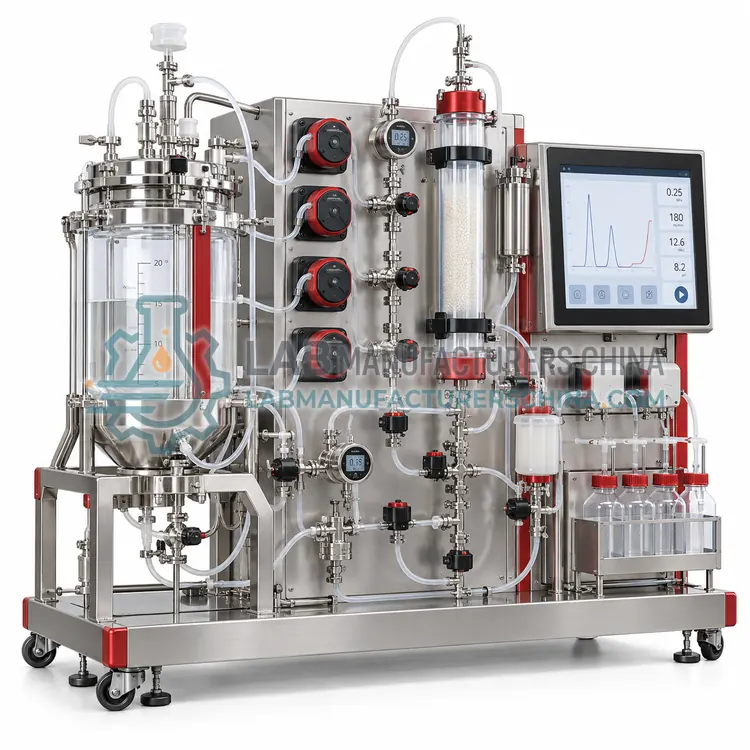
How do Protein Purification work?
Chromatographic purification separates proteins by differences in a specific property. In affinity chromatography, a ligand such as immobilised nickel for histidine tags, glutathione for GST tags or protein A for antibodies retains the target while other proteins wash through, and a competing agent or a pH shift elutes it. Ion exchange uses charged resins so that proteins bind according to net charge at a chosen pH and elute under a salt gradient. Hydrophobic interaction chromatography binds proteins in high-salt buffers and elutes them as salt decreases. Size exclusion separates by hydrodynamic radius, with large molecules eluting first, which makes it useful for aggregate removal and buffer exchange. Magnetic bead methods bind the target on functionalised particles and collect them with a magnet, allowing parallel small-scale purification. Throughout, detectors measure absorbance at 280 nm and conductivity, and fractions are collected by peak.
Which Protein Purification variants are available?
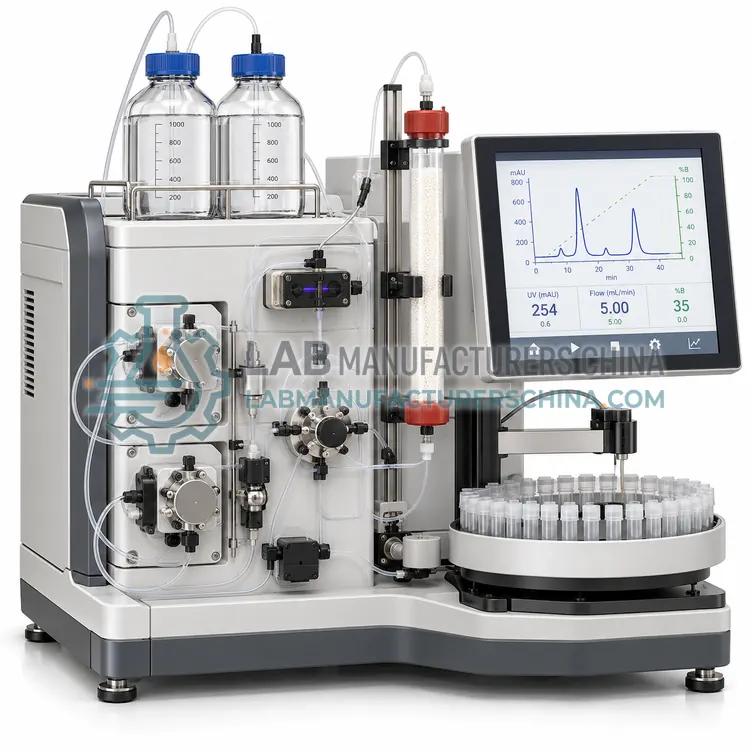
- Fast Protein Liquid Chromatography System — A fast protein liquid chromatography system uses two or more pumps to create salt, pH or affinity gradients at pressures up to a few MPa, with UV and conductivity detection and automated fraction collection.
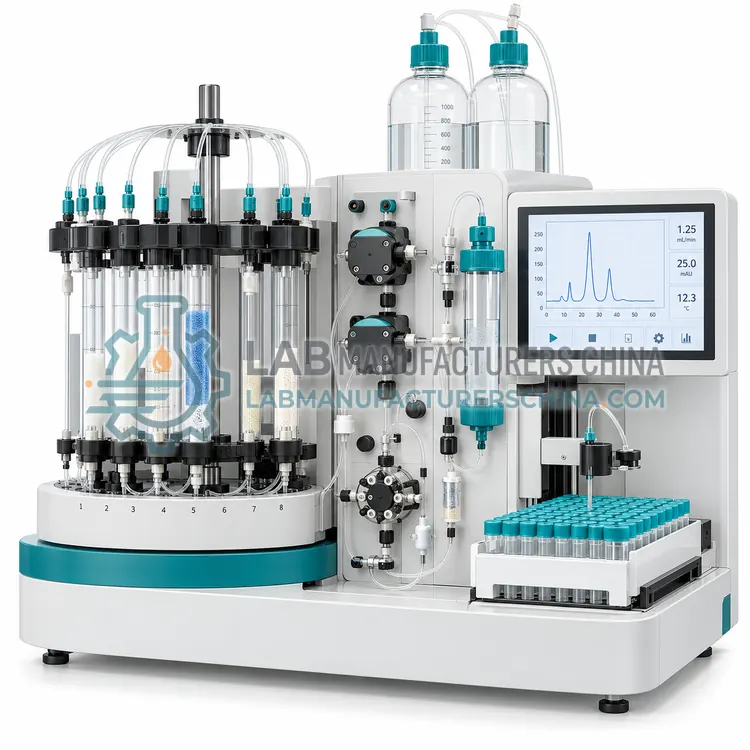
- Automated Affinity Purification System — An automated affinity purification system captures tagged or antibody-based targets on affinity resin inside a programmable instrument, performing load, wash, elution and cleaning steps automatically for 1 to 8 samples in parallel.
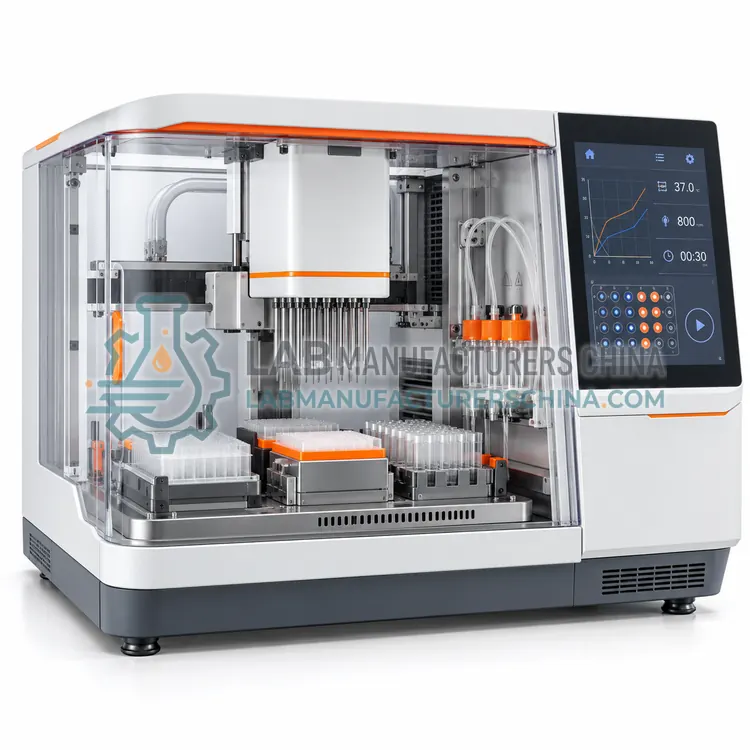
- Magnetic Bead Protein Purification Instrument — A magnetic bead protein purification instrument captures tagged proteins on functionalised magnetic particles and collects them with a magnetic rod, allowing 8 to 96 small-scale purifications in parallel for expression screening and yield optimisation.
- Size Exclusion Chromatography System — A size exclusion chromatography system separates proteins by hydrodynamic radius on a porous resin, with large molecules eluting first.
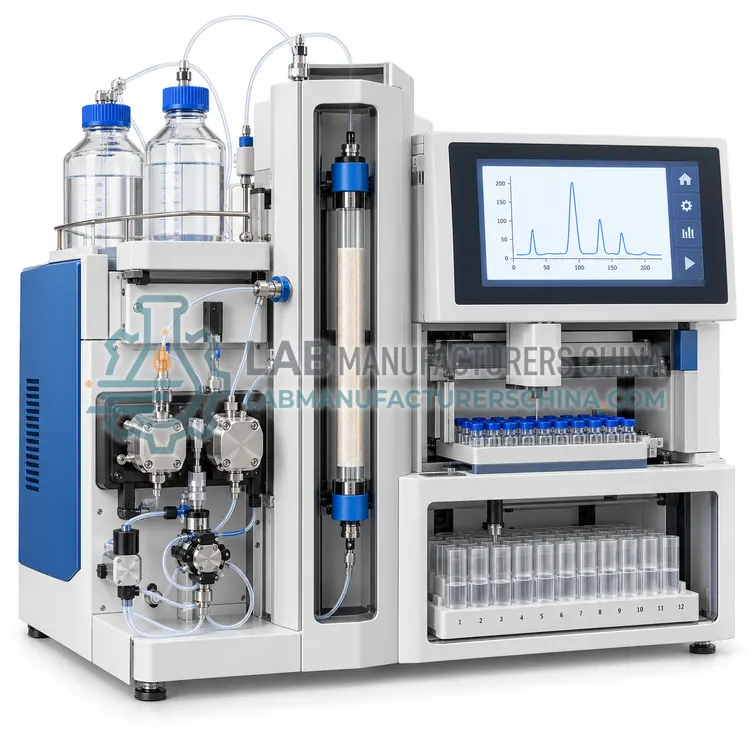
- Perfusion Chromatography System — A perfusion chromatography system uses rigid particles with large through-pores so that mobile phase flows through the beads rather than around them, allowing high flow rates and short cycles.
How do I choose the right variant?
Match the purification mode to the property you will exploit: a tag or known binding partner points to affinity chromatography, charge differences to ion exchange, salt-dependent hydrophobicity to hydrophobic interaction, and size differences to size exclusion. Then decide on scale and automation. Magnetic bead instruments suit parallel screening of 8–96 small samples where yield optimisation matters. Fast protein liquid chromatography systems with gradient pumps and fraction collectors handle method development and preparative work up to tens of milligrams per run. For screening many conditions quickly, perfusion chromatography allows short cycles at high flow rates. Check pressure rating, flow rate range, column and resin compatibility, gradient accuracy, fraction collector capacity and whether the software records methods and runs for traceability.
Where are Protein Purification used?
Protein Purification are specified in recombinant protein purification for analysis, antibody purification from culture supernatant, aggregate and fragment removal before testing, buffer exchange into assay-compatible solutions and enzyme and native protein isolation.
Which standards and certifications apply?
Work with Protein Purification is commonly governed by USP <1057>, Ph. Eur. 2.2.29, Ph. Eur. 2.2.30, IEC 61010-1, ISO 17025 and 21 CFR Part 11. Instrument certifications such as CE marking are confirmed per configuration and never assumed.
What are the key considerations before purchase?
Maintain the system at a stable temperature, either at ambient with buffer equilibration or in a cold cabinet for labile proteins. Filter and degas all buffers to prevent pump damage and baseline noise, and choose buffers compatible with the resin and the downstream assay. Sanitise or clean-in-place the flow path between different proteins to avoid cross-contamination, and store columns in the recommended preservative. Monitor pressure throughout the run, because resin compression or a blocked line shows up first as rising pressure and then as distorted peaks. Keep tubing volumes small to limit peak broadening. Validate linearity, precision and carry-over before use in quality control, and retain chromatograms, gradients and fraction records so that a purification can be reproduced or investigated later.