Lab Manufacturers China

Protein Analysis

蛋白分析仪器

PRA · Life Science Equipment · 5 models

By Lab Manufacturers China Technical TeamLast reviewed Standards: IEC 61010-1, IEC 61010-2-101, IEC 61326-2-6

Standards referenced

  • IEC 61010-1
  • IEC 61010-2-101
  • IEC 61326-2-6
  • USP <1053>
  • USP <1055>
  • Ph. Eur. 2.2.31
  • ICH Q6B

What are Protein Analysis?

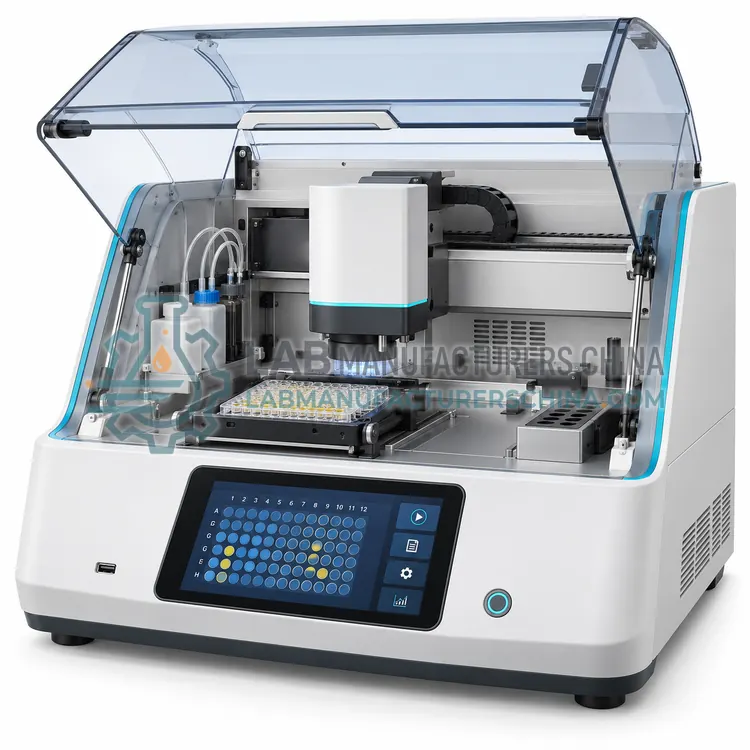
Protein analysis instruments quantify, separate, detect and purify proteins using absorbance, fluorescence, chemiluminescence, electrophoresis and chromatography. They support expression studies, immunoassays, antibody characterization and biopharmaceutical quality control in research, biotechnology and pharmaceutical development laboratories.

5 models of Protein Analysis

The 5 models below are current configurations; specifications are confirmed on quotation.

Absorbance Microplate Reader for ELISA

ELISA 吸光度酶标仪

  • PRA-0001
  • Protein Analysis
  • CE (to be confirmed)
  • ISO 9001 manufacturing (to be confirmed)
  • IEC 61010-2-101 test report (to be confirmed)
Plate formats:
6- to 384-well
Wavelength selection:
Filters: 405, 450, 492, 562, 620 nm (user-changeable)
Wavelength range (monochromator option):
230–1000 nm
Absorbance range:
0–4.0 OD
Linear range:
0–3.0 OD
Accuracy:
±1 % at 2.0 OD

An absorbance microplate reader measures optical density in 96- or 384-well plates at selected wavelengths, most commonly 450 nm for ELISA and 562 nm for BCA assays. It is the right choice for laboratories running colorimetric immunoassays and protein quantification without fluorescence or luminescence needs.

Request a quote
View details

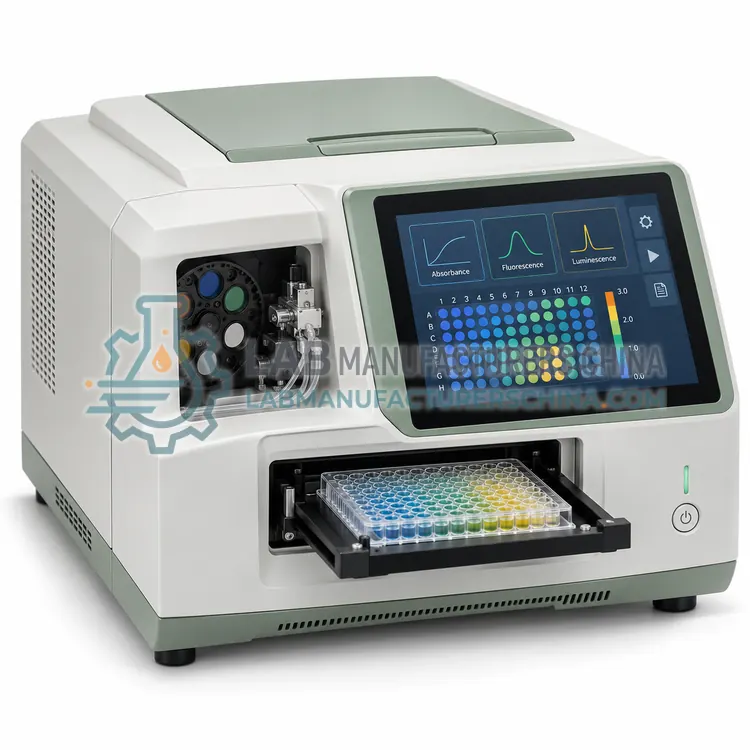
Multimode Microplate Reader (Absorbance, Fluorescence, Luminescence)

多功能酶标仪(吸光度、荧光、发光)

  • PRA-0002
  • Protein Analysis
  • CE (to be confirmed)
  • ISO 9001 manufacturing (to be confirmed)
  • IEC 61010-2-101 test report (to be confirmed)
Detection modes:
Absorbance, FI, luminescence (options: FP, TRF)
Plate formats:
6- to 384-well (1536 optional)
Absorbance wavelength range:
230–1000 nm
Fluorescence excitation range:
250–800 nm
Bandwidth:
5–20 nm (selectable)
Fluorescein sensitivity:
below 1 pM (384-well, typical)

A multimode microplate reader combines absorbance, fluorescence intensity and luminescence detection in one instrument, often with monochromator wavelength selection. It suits laboratories running varied assays, including protein quantification, reporter gene, cell viability and fluorescence-based binding studies on 96- to 384-well plates.

Request a quote
View details

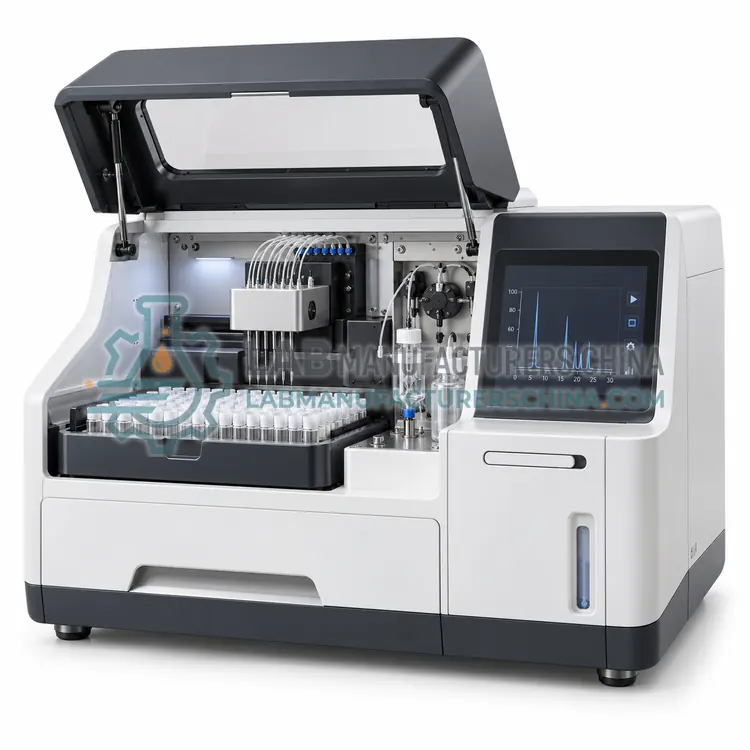
Capillary Electrophoresis Protein Analyzer

毛细管电泳蛋白分析仪

  • PRA-0003
  • Protein Analysis
  • CE (to be confirmed)
  • ISO 9001 manufacturing (to be confirmed)
  • 21 CFR Part 11 software capability (to be confirmed)
Separation modes:
CE-SDS, cIEF, CZE
Maximum voltage:
±30 kV
Detection:
UV 200–280 nm; LIF optional
Capillary temperature control:
15–60 °C, ±0.1 °C
Sample capacity:
48–96 vials/wells
Sample volume:
approx. 10–50 μL

A capillary electrophoresis protein analyzer separates proteins in fused-silica capillaries by size (CE-SDS), charge or isoelectric point (cIEF), with UV or fluorescence detection. It is used in biopharmaceutical laboratories for quantitative purity, fragment and charge variant analysis of monoclonal antibodies and recombinant proteins.

Request a quote
View details

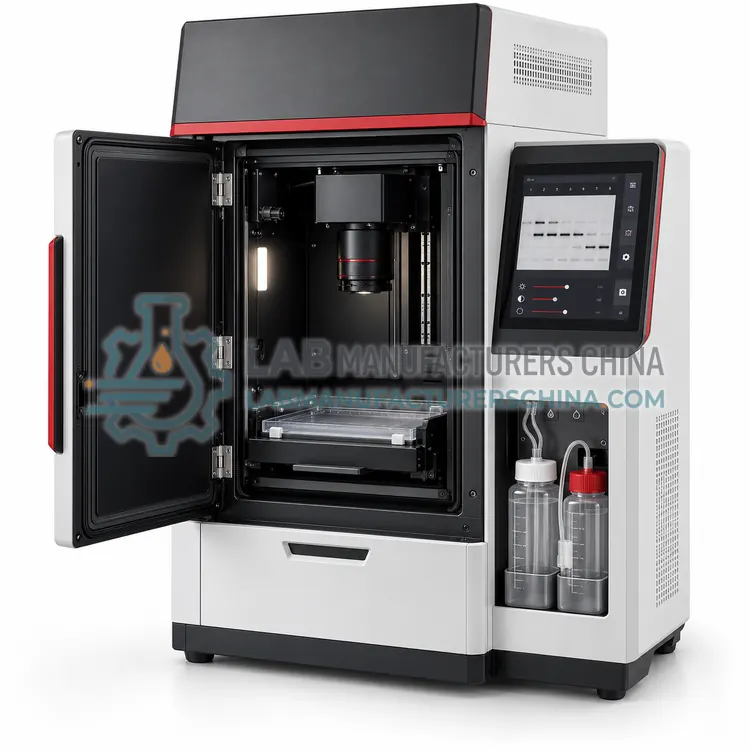
Western Blot Chemiluminescence Imaging System

Western blot 化学发光成像系统

  • PRA-0004
  • Protein Analysis
  • CE (to be confirmed)
  • ISO 9001 manufacturing (to be confirmed)
Camera sensor:
Cooled CCD/CMOS, 4–9 MP
Cooling:
−25 to −60 °C below ambient
Dynamic range:
16-bit, ≥4 orders
Exposure time:
0.001 s–30 min
Imaging area:
up to 20 × 24 cm
Detection modes:
Chemiluminescence; fluorescence optional

A Western blot chemiluminescence imaging system uses a cooled CCD or CMOS camera to capture chemiluminescent and fluorescent signals from membranes with exposures from seconds to several minutes. It replaces X-ray film for protein detection and supports quantitative densitometry within the linear range.

Request a quote
View details

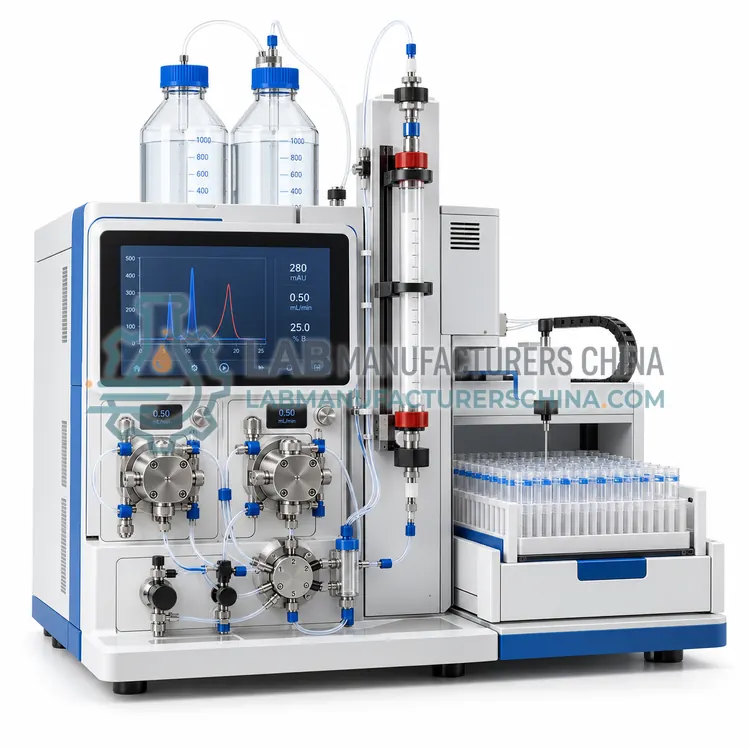
FPLC Protein Purification System

FPLC 蛋白纯化系统

  • PRA-0005
  • Protein Analysis
  • CE (to be confirmed)
  • ISO 9001 manufacturing (to be confirmed)
Flow rate range:
0.01–25 mL/min (up to 50 optional)
Maximum pressure:
up to 20–40 bar
Gradient accuracy:
±0.5 % B
Flow accuracy:
±1 %
UV detection:
Multi-wavelength, 190–700 nm
Conductivity range:
0.01–999.99 mS/cm

An FPLC protein purification system pumps buffers through chromatography columns at up to 25 or 50 mL/min and monitors UV absorbance, conductivity and pH to purify proteins by affinity, ion exchange or size exclusion. It suits research and process development laboratories purifying milligram to gram quantities.

Request a quote
View details

Compare Protein Analysis models

ModelPlate formatsPower supplyDetection modes
Absorbance Microplate Reader for ELISAPRA-00016- to 384-well100–240 V, 50/60 Hz—
Multimode Microplate Reader (Absorbance, Fluorescence, Luminescence)PRA-00026- to 384-well (1536 optional)100–240 V, 50/60 HzAbsorbance, FI, luminescence (options: FP, TRF)
Capillary Electrophoresis Protein AnalyzerPRA-0003—100–240 V, 50/60 Hz—
Western Blot Chemiluminescence Imaging SystemPRA-0004—100–240 V, 50/60 HzChemiluminescence; fluorescence optional
FPLC Protein Purification SystemPRA-0005—100–240 V, 50/60 Hz—

Indicative values for this product class. Final specifications are confirmed on the quotation and in the calibration documents supplied with the instrument.

How do Protein Analysis work?

Protein analysis relies on several complementary physical principles. Microplate readers measure absorbance, fluorescence or luminescence from wells to quantify protein by colorimetric assays such as BCA and Bradford or to read ELISA signals, using monochromators or filters and photomultiplier tubes or photodiodes. Electrophoretic systems separate proteins by size, charge or isoelectric point; in capillary systems, SDS-coated proteins migrate through a sieving polymer under high voltage and are detected by UV absorbance or laser-induced fluorescence. Western blot imagers capture chemiluminescent or fluorescent signals from membranes using cooled CCD cameras with long exposure. Chromatography systems such as FPLC pump buffers through columns to bind and elute proteins by affinity, ion exchange or size exclusion, with UV, conductivity and pH monitors guiding fraction collection.

Which Protein Analysis variants are available?

  • Absorbance Microplate Reader for ELISA — An absorbance microplate reader measures optical density in 96- or 384-well plates at selected wavelengths, most commonly 450 nm for ELISA and 562 nm for BCA assays.
  • Multimode Microplate Reader (Absorbance, Fluorescence, Luminescence) — A multimode microplate reader combines absorbance, fluorescence intensity and luminescence detection in one instrument, often with monochromator wavelength selection.
  • Capillary Electrophoresis Protein Analyzer — A capillary electrophoresis protein analyzer separates proteins in fused-silica capillaries by size (CE-SDS), charge or isoelectric point (cIEF), with UV or fluorescence detection.
  • Western Blot Chemiluminescence Imaging System — A Western blot chemiluminescence imaging system uses a cooled CCD or CMOS camera to capture chemiluminescent and fluorescent signals from membranes with exposures from seconds to several minutes.
  • FPLC Protein Purification System — An FPLC protein purification system pumps buffers through chromatography columns at up to 25 or 50 mL/min and monitors UV absorbance, conductivity and pH to purify proteins by affinity, ion exchange or size exclusion.

How do I choose the right variant?

Define the analytical goal first: quantification and ELISA point to microplate readers, purity and size variants to capillary electrophoresis, expression and semi-quantitative detection to Western blot imaging, and isolation of milligram quantities to chromatography systems. Check sensitivity and dynamic range against your lowest expected signal, for example pg/mL for ELISA or ng per band for blotting. Consider throughput and automation, such as 96-sample capillary runs or plate stackers. For purification, specify column pressure limits, flow rate range and detector options. Confirm compatibility with your assay formats and reagents, and evaluate software for data integrity, regulatory audit trail and export. Factor in consumable costs, such as capillary cartridges or detection reagents, and available training.

Where are Protein Analysis used?

Protein Analysis are specified in ELISA and immunoassay readout, protein concentration determination, antibody purity and size variant analysis, western blot expression studies and recombinant protein purification.

Which standards and certifications apply?

Work with Protein Analysis is commonly governed by IEC 61010-1, IEC 61010-2-101, IEC 61326-2-6, USP <1053>, USP <1055>, Ph. Eur. 2.2.31 and ICH Q6B. Instrument certifications such as CE marking are confirmed per configuration and never assumed.

What are the key considerations before purchase?

Protein instruments depend on good sample handling: keep samples cold, use protease inhibitors and avoid repeated freeze-thaw cycles. Microplate readers need periodic verification of wavelength accuracy and absorbance linearity with reference filters or dye solutions. Capillary systems require clean buffers, filtered samples and replacement of cartridges on schedule. Imaging systems should be kept in a dust-free, temperature-stable location, and cameras need flat-field correction. FPLC columns must be stored in recommended solutions, and pump seals replaced regularly. Regulated laboratories should perform installation and operational qualification, and consider 21 CFR Part 11 compliant software.

Frequently asked questions about Protein Analysis

Common instruments include microplate readers for protein quantification and ELISA, capillary electrophoresis systems for purity and size variants, Western blot imagers for expression detection and FPLC systems for purification. Choice depends on the information needed, sensitivity and sample number.

Need help specifying Protein Analysis?

Request a quote