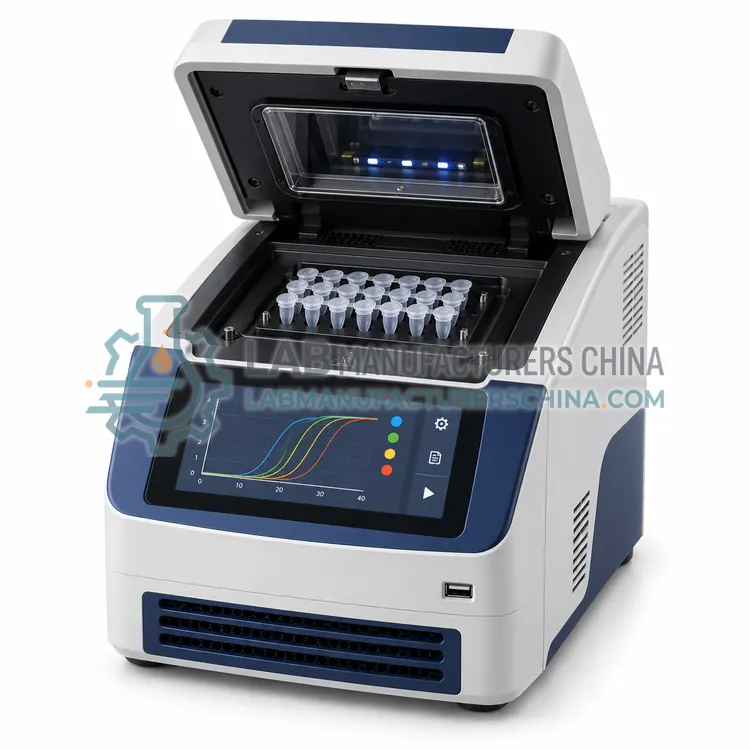
How do Molecular Analysis work?
Molecular analysis instruments amplify a nucleic acid target and monitor the reaction through fluorescence. In real-time PCR, a thermal block cycles between denaturation, annealing and extension, and optics read intercalating dyes such as SYBR Green or hydrolysis probes such as TaqMan at each cycle. The cycle at which fluorescence crosses a threshold, the quantification cycle (Cq), is inversely related to starting copy number, and a standard curve or comparative method gives relative or absolute quantity. Digital PCR partitions the reaction into thousands of nanoliter droplets or wells, amplifies each independently, and counts positive partitions; Poisson statistics then yield absolute copy number without calibration curves. Isothermal methods such as LAMP amplify at a constant temperature and detect fluorescence or turbidity. Melt-curve analysis verifies product specificity.
Which Molecular Analysis variants are available?
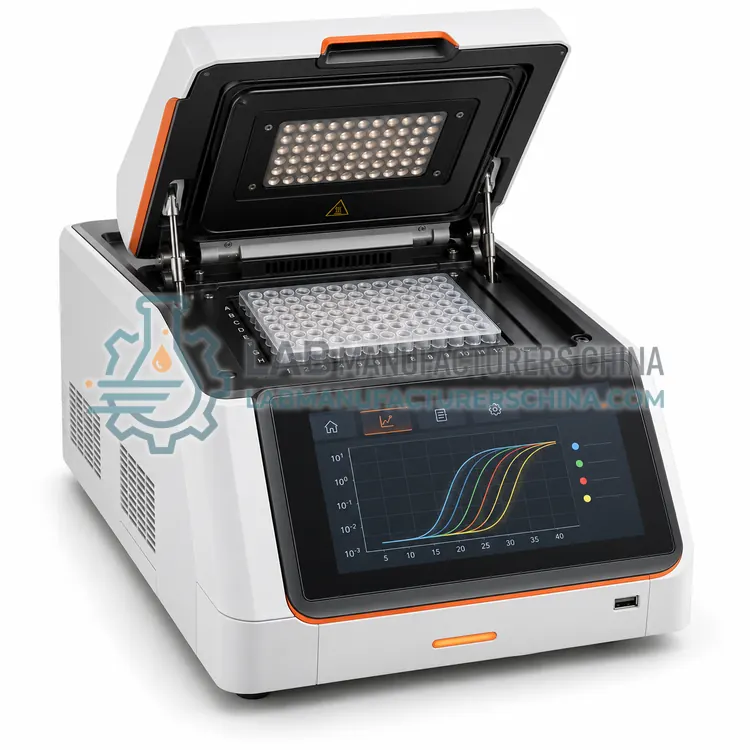
- Real-Time PCR System (96-Well) — A 96-well real-time PCR system thermocycles up to 96 reactions while measuring fluorescence in each well every cycle, giving quantification, melt-curve and genotyping data.
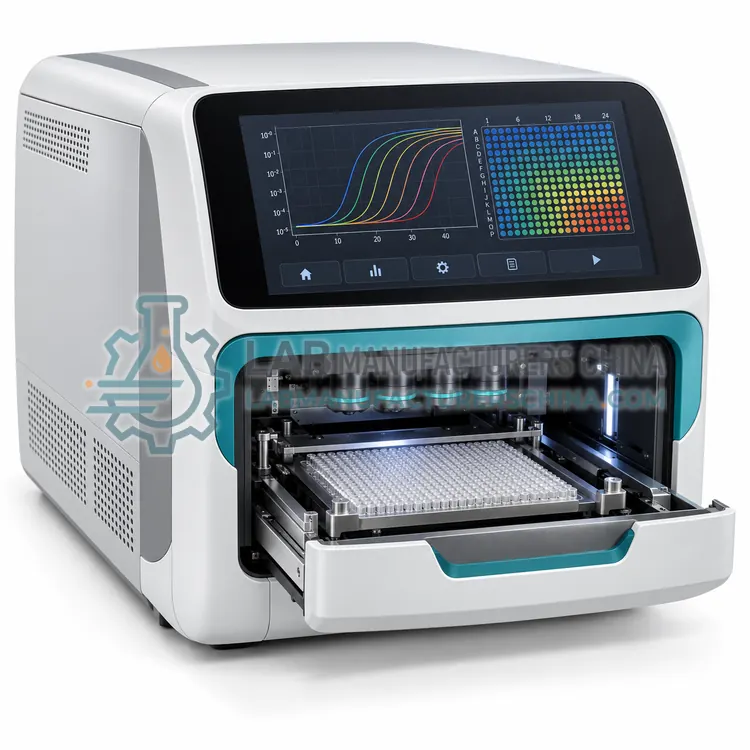
- High-Throughput Real-Time PCR System (384-Well) — A 384-well real-time PCR system runs up to 384 reactions of 5 to 20 μL per plate, with fast ramp rates and robotic loading options.
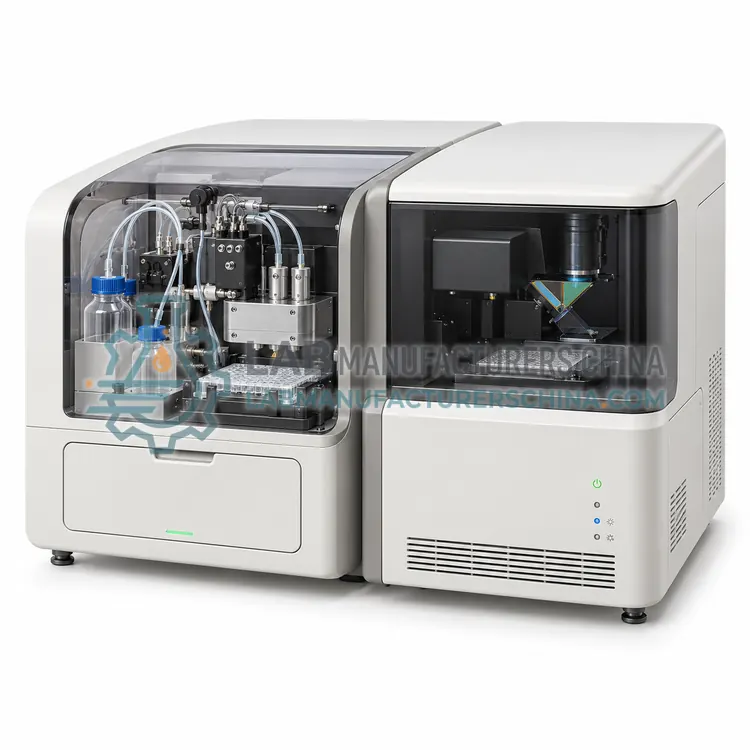
- Droplet Digital PCR System — A droplet digital PCR system partitions each reaction into about 20,000 nanoliter droplets, amplifies them to end-point and counts positive droplets to report absolute copy number.
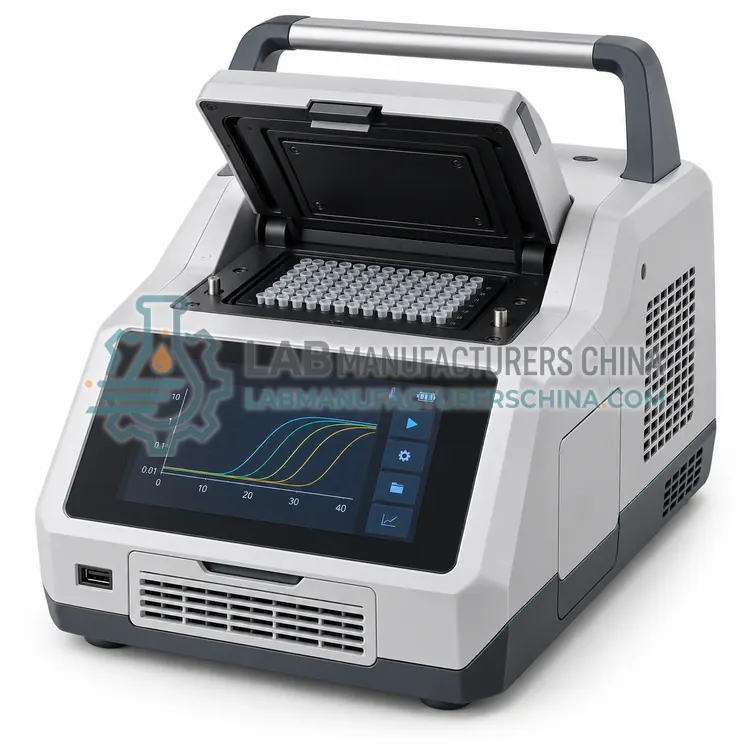
- Portable Real-Time PCR Analyzer — A portable real-time PCR analyzer is a compact, battery-capable instrument that runs 4 to 16 reactions with fluorescence detection, suitable for field sites and point-of-need testing.
- Isothermal Amplification Fluorescence Detector — An isothermal amplification fluorescence detector holds reactions at a constant temperature, typically 60 to 65 °C for LAMP, while monitoring fluorescence in real time.
How do I choose the right variant?
Decide first between relative quantification, for which real-time PCR is usually sufficient, and absolute quantification of rare targets or small fold changes, for which digital PCR offers better precision. Match well format to throughput: 96-well suits routine work, and 384-well suits screening. Count optical channels against multiplex needs, since four to six channels are common for multiplex panels. Consider ramp rate and run time, block uniformity and lid heating for reproducibility. For field or point-of-need testing, portable analyzers with battery operation and lyophilized reagents are appropriate. Check reagent openness, software features for analysis and export, and whether the instrument can support the validation documents that regulated workflows require.
Where are Molecular Analysis used?
Molecular Analysis are specified in gene expression analysis, pathogen detection assay development, viral vector and residual DNA quantification, copy number variation and rare mutation detection and food and agricultural testing.
Which standards and certifications apply?
Work with Molecular Analysis is commonly governed by IEC 61010-1, IEC 61010-2-010, IEC 61010-2-101, IEC 61326-2-6, ISO 20395, ISO 22174 and MIQE guidelines. Instrument certifications such as CE marking are confirmed per configuration and never assumed.
What are the key considerations before purchase?
Molecular instruments require careful contamination control: separate pre- and post-amplification areas, use filter tips and include no-template controls. Thermal block temperature accuracy and uniformity should be verified periodically with a calibrated temperature probe, and optical calibration with dye plates should be performed after installation and at intervals recommended by the manufacturer. Keep the instrument on a stable bench with adequate ventilation, and protect lamps or LEDs from unnecessary exposure. Follow MIQE guidance when reporting qPCR data, and keep raw fluorescence data archived. Regulated laboratories should confirm software access control and audit trail.