Lab Manufacturers China

Vacuum Systems

真空系统

VAS · Vacuum Equipment · 6 models

By Lab Manufacturers China Technical TeamLast reviewed Standards: IEC 61010-1, IEC 61326-1, ISO 21360

Standards referenced

  • IEC 61010-1
  • IEC 61326-1
  • ISO 21360
  • ISO 27893
  • ISO 20485
  • ISO 9001

What are Vacuum Systems?

Vacuum systems integrate a pump, gauges, valves and controls into a matched package for a specific process such as freeze drying, filtration or drying. They simplify installation and make vacuum performance predictable and reproducible.

6 models of Vacuum Systems

The 6 models below are current configurations; specifications are confirmed on quotation.

Freeze-Drying Vacuum System

冷冻干燥真空系统

  • VAS-0001
  • Vacuum Systems
  • CE (to be confirmed)
  • ISO 9001 manufacturing (to be confirmed)
  • RoHS (to be confirmed)
Working pressure:
1–0.01 mbar
Pumping speed:
100–300 L/min
Condenser temperature:
−40 to −80 °C
Chamber volume:
2–200 L
Pump type:
Two-stage rotary vane or scroll
Gauge:
Pirani, 1–0.001 mbar

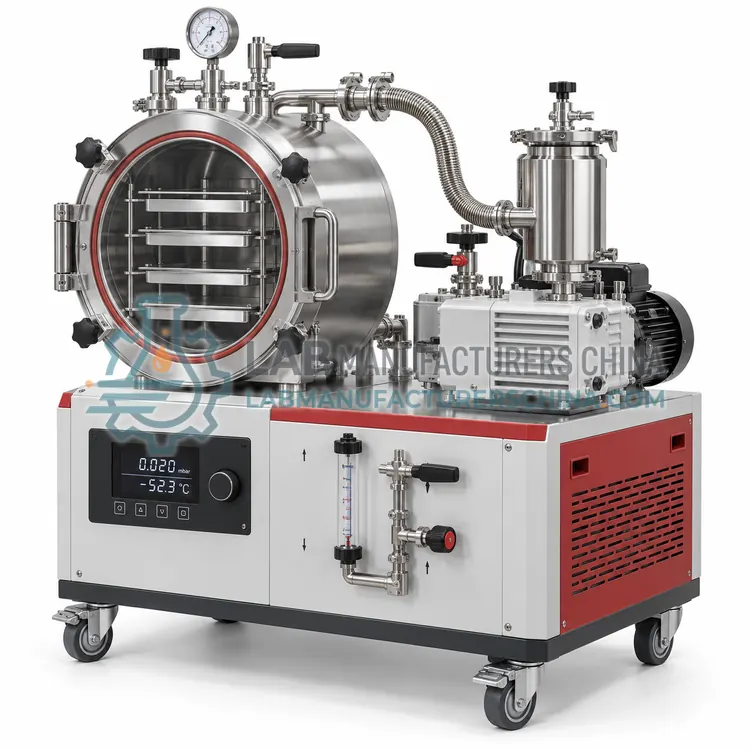
A freeze-drying vacuum system provides deep, stable vacuum for lyophilization, with a condenser to trap water vapor. It is used for biological, pharmaceutical and food samples that must be dried without heat damage.

Request a quote
View details

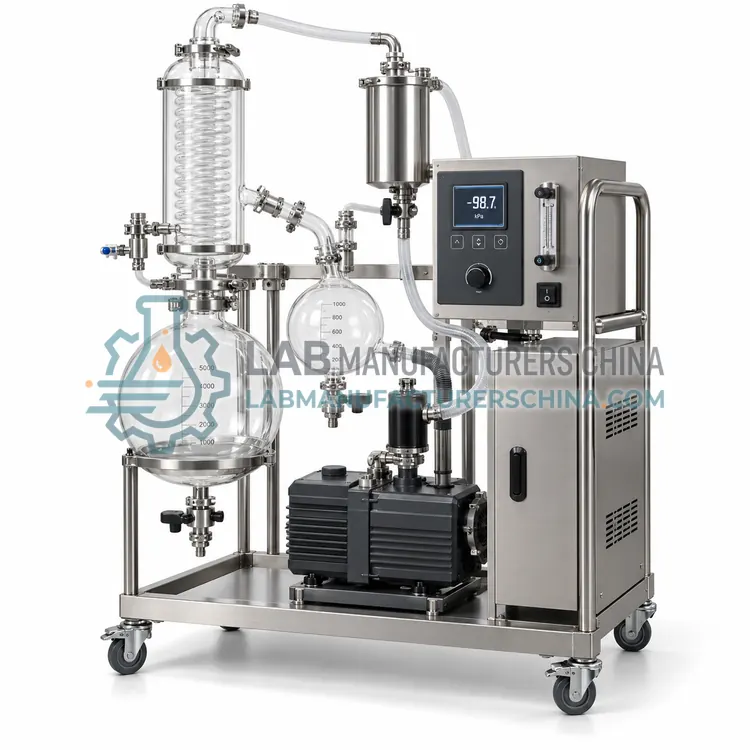
Rotary Evaporation Vacuum System

旋转蒸发真空系统

  • VAS-0002
  • Vacuum Systems
  • CE (to be confirmed)
  • RoHS (to be confirmed)
  • ISO 9001 manufacturing (to be confirmed)
Pumping speed:
20–60 L/min
Ultimate pressure:
10–2 mbar (dry pump)
Controller range:
1,000–1 mbar
Trap:
Cold trap or condenser
Wetted materials:
PTFE, EPDM or fluoropolymer
Pump type:
Diaphragm or rotary vane

A rotary evaporation vacuum system pairs a chemical-duty pump, trap and controller to remove solvents gently. It protects samples from bumping and keeps solvent recovery reproducible across many different solvents and formulations.

Request a quote
View details

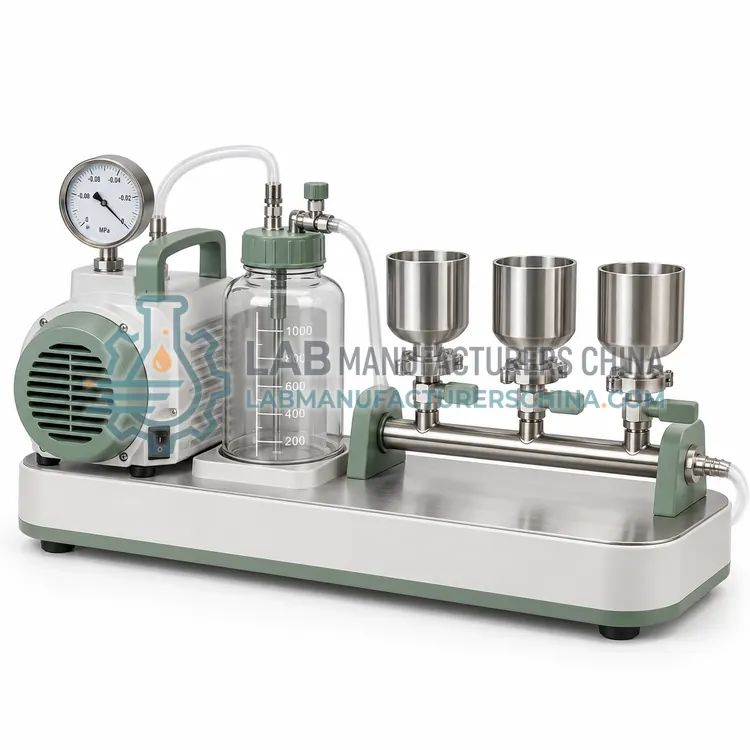
Vacuum Filtration System

真空过滤系统

  • VAS-0003
  • Vacuum Systems
  • CE (to be confirmed)
  • RoHS (to be confirmed)
  • ISO 9001 manufacturing (to be confirmed)
Free-air flow rate:
20–100 L/min
Working vacuum:
100–10 mbar
Receiver volume:
1–10 L
Manifold positions:
1–6 or 12
Wetted material:
PP, PTFE or stainless steel
Filter diameter:
25–90 mm

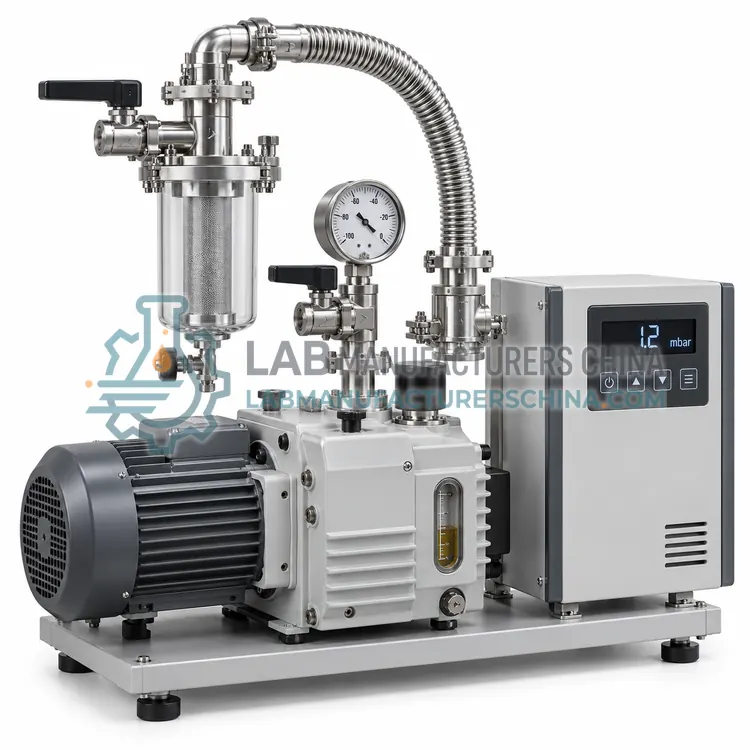
A vacuum filtration system combines a pump, receiver, trap and manifold to speed filtration of one or many samples. It provides repeatable vacuum for microfiltration, SPE and solids recovery in routine laboratories.

Request a quote
View details

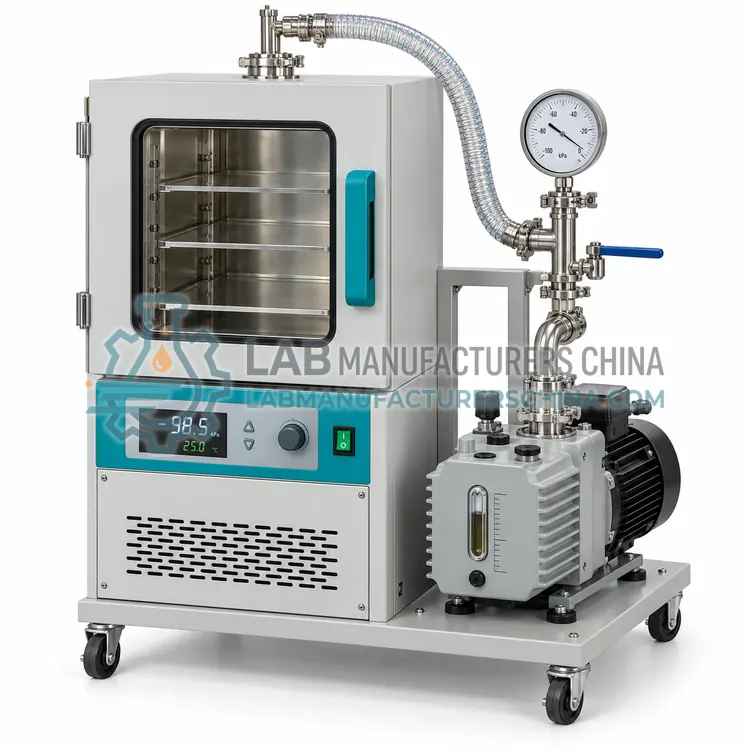
Vacuum Drying System

真空干燥系统

  • VAS-0004
  • Vacuum Systems
  • CE (to be confirmed)
  • RoHS (to be confirmed)
  • ISO 9001 manufacturing (to be confirmed)
Chamber temperature:
40–200 °C
Working pressure:
About 10–1 mbar
Chamber volume:
20–500 L
Pump type:
Rotary vane, scroll or water ring
Trap:
Cold trap or condenser
Controller:
Pressure with sequencing

A vacuum drying system combines a heated chamber, deep vacuum and vapor trapping to dry heat-sensitive or oxidation-prone materials. It removes solvents and moisture at a lower temperature than ordinary air drying.

Request a quote
View details

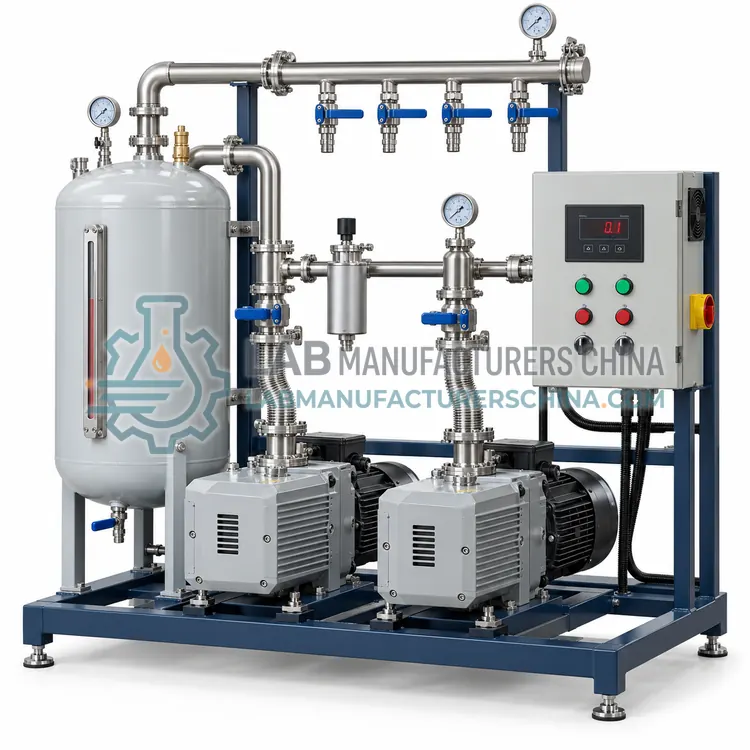
Central Laboratory Vacuum System

中央实验室真空系统

  • VAS-0005
  • Vacuum Systems
  • CE (to be confirmed)
  • ISO 9001 manufacturing (to be confirmed)
  • PED compliance (to be confirmed)
Pump type:
Dry, water-ring or oil-sealed
Header pressure:
About 100–20 mbar
Number of outlets:
4–50
Receiver volume:
50–500 L
Pipe bore:
25–50 mm
Pump redundancy:
Yes, lead-standby option

A central laboratory vacuum system serves many benches and instruments from one pump and distribution network. It provides reliable vacuum throughout the building with a single service point and reduces noise and clutter.

Request a quote
View details

Glovebox Vacuum System

手套箱真空系统

  • VAS-0006
  • Vacuum Systems
  • CE (to be confirmed)
  • ISO 9001 manufacturing (to be confirmed)
Pump type:
Oil-free diaphragm or scroll
Ultimate pressure:
About 10–1 mbar
Antechamber volume:
5–60 L
Purge gas:
Nitrogen or argon
Oxygen level target:
< 1 ppm with cycles
Moisture target:
< 1 ppm with cycles

A glovebox vacuum system provides clean vacuum for antechamber purge cycles, transfer operations and internal tools. It protects the inert atmosphere from air and moisture while keeping oil out of the box.

Request a quote
View details

Compare Vacuum Systems models

ModelWorking pressurePumping speedChamber volumePump typeGauge
Freeze-Drying Vacuum SystemVAS-00011–0.01 mbar100–300 L/min2–200 LTwo-stage rotary vane or scrollPirani, 1–0.001 mbar
Rotary Evaporation Vacuum SystemVAS-0002—20–60 L/min—Diaphragm or rotary vaneIntegrated in controller
Vacuum Filtration SystemVAS-0003————Analog or digital
Vacuum Drying SystemVAS-0004About 10–1 mbar—20–500 LRotary vane, scroll or water ringPirani or capacitance
Central Laboratory Vacuum SystemVAS-0005———Dry, water-ring or oil-sealed—
Glovebox Vacuum SystemVAS-0006———Oil-free diaphragm or scroll0–1000 mbar

Indicative values for this product class. Final specifications are confirmed on the quotation and in the calibration documents supplied with the instrument.

How do Vacuum Systems work?

A vacuum system combines all components needed to produce and control reduced pressure for one application. The pump sets the base pressure and pumping speed, gauges measure the level, valves control the path, and a controller sequences pump-down, hold and vent. Traps, filters and condensers protect the pump from vapor, particles and corrosive gas, while tubing and fittings must have enough conductance not to restrict flow. Design starts from the required pressure, chamber volume, gas load and cycle time, and the components are matched so that no single part limits performance. A complete system usually includes over-pressure and over-temperature protection, and often data logging. Because the parts are selected to work together, installation, commissioning and troubleshooting are simpler than with separately sourced components.

Which Vacuum Systems variants are available?

  • Freeze-Drying Vacuum System — A freeze-drying vacuum system provides deep, stable vacuum for lyophilization, with a condenser to trap water vapor.
  • Rotary Evaporation Vacuum System — A rotary evaporation vacuum system pairs a chemical-duty pump, trap and controller to remove solvents gently.
  • Vacuum Filtration System — A vacuum filtration system combines a pump, receiver, trap and manifold to speed filtration of one or many samples.
  • Vacuum Drying System — A vacuum drying system combines a heated chamber, deep vacuum and vapor trapping to dry heat-sensitive or oxidation-prone materials.
  • Central Laboratory Vacuum System — A central laboratory vacuum system serves many benches and instruments from one pump and distribution network.
  • Glovebox Vacuum System — A glovebox vacuum system provides clean vacuum for antechamber purge cycles, transfer operations and internal tools.

How do I choose the right variant?

Define the process first: target pressure, chamber or vessel volume, gas and vapor composition, cycle time and whether operation is continuous or batch. Then choose the pump type and speed to meet the pressure and time, and add a booster if the volume is large. Select gauges for the range, typically a Pirani or capacitance gauge, and valves for automatic or manual sequencing. Specify traps or condensers for condensable vapor, filters for particles and corrosion-resistant wetted materials for aggressive gases. Confirm the controller features you need, such as ramps, interlocks and data logging. Check utilities, noise, footprint and whether the system must fit a fume hood or cleanroom. Finally, ask for pump-down curves and commissioning data so realistic expectations are set.

Where are Vacuum Systems used?

Vacuum Systems are specified in freeze drying and lyophilization, rotary evaporation and distillation, vacuum filtration and aspiration, vacuum oven and drying cycles, central laboratory vacuum supply and glovebox and inert atmosphere preparation.

Which standards and certifications apply?

Work with Vacuum Systems is commonly governed by IEC 61010-1, IEC 61326-1, ISO 21360, ISO 27893, ISO 20485 and ISO 9001. Instrument certifications such as CE marking are confirmed per configuration and never assumed.

What are the key considerations before purchase?

Commission the system by recording base pressure, pump-down time and leak-up rate, and repeat these checks at service intervals to detect degradation. Keep traps clean and cold, and replace filters before they block. Review the sequencing so that valves and pumps are not switched in a way that causes pressure shocks or oil backstreaming. Train operators on safe venting, especially for oil-sealed pumps, which must not be vented at speed or left pressurized. Follow IEC 61010-1 for electrical safety and any local pressure rules for vessels and piping. For regulated processes, document installation and operational qualification against the user requirement specification. Keep spare seals, valves and filter elements so that downtime stays short.

Frequently asked questions about Vacuum Systems

Typically a pump, gauges, valves, a controller, and traps or filters, plus tubing and fittings matched to the process. Options include boosters, condensers and data logging, depending on the application.

Need help specifying Vacuum Systems?

Request a quote