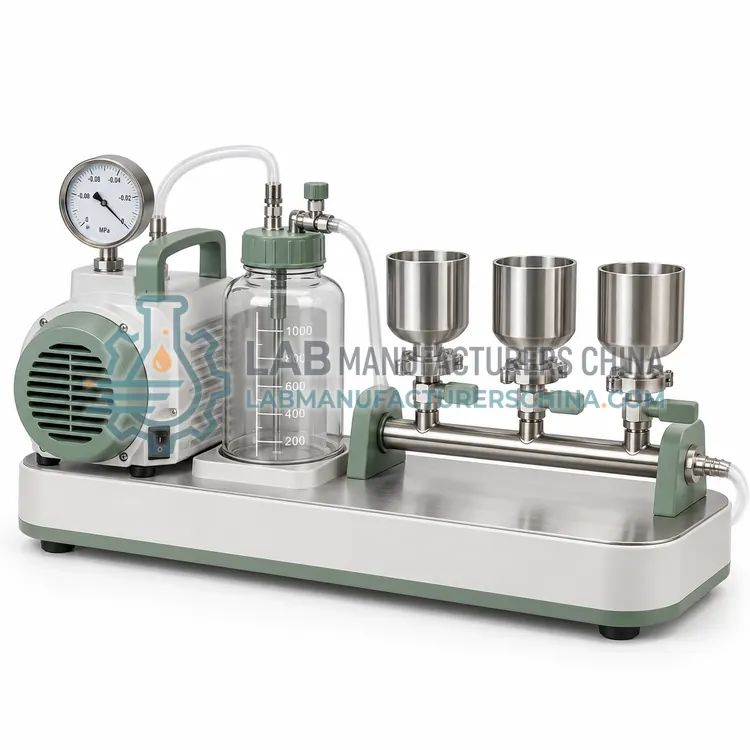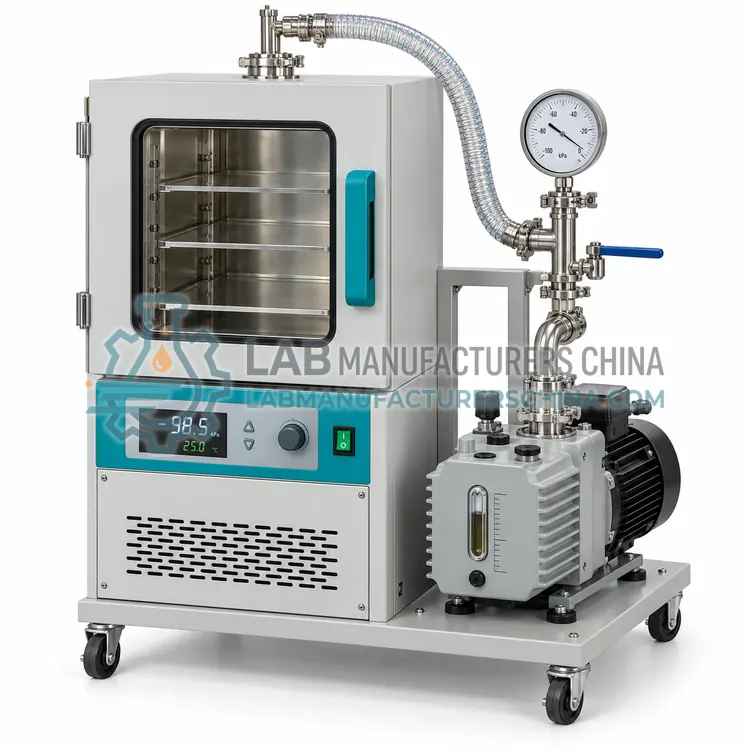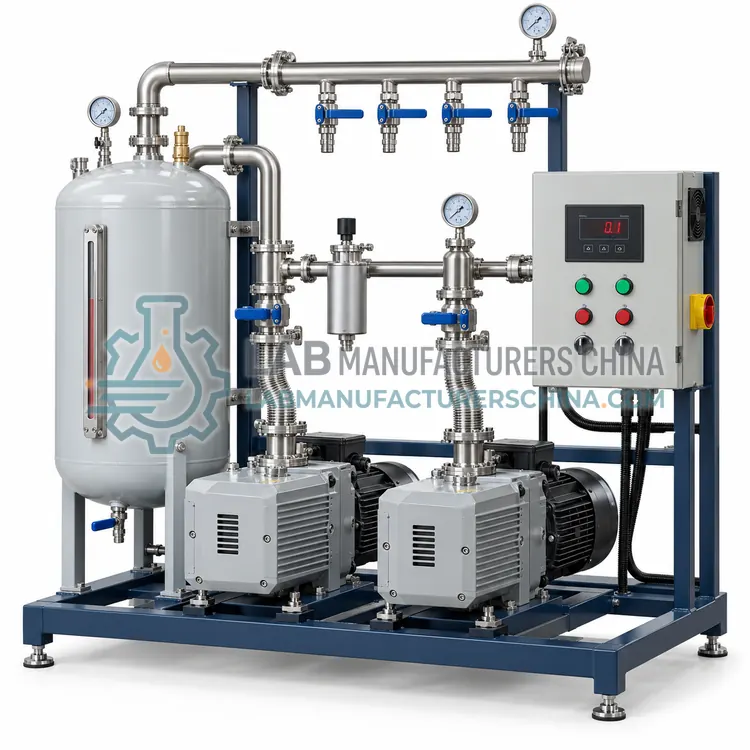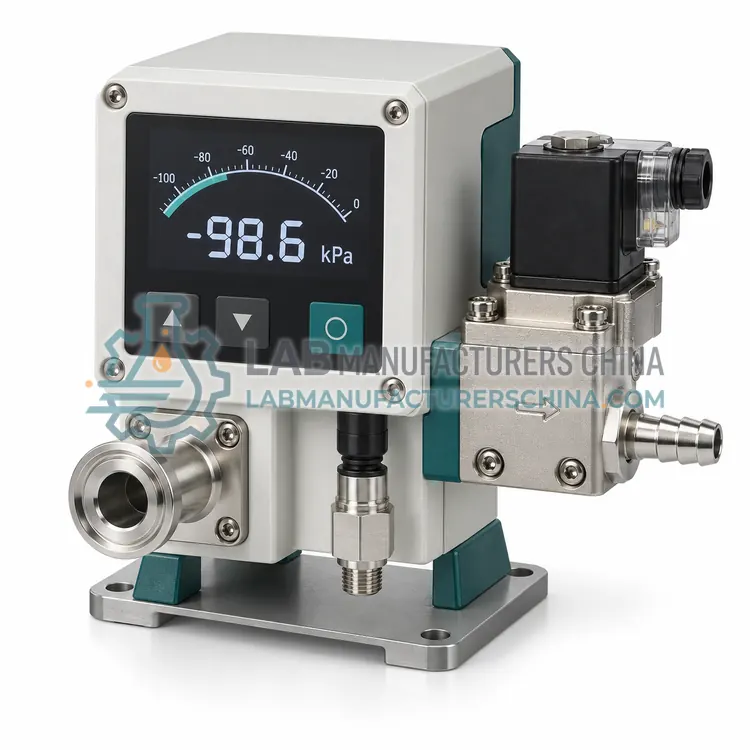
Freeze-Drying Vacuum System
冷冻干燥真空系统
- SKU VAS-0001
- Vacuum Systems
- CE (to be confirmed)
- ISO 9001 manufacturing (to be confirmed)
- RoHS (to be confirmed)
Price on request — FOB / CIF quoted per order
Prices depend on configuration, quantity and destination port.
Key specifications
| Working pressure | 1–0.01 mbar |
|---|---|
| Pumping speed | 100–300 L/min |
| Condenser temperature | −40 to −80 °C |
| Chamber volume | 2–200 L |
| Pump type | Two-stage rotary vane or scroll |
| Gauge | Pirani, 1–0.001 mbar |
Request a quote Download brochure · to be provided
By Lab Manufacturers China Technical TeamLast reviewed Standards: IEC 61010-1, IEC 61326-1, ISO 21360
What is the Freeze-Drying Vacuum System?
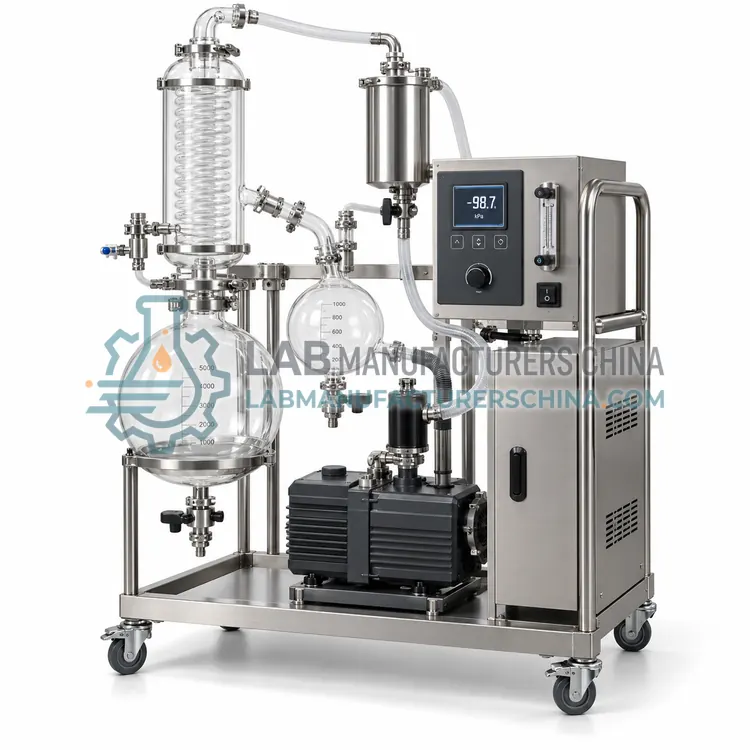
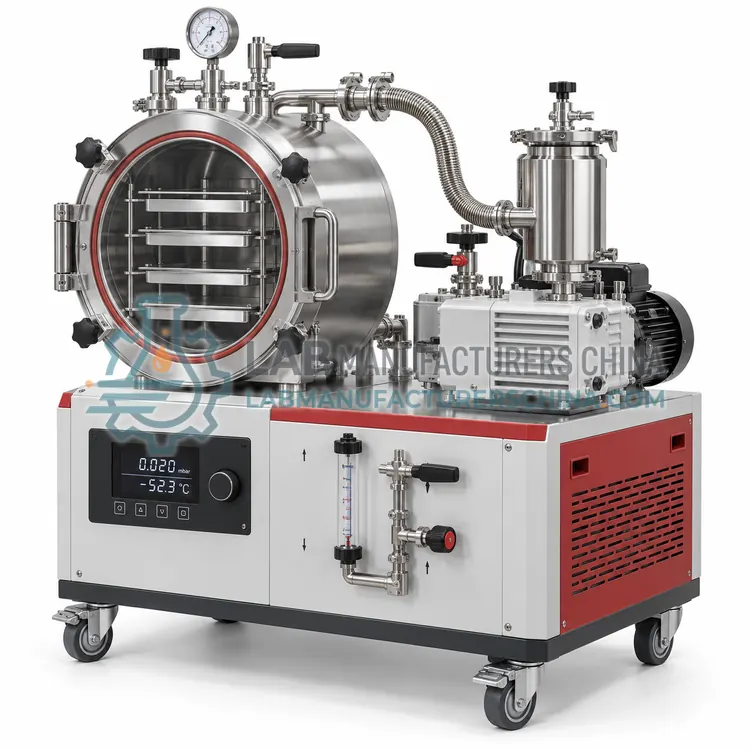
A freeze-drying vacuum system provides deep, stable vacuum for lyophilization, with a condenser to trap water vapor. It is used for biological, pharmaceutical and food samples that must be dried without heat damage.
What is the Freeze-Drying Vacuum System?
A freeze-drying vacuum system provides deep, stable vacuum for lyophilization, with a condenser to trap water vapor. It is used for biological, pharmaceutical and food samples that must be dried without heat damage.
Overview
The freeze-drying vacuum system combines a two-stage rotary vane or scroll pump, a vapor condenser held at about minus 40 to minus 80 degrees Celsius, and the vacuum chamber where frozen product sublimes. The pump must handle a large water vapor load during primary drying, so pumping speed is typically 100 to 300 liters per minute, and the condenser must trap the water before it reaches the pump. Gauges cover the working range of 1 to 0.01 millibar, and valves sequence the chamber, condenser and pump. A vacuum controller holds the pressure to keep sublimation efficient without melting the product. Systems range from benchtop units for a few vials to pilot and production dryers with trays or stoppering. The design protects the pump from water, which would otherwise emulsify its oil, and keeps the process reproducible.
How does it work?
A vacuum system combines all components needed to produce and control reduced pressure for one application. The pump sets the base pressure and pumping speed, gauges measure the level, valves control the path, and a controller sequences pump-down, hold and vent. Traps, filters and condensers protect the pump from vapor, particles and corrosive gas, while tubing and fittings must have enough conductance not to restrict flow. Design starts from the required pressure, chamber volume, gas load and cycle time, and the components are matched so that no single part limits performance. A complete system usually includes over-pressure and over-temperature protection, and often data logging. Because the parts are selected to work together, installation, commissioning and troubleshooting are simpler than with separately sourced components.
What are the key features?
- Deep vacuum of 1–0.01 mbar for lyophilization
- Condenser at −40 to −80 °C to trap water vapor
- Pumping speed of 100–300 L/min for vapor load
- Vacuum controller to hold optimal pressure
- Valve sequencing for chamber, condenser and pump
- Benchtop to production scale with trays or stoppering
What are the technical specifications?
A typical freeze-drying vacuum system configuration offers working pressure of 1–0.01 mbar, pumping speed of 100–300 L/min, condenser temperature of −40 to −80 °C, chamber volume of 2–200 L, pump type of Two-stage rotary vane or scroll and gauge of Pirani, 1–0.001 mbar. Values are indicative of the product class; the exact figures for each configuration are confirmed on the quotation and the calibration documents supplied with the instrument.
Which applications is it used for?
The Freeze-Drying Vacuum System is used in biological sample lyophilization, pharmaceutical formulation drying, food and culture preservation, vaccine and reagent stabilization and pilot and production freeze drying. Across the wider Vacuum Systems class, laboratories also deploy it for freeze drying and lyophilization, rotary evaporation and distillation and vacuum filtration and aspiration.
Which standards and certifications apply?
Relevant standards and methods include IEC 61010-1, IEC 61326-1, ISO 21360, ISO 27893, ISO 20485 and ISO 9001. Certification candidates for this model are CE, ISO 9001 manufacturing and RoHS; each is to be confirmed for the specific configuration before shipment, and certificates are supplied only where they have been issued.
Commission the system by recording base pressure, pump-down time and leak-up rate, and repeat these checks at service intervals to detect degradation. Keep traps clean and cold, and replace filters before they block. Review the sequencing so that valves and pumps are not switched in a way that causes pressure shocks or oil backstreaming. Train operators on safe venting, especially for oil-sealed pumps, which must not be vented at speed or left pressurized. Follow IEC 61010-1 for electrical safety and any local pressure rules for vessels and piping. For regulated processes, document installation and operational qualification against the user requirement specification. Keep spare seals, valves and filter elements so that downtime stays short.
How do I select the right Freeze-Drying Vacuum System?
Choose a freeze-drying system matched to chamber volume and water load, with a condenser cold enough to protect the pump. For small vials a benchtop package suffices; larger loads need higher speed. In the RFQ, state chamber volume, batch size, target pressure and condenser temperature.
How does it compare with other Vacuum Systems variants?
Define the process first: target pressure, chamber or vessel volume, gas and vapor composition, cycle time and whether operation is continuous or batch. Then choose the pump type and speed to meet the pressure and time, and add a booster if the volume is large. Select gauges for the range, typically a Pirani or capacitance gauge, and valves for automatic or manual sequencing. Specify traps or condensers for condensable vapor, filters for particles and corrosion-resistant wetted materials for aggressive gases. Confirm the controller features you need, such as ramps, interlocks and data logging. Check utilities, noise, footprint and whether the system must fit a fume hood or cleanroom. Finally, ask for pump-down curves and commissioning data so realistic expectations are set.
Full specifications
| Working pressure | 1–0.01 mbar |
|---|---|
| Pumping speed | 100–300 L/min |
| Condenser temperature | −40 to −80 °C |
| Chamber volume | 2–200 L |
| Pump type | Two-stage rotary vane or scroll |
| Gauge | Pirani, 1–0.001 mbar |
| Controller | Vacuum with setpoint |
| Valves | Solenoid sequencing |
| Power supply | 220–380 V, 50/60 Hz |
Indicative values for this product class. Final specifications are confirmed on the quotation and in the calibration documents supplied with the instrument.
Applications
- Biological sample lyophilization
- Pharmaceutical formulation drying
- Food and culture preservation
- Vaccine and reagent stabilization
- Pilot and production freeze drying
Key features
- Deep vacuum of 1–0.01 mbar for lyophilization
- Condenser at −40 to −80 °C to trap water vapor
- Pumping speed of 100–300 L/min for vapor load
- Vacuum controller to hold optimal pressure
- Valve sequencing for chamber, condenser and pump
- Benchtop to production scale with trays or stoppering
Frequently asked questions about Freeze-Drying Vacuum System
It must be colder than the product so water vapor from sublimation freezes on it instead of reaching the pump. Below about minus 40 degrees Celsius covers most aqueous formulations.
Yes, an oil-free scroll pump suits freeze drying because it tolerates water vapor better and avoids oil emulsification. It needs a gas ballast and a condenser to manage the vapor load.
A vacuum controller holds a pressure just below the vapor pressure of the frozen product, so sublimation continues efficiently without melting. The setpoint may change as the product dries.
Typically a pump, gauges, valves, a controller, and traps or filters, plus tubing and fittings matched to the process. Options include boosters, condensers and data logging, depending on the application.
Measure base pressure, pump-down time from atmosphere and leak-up rate with the pump isolated, and record them at commissioning. Repeating the same test later shows whether seals, traps or the pump have degraded.
A matched system avoids conductance bottlenecks, valve sizing errors and control mismatches, so it reaches the specified pressure and cycle time reliably. It also simplifies commissioning and service.
Related models