How do Vacuum Controllers work?
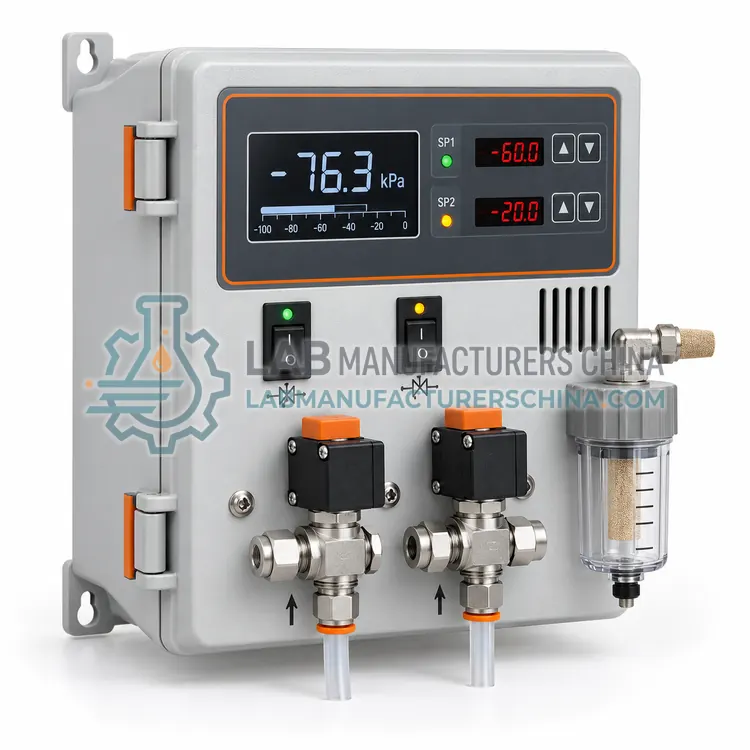
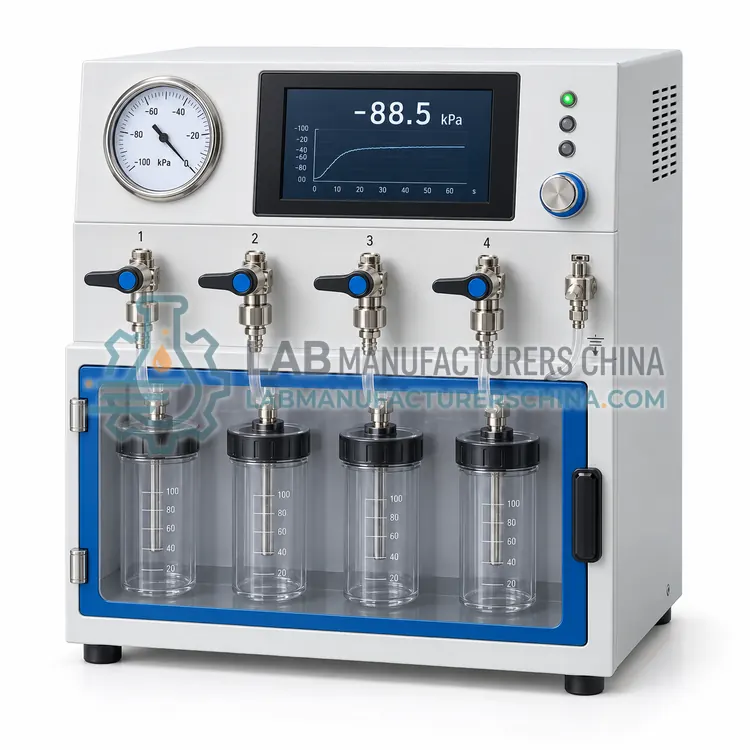
A vacuum controller combines a pressure sensor, a control algorithm and an output that acts on the vacuum system. The sensor, usually a piezoresistive or capacitive absolute pressure transducer, measures pressure from atmospheric down to a few millibars. The controller compares this value with the setpoint and adjusts either the pump speed or, more often, a solenoid or proportional valve that bleeds air into the line. A PID or on-off algorithm holds the pressure within a band, and the display shows the current and target values. Some controllers add ramps so that pressure changes gradually, and inputs for a solvent library or an external sensor at the sample. Outputs may include relay contacts for the pump, an analog or digital signal, and alarm contacts for out-of-range conditions.
Which Vacuum Controllers variants are available?
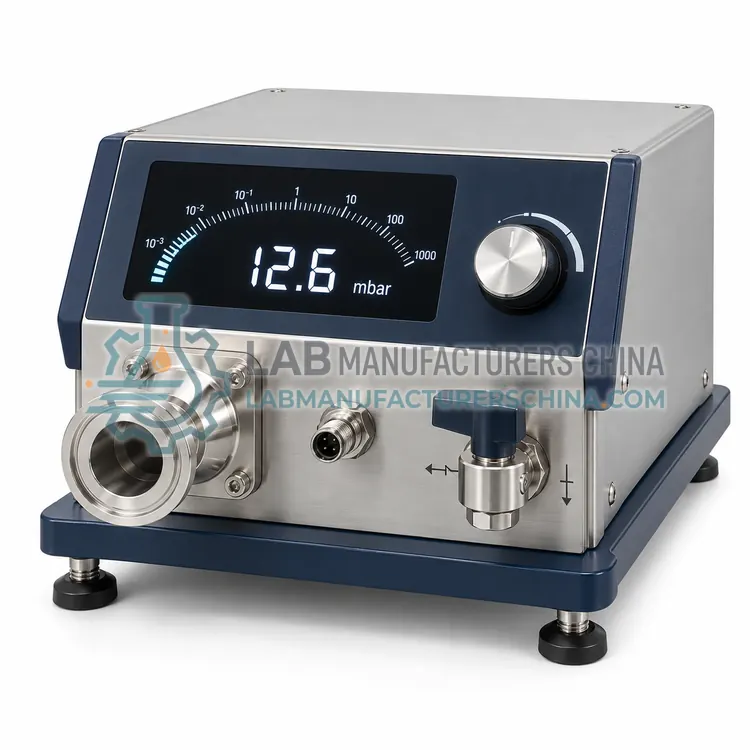
- Digital Vacuum Controller — A digital vacuum controller measures pressure and holds a set vacuum by driving a valve or pump through a digital interface.
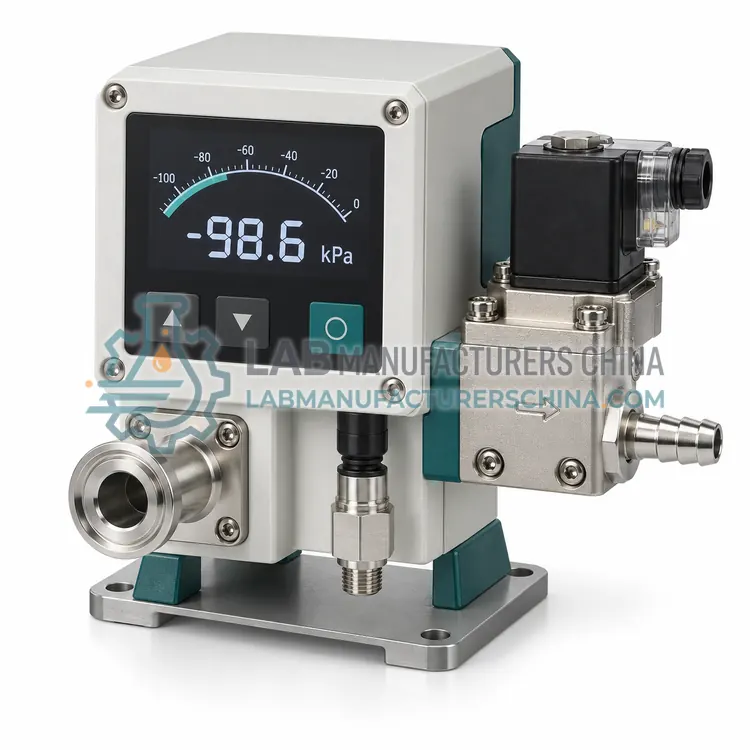
- Automatic Vacuum Controller with Solenoid Valve — An automatic vacuum controller with a solenoid valve holds a set vacuum without operator intervention, switching a bleed valve to maintain pressure.
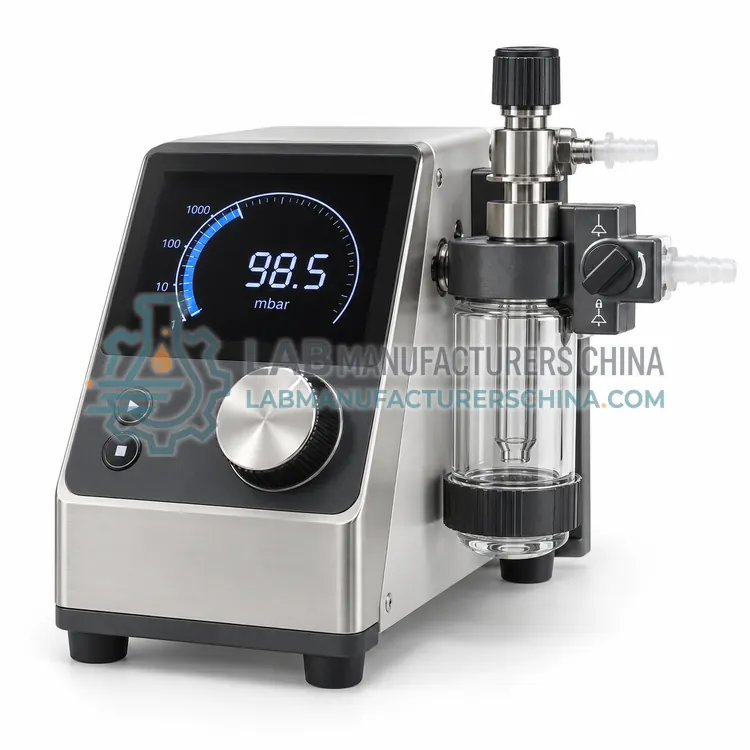
- Vacuum Pressure Controller for Rotary Evaporation — A vacuum pressure controller for rotary evaporation is optimized for solvent removal, with solvent libraries and automatic boiling point control.
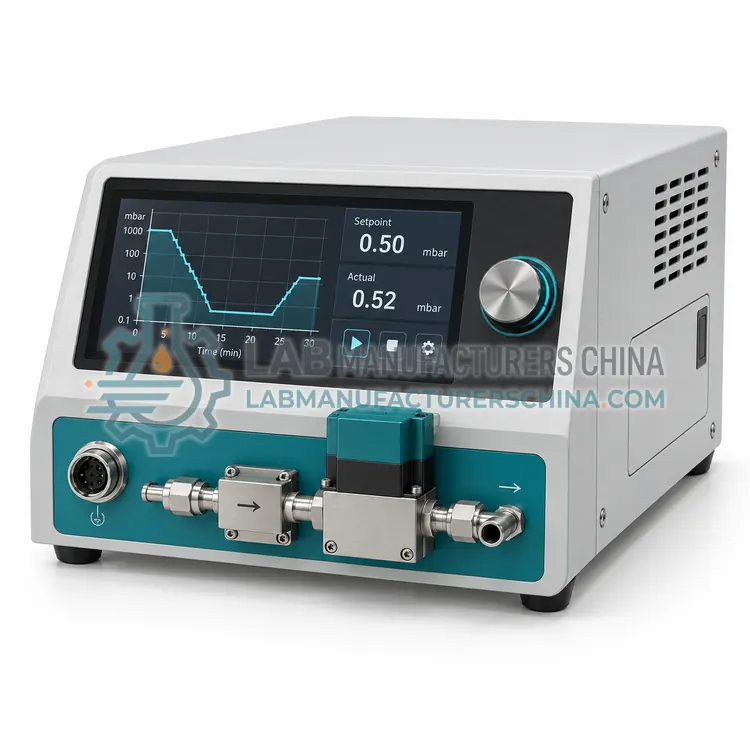
- Programmable Vacuum Ramp Controller — A programmable vacuum ramp controller changes pressure according to a timed program, so processes follow a controlled curve.
- Two-Point Vacuum Controller — A two-point vacuum controller switches between two preset pressures for a defined process, such as a high and low vacuum step.
- Multi-Port Vacuum Controller — A multi-port vacuum controller regulates several vacuum lines or vessels from one unit, with independent setpoints per channel.
How do I choose the right variant?
Match the control range to your process: rotary evaporation and distillation usually need control from atmospheric down to about 10 mbar, while filtration and coating may need lower. Check the measurement accuracy and resolution, since fine control of boiling depends on both. Decide whether you need on-off control with a solenoid valve or proportional control, which is smoother but more expensive. Confirm the valve is compatible with the vapors being pumped and that its orifice suits your pump flow. Consider whether ramps, solvent libraries and an external sample sensor are useful for your methods, and whether the controller can drive your pump directly or only a bleed valve. Check the interface, alarm contacts and whether a separate gauge is still needed.
Where are Vacuum Controllers used?
Vacuum Controllers are specified in rotary evaporation control, vacuum distillation and solvent recovery, vacuum filtration and degassing, freeze drying pressure control, coating and sputtering pressure control and reproducible sample drying.
Which standards and certifications apply?
Work with Vacuum Controllers is commonly governed by IEC 61010-1, IEC 61326-1, ISO 21360, ISO 9001 and GB 4793.1. Instrument certifications such as CE marking are confirmed per configuration and never assumed.
What are the key considerations before purchase?
Calibrate or verify the pressure sensor periodically against a reference gauge, because drift changes the boiling point and therefore the process. Keep the bleed valve and sensor port clean and dry, since condensate or particles cause erratic readings. Fit a cold trap or separator between the controller and the pumped vapor to protect both, and mount the controller above the liquid level. Use ramps to avoid bumping and foaming when pressure is reduced quickly. Follow IEC 61010-1 for electrical safety and check that the valve materials suit the solvents in use. Record setpoints and ramp programs in the method so that runs are reproducible, and log pressure data where the process is regulated.