Lab Manufacturers China

Vacuum Manifolds

真空歧管

VAM · Vacuum Equipment · 6 models

By Lab Manufacturers China Technical TeamLast reviewed Standards: IEC 61010-1, ISO 21360, ISO 9001

Standards referenced

  • IEC 61010-1
  • ISO 21360
  • ISO 9001
  • USP <711>
  • GB 4793.1

What are Vacuum Manifolds?

Vacuum manifolds distribute one vacuum source to several ports through valves, letting multiple filtrations, extractions or reactions share a pump. They are used with filtration flasks, SPE plates and Schlenk lines in analytical and synthetic laboratories.

6 models of Vacuum Manifolds

The 6 models below are current configurations; specifications are confirmed on quotation.

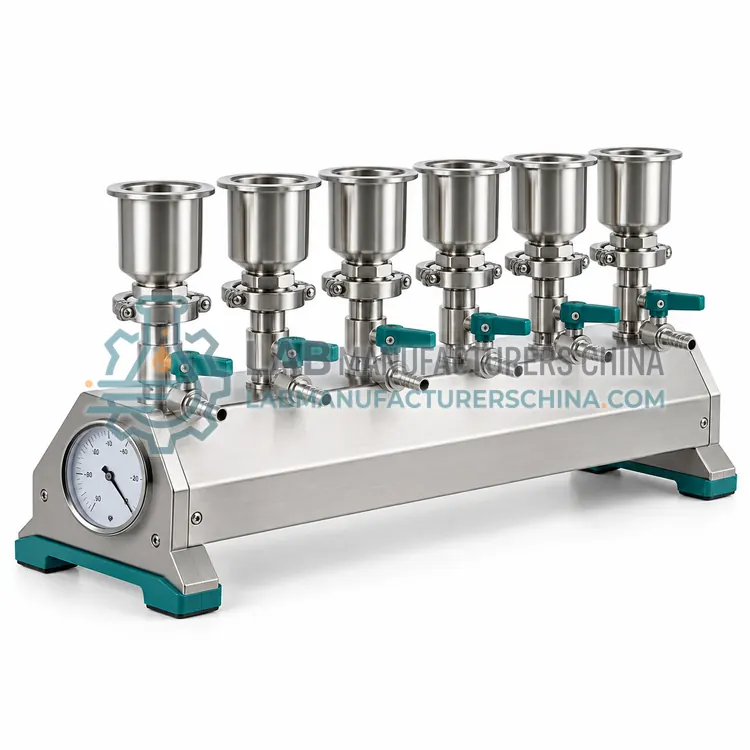
Vacuum Filtration Manifold

真空过滤歧管

  • VAM-0001
  • Vacuum Manifolds
  • ISO 9001 manufacturing (to be confirmed)
  • Material conformity (to be confirmed)
Number of positions:
1–12
Funnel volume:
100–500 mL
Body material:
Stainless steel or anodized aluminum
Valve type:
Individual stopcock
Working vacuum:
Up to about 30 mbar
Filter diameter:
47 or 90 mm

A vacuum filtration manifold holds several filtration funnels over a common receiver and shares one vacuum source. It is used for parallel filtration of water, beverages, oils and microbiology samples under identical conditions.

Request a quote
View details

Solid-Phase Extraction Manifold

固相萃取歧管

  • VAM-0002
  • Vacuum Manifolds
  • ISO 9001 manufacturing (to be confirmed)
  • Material conformity (to be confirmed)
Number of ports:
1–12 or 96-well
Cartridge sizes:
1, 3, 6 or 12 mL
Flow control:
Needle valve
Working vacuum:
About 100–10 mbar
Body material:
Polypropylene or PTFE-lined
Chamber material:
Glass or polycarbonate

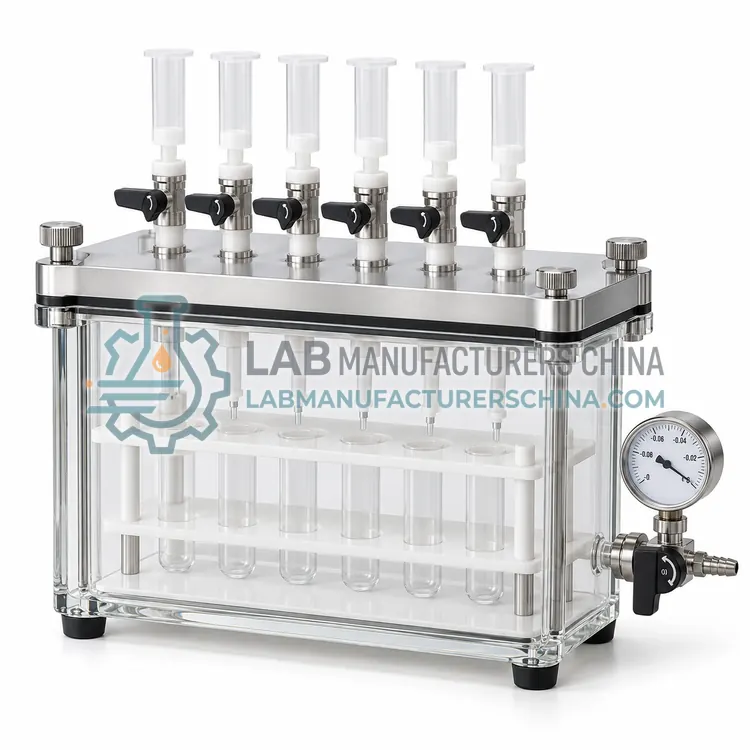
A solid-phase extraction manifold holds multiple SPE cartridges or plates and applies vacuum for controlled flow. It is used in environmental, clinical and food analysis for routine parallel sample cleanup and concentration.

Request a quote
View details

Schlenk Line Vacuum Manifold

Schlenk 线真空歧管

  • VAM-0003
  • Vacuum Manifolds
  • ISO 9001 manufacturing (to be confirmed)
  • Material conformity (to be confirmed)
Number of stations:
2–10
Working vacuum:
About 10–0.1 mbar
Body material:
Borosilicate glass or stainless steel
Stopcock bore:
2–4 mm
Gas inlet:
Nitrogen or argon
Trap:
Cold trap or solvent trap

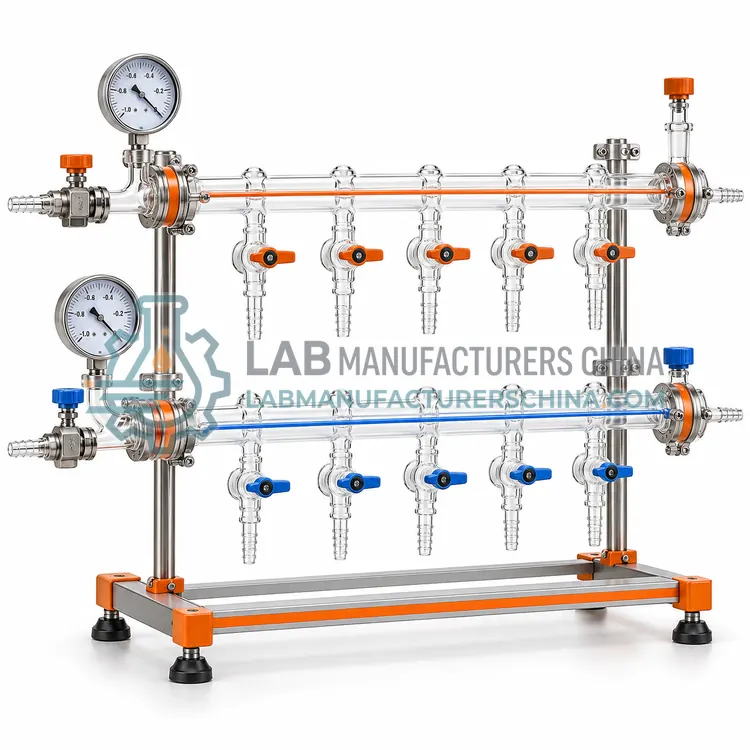
A Schlenk line vacuum manifold combines a vacuum tube and an inert gas tube with multiple stopcocks. It gives air-sensitive chemistry reliable vacuum and gas cycling for reactions, filtrations and solvent removal.

Request a quote
View details

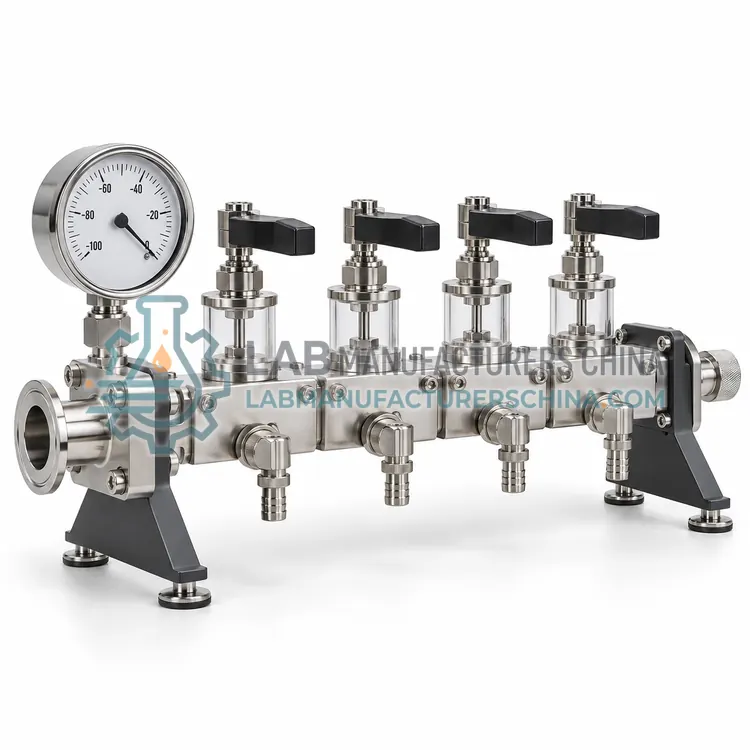
Multi-Port Vacuum Distribution Manifold

多接口真空分配歧管

  • VAM-0004
  • Vacuum Manifolds
  • CE (to be confirmed)
  • ISO 9001 manufacturing (to be confirmed)
Number of branches:
4–12 or more
Header bore:
15–40 mm
Working vacuum:
About 100–1 mbar
Body material:
Stainless steel or anodized aluminum
Valve type:
PTFE-seated ball or diaphragm
Branch connections:
Quick-connect, barb or KF

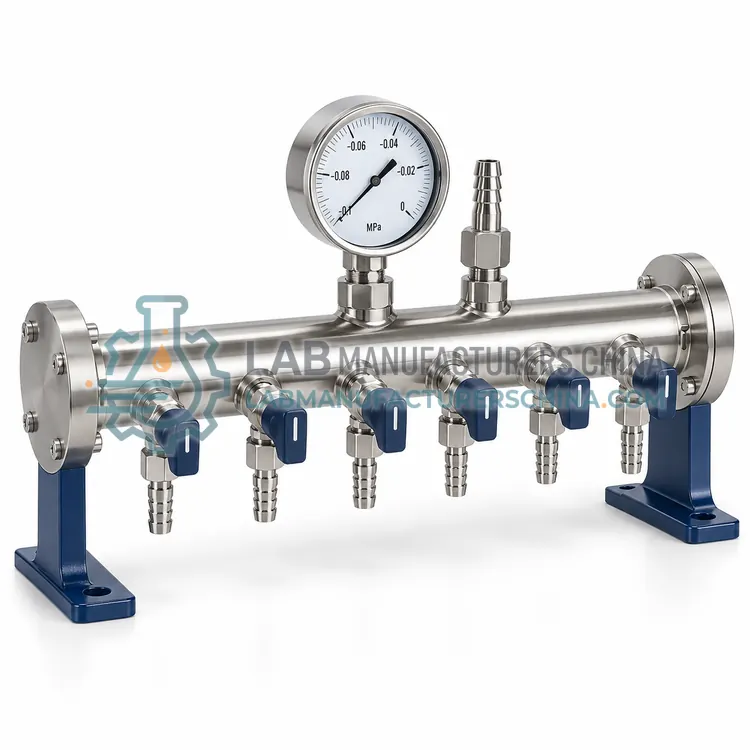
A multi-port vacuum distribution manifold routes one pump to many instruments or vessels with independent valves. It is used in central vacuum systems and laboratories that must serve several users from one source.

Request a quote
View details

Stainless Steel Vacuum Gas Manifold

不锈钢真空气体歧管

  • VAM-0005
  • Vacuum Manifolds
  • CE (to be confirmed)
  • ISO 9001 manufacturing (to be confirmed)
  • PED compliance (to be confirmed)
Number of stations:
2–8
Pressure range:
Full vacuum to 10 bar
Body material:
Stainless steel 316L
Valve type:
Bellows-sealed or ball
Fittings:
VCR or compression
Leak rate:
< 1 × 10⁻⁹ mbar·L/s helium

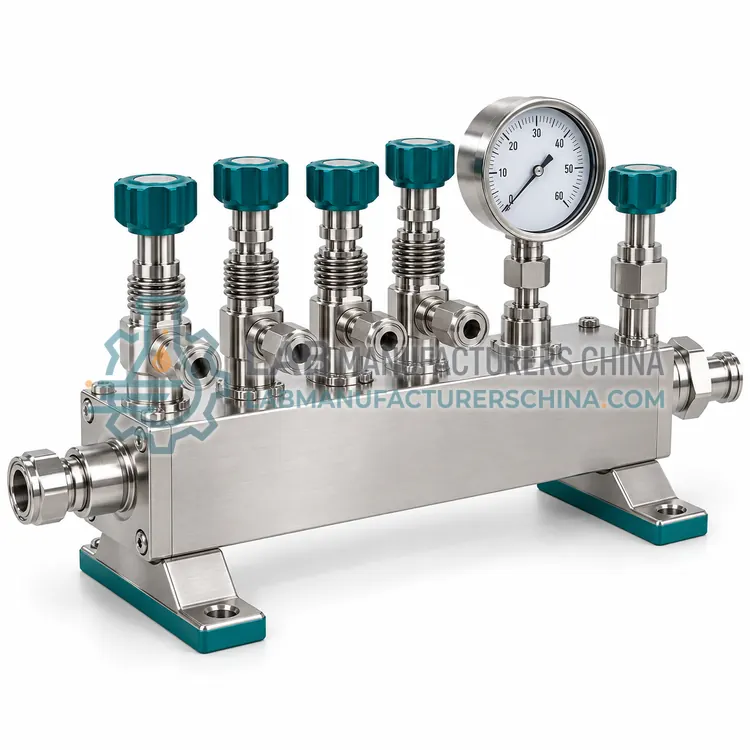
A stainless steel vacuum and gas manifold switches between vacuum and gas for several vessels under pressure or vacuum. It is used in glovebox work, gas adsorption studies and inert sample handling.

Request a quote
View details

Modular Vacuum Manifold

模块化真空歧管

  • VAM-0006
  • Vacuum Manifolds
  • ISO 9001 manufacturing (to be confirmed)
  • Material conformity (to be confirmed)
Port count:
2–12, expandable
Working vacuum:
About 10–1 mbar
Component material:
Borosilicate glass, PTFE or stainless steel
Joint type:
Ground glass, compression or clamp
Valve bore:
2–4 mm
Tubing size:
8–12 mm hose barb

A modular vacuum manifold is built from interchangeable tubes, tees and valved modules, so its port count and layout can be changed as needs evolve. It suits laboratories with frequently changing research configurations.

Request a quote
View details

Compare Vacuum Manifolds models

ModelBody materialValve typeWorking vacuumWeightGauge
Vacuum Filtration ManifoldVAM-0001Stainless steel or anodized aluminumIndividual stopcockUp to about 30 mbar2–8 kg—
Solid-Phase Extraction ManifoldVAM-0002Polypropylene or PTFE-lined—About 100–10 mbar2–8 kgAnalog or digital
Schlenk Line Vacuum ManifoldVAM-0003Borosilicate glass or stainless steel—About 10–0.1 mbar—Optional, 0–1000 mbar
Multi-Port Vacuum Distribution ManifoldVAM-0004Stainless steel or anodized aluminumPTFE-seated ball or diaphragmAbout 100–1 mbar—Analog or digital
Stainless Steel Vacuum Gas ManifoldVAM-0005Stainless steel 316LBellows-sealed or ball——Analog, digital or transducer
Modular Vacuum ManifoldVAM-0006——About 10–1 mbar——

Indicative values for this product class. Final specifications are confirmed on the quotation and in the calibration documents supplied with the instrument.

How do Vacuum Manifolds work?

A vacuum manifold is a tube or block with one inlet for the pump and several valved outlets. Opening a valve connects that outlet to the vacuum while the others remain closed, so each station can be isolated without disturbing the rest. The manifold body must have enough internal bore that flow is not restricted, and each valve must seal reliably at the working vacuum. A gauge or regulator may be fitted to set and monitor the level. Manifolds are made from stainless steel, PTFE, polypropylene or glass depending on chemical exposure and temperature, and connections are usually hose barbs, luer fittings or flanges. Versions with a purge or vent port allow controlled release of vacuum. Because all ports share one pump, the pump flow must be sufficient for the number of stations in use at once.

Which Vacuum Manifolds variants are available?

  • Vacuum Filtration Manifold — A vacuum filtration manifold holds several filtration funnels over a common receiver and shares one vacuum source.
  • Solid-Phase Extraction Manifold — A solid-phase extraction manifold holds multiple SPE cartridges or plates and applies vacuum for controlled flow.
  • Schlenk Line Vacuum Manifold — A Schlenk line vacuum manifold combines a vacuum tube and an inert gas tube with multiple stopcocks.
  • Multi-Port Vacuum Distribution Manifold — A multi-port vacuum distribution manifold routes one pump to many instruments or vessels with independent valves.
  • Stainless Steel Vacuum Gas Manifold — A stainless steel vacuum and gas manifold switches between vacuum and gas for several vessels under pressure or vacuum.
  • Modular Vacuum Manifold — A modular vacuum manifold is built from interchangeable tubes, tees and valved modules, so its port count and layout can be changed as needs evolve.

How do I choose the right variant?

Choose the number of ports from the maximum number of stations you will run at once, and check the internal bore so the last port still receives adequate vacuum. Select the body and valve materials for your solvents: PTFE and polypropylene for aggressive chemistry, stainless steel for durability and higher temperatures, and glass for visibility and inertness. Decide which connection type suits your flasks, cartridges or reactors, and whether each port needs an individual control valve or a simple on-off stopcock. Add a gauge or a regulator if the vacuum level must be set, and a vent or purge port if you need to release vacuum gradually. Confirm the pump flow rating for the total number of ports, and consider a manifold with a removable tray or rack for holding vessels.

Where are Vacuum Manifolds used?

Vacuum Manifolds are specified in multi-place vacuum filtration, solid-phase extraction, schlenk line vacuum and gas, parallel reaction workup, vacuum drying of multiple samples and sample concentration manifolds.

Which standards and certifications apply?

Work with Vacuum Manifolds is commonly governed by IEC 61010-1, ISO 21360, ISO 9001, USP <711> and GB 4793.1. Instrument certifications such as CE marking are confirmed per configuration and never assumed.

What are the key considerations before purchase?

Check every valve for leaks at the working vacuum, because a single leaking port reduces performance at all stations. Use the correct tubing and clamps, and avoid kinking or long runs that reduce conductance. Keep manifolds clean and dry, and do not use vacuum grease where it can contaminate samples or block fine passages. Do not exceed the rated vacuum if the body is glass, and support glassware to avoid stress. For solvent work, trap vapor before it reaches the pump and route exhaust safely. Follow IEC 61010-1 for associated electrical equipment. Record the vacuum achieved at each port during commissioning, so that a blocked valve or leaking connection is noticed early.

Frequently asked questions about Vacuum Manifolds

It depends on pump flow and the vacuum needed at each station. A small pump may handle two or three filtration ports, while a high-flow pump can serve six or more. Confirm total flow against your plan.

Need help specifying Vacuum Manifolds?

Request a quote