How do Vacuum Chambers work?
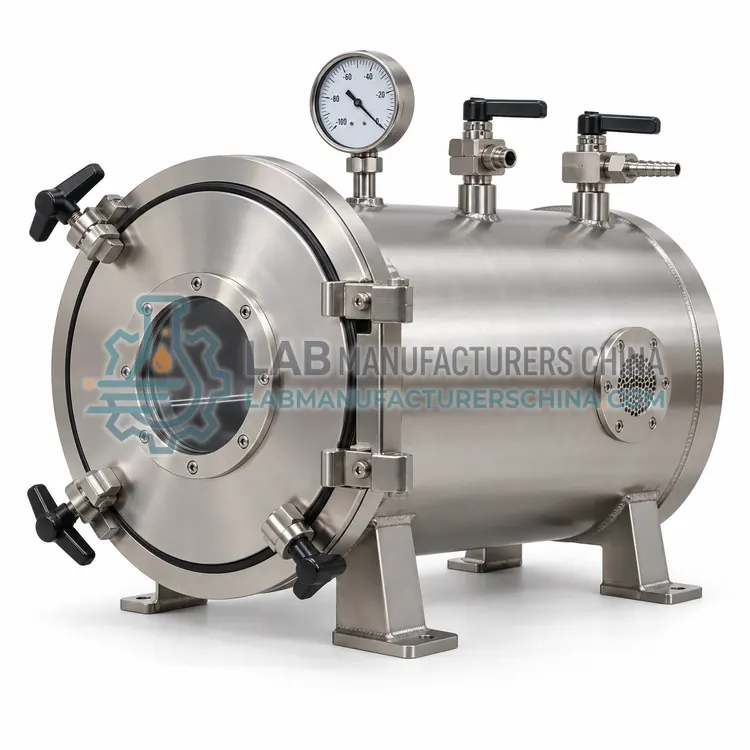
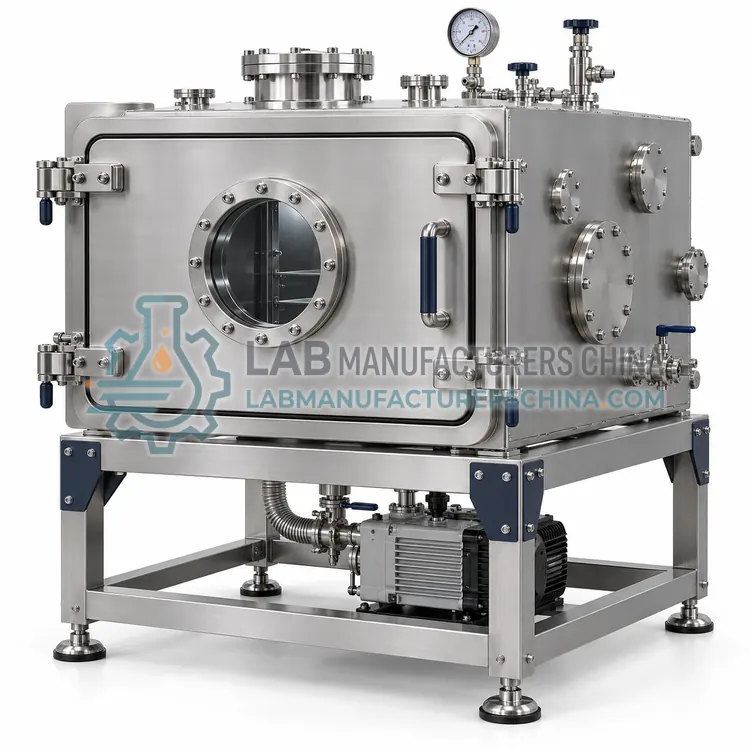
A vacuum chamber provides the sealed volume from which a pump removes gas. Its walls and seals must resist the pressure difference, which at full vacuum is about one bar acting inward on every square centimeter. Chamber materials, usually stainless steel, aluminum, acrylic or glass, determine strength, chemical resistance and outgassing behavior. Seals in O-ring grooves, gaskets or flat flanges keep air out, and the sealing method sets the achievable vacuum and the ease of opening. Ports allow connection to a pump, gauge, vent valve and feedthroughs for electrical, fluid or optical access. Internal features such as shelves, heating platens, electrodes or sample holders adapt the chamber to its task. The pump-down rate depends on chamber volume, pump speed and the conductance of the connecting line, so the chamber and pump must be matched.
Which Vacuum Chambers variants are available?
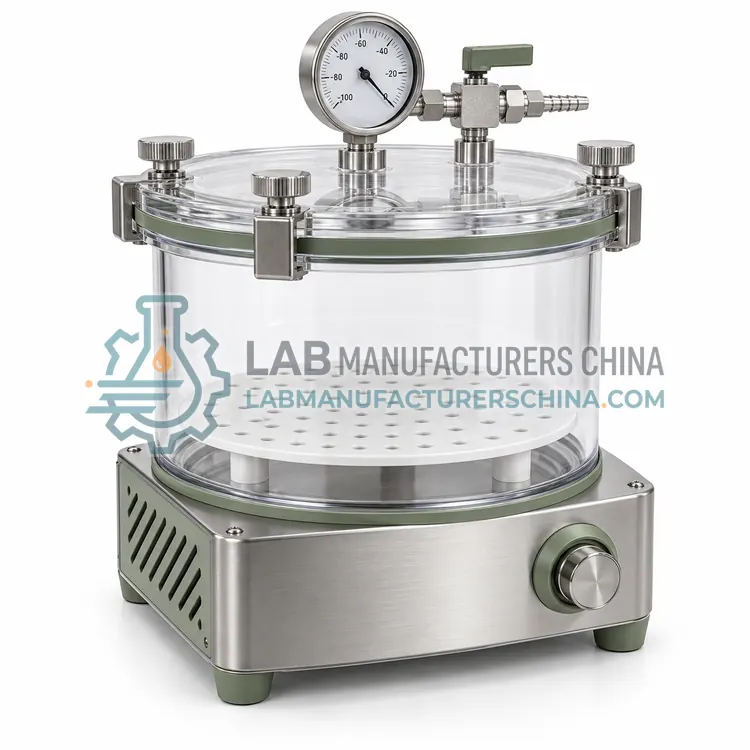
- Benchtop Vacuum Desiccator Chamber — A benchtop vacuum desiccator chamber is a transparent vessel for storing moisture-sensitive samples and drying them under rough vacuum.
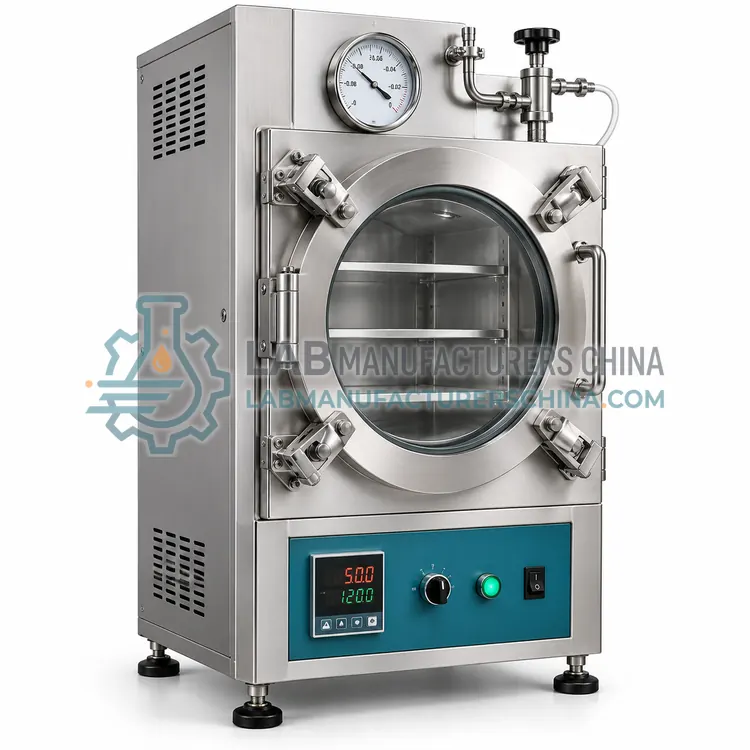
- Vacuum Drying Oven Chamber — A vacuum drying oven chamber combines vacuum with controlled heating to dry heat- and oxygen-sensitive materials at lower temperatures.
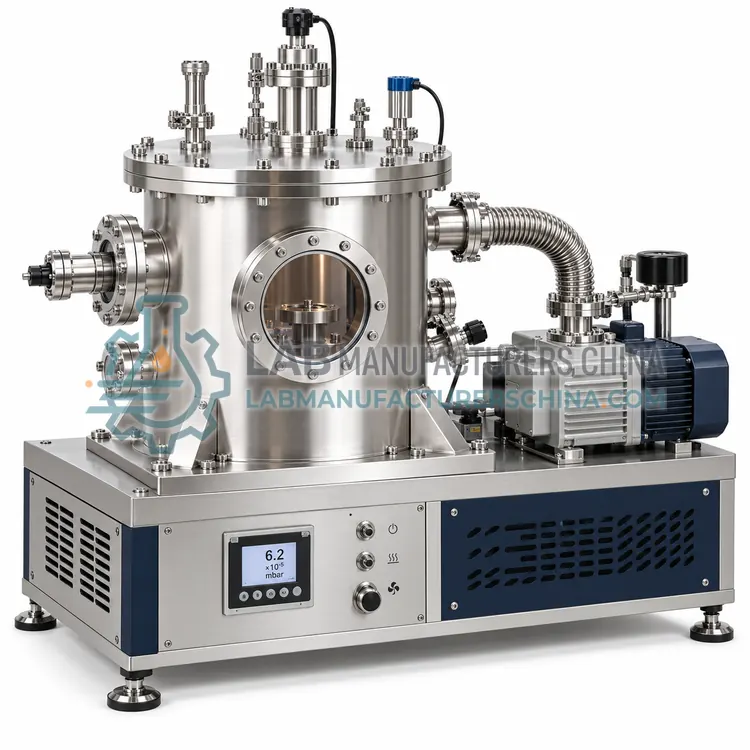
- Vacuum Coating Chamber — A vacuum coating chamber provides a clean high-vacuum environment with feedthroughs and fixtures for sputtering, evaporation or ion coating.
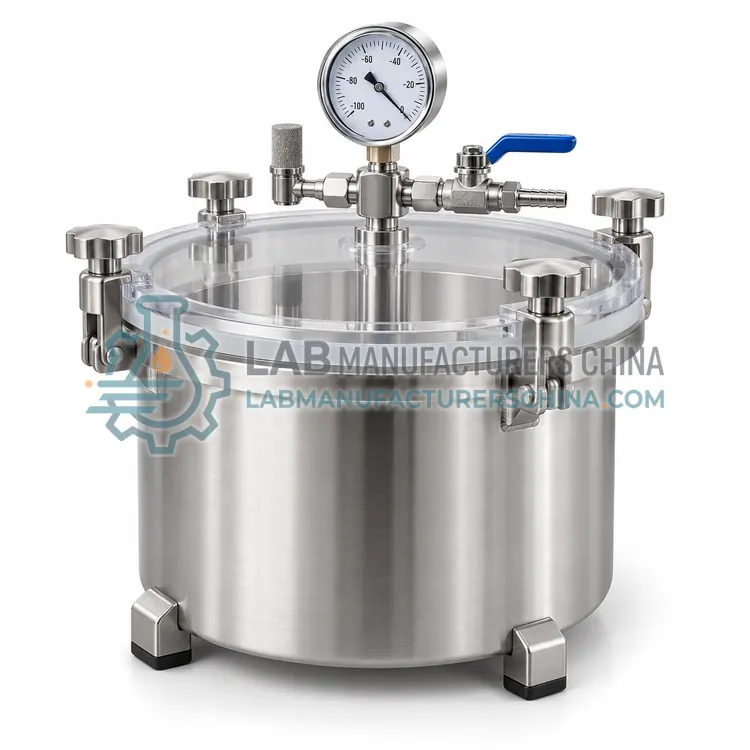
- Stainless Steel Degassing Chamber — A stainless steel degassing chamber removes dissolved gases from liquids, resins and slurries under moderate vacuum.
- Vacuum Glovebox Antechamber — A vacuum glovebox antechamber is a small transfer chamber that lets items enter or leave a glovebox without exposing the main atmosphere.
- Large Custom Vacuum Chamber — A large custom vacuum chamber is engineered for a specific volume, pressure and access requirement, often with multiple ports, doors and internal fixtures.
How do I choose the right variant?
Start with the volume needed for your samples or components, and the pressure you must reach. A desiccator-style chamber works for storage and gentle drying at rough vacuum, while ovens and coating chambers need deeper vacuum and often heating or electrode feedthroughs. Choose the material for the process: stainless steel for strength, chemical resistance and cleanability; acrylic or glass for visibility and non-magnetic work; aluminum for light weight. Confirm the pressure rating with a safety factor and check whether a relief device is needed. Select the sealing method, typically an O-ring or gasket, for the vacuum level and opening frequency, and list the ports you need for pump, gauge, vent and feedthroughs. Consider internal fixtures, door or lid access, window size and how the chamber will be cleaned and mounted.
Where are Vacuum Chambers used?
Vacuum Chambers are specified in sample drying and desiccation, degassing of liquids and resins, vacuum coating and evaporation, leak and pressure testing, anaerobic and moisture-free storage and component and material outgassing tests.
Which standards and certifications apply?
Work with Vacuum Chambers is commonly governed by IEC 61010-1, ISO 21360, ISO 27893, ISO 9001 and GB 4793.1. Instrument certifications such as CE marking are confirmed per configuration and never assumed.
What are the key considerations before purchase?
Never use a chamber above its rated pressure difference, and fit a relief valve or rupture disc where a pump could over-pressurize it or where a process generates gas. Keep sealing surfaces clean and free of scratches, and replace O-rings that are cut, swollen or hardened. Apply vacuum grease sparingly, because excess grease traps particles and can contaminate samples. Support heavy doors safely and check hinges and clamps regularly, especially on large chambers. Verify thermal uniformity if the chamber is heated, and use compatible feedthroughs for electrical or fluid lines. Follow IEC 61010-1 for associated electrical equipment and local pressure vessel rules where applicable. Record base pressure and leak-up rate during commissioning so changes can be detected later.