Vacuum Filtration Manifold
真空过滤歧管
- SKU VAM-0001
- Vacuum Manifolds
- ISO 9001 manufacturing (to be confirmed)
- Material conformity (to be confirmed)
Price on request — FOB / CIF quoted per order
Prices depend on configuration, quantity and destination port.
Key specifications
| Number of positions | 1–12 |
|---|---|
| Funnel volume | 100–500 mL |
| Body material | Stainless steel or anodized aluminum |
| Valve type | Individual stopcock |
| Working vacuum | Up to about 30 mbar |
| Filter diameter | 47 or 90 mm |
Request a quote Download brochure · to be provided
By Lab Manufacturers China Technical TeamLast reviewed Standards: IEC 61010-1, ISO 21360, ISO 9001
What is the Vacuum Filtration Manifold?
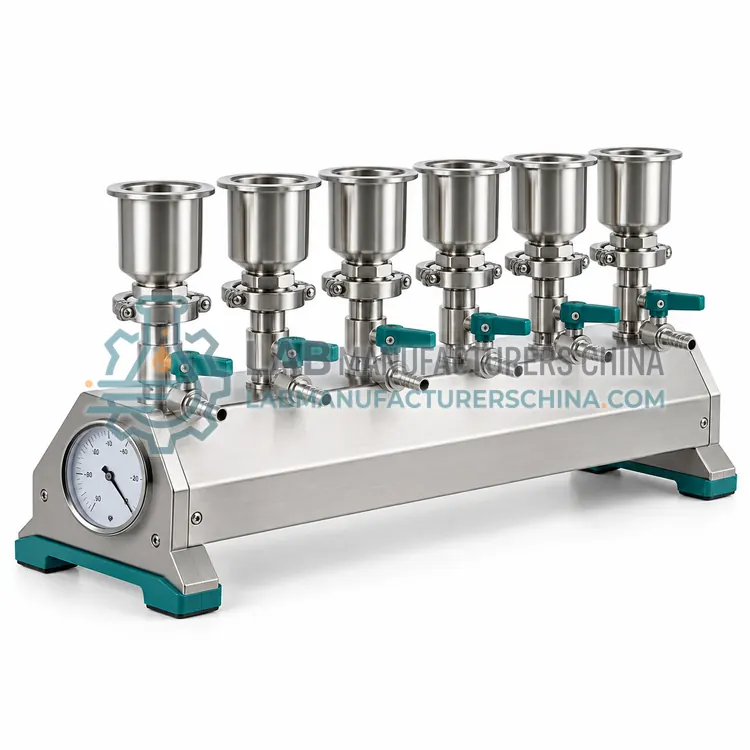
A vacuum filtration manifold holds several filtration funnels over a common receiver and shares one vacuum source. It is used for parallel filtration of water, beverages, oils and microbiology samples under identical conditions.
What is the Vacuum Filtration Manifold?
A vacuum filtration manifold holds several filtration funnels over a common receiver and shares one vacuum source. It is used for parallel filtration of water, beverages, oils and microbiology samples under identical conditions.
Overview
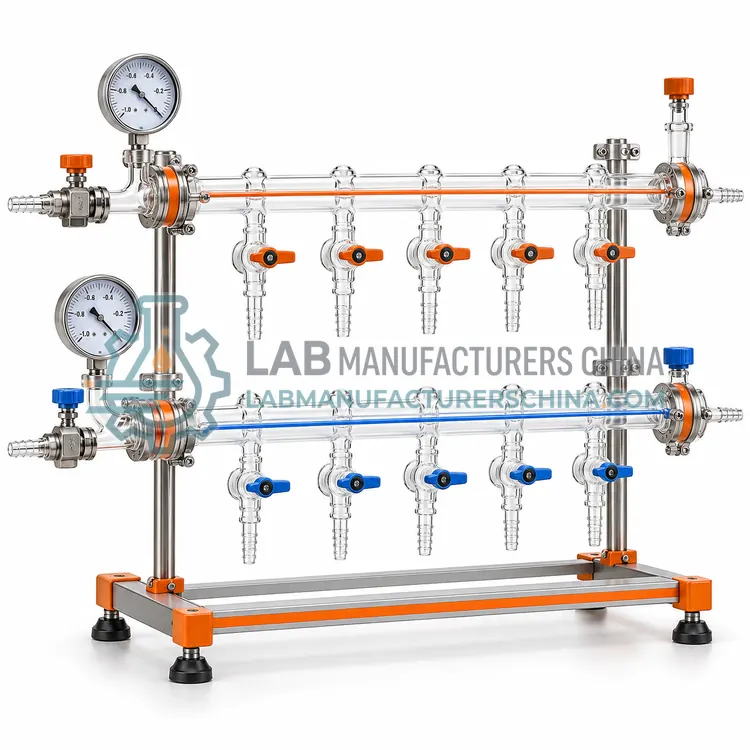
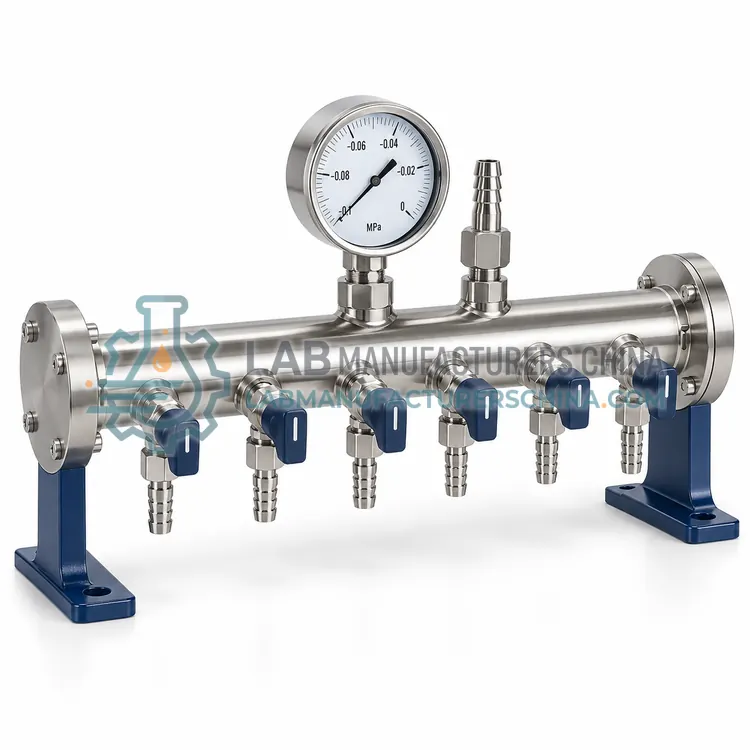
The filtration manifold consists of a base with a vacuum inlet, a set of valved ports and a rack or plate that holds funnels or filter holders. Stainless steel or anodized aluminum bodies are usual, with individual stopcocks so each funnel can be operated separately. Configurations cover one, three, six or twelve places, and funnels may be 100 to 500 milliliters. A common receiving flask or a divided base collects the filtrate, and a gauge port allows vacuum monitoring. The manifold sits between the funnel and the pump, and a liquid trap protects the pump from overflow. These units are used in environmental water testing, beverage microbiology, oil and fuel testing and particle counting, where several samples must be filtered under the same conditions and compared.
How does it work?
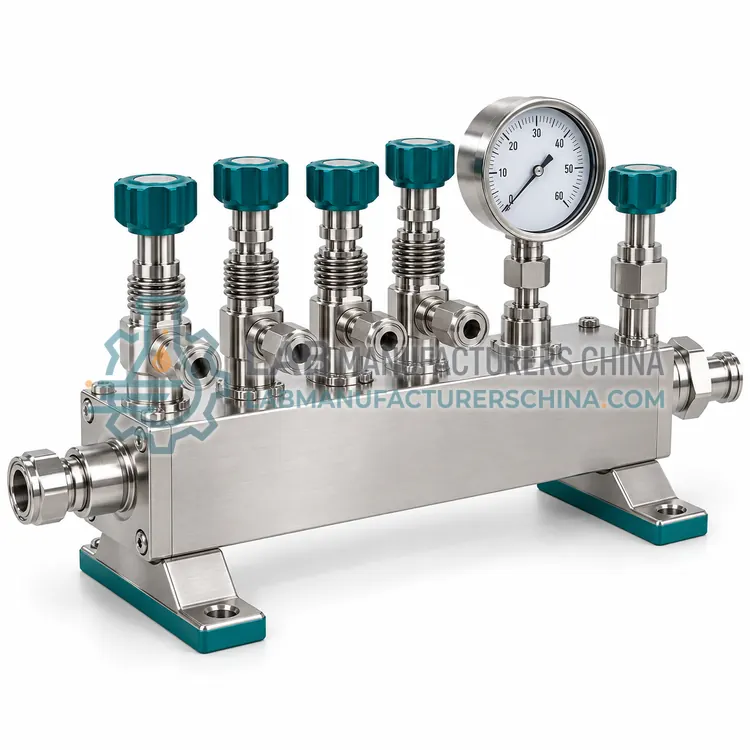
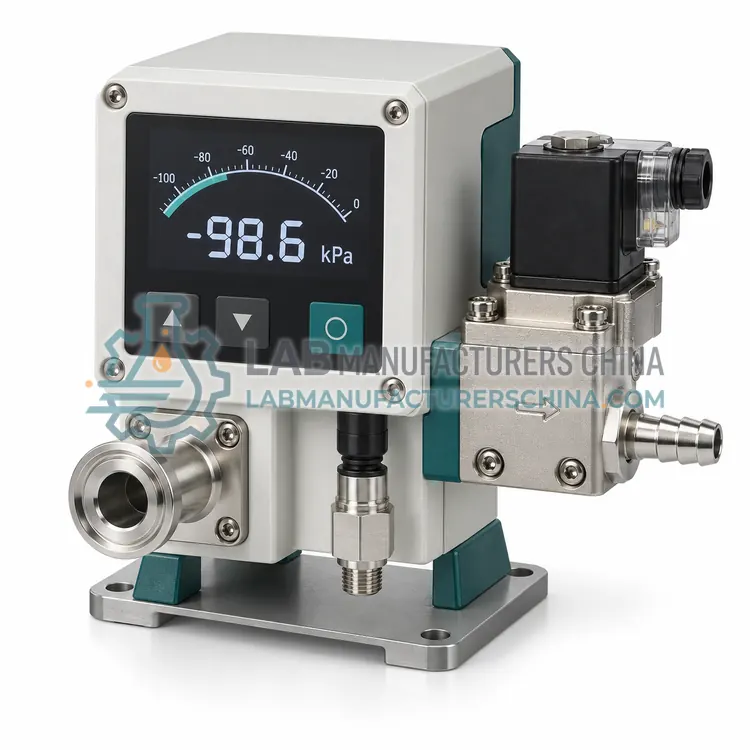
A vacuum manifold is a tube or block with one inlet for the pump and several valved outlets. Opening a valve connects that outlet to the vacuum while the others remain closed, so each station can be isolated without disturbing the rest. The manifold body must have enough internal bore that flow is not restricted, and each valve must seal reliably at the working vacuum. A gauge or regulator may be fitted to set and monitor the level. Manifolds are made from stainless steel, PTFE, polypropylene or glass depending on chemical exposure and temperature, and connections are usually hose barbs, luer fittings or flanges. Versions with a purge or vent port allow controlled release of vacuum. Because all ports share one pump, the pump flow must be sufficient for the number of stations in use at once.
What are the key features?
- One to twelve filter positions in one base
- Individual stopcocks for separate operation
- Stainless steel or anodized aluminum body
- Funnel sizes of 100–500 mL
- Gauge port for vacuum monitoring
- Common or divided filtrate collection
What are the technical specifications?
A typical vacuum filtration manifold configuration offers number of positions of 1–12, funnel volume of 100–500 mL, body material of Stainless steel or anodized aluminum, valve type of Individual stopcock, working vacuum of Up to about 30 mbar and filter diameter of 47 or 90 mm. Values are indicative of the product class; the exact figures for each configuration are confirmed on the quotation and the calibration documents supplied with the instrument.
Which applications is it used for?
The Vacuum Filtration Manifold is used in environmental water filtration, beverage microbiology testing, oil and fuel particle analysis, microbiological membrane filtration and parallel sample preparation. Across the wider Vacuum Manifolds class, laboratories also deploy it for multi-place vacuum filtration, solid-phase extraction and schlenk line vacuum and gas.
Which standards and certifications apply?
Relevant standards and methods include IEC 61010-1, ISO 21360, ISO 9001, USP <711> and GB 4793.1. Certification candidates for this model are ISO 9001 manufacturing and Material conformity; each is to be confirmed for the specific configuration before shipment, and certificates are supplied only where they have been issued.
Check every valve for leaks at the working vacuum, because a single leaking port reduces performance at all stations. Use the correct tubing and clamps, and avoid kinking or long runs that reduce conductance. Keep manifolds clean and dry, and do not use vacuum grease where it can contaminate samples or block fine passages. Do not exceed the rated vacuum if the body is glass, and support glassware to avoid stress. For solvent work, trap vapor before it reaches the pump and route exhaust safely. Follow IEC 61010-1 for associated electrical equipment. Record the vacuum achieved at each port during commissioning, so that a blocked valve or leaking connection is noticed early.
How do I select the right Vacuum Filtration Manifold?
Choose a filtration manifold when several samples must be filtered in parallel with individual control. For single filtrations, a simple funnel and flask are enough. In the RFQ, state position count, funnel volume, filter diameter, material and autoclavability needs.
How does it compare with other Vacuum Manifolds variants?
Choose the number of ports from the maximum number of stations you will run at once, and check the internal bore so the last port still receives adequate vacuum. Select the body and valve materials for your solvents: PTFE and polypropylene for aggressive chemistry, stainless steel for durability and higher temperatures, and glass for visibility and inertness. Decide which connection type suits your flasks, cartridges or reactors, and whether each port needs an individual control valve or a simple on-off stopcock. Add a gauge or a regulator if the vacuum level must be set, and a vent or purge port if you need to release vacuum gradually. Confirm the pump flow rating for the total number of ports, and consider a manifold with a removable tray or rack for holding vessels.
Full specifications
| Number of positions | 1–12 |
|---|---|
| Funnel volume | 100–500 mL |
| Body material | Stainless steel or anodized aluminum |
| Valve type | Individual stopcock |
| Working vacuum | Up to about 30 mbar |
| Filter diameter | 47 or 90 mm |
| Vacuum port | Hose barb 8–12 mm |
| Autoclavable | Stainless parts yes |
| Weight | 2–8 kg |
Indicative values for this product class. Final specifications are confirmed on the quotation and in the calibration documents supplied with the instrument.
Applications
- Environmental water filtration
- Beverage microbiology testing
- Oil and fuel particle analysis
- Microbiological membrane filtration
- Parallel sample preparation
Key features
- One to twelve filter positions in one base
- Individual stopcocks for separate operation
- Stainless steel or anodized aluminum body
- Funnel sizes of 100–500 mL
- Gauge port for vacuum monitoring
- Common or divided filtrate collection
Frequently asked questions about Vacuum Filtration Manifold
Yes, each stopcock isolates its port, so you can run one or a few positions and leave the rest closed. This is useful when sample numbers vary between runs.
A liquid trap or overflow flask between the manifold and pump catches filtrate that passes through. Empty it regularly and use a hydrophobic filter as an extra safeguard.
Stainless steel bodies and funnels can be autoclaved, while plastic parts and valves may not tolerate high temperature. Confirm each component's temperature rating before sterilizing.
It depends on pump flow and the vacuum needed at each station. A small pump may handle two or three filtration ports, while a high-flow pump can serve six or more. Confirm total flow against your plan.
Pressure drop along the manifold reduces vacuum at distant ports, especially with small bore or many fittings. Use a larger bore body and keep the run short so all ports perform similarly.
PTFE and polypropylene resist aggressive solvents and are inexpensive; stainless steel handles higher temperature and repeated use; glass offers visibility and inertness but must be supported and not over-pressurized.
Related models