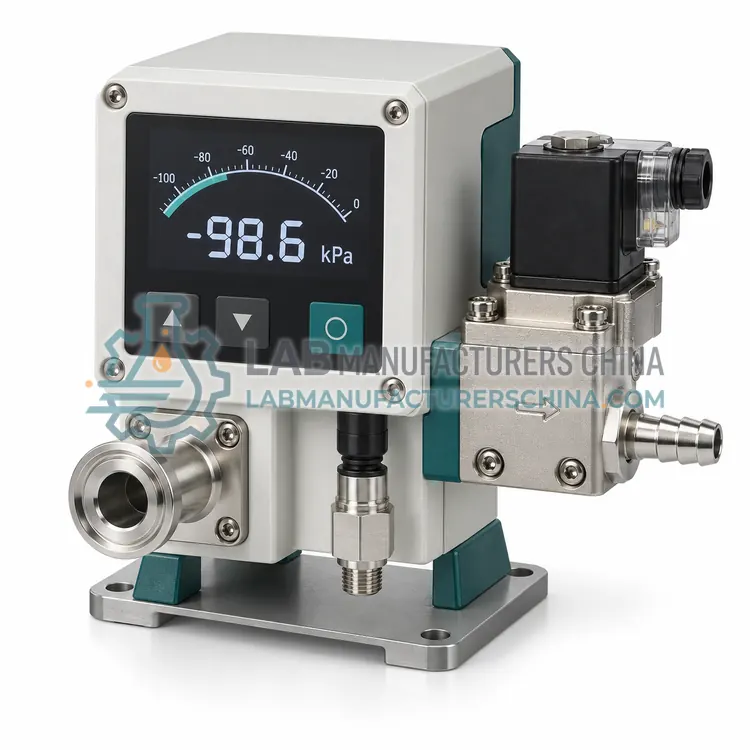
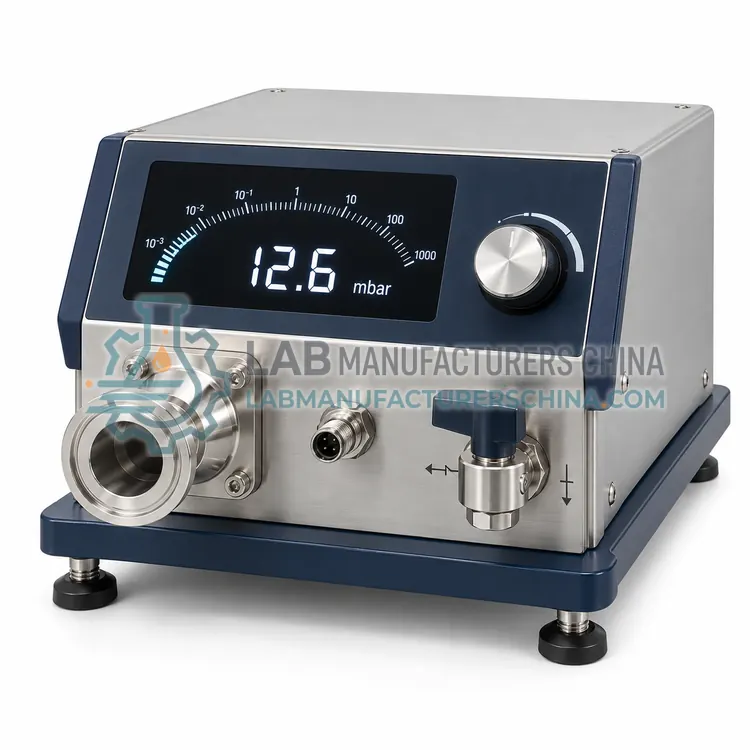
Digital Vacuum Controller
数字真空控制器
- SKU VCO-0001
- Vacuum Controllers
- CE (to be confirmed)
- RoHS (to be confirmed)
- ISO 9001 manufacturing (to be confirmed)
Price on request — FOB / CIF quoted per order
Prices depend on configuration, quantity and destination port.
Key specifications
| Pressure range | 1,000–1 mbar |
|---|---|
| Resolution | 1 mbar |
| Accuracy | ± 1 % of full scale |
| Control type | On-off with solenoid valve |
| Valve | PTFE solenoid, 2–4 mm orifice |
| Display | Digital, current and setpoint |
Request a quote Download brochure · to be provided
By Lab Manufacturers China Technical TeamLast reviewed Standards: IEC 61010-1, IEC 61326-1, ISO 21360
What is the Digital Vacuum Controller?
A digital vacuum controller measures pressure and holds a set vacuum by driving a valve or pump through a digital interface. It is the basic unit for making rotary evaporation and distillation repeatable.
What is the Digital Vacuum Controller?
A digital vacuum controller measures pressure and holds a set vacuum by driving a valve or pump through a digital interface. It is the basic unit for making rotary evaporation and distillation repeatable.
Overview
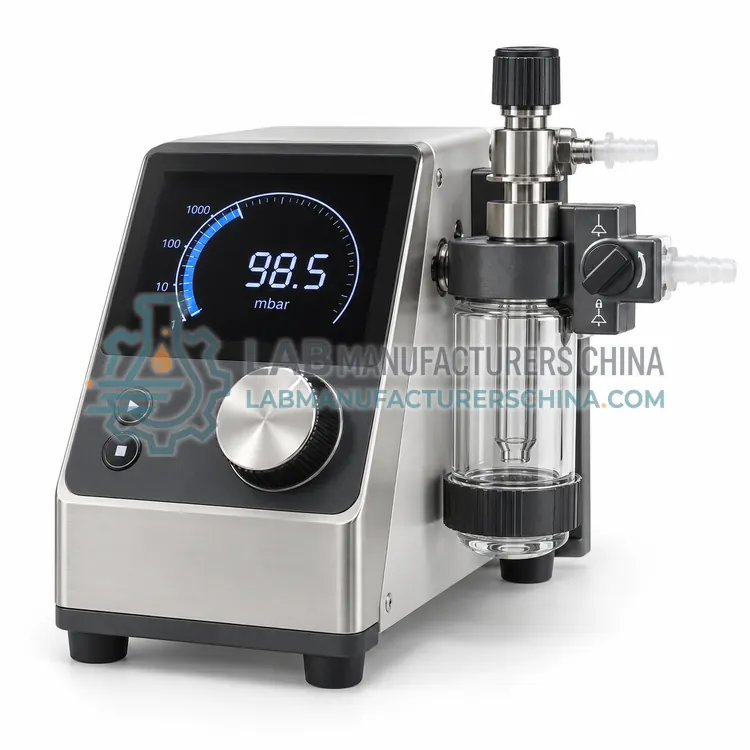
The digital vacuum controller uses an absolute pressure transducer and a microprocessor to compare measured and set pressure. It actuates a solenoid bleed valve, and on some models it also switches the pump on and off through a relay. Ranges typically cover 1,000 to 1 millibar with resolution of 1 millibar and accuracy of about one percent of full scale. The display shows current and target pressure, and buttons or a knob set the value. Hysteresis is adjustable to prevent rapid valve cycling. Many units detect the boiling point automatically, so the operator need not know the solvent's vapor pressure. The body is bench-top or panel-mounted, connections are hose barbs or KF flanges, and wetted parts are PTFE or stainless steel. It is the most common vacuum control format in chemical laboratories.
How does it work?
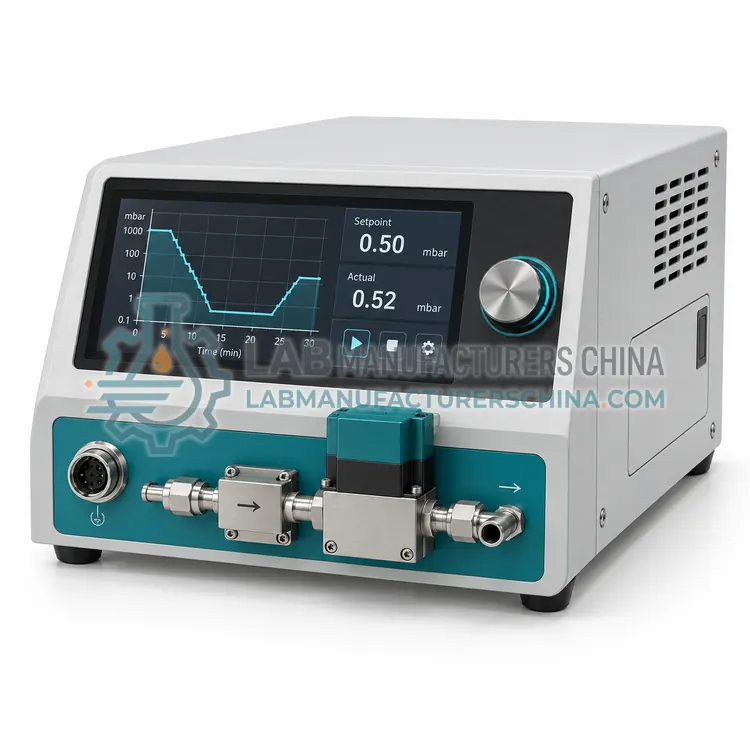
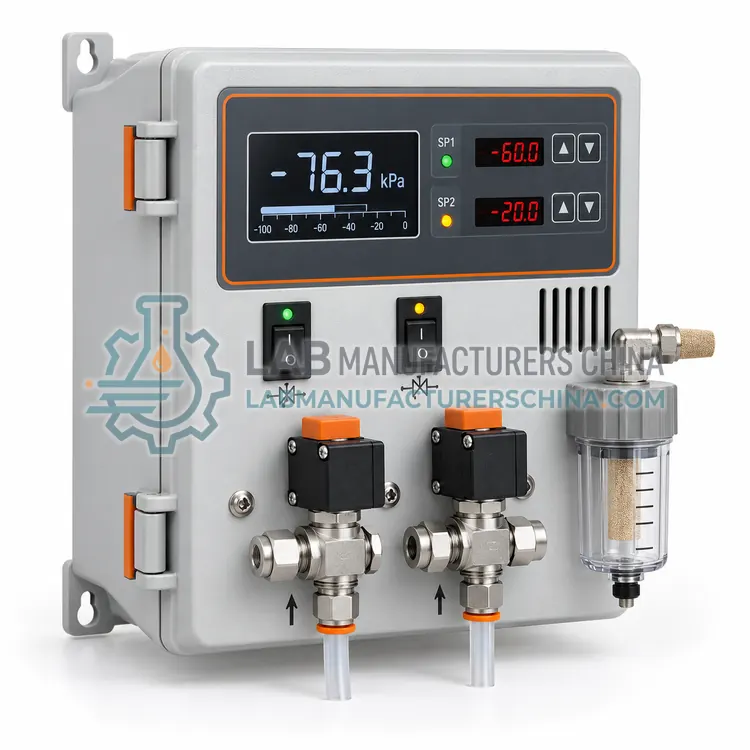
A vacuum controller combines a pressure sensor, a control algorithm and an output that acts on the vacuum system. The sensor, usually a piezoresistive or capacitive absolute pressure transducer, measures pressure from atmospheric down to a few millibars. The controller compares this value with the setpoint and adjusts either the pump speed or, more often, a solenoid or proportional valve that bleeds air into the line. A PID or on-off algorithm holds the pressure within a band, and the display shows the current and target values. Some controllers add ramps so that pressure changes gradually, and inputs for a solvent library or an external sensor at the sample. Outputs may include relay contacts for the pump, an analog or digital signal, and alarm contacts for out-of-range conditions.
What are the key features?
- Absolute pressure measurement from 1,000 to 1 mbar
- Resolution of 1 mbar and accuracy about 1 % full scale
- Automatic boiling point detection
- Adjustable hysteresis to avoid valve cycling
- Relay output to switch the pump
- PTFE wetted parts and hose barb or KF connections
What are the technical specifications?
A typical digital vacuum controller configuration offers pressure range of 1,000–1 mbar, resolution of 1 mbar, accuracy of ± 1 % of full scale, control type of On-off with solenoid valve, valve of PTFE solenoid, 2–4 mm orifice and display of Digital, current and setpoint. Values are indicative of the product class; the exact figures for each configuration are confirmed on the quotation and the calibration documents supplied with the instrument.
Which applications is it used for?
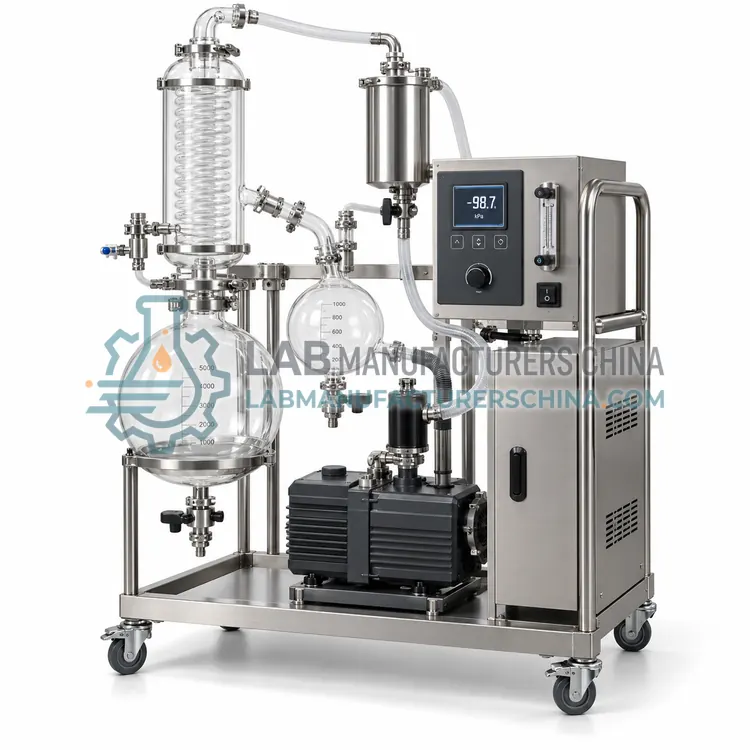
The Digital Vacuum Controller is used in rotary evaporation, vacuum distillation, solvent recovery, centrifugal concentration and sample drying. Across the wider Vacuum Controllers class, laboratories also deploy it for rotary evaporation control, vacuum distillation and solvent recovery and vacuum filtration and degassing.
Which standards and certifications apply?
Relevant standards and methods include IEC 61010-1, IEC 61326-1, ISO 21360, ISO 9001 and GB 4793.1. Certification candidates for this model are CE, RoHS and ISO 9001 manufacturing; each is to be confirmed for the specific configuration before shipment, and certificates are supplied only where they have been issued.
Calibrate or verify the pressure sensor periodically against a reference gauge, because drift changes the boiling point and therefore the process. Keep the bleed valve and sensor port clean and dry, since condensate or particles cause erratic readings. Fit a cold trap or separator between the controller and the pumped vapor to protect both, and mount the controller above the liquid level. Use ramps to avoid bumping and foaming when pressure is reduced quickly. Follow IEC 61010-1 for electrical safety and check that the valve materials suit the solvents in use. Record setpoints and ramp programs in the method so that runs are reproducible, and log pressure data where the process is regulated.
How do I select the right Digital Vacuum Controller?
Choose a digital controller for everyday vacuum regulation where a stable setpoint and automatic boiling point detection are enough. For ramps or multi-stage programs, choose a programmable model. In the RFQ, state pressure range, valve orifice, pump switching and connection type.
How does it compare with other Vacuum Controllers variants?
Match the control range to your process: rotary evaporation and distillation usually need control from atmospheric down to about 10 mbar, while filtration and coating may need lower. Check the measurement accuracy and resolution, since fine control of boiling depends on both. Decide whether you need on-off control with a solenoid valve or proportional control, which is smoother but more expensive. Confirm the valve is compatible with the vapors being pumped and that its orifice suits your pump flow. Consider whether ramps, solvent libraries and an external sample sensor are useful for your methods, and whether the controller can drive your pump directly or only a bleed valve. Check the interface, alarm contacts and whether a separate gauge is still needed.
Full specifications
| Pressure range | 1,000–1 mbar |
|---|---|
| Resolution | 1 mbar |
| Accuracy | ± 1 % of full scale |
| Control type | On-off with solenoid valve |
| Valve | PTFE solenoid, 2–4 mm orifice |
| Display | Digital, current and setpoint |
| Pump output | Relay, 250 V AC 3 A |
| Connection | Hose barb 8 mm or KF 16 |
| Power supply | 100–240 V, 50/60 Hz |
Indicative values for this product class. Final specifications are confirmed on the quotation and in the calibration documents supplied with the instrument.
Applications
- Rotary evaporation
- Vacuum distillation
- Solvent recovery
- Centrifugal concentration
- Sample drying
Key features
- Absolute pressure measurement from 1,000 to 1 mbar
- Resolution of 1 mbar and accuracy about 1 % full scale
- Automatic boiling point detection
- Adjustable hysteresis to avoid valve cycling
- Relay output to switch the pump
- PTFE wetted parts and hose barb or KF connections
Frequently asked questions about Digital Vacuum Controller
Many models can switch the pump through a relay, but they can also work with a continuously running pump by bleeding air. Either method holds the setpoint if pump flow is sufficient.
The controller lowers pressure until it detects the vapor pressure of the solvent, then holds a margin above it. This prevents bumping without the operator looking up vapor pressure data.
Standard units stop at about 1 millibar. For lower pressures, choose a high-vacuum controller with a different sensor, such as a Pirani or capacitance gauge, and a suitable valve.
At full vacuum, low-boiling solvents bump and foam, and volatile analytes may be lost. Holding a set pressure keeps boiling gentle, protects the sample and makes runs reproducible between operators.
For rotary evaporation, plus or minus 1 to 5 millibars is usually enough, and accuracy of about 1 percent of full scale is common. Tight control matters more when boiling must be kept near a threshold.
On-off control with a solenoid valve is simple and lower cost, but pressure oscillates around the setpoint. Proportional control modulates the valve for smoother pressure, which suits sensitive distillations and coatings.
Related models