How do Steam Sterilizers work?
Steam sterilization relies on saturated steam condensing on the load, where it releases latent heat and raises the surface temperature rapidly; the moisture plus heat coagulates proteins and kills microorganisms, including spores. Cycle efficacy depends on air removal, because trapped air forms a cooler pocket that blocks steam contact. Machines therefore use gravity displacement, where steam enters at the top and pushes air out of a bottom drain, or pre-vacuum cycles, where a pump or ejector removes air in stages before steam admission. Saturated steam quality is defined by dryness fraction, non-condensable gases and superheat. A jacketed chamber and insulated door hold temperature, a pressure vessel with a safety valve contains the load, and instruments record chamber pressure and load temperature so the cycle can be documented and validated.
Which Steam Sterilizers variants are available?
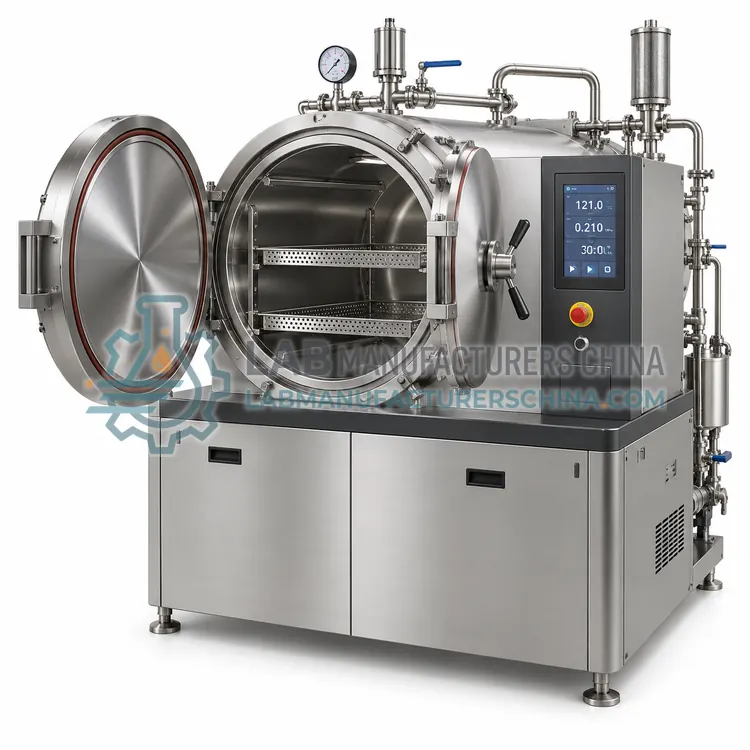
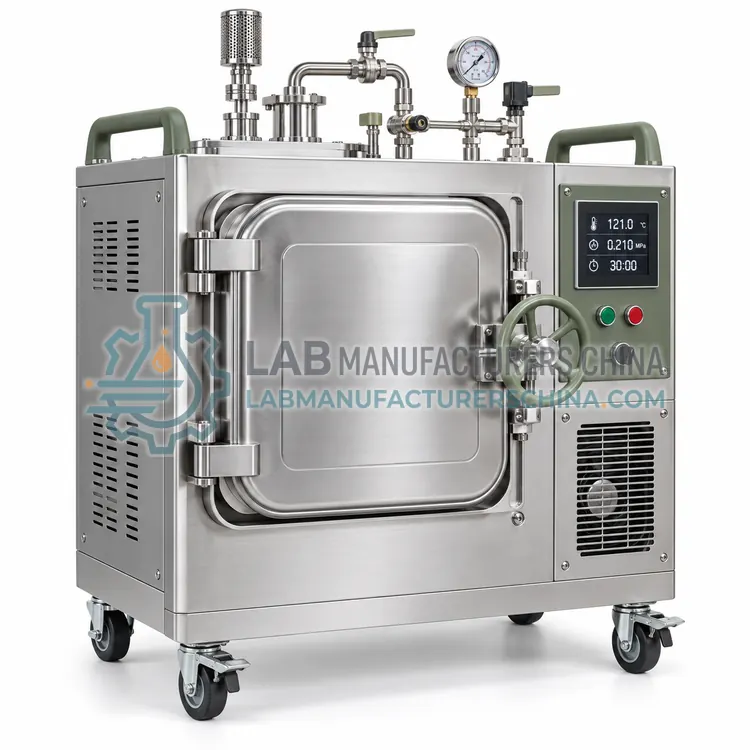
- Horizontal Steam Sterilizer with Built-In Steam Generator — A horizontal chamber sterilizer with its own electric steam generator, so no plant steam connection is needed.
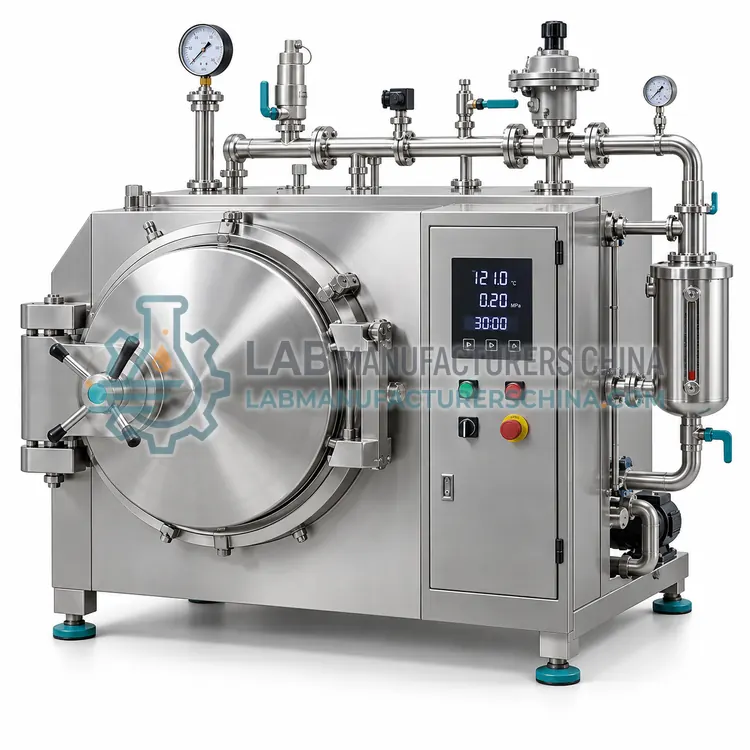
- Steam-Air Mixture Sterilizer for Sealed Liquid Loads — A sterilizer that mixes compressed air with steam and applies counter-pressure to sterilize sealed bottles, bags and ampoules without bursting them.
- Centralized House-Steam Sterilizer — A large chamber sterilizer supplied by the building steam system, used in central sterile processing and production suites.
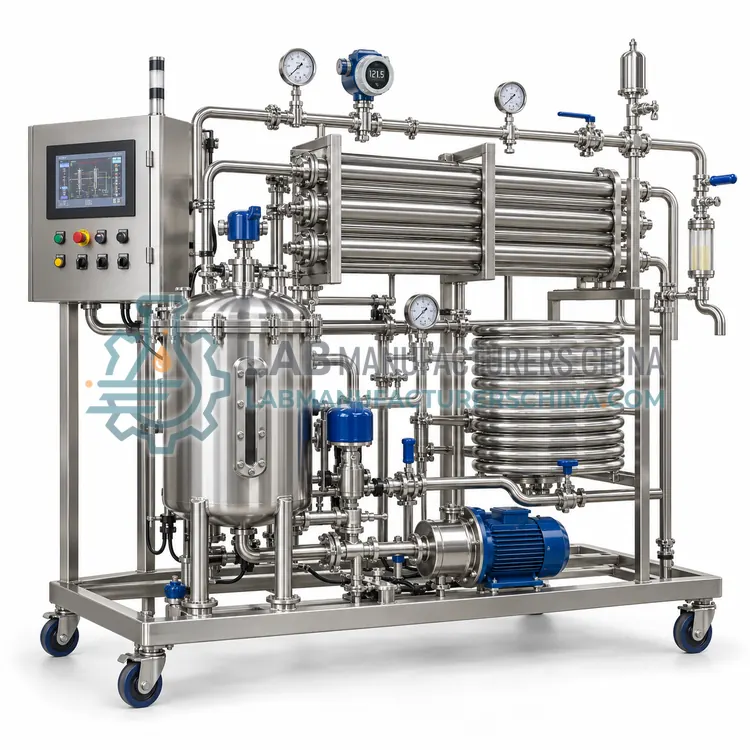
- Continuous Media Sterilization System — A flow-through system that heats medium to 121 to 140 °C for 30 to 120 seconds, holds it in a retention loop and cools it to process temperature.
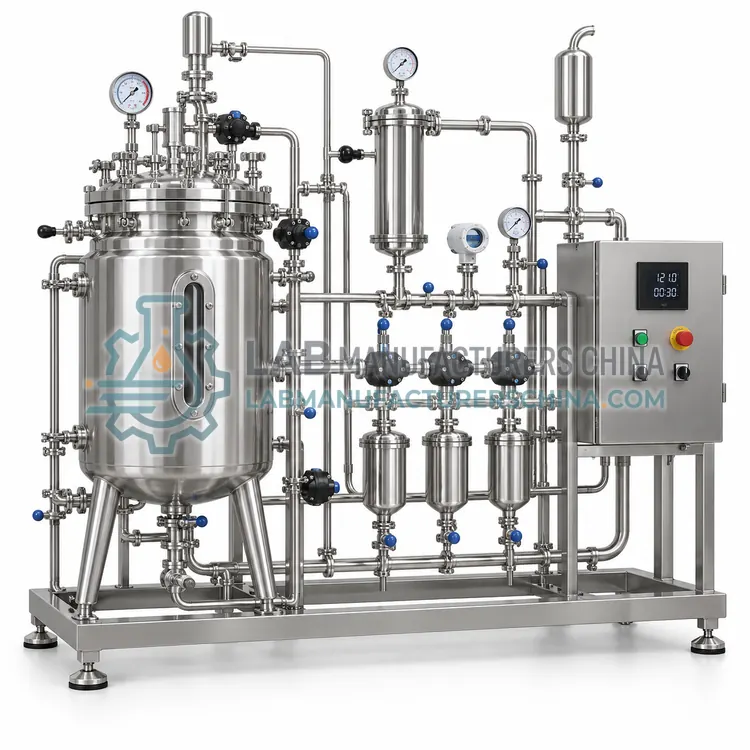
- In-Situ Steam Sterilization (SIP) System for Bioreactors — A steam delivery and control system that sterilizes a bioreactor vessel, headspace, piping and filters in place with saturated steam at 121 °C.
How do I choose the right variant?
Begin with the load: wrapped instruments need pre-vacuum cycles, sealed liquid bottles need steam-air mixtures with counter-pressure, and process lines need continuous or in-situ sterilization. Then choose the steam source. House steam is economical but depends on plant supply quality and availability, while an integrated electric generator gives independence at higher running cost and electrical demand. Match chamber volume to the largest load and allow 20 to 30 percent free space for steam circulation. Check the achievable cycle range, temperature uniformity, control and recording system, door type, vacuum capability and the documentation needed for validation. Confirm local pressure-vessel rules and the permissible steam supply pressure before ordering.
Where are Steam Sterilizers used?
Steam Sterilizers are specified in sterile processing of instruments and glassware, pharmaceutical media and buffer sterilization, sealed liquid loads in bottles and ampoules, bioreactor and process line sterilization in place and large-volume laboratory and pilot plant loads.
Which standards and certifications apply?
Work with Steam Sterilizers is commonly governed by EN 285, EN 13060, ISO 17665-1, ISO 11140-1, EN ISO 11138-1, HTM 01-01 and ISO 13485 manufacturing. Instrument certifications such as CE marking are confirmed per configuration and never assumed.
What are the key considerations before purchase?
Install the sterilizer on a level floor near a drain, with clearance for door swing and service access, and confirm the electrical supply suits the installed power, which can reach 40 kW for generator-equipped models. Verify steam supply pressure, dryness and absence of non-condensable gases before commissioning, since poor steam quality causes failed cycles. Validate with thermocouples in the load and with biological indicators such as Geobacillus stearothermophilus spores. Perform daily warm-up and air-removal checks, weekly steam quality and safety-valve checks, and annual calibration of temperature and pressure instruments. Maintain door gaskets, steam traps, filters and vacuum pumps on schedule, and keep records for the pressure-vessel inspection interval required locally.