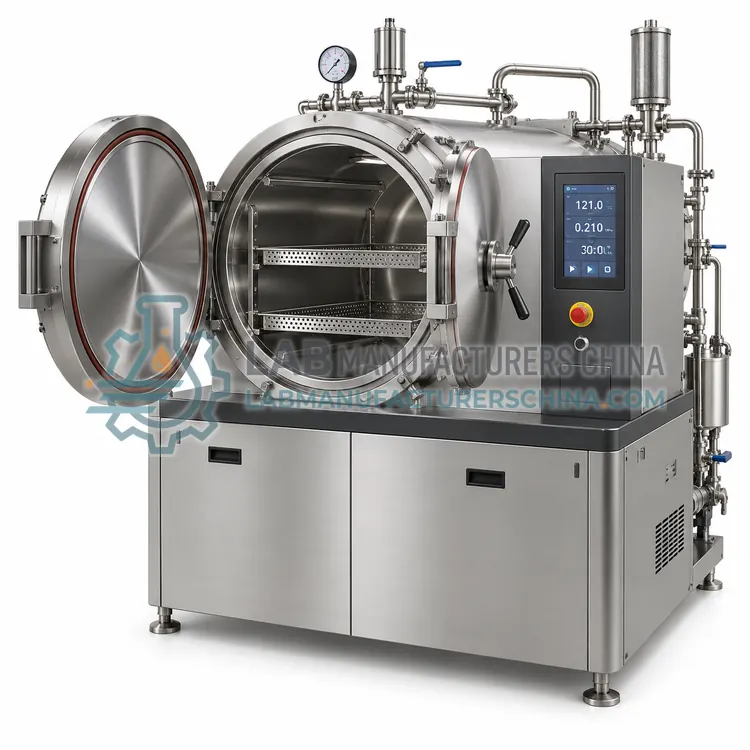
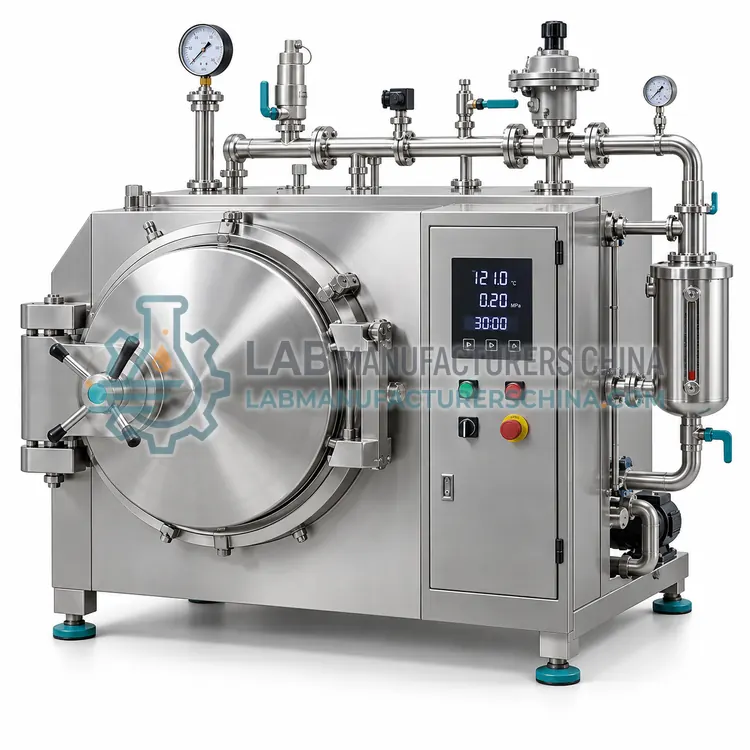
Centralized House-Steam Sterilizer
接入公用蒸汽的集中式蒸汽灭菌器
- SKU STS-0003
- Steam Sterilizers
- CE (to be confirmed)
- ISO 13485 manufacturing (to be confirmed)
- PED 2014/68/EU pressure vessel documentation (to be confirmed)
Price on request — FOB / CIF quoted per order
Prices depend on configuration, quantity and destination port.
Key specifications
| Steam supply pressure | 0.3-0.6 MPa, reducing valve regulated |
|---|---|
| Chamber volume | 200-2,000 L |
| Working temperature | 121-134 °C |
| Design pressure | 0.25-0.3 MPa |
| Installed electrical power | 2-6 kW |
| Air removal | Gravity or pre-vacuum |
Request a quote Download brochure · to be provided
By Lab Manufacturers China Technical TeamLast reviewed Standards: EN 285, EN 13060, ISO 17665-1
What is the Centralized House-Steam Sterilizer?
A large chamber sterilizer supplied by the building steam system, used in central sterile processing and production suites. It reduces operating cost but requires reliable steam quality and pressure from the plant.
What is the Centralized House-Steam Sterilizer?
A large chamber sterilizer supplied by the building steam system, used in central sterile processing and production suites. It reduces operating cost but requires reliable steam quality and pressure from the plant.
Overview
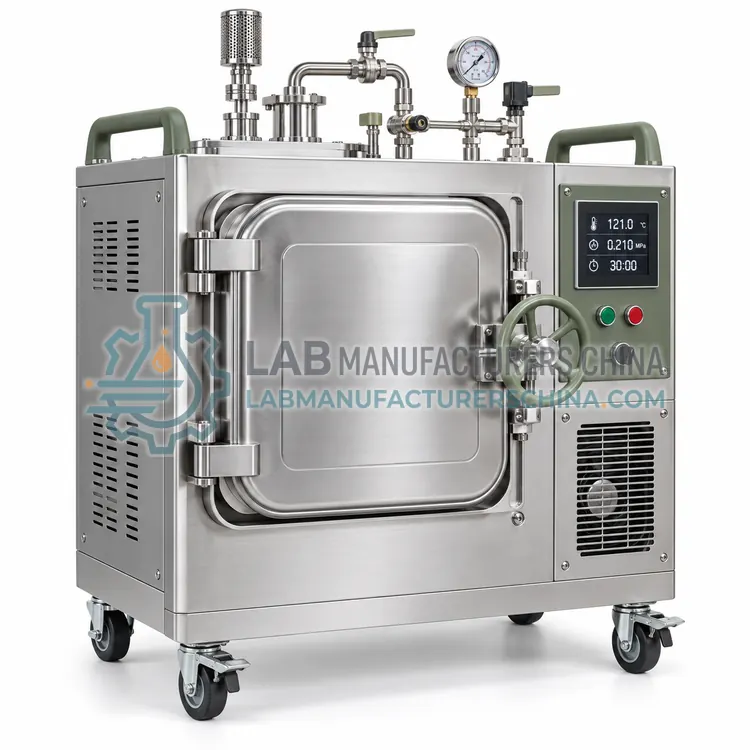
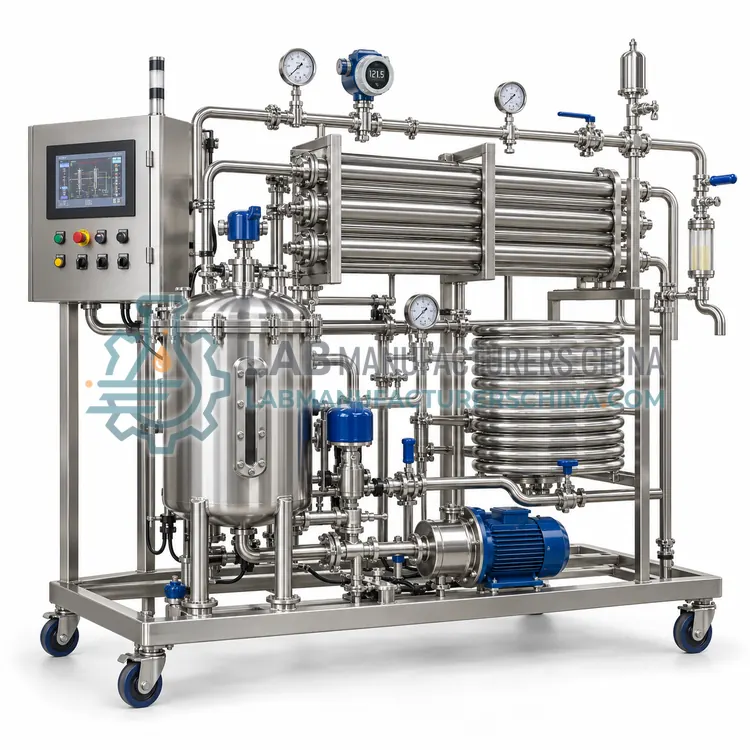
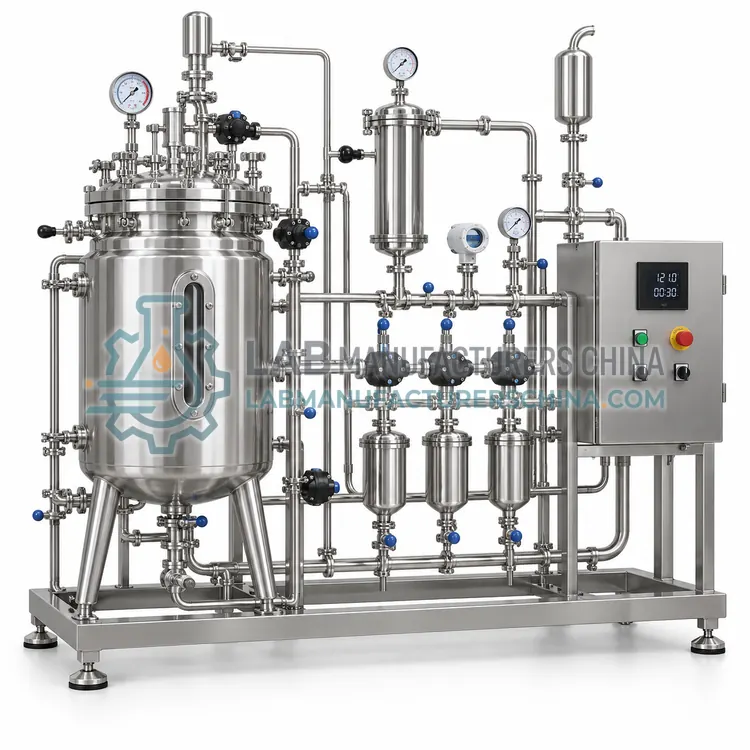
This sterilizer connects to plant or house steam instead of generating its own. Steam passes through a reducing valve, filters and a steam trap set before entering the jacket and chamber, and the machine controls pressure and temperature with pneumatic or electric valves. Chambers usually range from 200 to 2,000 L and doors may be single or double, with the double-door pass-through version used to separate dirty and clean zones in central sterile departments. Because the energy comes from the boiler, installed electrical power is low, typically 2 to 6 kW for controls, pumps and door drives. Cycle range covers 121 and 134 °C with gravity or pre-vacuum air removal, and some models offer steam-to-water cooling. Correct steam quality is critical: wet, superheated or contaminated steam causes indicator failures and instrument staining.
How does it work?
Steam sterilization relies on saturated steam condensing on the load, where it releases latent heat and raises the surface temperature rapidly; the moisture plus heat coagulates proteins and kills microorganisms, including spores. Cycle efficacy depends on air removal, because trapped air forms a cooler pocket that blocks steam contact. Machines therefore use gravity displacement, where steam enters at the top and pushes air out of a bottom drain, or pre-vacuum cycles, where a pump or ejector removes air in stages before steam admission. Saturated steam quality is defined by dryness fraction, non-condensable gases and superheat. A jacketed chamber and insulated door hold temperature, a pressure vessel with a safety valve contains the load, and instruments record chamber pressure and load temperature so the cycle can be documented and validated.
What are the key features?
- Operates on building or plant steam, no generator.
- Low installed electrical power of 2 to 6 kW.
- Chamber volumes of 200 to 2,000 L.
- Single-door or double-door pass-through configuration.
- Gravity and pre-vacuum cycles at 121 and 134 °C.
- Steam conditioning set with reducing valve, filter and trap.
What are the technical specifications?
A typical centralized house-steam sterilizer configuration offers steam supply pressure of 0.3-0.6 MPa, reducing valve regulated, chamber volume of 200-2,000 L, working temperature of 121-134 °C, design pressure of 0.25-0.3 MPa, installed electrical power of 2-6 kW and air removal of Gravity or pre-vacuum. Values are indicative of the product class; the exact figures for each configuration are confirmed on the quotation and the calibration documents supplied with the instrument.
Which applications is it used for?
The Centralized House-Steam Sterilizer is used in central sterile services departments, pharmaceutical production suites, large glassware and instrument loads and barrier-separated clean and dirty zones. Across the wider Steam Sterilizers class, laboratories also deploy it for sterile processing of instruments and glassware, pharmaceutical media and buffer sterilization and sealed liquid loads in bottles and ampoules.
Which standards and certifications apply?
Relevant standards and methods include EN 285, EN 13060, ISO 17665-1, ISO 11140-1, EN ISO 11138-1, HTM 01-01 and ISO 13485 manufacturing. Certification candidates for this model are CE, ISO 13485 manufacturing and PED 2014/68/EU pressure vessel documentation; each is to be confirmed for the specific configuration before shipment, and certificates are supplied only where they have been issued.
Install the sterilizer on a level floor near a drain, with clearance for door swing and service access, and confirm the electrical supply suits the installed power, which can reach 40 kW for generator-equipped models. Verify steam supply pressure, dryness and absence of non-condensable gases before commissioning, since poor steam quality causes failed cycles. Validate with thermocouples in the load and with biological indicators such as Geobacillus stearothermophilus spores. Perform daily warm-up and air-removal checks, weekly steam quality and safety-valve checks, and annual calibration of temperature and pressure instruments. Maintain door gaskets, steam traps, filters and vacuum pumps on schedule, and keep records for the pressure-vessel inspection interval required locally.
How do I select the right Centralized House-Steam Sterilizer?
Select the house-steam unit when plant steam is available at stable pressure and good quality, since running cost is lowest and electrical demand is small. Survey the supply first, including pressure at peak demand, condensate and non-condensable gas content. Specify chamber volume, door arrangement, air-removal method, steam conditioning components and the cycle documentation required.
How does it compare with other Steam Sterilizers variants?
Begin with the load: wrapped instruments need pre-vacuum cycles, sealed liquid bottles need steam-air mixtures with counter-pressure, and process lines need continuous or in-situ sterilization. Then choose the steam source. House steam is economical but depends on plant supply quality and availability, while an integrated electric generator gives independence at higher running cost and electrical demand. Match chamber volume to the largest load and allow 20 to 30 percent free space for steam circulation. Check the achievable cycle range, temperature uniformity, control and recording system, door type, vacuum capability and the documentation needed for validation. Confirm local pressure-vessel rules and the permissible steam supply pressure before ordering.
Full specifications
| Steam supply pressure | 0.3-0.6 MPa, reducing valve regulated |
|---|---|
| Chamber volume | 200-2,000 L |
| Working temperature | 121-134 °C |
| Design pressure | 0.25-0.3 MPa |
| Installed electrical power | 2-6 kW |
| Air removal | Gravity or pre-vacuum |
| Door configuration | Single or double pass-through |
| Chamber material | SUS304 or SUS316L stainless steel |
| Cycle recording | Chart recorder, printer or data logger |
| Steam consumption | 20-90 kg per cycle |
Indicative values for this product class. Final specifications are confirmed on the quotation and in the calibration documents supplied with the instrument.
Applications
- Central sterile services departments
- Pharmaceutical production suites
- Large glassware and instrument loads
- Barrier-separated clean and dirty zones
Key features
- Operates on building or plant steam, no generator.
- Low installed electrical power of 2 to 6 kW.
- Chamber volumes of 200 to 2,000 L.
- Single-door or double-door pass-through configuration.
- Gravity and pre-vacuum cycles at 121 and 134 °C.
- Steam conditioning set with reducing valve, filter and trap.
Frequently asked questions about Centralized House-Steam Sterilizer
Cycles may abort or under-process, because the chamber cannot reach the hold temperature. Ask for the guarantee point in megapascals, install a low-pressure alarm, and confirm that the controller holds or aborts the cycle if supply falls below it.
Wet steam leaves water spots and can wet packs, superheated steam transfers heat poorly and slows penetration, and non-condensable gases cause cold pockets. All three lead to failed indicators and unsterile loads.
Use double doors when clean and dirty flows must be separated, as in central sterile departments or production areas where the loading side opens to a contaminated corridor and the unloading side to a clean room.
Both use saturated steam, but 134 °C is about 2.1 bar gauge and sterilizes in 3 to 4 minutes, while 121 °C at about 1.1 bar gauge needs 15 to 20 minutes. Higher temperature suits wrapped instrument loads and faster turnaround; lower temperature suits heat-sensitive media and liquids.
Air does not sterilize and collects in cooler pockets that prevent steam contact with the load. Pre-vacuum cycles remove it with a pump before steam enters, and gravity cycles rely on steam pushing air out of a bottom drain.
Validation uses temperature probes placed in the load, air-removal tests, and biological indicators with Geobacillus stearothermophilus spores. Acceptance requires that the coldest point reaches the set temperature for the full hold time and that indicators show no growth.
Related models