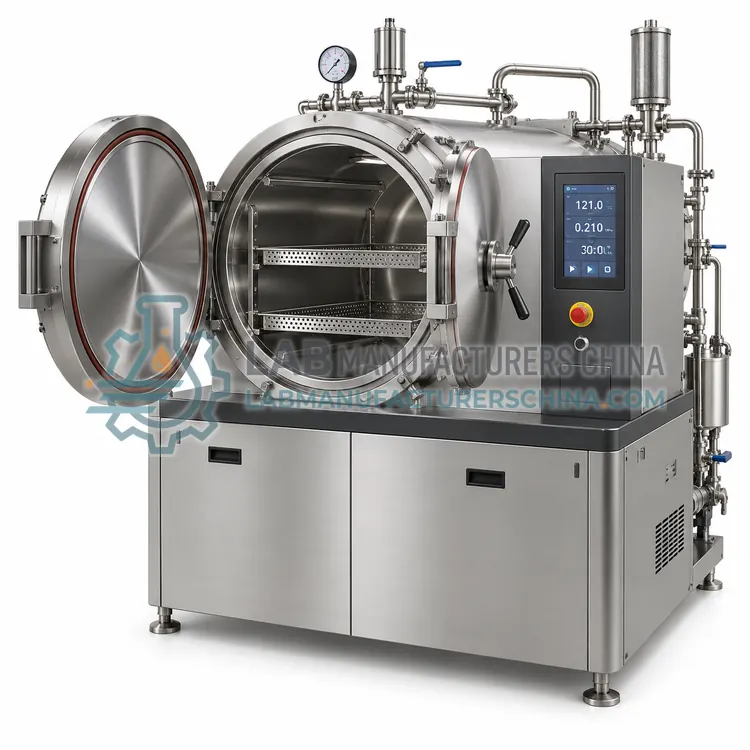
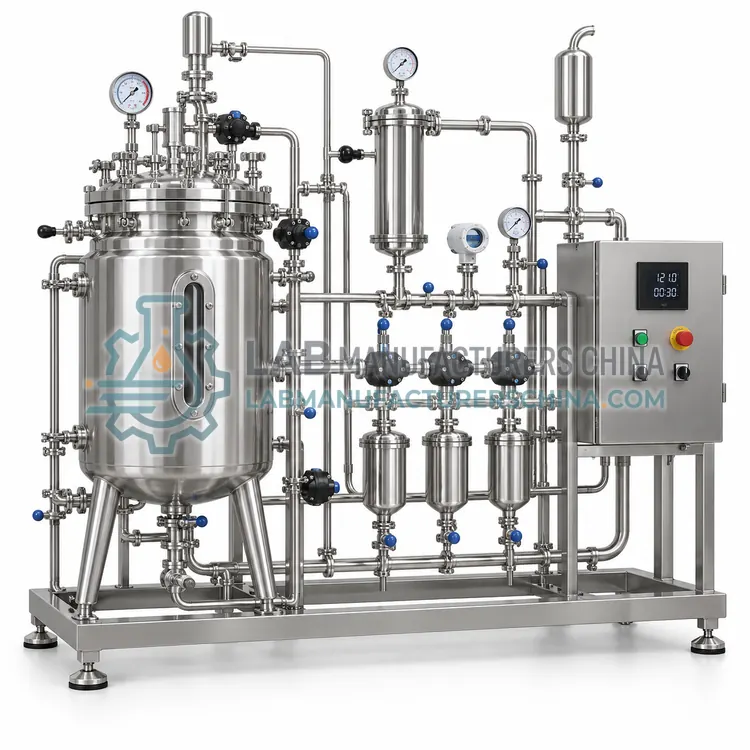
In-Situ Steam Sterilization (SIP) System for Bioreactors
生物反应器原位蒸汽灭菌系统
- SKU STS-0005
- Steam Sterilizers
- CE (to be confirmed)
- ISO 13485 manufacturing (to be confirmed)
- PED 2014/68/EU pressure vessel documentation (to be confirmed)
Price on request — FOB / CIF quoted per order
Prices depend on configuration, quantity and destination port.
Key specifications
| Vessel volume range | 30-2,000 L |
|---|---|
| Sterilization temperature | 121-130 °C |
| Vessel hold time | 20-30 min |
| Transfer line hold time | 30-60 min |
| Steam supply pressure | 0.2-0.4 MPa |
| Jacket pressure | 0.1-0.2 MPa |
Request a quote Download brochure · to be provided
By Lab Manufacturers China Technical TeamLast reviewed Standards: EN 285, EN 13060, ISO 17665-1
What is the In-Situ Steam Sterilization (SIP) System for Bioreactors?
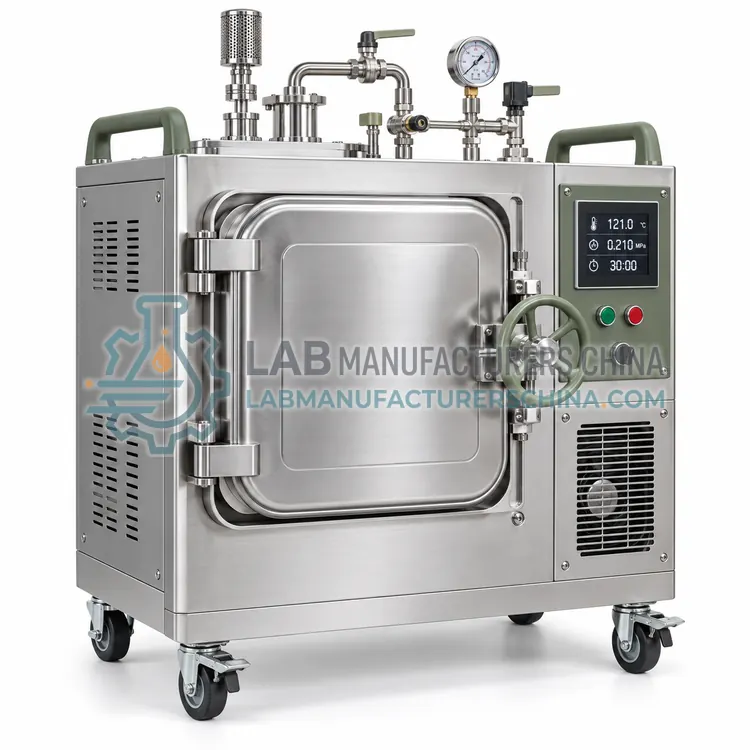
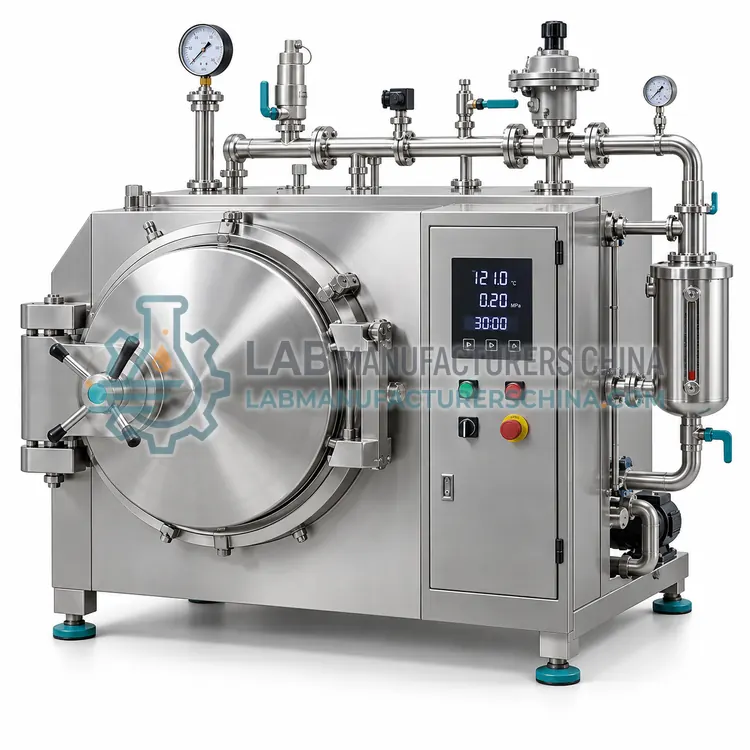
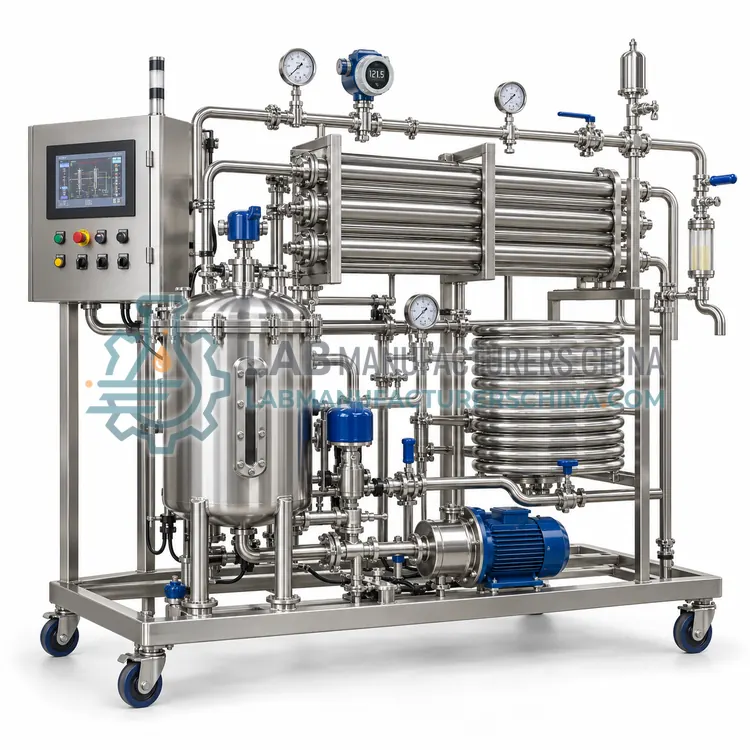
A steam delivery and control system that sterilizes a bioreactor vessel, headspace, piping and filters in place with saturated steam at 121 °C. It removes the need to autoclave the vessel as a separate step.
What is the In-Situ Steam Sterilization (SIP) System for Bioreactors?
A steam delivery and control system that sterilizes a bioreactor vessel, headspace, piping and filters in place with saturated steam at 121 °C. It removes the need to autoclave the vessel as a separate step.
Overview
In-situ sterilization applies steam directly to a vessel and its connected piping, so a bioreactor can be sterilized without dismantling. Steam enters at several points, including the jacket or vessel bottom, the headspace and each transfer line, and condensate is removed through steam traps and drainage valves. The critical parameters are the surface temperature reached in the coldest location, the hold time, and complete air removal from the headspace and dead legs. Typical conditions are 121 °C for 20 to 30 minutes for the vessel and 30 to 60 minutes for transfer lines. A control package sequences steam admission, jacket pressure, exhaust, cooling and filtered air overlay, and records the trace. Vent filters are sterilized by the steam passing through them, which also checks their integrity for the following run.
How does it work?
Steam sterilization relies on saturated steam condensing on the load, where it releases latent heat and raises the surface temperature rapidly; the moisture plus heat coagulates proteins and kills microorganisms, including spores. Cycle efficacy depends on air removal, because trapped air forms a cooler pocket that blocks steam contact. Machines therefore use gravity displacement, where steam enters at the top and pushes air out of a bottom drain, or pre-vacuum cycles, where a pump or ejector removes air in stages before steam admission. Saturated steam quality is defined by dryness fraction, non-condensable gases and superheat. A jacketed chamber and insulated door hold temperature, a pressure vessel with a safety valve contains the load, and instruments record chamber pressure and load temperature so the cycle can be documented and validated.
What are the key features?
- Sterilizes vessel, headspace and transfer lines without dismantling.
- Multiple steam injection points with trap-based condensate removal.
- Sequence control for steam, pressure, cooling and air overlay.
- Recording of temperature at the coldest point for each run.
- Vent filter sterilized by steam in place.
- Compatible with vessels from 30 to 2,000 L.
What are the technical specifications?
A typical in-situ steam sterilization (sip) system for bioreactors configuration offers vessel volume range of 30-2,000 L, sterilization temperature of 121-130 °C, vessel hold time of 20-30 min, transfer line hold time of 30-60 min, steam supply pressure of 0.2-0.4 MPa and jacket pressure of 0.1-0.2 MPa. Values are indicative of the product class; the exact figures for each configuration are confirmed on the quotation and the calibration documents supplied with the instrument.
Which applications is it used for?
The In-Situ Steam Sterilization (SIP) System for Bioreactors is used in stainless steel bioreactor sterilization, transfer line and harvest line sterilization, fermenter preparation in pilot plants and vent filter sterilization and integrity checks. Across the wider Steam Sterilizers class, laboratories also deploy it for sterile processing of instruments and glassware, pharmaceutical media and buffer sterilization and sealed liquid loads in bottles and ampoules.
Which standards and certifications apply?
Relevant standards and methods include EN 285, EN 13060, ISO 17665-1, ISO 11140-1, EN ISO 11138-1, HTM 01-01 and ISO 13485 manufacturing. Certification candidates for this model are CE, ISO 13485 manufacturing and PED 2014/68/EU pressure vessel documentation; each is to be confirmed for the specific configuration before shipment, and certificates are supplied only where they have been issued.
Install the sterilizer on a level floor near a drain, with clearance for door swing and service access, and confirm the electrical supply suits the installed power, which can reach 40 kW for generator-equipped models. Verify steam supply pressure, dryness and absence of non-condensable gases before commissioning, since poor steam quality causes failed cycles. Validate with thermocouples in the load and with biological indicators such as Geobacillus stearothermophilus spores. Perform daily warm-up and air-removal checks, weekly steam quality and safety-valve checks, and annual calibration of temperature and pressure instruments. Maintain door gaskets, steam traps, filters and vacuum pumps on schedule, and keep records for the pressure-vessel inspection interval required locally.
How do I select the right In-Situ Steam Sterilization (SIP) System for Bioreactors?
Select SIP when the vessel is too large to autoclave, when sterility of connected piping is required, or when turnaround time matters. Map the vessel and line layout in the RFQ so injection points, traps and temperature probe locations can be confirmed. Specify vessel size, hold times, steam and jacket pressures, probe count and the batch reporting format needed.
How does it compare with other Steam Sterilizers variants?
Begin with the load: wrapped instruments need pre-vacuum cycles, sealed liquid bottles need steam-air mixtures with counter-pressure, and process lines need continuous or in-situ sterilization. Then choose the steam source. House steam is economical but depends on plant supply quality and availability, while an integrated electric generator gives independence at higher running cost and electrical demand. Match chamber volume to the largest load and allow 20 to 30 percent free space for steam circulation. Check the achievable cycle range, temperature uniformity, control and recording system, door type, vacuum capability and the documentation needed for validation. Confirm local pressure-vessel rules and the permissible steam supply pressure before ordering.
Full specifications
| Vessel volume range | 30-2,000 L |
|---|---|
| Sterilization temperature | 121-130 °C |
| Vessel hold time | 20-30 min |
| Transfer line hold time | 30-60 min |
| Steam supply pressure | 0.2-0.4 MPa |
| Jacket pressure | 0.1-0.2 MPa |
| Temperature sensing | RTD probes in vessel, headspace and lines |
| Condensate removal | Steam traps with bypass and monitoring |
| Control | PLC recipe control with batch reporting |
| Wetted material | SUS316L stainless steel, sanitary connections |
Indicative values for this product class. Final specifications are confirmed on the quotation and in the calibration documents supplied with the instrument.
Applications
- Stainless steel bioreactor sterilization
- Transfer line and harvest line sterilization
- Fermenter preparation in pilot plants
- Vent filter sterilization and integrity checks
Key features
- Sterilizes vessel, headspace and transfer lines without dismantling.
- Multiple steam injection points with trap-based condensate removal.
- Sequence control for steam, pressure, cooling and air overlay.
- Recording of temperature at the coldest point for each run.
- Vent filter sterilized by steam in place.
- Compatible with vessels from 30 to 2,000 L.
Frequently asked questions about In-Situ Steam Sterilization (SIP) System for Bioreactors
They often are not, unless designed out. Steam cannot displace air in blanked branches, so each dead leg should have a drain or trap, be kept as short as possible, and be fitted with a temperature probe during validation.
A 100 L vessel typically needs 60 to 120 minutes including heat-up, hold, cooling and draining. Larger vessels and long transfer lines extend the cycle because every connected line must reach temperature.
Hydrophobic PTFE or PVDF filters are designed for steam exposure at 121 to 135 °C, but repeated cycles degrade them over time. Follow the manufacturer's cycle limits and check integrity before and after each campaign.
Both use saturated steam, but 134 °C is about 2.1 bar gauge and sterilizes in 3 to 4 minutes, while 121 °C at about 1.1 bar gauge needs 15 to 20 minutes. Higher temperature suits wrapped instrument loads and faster turnaround; lower temperature suits heat-sensitive media and liquids.
Air does not sterilize and collects in cooler pockets that prevent steam contact with the load. Pre-vacuum cycles remove it with a pump before steam enters, and gravity cycles rely on steam pushing air out of a bottom drain.
Validation uses temperature probes placed in the load, air-removal tests, and biological indicators with Geobacillus stearothermophilus spores. Acceptance requires that the coldest point reaches the set temperature for the full hold time and that indicators show no growth.