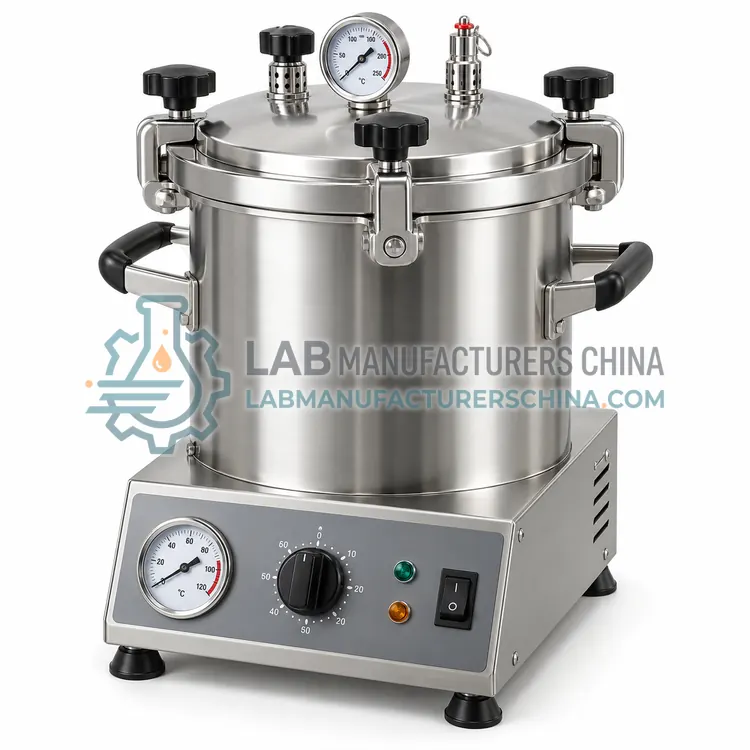
How do Autoclaves work?
An autoclave sterilizes by exposing items to saturated steam under pressure. At 103 kPa gauge, steam reaches 121 °C, and at about 205 kPa it reaches 134 °C. Steam condenses on cooler surfaces, releasing latent heat that denatures proteins and destroys microorganisms far faster than dry heat at the same temperature. A cycle has three main phases: air removal, sterilization hold and exhaust or drying. Gravity-displacement units push air out through a drain by steam flow, while pre-vacuum units use a vacuum pump to remove air before steam admission, which penetrates porous loads and hollow instruments. A steam generator or jacket supplies steam, a controller reads temperature and pressure sensors, and safety valves, door interlocks and overpressure devices protect users. Validated hold times typically range from 3 to 30 minutes depending on load and temperature.
Which Autoclaves variants are available?
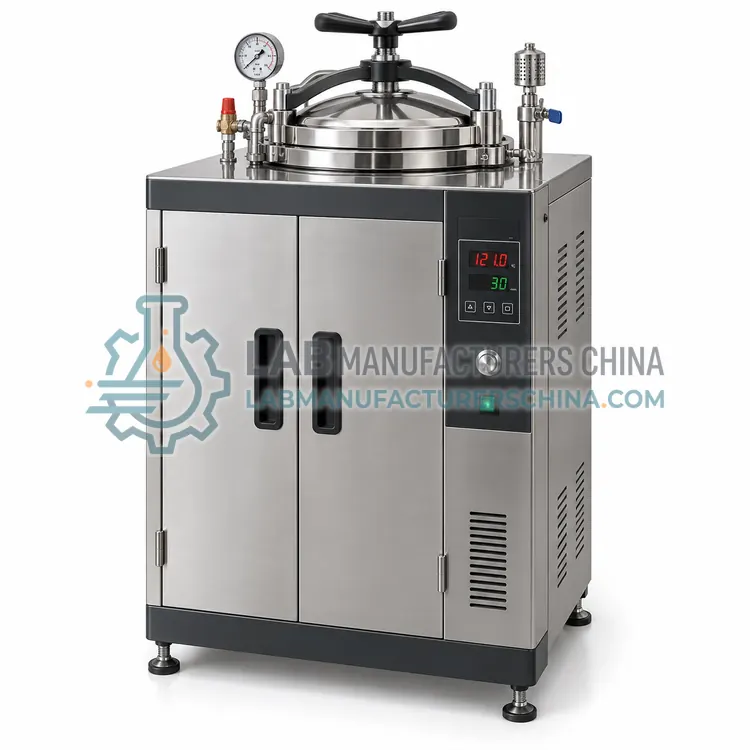
- Top-Loading Vertical Pressure Steam Autoclave — A vertical autoclave with a top-opening lid and a cylindrical chamber of 18 to 150 L.
- Benchtop Class B Vacuum Autoclave — A front-loading benchtop autoclave with fractionated pre-vacuum and vacuum drying that meets EN 13060 Class B cycles.
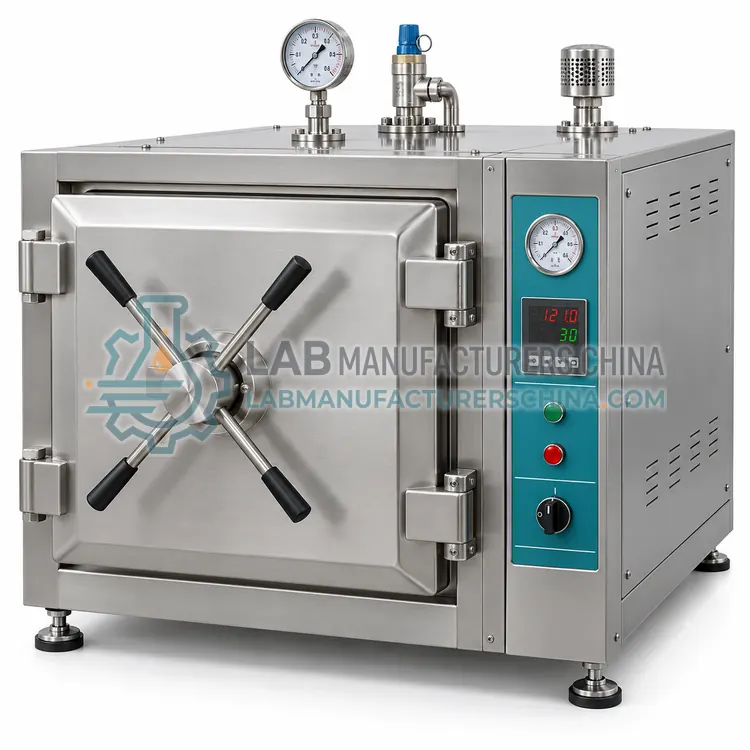
- Front-Loading Horizontal Rectangular Autoclave — A floor-standing autoclave with a rectangular chamber of 100 to 1000 L and a horizontal door.
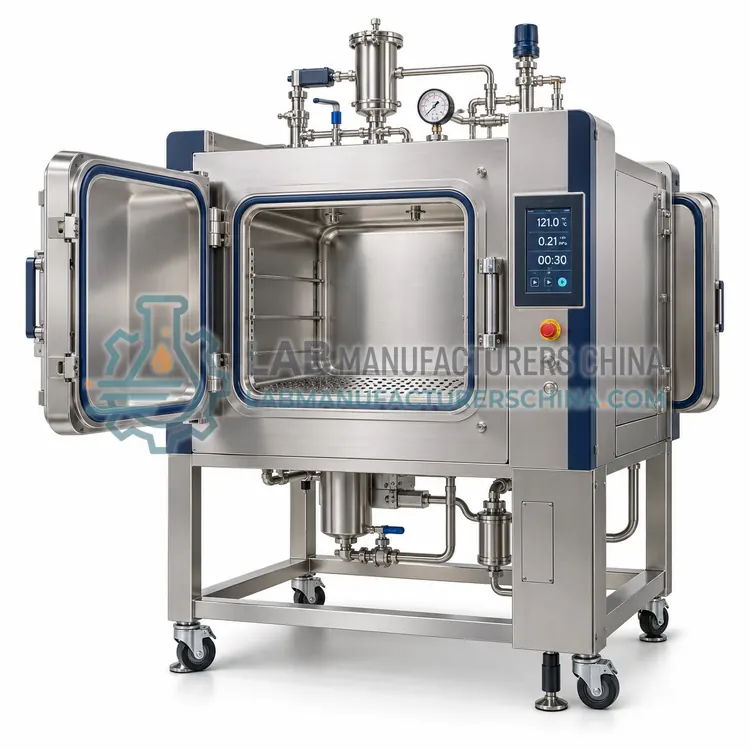
- Double-Door Pass-Through Barrier Autoclave — An autoclave with doors on both ends that passes loads between a contaminated and a clean area through the wall.
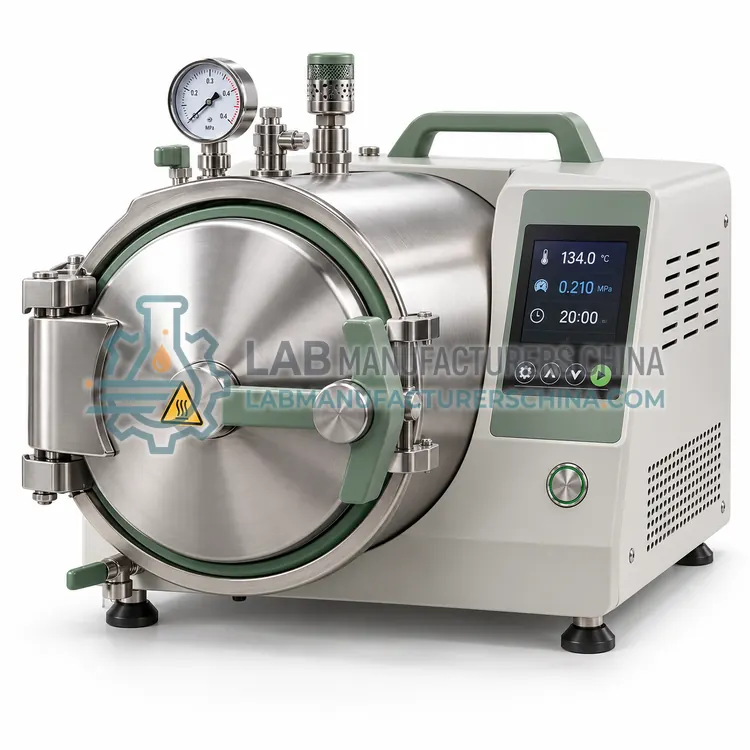
- Portable Benchtop Gravity Autoclave (Class N) — A compact front-loading or top-loading benchtop autoclave of 8 to 35 L using gravity air removal.
How do I choose the right variant?
Match the autoclave to the load and the level of assurance required. Liquids, glassware and waste can be processed in gravity cycles, while wrapped instruments, porous textiles and hollow devices need pre-vacuum to remove air. Select chamber volume from the largest load and throughput, typically 18 L for small benchtop units to 1000 L or more for floor-standing models. Decide between top-loading vertical units for economy, front-loading horizontal units for ergonomics, and double-door pass-through units to separate clean and contaminated zones. Check cycle options, such as liquid, waste and dry cycles, printer or data logging, and validation support. Confirm the pressure vessel code, steam source and water quality, and compare electrical or steam supply requirements and installation space, including door swing and drainage.
Where are Autoclaves used?
Autoclaves are specified in microbiology media sterilization, laboratory waste decontamination, glassware and instrument sterilization, clinical and dental instrument processing, pharmaceutical and biotech laboratory support and teaching laboratories.
Which standards and certifications apply?
Work with Autoclaves is commonly governed by EN 13060, EN 285, ISO 17665-1, ISO 11138, ASME BPVC Section VIII, GB 8599 and EN 61010-2-040. Instrument certifications such as CE marking are confirmed per configuration and never assumed.
What are the key considerations before purchase?
Install the autoclave on a level floor with clearances specified by the maker for service and ventilation, and provide a drain, water supply and electrical circuit sized to the heater. Use distilled, deionized or conditioned water as specified to limit scale. Pressure vessels are regulated in most countries, so arrange registration, periodic inspection and operator training. Qualify the unit with installation and operational checks, then validate each load type using thermocouples and biological indicators such as Geobacillus stearothermophilus spores. Perform Bowie-Dick or helix tests daily on vacuum models. Inspect door seals, gaskets and safety valves regularly, descale the chamber and steam generator, and calibrate sensors annually. Never autoclave sealed containers, solvents or bleach-containing waste.