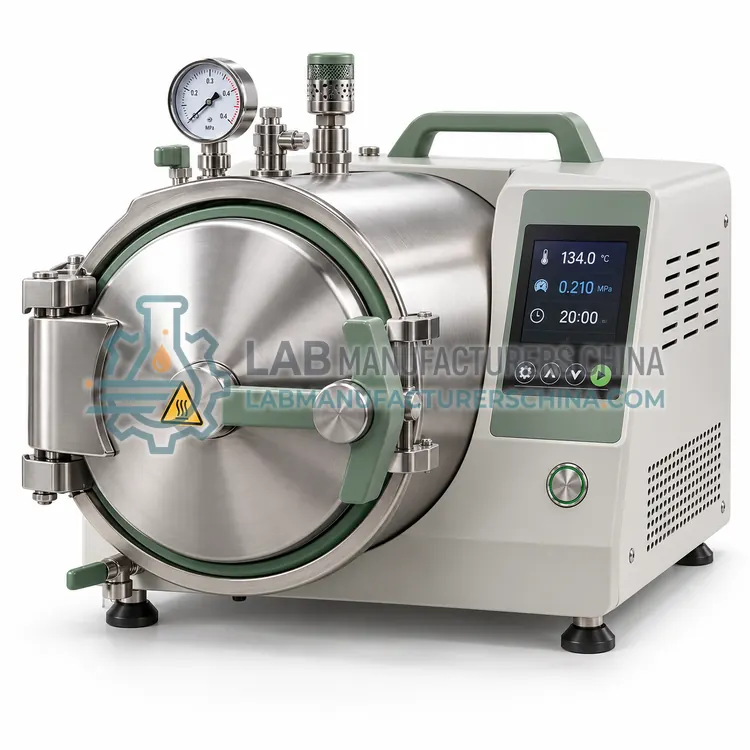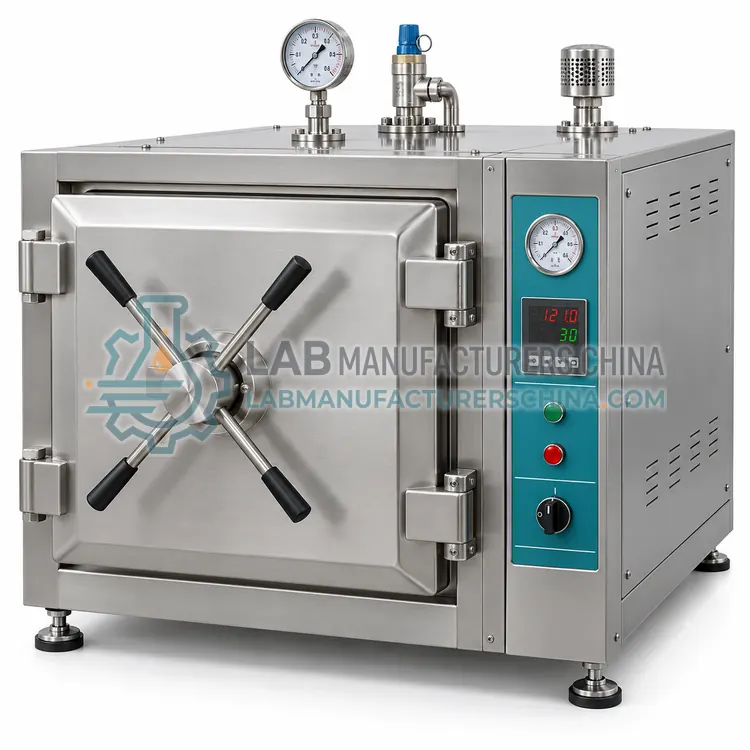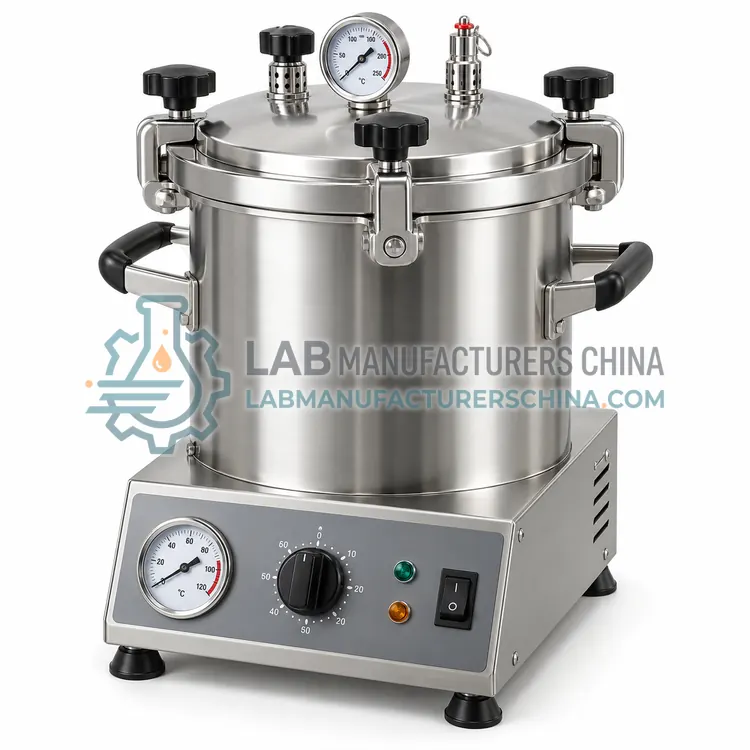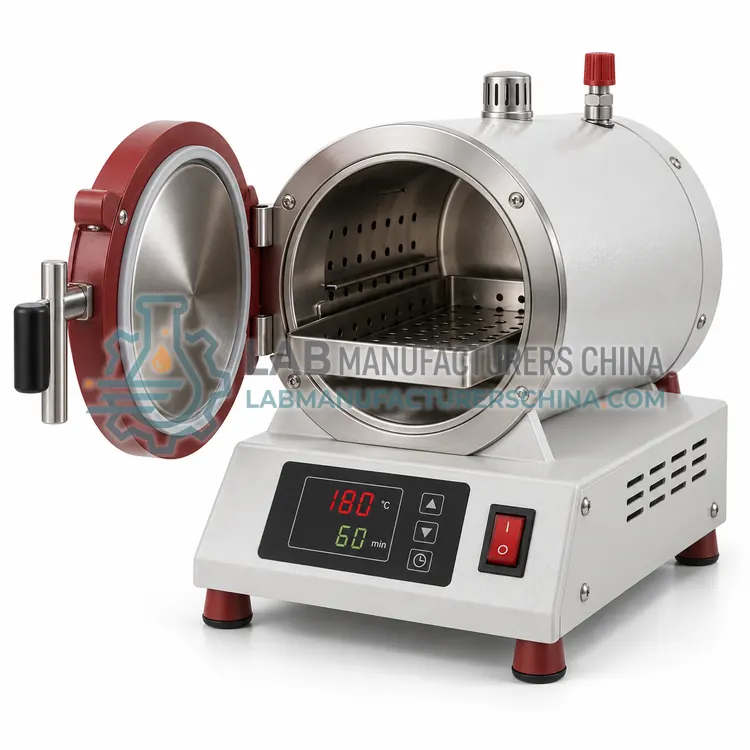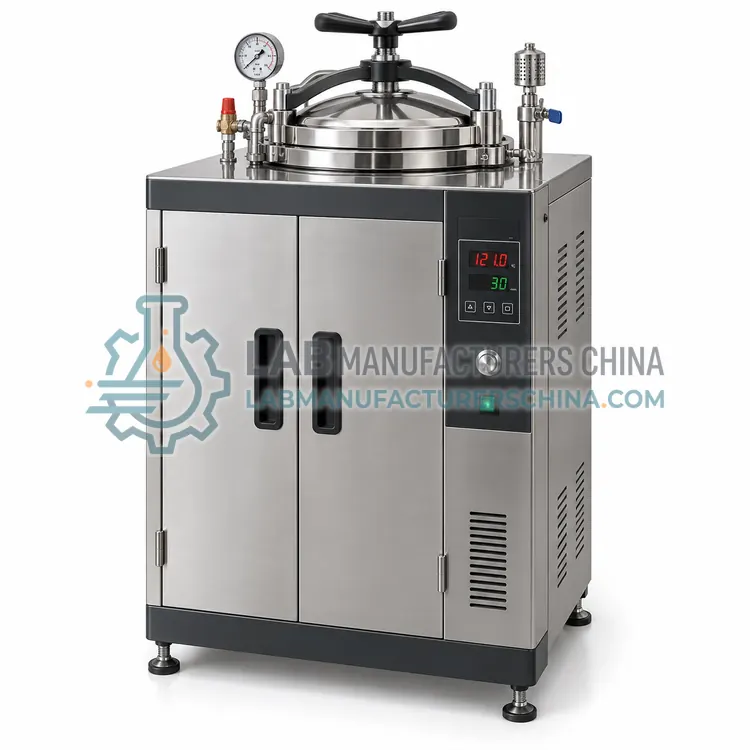
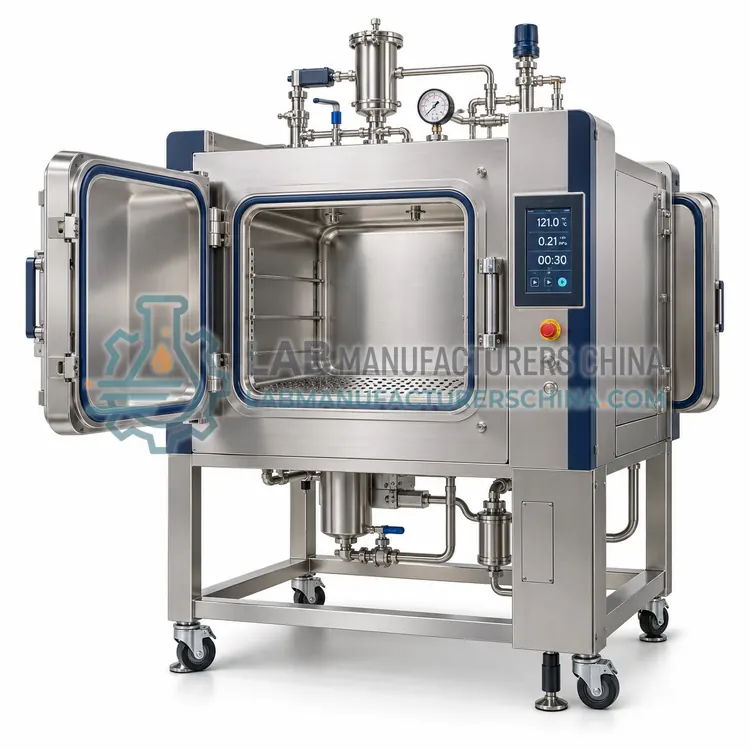
Double-Door Pass-Through Barrier Autoclave
双门传递式屏障高压灭菌器
- SKU AUT-0004
- Autoclaves
- CE (to be confirmed)
- PED 2014/68/EU (to be confirmed)
- ISO 13485 manufacturing (to be confirmed)
Price on request — FOB / CIF quoted per order
Prices depend on configuration, quantity and destination port.
Key specifications
| Chamber volume | 150-2000 L |
|---|---|
| Door arrangement | Two doors, interlocked |
| Sterilization temperature | 121-134 °C |
| Working pressure | Up to 0.25 MPa |
| Air removal | Pre-vacuum with leak test |
| Vent filtration | HEPA, optional |
Request a quote Download brochure · to be provided
By Lab Manufacturers China Technical TeamLast reviewed Standards: EN 13060, EN 285, ISO 17665-1
What is the Double-Door Pass-Through Barrier Autoclave?
An autoclave with doors on both ends that passes loads between a contaminated and a clean area through the wall. It is used in BSL-3, cleanroom and pharmaceutical facilities to maintain containment and prevent cross-contamination.
What is the Double-Door Pass-Through Barrier Autoclave?
An autoclave with doors on both ends that passes loads between a contaminated and a clean area through the wall. It is used in BSL-3, cleanroom and pharmaceutical facilities to maintain containment and prevent cross-contamination.
Overview
The pass-through autoclave is built into a wall, with a loading door on the contaminated or unclean side and an unloading door on the clean side. An interlock ensures that only one door can be opened at a time and that the clean door opens only after a successful cycle. Bio-seal flanges seal the chamber to the wall, and options include HEPA-filtered vents, effluent decontamination systems, vacuum drying and leak tests. Chambers range from 150 to 2000 L. Controllers record each cycle and require authorization to release loads, which supports GMP and biosafety procedures. Installation needs wall modification, service access on a maintenance side and careful planning of pressure cascades. The design fits containment laboratories, sterile manufacturing support and animal facilities.
How does it work?
An autoclave sterilizes by exposing items to saturated steam under pressure. At 103 kPa gauge, steam reaches 121 °C, and at about 205 kPa it reaches 134 °C. Steam condenses on cooler surfaces, releasing latent heat that denatures proteins and destroys microorganisms far faster than dry heat at the same temperature. A cycle has three main phases: air removal, sterilization hold and exhaust or drying. Gravity-displacement units push air out through a drain by steam flow, while pre-vacuum units use a vacuum pump to remove air before steam admission, which penetrates porous loads and hollow instruments. A steam generator or jacket supplies steam, a controller reads temperature and pressure sensors, and safety valves, door interlocks and overpressure devices protect users. Validated hold times typically range from 3 to 30 minutes depending on load and temperature.
What are the key features?
- Doors on both ends with interlock so only one can open at a time.
- Bio-seal flange isolates the contaminated and clean zones through the wall.
- Clean door releases only after a successful cycle with authorization.
- Optional HEPA-filtered vents and effluent decontamination.
- Vacuum drying and leak test cycles for validation.
- Cycle records support GMP and biosafety procedures.
What are the technical specifications?
A typical double-door pass-through barrier autoclave configuration offers chamber volume of 150-2000 L, door arrangement of Two doors, interlocked, sterilization temperature of 121-134 °C, working pressure of Up to 0.25 MPa, air removal of Pre-vacuum with leak test and vent filtration of HEPA, optional. Values are indicative of the product class; the exact figures for each configuration are confirmed on the quotation and the calibration documents supplied with the instrument.
Which applications is it used for?
The Double-Door Pass-Through Barrier Autoclave is used in BSL-3 containment laboratories, pharmaceutical cleanroom support, animal facility waste processing and sterile manufacturing support. Across the wider Autoclaves class, laboratories also deploy it for microbiology media sterilization, laboratory waste decontamination and glassware and instrument sterilization.
Which standards and certifications apply?
Relevant standards and methods include EN 13060, EN 285, ISO 17665-1, ISO 11138, ASME BPVC Section VIII, GB 8599 and EN 61010-2-040. Certification candidates for this model are CE, PED 2014/68/EU and ISO 13485 manufacturing; each is to be confirmed for the specific configuration before shipment, and certificates are supplied only where they have been issued.
Install the autoclave on a level floor with clearances specified by the maker for service and ventilation, and provide a drain, water supply and electrical circuit sized to the heater. Use distilled, deionized or conditioned water as specified to limit scale. Pressure vessels are regulated in most countries, so arrange registration, periodic inspection and operator training. Qualify the unit with installation and operational checks, then validate each load type using thermocouples and biological indicators such as Geobacillus stearothermophilus spores. Perform Bowie-Dick or helix tests daily on vacuum models. Inspect door seals, gaskets and safety valves regularly, descale the chamber and steam generator, and calibrate sensors annually. Never autoclave sealed containers, solvents or bleach-containing waste.
How do I select the right Double-Door Pass-Through Barrier Autoclave?
Select the pass-through model when loads must cross between containment and clean zones. A single-door unit is enough where no barrier exists. Specify chamber size, door interlocks, wall thickness, leak test, HEPA vent, effluent treatment and validation documentation.
How does it compare with other Autoclaves variants?
Match the autoclave to the load and the level of assurance required. Liquids, glassware and waste can be processed in gravity cycles, while wrapped instruments, porous textiles and hollow devices need pre-vacuum to remove air. Select chamber volume from the largest load and throughput, typically 18 L for small benchtop units to 1000 L or more for floor-standing models. Decide between top-loading vertical units for economy, front-loading horizontal units for ergonomics, and double-door pass-through units to separate clean and contaminated zones. Check cycle options, such as liquid, waste and dry cycles, printer or data logging, and validation support. Confirm the pressure vessel code, steam source and water quality, and compare electrical or steam supply requirements and installation space, including door swing and drainage.
Full specifications
| Chamber volume | 150-2000 L |
|---|---|
| Door arrangement | Two doors, interlocked |
| Sterilization temperature | 121-134 °C |
| Working pressure | Up to 0.25 MPa |
| Air removal | Pre-vacuum with leak test |
| Vent filtration | HEPA, optional |
| Effluent treatment | Kill tank, optional |
| Chamber material | SUS316L stainless steel |
| Data and access control | Batch records, user authorization levels |
| Power supply | 380 V, 50 Hz, 3 phase |
Indicative values for this product class. Final specifications are confirmed on the quotation and in the calibration documents supplied with the instrument.
Applications
- BSL-3 containment laboratories
- Pharmaceutical cleanroom support
- Animal facility waste processing
- Sterile manufacturing support
Key features
- Doors on both ends with interlock so only one can open at a time.
- Bio-seal flange isolates the contaminated and clean zones through the wall.
- Clean door releases only after a successful cycle with authorization.
- Optional HEPA-filtered vents and effluent decontamination.
- Vacuum drying and leak test cycles for validation.
- Cycle records support GMP and biosafety procedures.
Frequently asked questions about Double-Door Pass-Through Barrier Autoclave
It creates a physical barrier, so contaminated material enters on one side and sterile material exits on the other, protecting clean areas from cross-contamination and supporting containment rules.
In high-containment laboratories effluent is collected in a kill tank or heat-treated before discharge. For lower-risk work, it may drain to a cooled drain depending on local rules.
Yes. The chamber is sealed into a wall opening, and service access is needed on a maintenance side. Plan wall construction, floor loading, drainage and pressure cascades early.
Common cycles are 121 °C for 15 to 30 minutes or 134 °C for 3 to 10 minutes, depending on load. Heavier, denser or waste loads need longer holds. Always validate cycle parameters for each load type.
A gravity unit displaces air by steam flow and suits liquids, glassware and unwrapped solids. A pre-vacuum unit removes air with a pump before steam enters, so steam reaches porous loads and hollow instruments.
Use physical monitoring of temperature and pressure, chemical indicators on each load and periodic biological indicators with Geobacillus stearothermophilus spores. Vacuum models also need a daily Bowie-Dick or helix test.
Related models