How do UV Sterilizers work?
Ultraviolet sterilization uses UV-C light, emitted mainly at 253.7 nm by low-pressure mercury lamps, which nucleic acids absorb so that pyrimidine dimers form and block replication. Efficacy depends on dose, the product of irradiance in µW/cm² and exposure time in seconds, expressed in mJ/cm². Germicidal cabinets place items on a reflective stainless steel tray below one or more lamps and run a timed cycle of 5 to 60 minutes. Air sterilizers draw room air through a chamber with lamps and baffles so the moving air receives the required dose while people remain outside the direct beam. Water units pass the flow around quartz-sleeved lamps. Because UV light travels in straight lines, only surfaces in direct view are treated, so shadowed, covered or dusty areas are not disinfected.
Which UV Sterilizers variants are available?
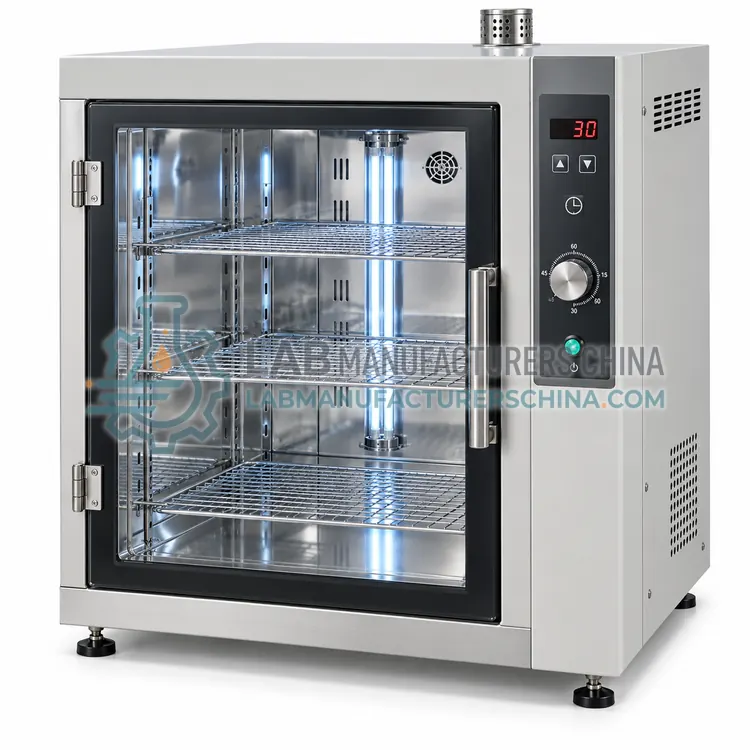
- UV Sterilization Cabinet — A closed stainless steel cabinet with UV-C lamps and a timer that disinfects small instruments, glassware, pipettes and reusable personal protective equipment.
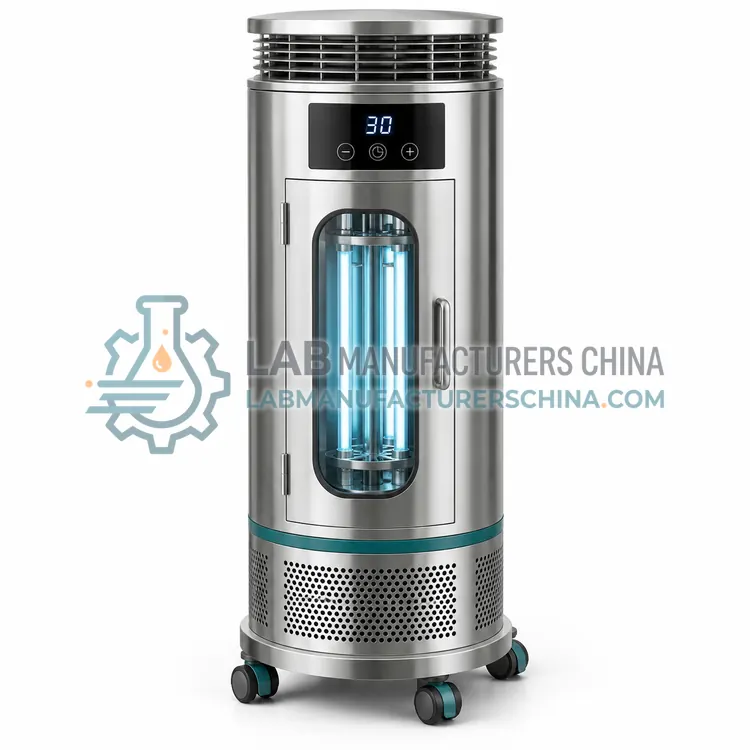
- UV Air Sterilizer — A unit that draws room air through a chamber with shielded UV-C lamps and returns it disinfected, so the room can stay occupied during operation.
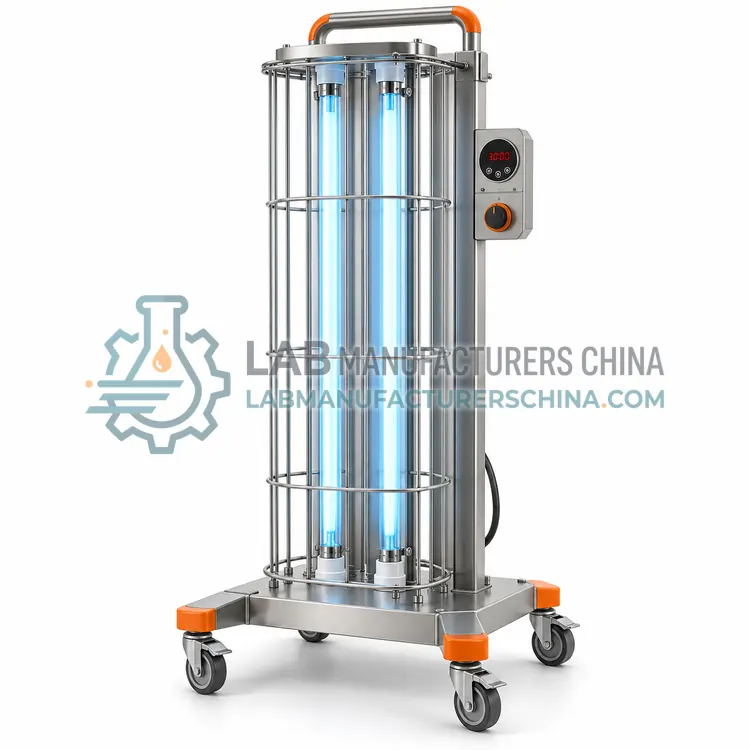
- Mobile UV Sterilization Lamp Cart — A wheeled stand carrying one to four shielded UV-C tubes and a timer, used to irradiate empty rooms, work surfaces and equipment directly.
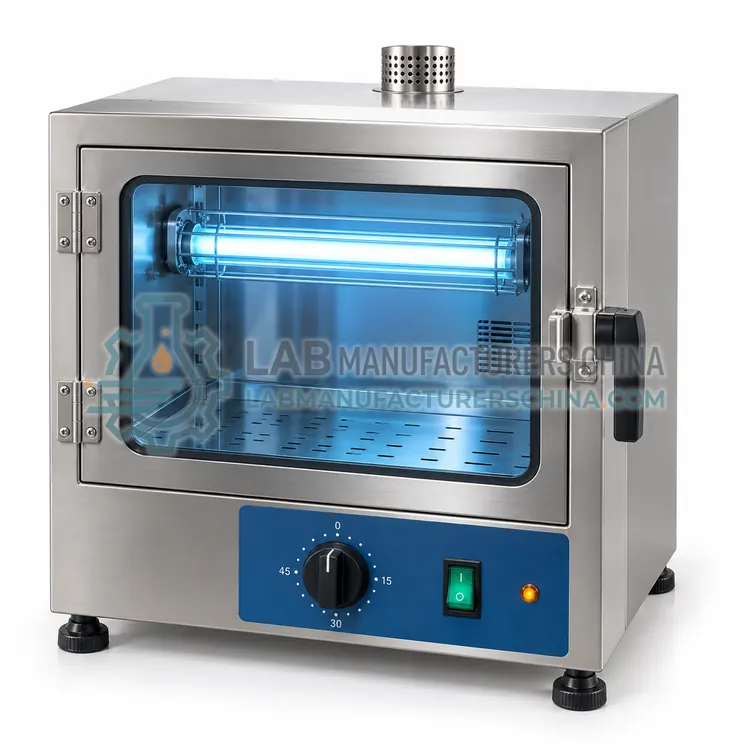
- Benchtop UV Sterilization Lamp with Timer — A compact UV-C lamp with a stand and timer that irradiates a small work area, such as a bench section, hood interior or instrument surface.
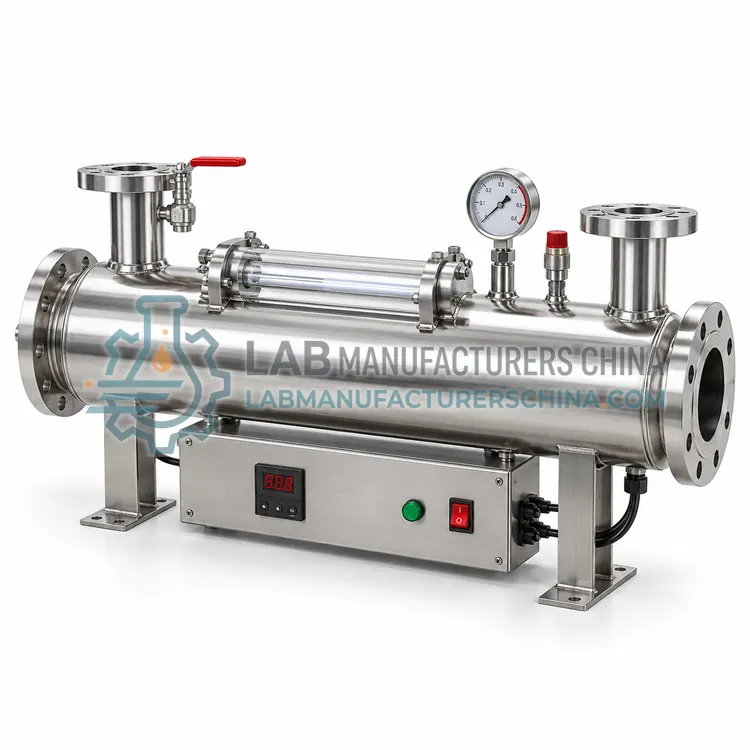
- UV Water Sterilizer — An in-line chamber with a quartz-sleeved UV-C lamp that disinfects water as it passes through, used for laboratory feed water, rinse water and deionized loops where heat or chemical treatment is impractical.
How do I choose the right variant?
Start with the target: surfaces, air or water, because each needs a different enclosure and dose. For cabinets, compare internal volume with the items to be treated and check that lamps reach every corner, since shadows limit efficacy. For air sterilizers, look at airflow in m³/h and the rated lamp power, as these together set the residence time and dose. For water units, check flow rate, lamp count and sleeve material. Confirm lamp type (253.7 nm germicidal or 254 nm amalgam), rated life in hours, quartz versus borosilicate sleeves, door interlocks and timer range. Where sporicidal or validated disinfection is required, ask for dose verification data rather than relying on nominal lamp power.
Where are UV Sterilizers used?
UV Sterilizers are specified in disinfection of work surfaces and small instruments, air disinfection in laboratories and animal rooms, feed water and rinse water disinfection, pass-through and transfer chamber disinfection and support for biological safety cabinets and laminar flow hoods.
Which standards and certifications apply?
Work with UV Sterilizers is commonly governed by IEC 62471, IEC 61010-1, GB 19258, ISO 15858, ASTM E3135 and ISO 9001 manufacturing. Instrument certifications such as CE marking are confirmed per configuration and never assumed.
What are the key considerations before purchase?
UV is a surface method, so clean items before irradiation and do not expect penetration into lumens, joints or packaging. Protect eyes and skin: run lamps only in closed cabinets or with interlocked rooms, and post warning signs. Fluence should be checked with a calibrated radiometer at installation and then at fixed intervals, since lamp output falls long before the lamp fails to light. Clean quartz sleeves and lamp tubes with alcohol to remove dust films that reduce output. Replace lamps at the rated hours or when measured output falls below about 70 percent. Consider 185 nm ozone-generating lamps only in ventilated, unoccupied spaces, and never use UV as a replacement for validated heat sterilization.