How do Ion Analyzers work?
Two technologies dominate. Ion-selective electrode (ISE) analyzers use a membrane that responds selectively to one ion, such as a LaF3 crystal for fluoride. The potential against a reference electrode follows the Nernst equation, changing about 59 mV per decade for monovalent ions at 25 °C, and concentration is found from calibration with standards and an ionic strength adjuster. Ion chromatography (IC) separates ions by injecting the sample onto an ion-exchange column, where an eluent such as carbonate-bicarbonate or hydroxide moves them at different rates. A suppressor reduces eluent background conductivity, and a conductivity detector records each ion as a peak whose retention time identifies it and whose area gives concentration. Autosamplers, eluent generators and chromatography software automate multi-ion runs.
Which Ion Analyzers variants are available?
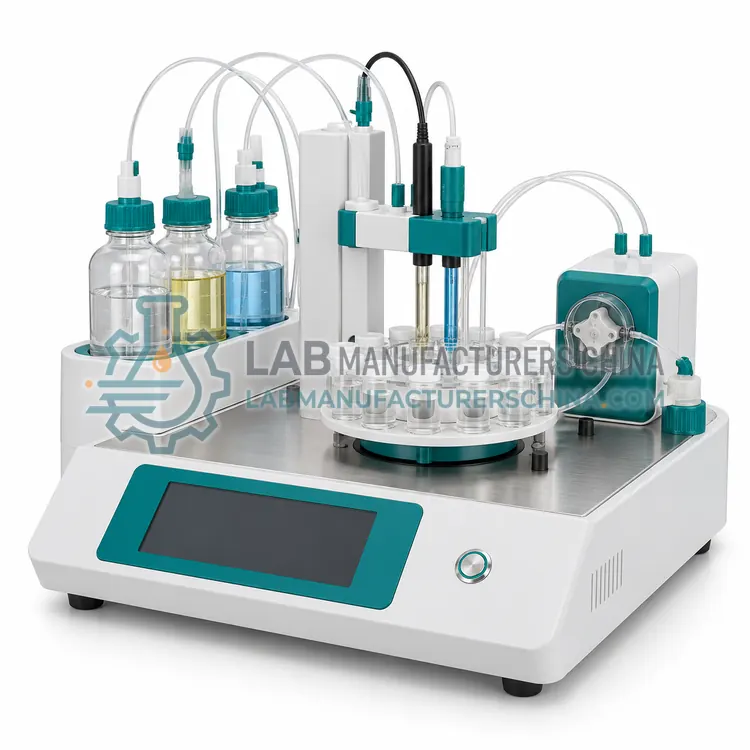
- Benchtop Ion-Selective Electrode Ion Analyzer — A laboratory potentiometric analyzer that reads ion-selective electrodes for fluoride, nitrate, ammonium, chloride and other ions with mV resolution of 0.1 mV.
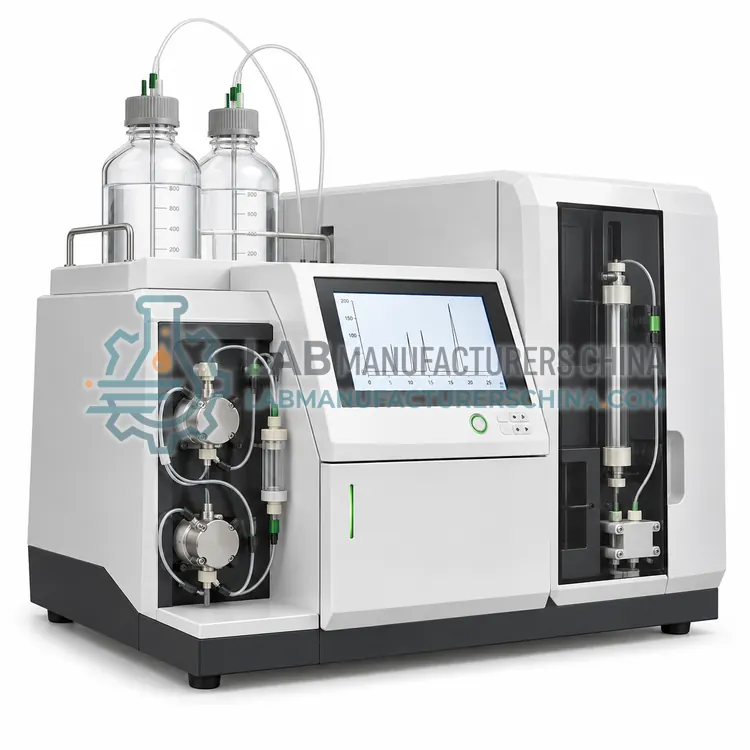
- Suppressed-Conductivity Ion Chromatograph for Anion Analysis in Water — An ion chromatograph configured with an anion-exchange column, carbonate or hydroxide eluent, chemical or electrolytic suppression and a conductivity detector.
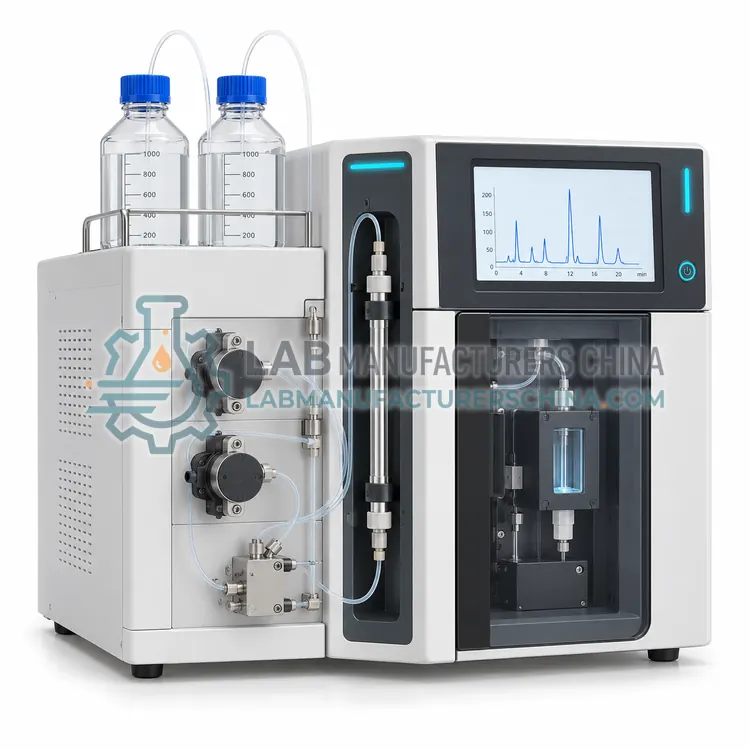
- Ion Chromatograph for Cation Analysis in Water — An ion chromatograph with a cation-exchange column, methanesulfonic acid eluent and suppressed or non-suppressed conductivity detection.
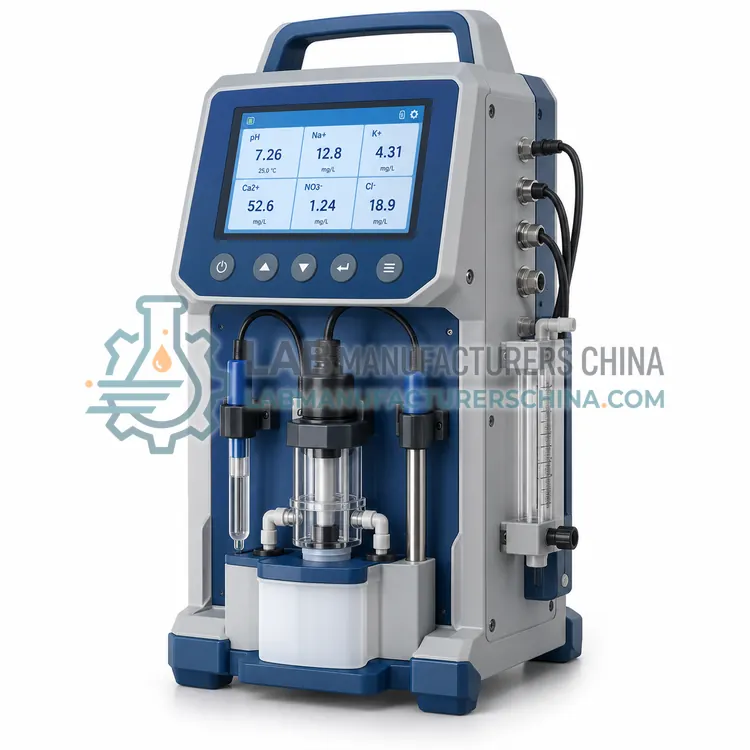
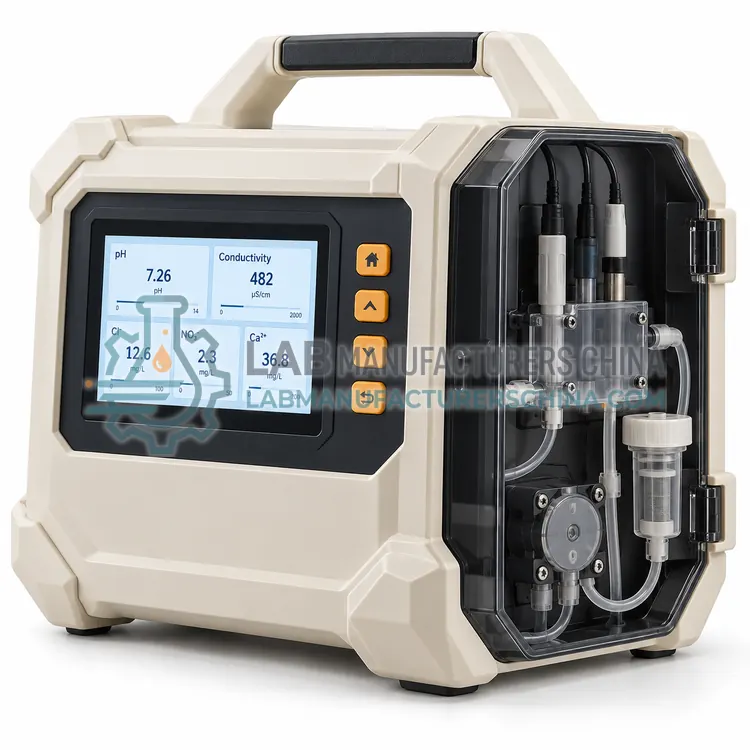
- Portable Multi-Ion Meter for Field Water Testing — A battery-powered handheld meter that reads ion-selective, pH and conductivity probes in the field.
- Online Ion Analyzer for Continuous Water Monitoring — An unattended analyzer that measures ammonium, nitrate, fluoride, chloride or other ions in flowing water, using ISE or colorimetric sensing with automatic calibration.
How do I choose the right variant?
The choice starts with how many ions you need and at what limit. For one or two ions such as fluoride or ammonium in routine samples, an ISE analyzer is fast and inexpensive. For simultaneous determination of chloride, nitrate, sulfate, phosphate and other anions, or cations like sodium, potassium and calcium, ion chromatography is required because it resolves interferences and gives full profiles at µg/L levels. Consider sample throughput and whether an autosampler is needed, as well as matrix complexity, since high-salt samples may require dilution or matrix elimination. Field work favors portable ISE meters, and continuous process control favors online analyzers with automated calibration. Confirm the reference method, such as ISO 10304-1 or HJ 84, and compare running costs for eluents, suppressors, columns and electrodes.
Where are Ion Analyzers used?
Ion Analyzers are specified in drinking water anion compliance testing, fluoride and nitrate monitoring, boiler and cooling water chemistry, wastewater and surface water surveys and food and beverage ion profiling.
Which standards and certifications apply?
Work with Ion Analyzers is commonly governed by ISO 10304-1, ISO 10304-2, EPA Method 300.1, ASTM D4327, ASTM D1179, HJ 84, GB/T 5750.5 and IEC 61010-1. Instrument certifications such as CE marking are confirmed per configuration and never assumed.
What are the key considerations before purchase?
ISE systems need stable temperature, fresh standards and proper electrode conditioning, with slope checks in the 54–60 mV/decade range and membrane replacement when response slows. Ion chromatographs require deionized water of 18.2 MΩ·cm, filtered eluents degassed to avoid baseline noise, and sample filtration through 0.45 µm filters to protect the column. Keep guard columns in place and flush the system when storing. Calibrate with at least five standards and verify with a mid-range check standard each batch. Suppressors and columns have finite life, so track system pressure and retention times. Laboratories working to ISO/IEC 17025 should keep calibration records and control charts.