How do Water Quality Analyzers work?
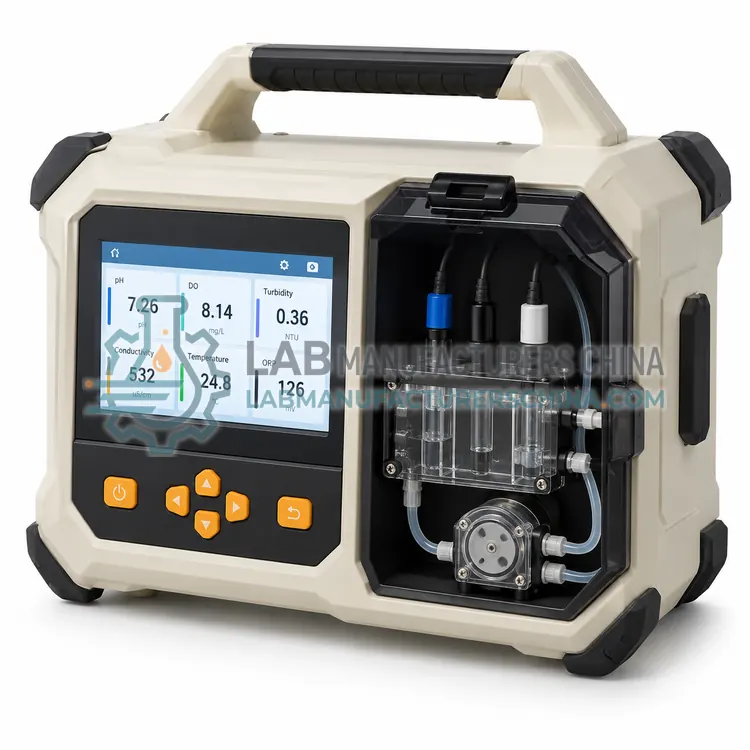
Water quality analyzers combine several sensor technologies in one instrument. pH is measured with a glass membrane electrode whose potential follows the Nernst equation. Conductivity uses a cell with two or four electrodes and temperature compensation to a 25 °C reference. Dissolved oxygen is sensed either by a polarographic or galvanic membrane sensor or, increasingly, by optical luminescence quenching of a dye. Turbidity is measured by nephelometry, detecting light scattered at 90° from an infrared or white source. Residual chlorine is determined amperometrically or by DPD colorimetry. A microprocessor applies calibration and temperature compensation, logs the readings and outputs them to a display, memory or digital network. Submersible and online designs add cleaning systems and housings for continuous deployment.
Which Water Quality Analyzers variants are available?
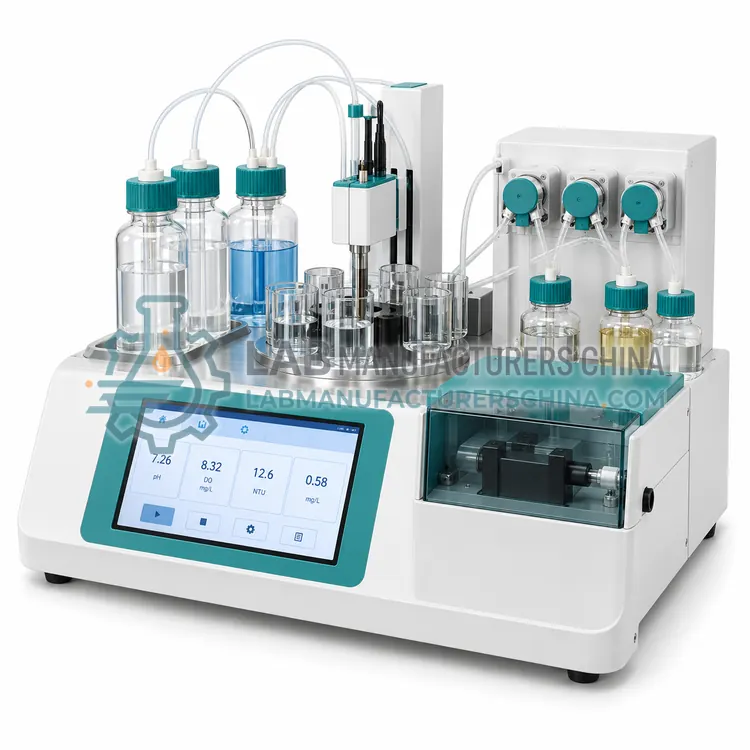
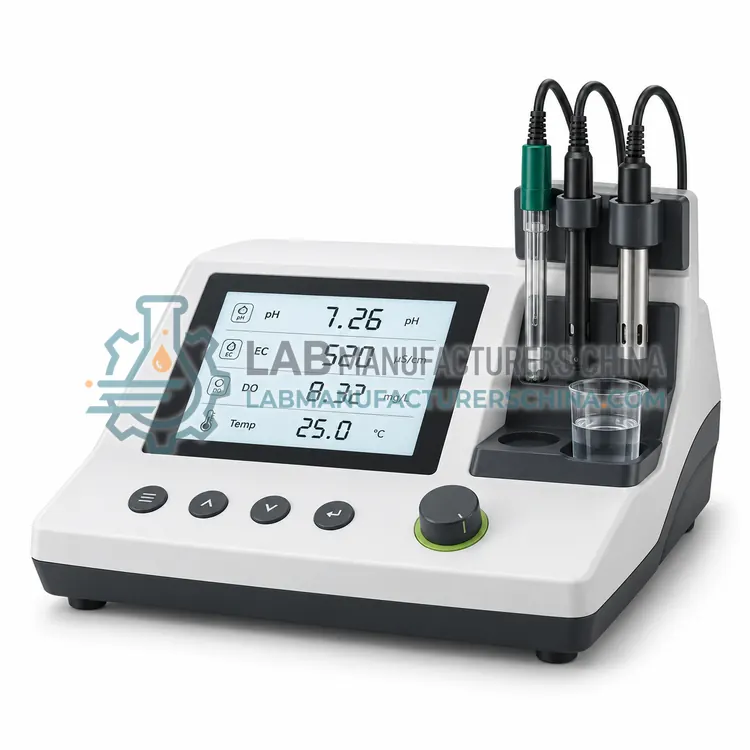
- Benchtop Multi-Parameter Water Quality Meter — A laboratory meter with two to five channels for pH, conductivity, TDS, salinity, dissolved oxygen and ORP, with resolutions down to 0.001 pH.
- Portable Multi-Parameter Water Quality Meter — A rugged handheld instrument that measures pH, conductivity, dissolved oxygen, temperature and often turbidity or ORP in the field.
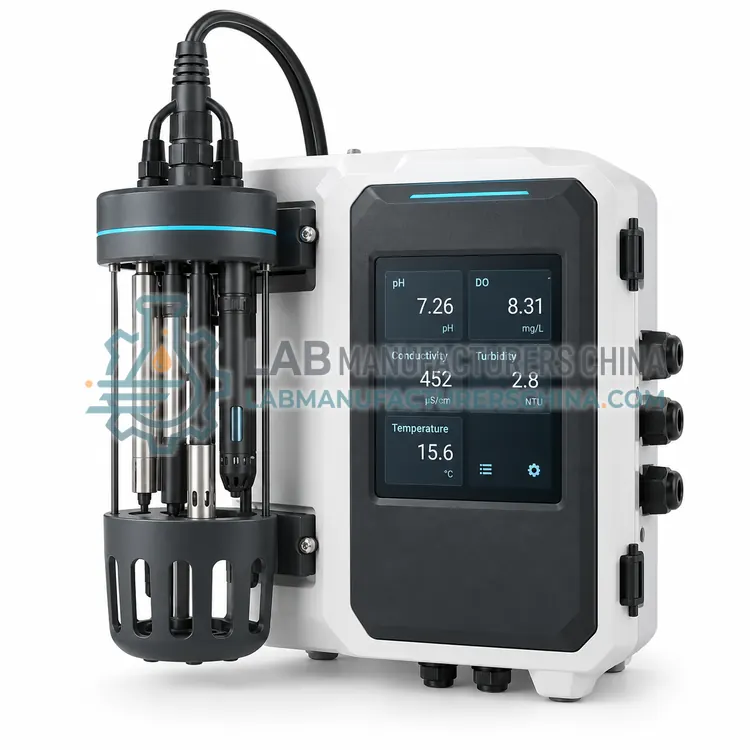
- Multi-Parameter Water Quality Sonde for Continuous Monitoring — A submersible, self-logging probe that measures up to 10 parameters, including pH, conductivity, optical dissolved oxygen, turbidity, chlorophyll and depth.
- Nephelometric Turbidity Analyzer for Water Treatment — A benchtop or online turbidimeter that measures scattered light at 90° in NTU or FNU, from 0.01 to 1000 NTU.
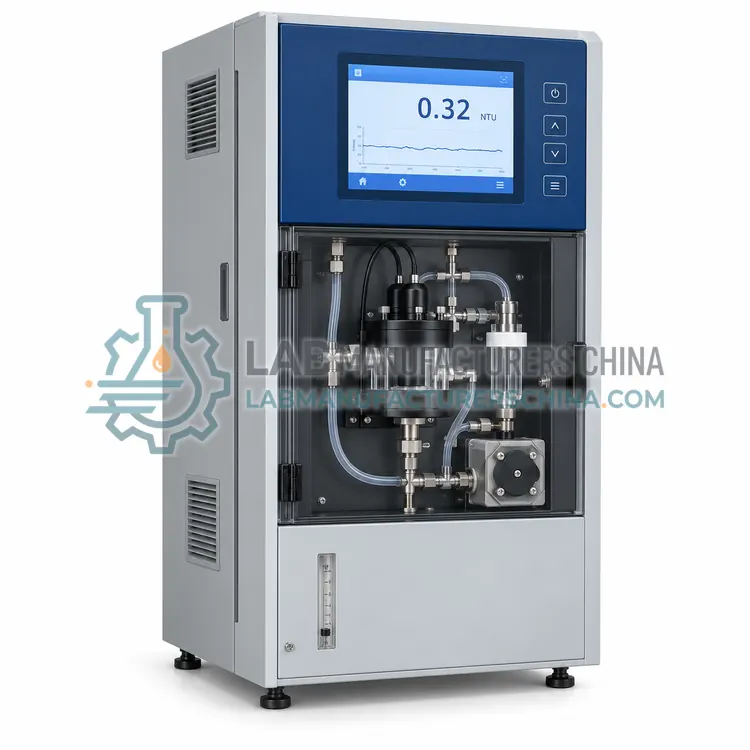
- Online Multi-Parameter Water Quality Analyzer for Treatment Plants — A panel-mounted analyzer that continuously measures pH, conductivity, turbidity, residual chlorine and temperature in a sample stream.
How do I choose the right variant?
Begin by listing the parameters you must report and their ranges, since sensor selection sets cost and maintenance. Decide where the instrument will work: a benchtop meter for laboratory use, a handheld for spot checks, a submersible sonde for long-term deployment in rivers and lakes, or an online analyzer for treatment plants. Consider accuracy needs, for instance ± 0.01 pH for lab work versus ± 0.1 pH for field screening. Optical dissolved oxygen sensors need less maintenance than membrane types. Check the ingress protection rating, cable length, battery life and data logging capacity for field instruments. For online systems, evaluate automated cleaning and calibration options, and communication protocols. Finally compare sensor replacement costs and calibration solution requirements over the instrument's life.
Where are Water Quality Analyzers used?
Water Quality Analyzers are specified in drinking water treatment and distribution monitoring, river, lake and groundwater surveys, aquaculture dissolved oxygen and pH control, wastewater treatment plant process monitoring and laboratory water testing and teaching.
Which standards and certifications apply?
Work with Water Quality Analyzers is commonly governed by ISO 10523, ISO 7888, ISO 5814, ISO 7027-1, ASTM D1293, ASTM D1125, ASTM D888, HJ 1147 and IEC 61010-1. Instrument certifications such as CE marking are confirmed per configuration and never assumed.
What are the key considerations before purchase?
Calibrate pH with at least two buffers bracketing the sample range, conductivity with a standard near the expected value, and dissolved oxygen in water-saturated air or zero solution. Turbidity needs formazin or stabilized polymer standards. Rinse probes with deionized water between samples, store electrodes in the recommended solution and replace membranes, caps and reference fill on schedule. Biofouling on submersible sondes can ruin readings within days, so use wipers or copper guards and inspect regularly. Record calibration logs and sensor replacement dates for quality audits, and follow the method when results support regulatory reporting. Protect instruments from condensation, freezing and strong electromagnetic interference.