Nephelometric Turbidity Analyzer for Water Treatment
水处理用散射浊度分析仪
- SKU WQA-0004
- Water Quality Analyzers
- CE (to be confirmed)
- ISO 9001 manufacturing (to be confirmed)
Price on request — FOB / CIF quoted per order
Prices depend on configuration, quantity and destination port.
Key specifications
| Measuring principle | 90° nephelometry with ratio correction |
|---|---|
| Measuring range | 0.01–1000 NTU (FNU) |
| Resolution | 0.001 NTU below 10 NTU |
| Accuracy | ± 2% of reading or ± 0.01 NTU |
| Light source | 860 nm LED or tungsten lamp |
| Sample volume | 10–25 mL vial (benchtop) |
Request a quote Download brochure · to be provided
By Lab Manufacturers China Technical TeamLast reviewed Standards: ISO 10523, ISO 7888, ISO 5814
What is the Nephelometric Turbidity Analyzer for Water Treatment?
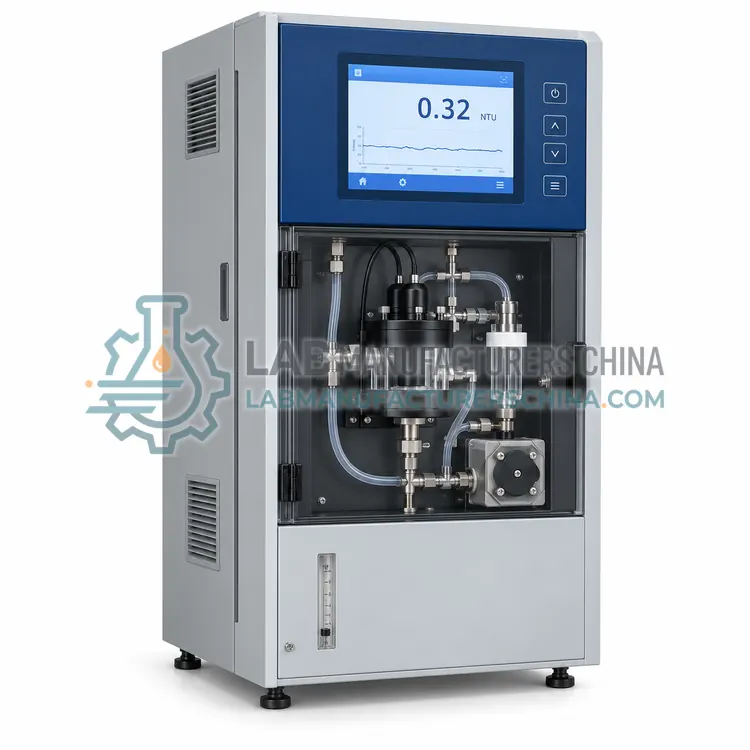
A benchtop or online turbidimeter that measures scattered light at 90° in NTU or FNU, from 0.01 to 1000 NTU. It monitors filtration performance and drinking water clarity under ISO 7027 and related regulatory requirements, in both laboratory grab-sample and continuous filter-effluent applications.
What is the Nephelometric Turbidity Analyzer for Water Treatment?
A benchtop or online turbidimeter that measures scattered light at 90° in NTU or FNU, from 0.01 to 1000 NTU. It monitors filtration performance and drinking water clarity under ISO 7027 and related regulatory requirements, in both laboratory grab-sample and continuous filter-effluent applications.
Overview
This variant measures turbidity using a light source, typically an 860 nm LED for ISO 7027 or a tungsten lamp for white-light methods, and a detector at 90° that measures scattered light, sometimes with a transmitted-light detector for ratio correction. The ratio method compensates for color and lamp fluctuations and improves stability at high turbidity. Low-range instruments resolve 0.001 NTU with accuracy of ± 2% of reading or ± 0.01 NTU, which suits filter effluent monitoring where regulatory limits may be 0.1 to 0.3 NTU. Benchtop models use 25 mm vials with bubble-free handling, while online models use a flow cell with a bubble trap and automatic cleaning. Calibration uses formazin or certified stabilized polymer standards at 20, 100, 800 NTU, and verification with gel standards is routine. Signal stability depends on clean vials and bubble removal.
How does it work?
Water quality analyzers combine several sensor technologies in one instrument. pH is measured with a glass membrane electrode whose potential follows the Nernst equation. Conductivity uses a cell with two or four electrodes and temperature compensation to a 25 °C reference. Dissolved oxygen is sensed either by a polarographic or galvanic membrane sensor or, increasingly, by optical luminescence quenching of a dye. Turbidity is measured by nephelometry, detecting light scattered at 90° from an infrared or white source. Residual chlorine is determined amperometrically or by DPD colorimetry. A microprocessor applies calibration and temperature compensation, logs the readings and outputs them to a display, memory or digital network. Submersible and online designs add cleaning systems and housings for continuous deployment.
What are the key features?
- 90° nephelometric detection with ratio correction for color and lamp drift
- Range 0.01 to 1000 NTU with resolution to 0.001 NTU
- 860 nm infrared source for ISO 7027 FNU or white-light source for NTU
- Bubble trap and automatic cleaning in the online flow cell version
- Calibration with formazin or stabilized polymer standards and gel verification
- Data logging with alarm relays for filter effluent limits
What are the technical specifications?
A typical nephelometric turbidity analyzer for water treatment configuration offers measuring principle of 90° nephelometry with ratio correction, measuring range of 0.01–1000 NTU (FNU), resolution of 0.001 NTU below 10 NTU, accuracy of ± 2% of reading or ± 0.01 NTU, light source of 860 nm LED or tungsten lamp and sample volume of 10–25 mL vial (benchtop). Values are indicative of the product class; the exact figures for each configuration are confirmed on the quotation and the calibration documents supplied with the instrument.
Which applications is it used for?
The Nephelometric Turbidity Analyzer for Water Treatment is used in filter effluent turbidity monitoring, finished drinking water compliance, coagulation and flocculation process control and beverage and bottled water clarity checks. Across the wider Water Quality Analyzers class, laboratories also deploy it for drinking water treatment and distribution monitoring, river, lake and groundwater surveys and aquaculture dissolved oxygen and pH control.
Which standards and certifications apply?
Relevant standards and methods include ISO 10523, ISO 7888, ISO 5814, ISO 7027-1, ASTM D1293, ASTM D1125, ASTM D888, HJ 1147 and IEC 61010-1. Certification candidates for this model are CE and ISO 9001 manufacturing; each is to be confirmed for the specific configuration before shipment, and certificates are supplied only where they have been issued.
Calibrate pH with at least two buffers bracketing the sample range, conductivity with a standard near the expected value, and dissolved oxygen in water-saturated air or zero solution. Turbidity needs formazin or stabilized polymer standards. Rinse probes with deionized water between samples, store electrodes in the recommended solution and replace membranes, caps and reference fill on schedule. Biofouling on submersible sondes can ruin readings within days, so use wipers or copper guards and inspect regularly. Record calibration logs and sensor replacement dates for quality audits, and follow the method when results support regulatory reporting. Protect instruments from condensation, freezing and strong electromagnetic interference.
How do I select the right Nephelometric Turbidity Analyzer for Water Treatment?
Select the turbidity analyzer when filter performance or finished water clarity must be tracked at levels below 1 NTU, or when regulators specify ISO 7027 or EPA 180.1 designs. Choose online models for continuous filter monitoring and benchtop for grab samples. In an RFQ, state range, method design (FNU or NTU), flow cell needs and output signals.
How does it compare with other Water Quality Analyzers variants?
Begin by listing the parameters you must report and their ranges, since sensor selection sets cost and maintenance. Decide where the instrument will work: a benchtop meter for laboratory use, a handheld for spot checks, a submersible sonde for long-term deployment in rivers and lakes, or an online analyzer for treatment plants. Consider accuracy needs, for instance ± 0.01 pH for lab work versus ± 0.1 pH for field screening. Optical dissolved oxygen sensors need less maintenance than membrane types. Check the ingress protection rating, cable length, battery life and data logging capacity for field instruments. For online systems, evaluate automated cleaning and calibration options, and communication protocols. Finally compare sensor replacement costs and calibration solution requirements over the instrument's life.
Full specifications
| Measuring principle | 90° nephelometry with ratio correction |
|---|---|
| Measuring range | 0.01–1000 NTU (FNU) |
| Resolution | 0.001 NTU below 10 NTU |
| Accuracy | ± 2% of reading or ± 0.01 NTU |
| Light source | 860 nm LED or tungsten lamp |
| Sample volume | 10–25 mL vial (benchtop) |
| Flow rate (online) | 100–1000 mL/min |
| Response time (online) | < 60 s |
| Outputs | 4–20 mA, RS-485, relays |
| Power supply | AC 100–240 V or 24 V DC |
Indicative values for this product class. Final specifications are confirmed on the quotation and in the calibration documents supplied with the instrument.
Applications
- Filter effluent turbidity monitoring
- Finished drinking water compliance
- Coagulation and flocculation process control
- Beverage and bottled water clarity checks
Key features
- 90° nephelometric detection with ratio correction for color and lamp drift
- Range 0.01 to 1000 NTU with resolution to 0.001 NTU
- 860 nm infrared source for ISO 7027 FNU or white-light source for NTU
- Bubble trap and automatic cleaning in the online flow cell version
- Calibration with formazin or stabilized polymer standards and gel verification
- Data logging with alarm relays for filter effluent limits
Frequently asked questions about Nephelometric Turbidity Analyzer for Water Treatment
Both describe 90° scattered-light measurements calibrated with formazin. NTU generally refers to white-light instruments under EPA 180.1, while FNU refers to 860 nm infrared instruments under ISO 7027. Values may differ for colored or particulate-rich samples, so state the method when reporting.
Let samples degas and invert vials gently before measurement. For online flow cells, a bubble trap and sufficient back pressure prevent bubble formation, since bubbles scatter light and cause spikes. Clean vials with lint-free cloth and silicone oil if the method allows.
GB 5749 sets a limit of 1 NTU, or 3 NTU in limited conditions, for finished water, and many utilities target below 0.3 NTU at filter effluent. WHO guidance recommends below 1 NTU for effective disinfection. Verify the limits that apply locally.
Typical parameters are pH, conductivity, total dissolved solids, salinity, dissolved oxygen, turbidity, temperature and oxidation-reduction potential. Optional sensors add ammonium, nitrate, chlorophyll, blue-green algae, residual chlorine and depth, depending on the model.
A portable meter is held or dipped for spot measurements and displays readings immediately. A sonde is a submersible multi-sensor probe that logs data autonomously for days or weeks, resists biofouling and is used for continuous monitoring in rivers, lakes and tanks.
Dissolved oxygen indicates the capacity of water to support aquatic life and aerobic treatment. Levels below about 4 mg/L stress most fish, and aeration control in wastewater plants depends on it. It varies with temperature, salinity and pressure, so readings need compensation.
Related models
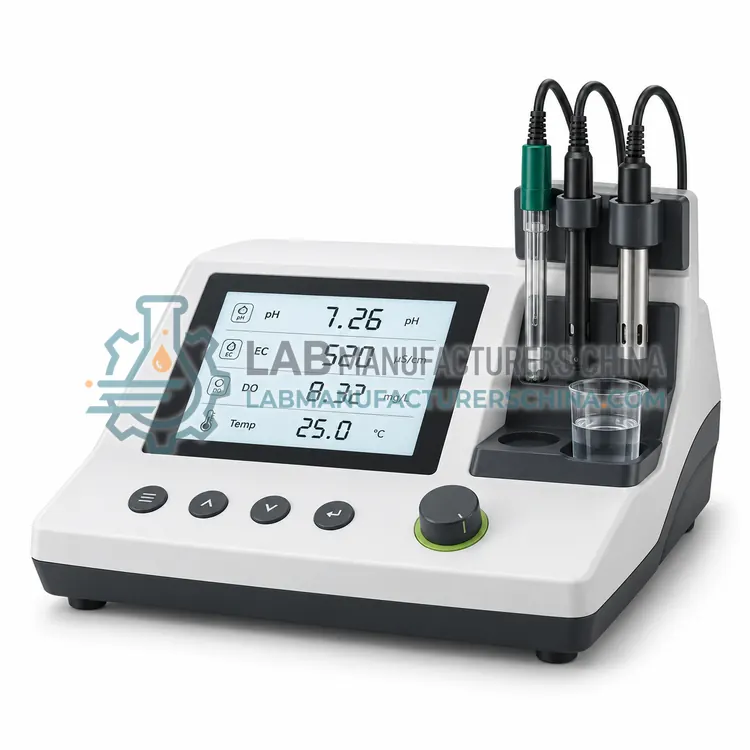
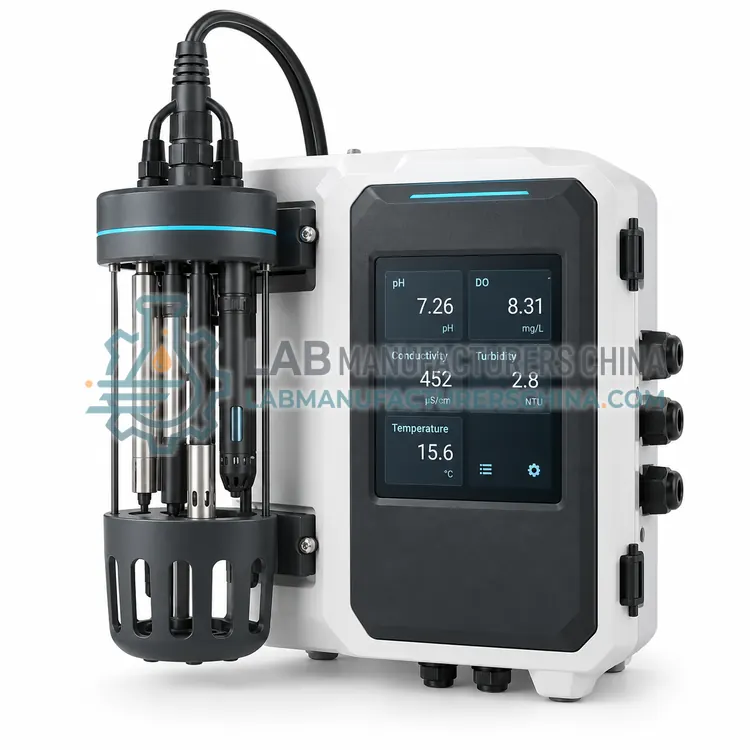
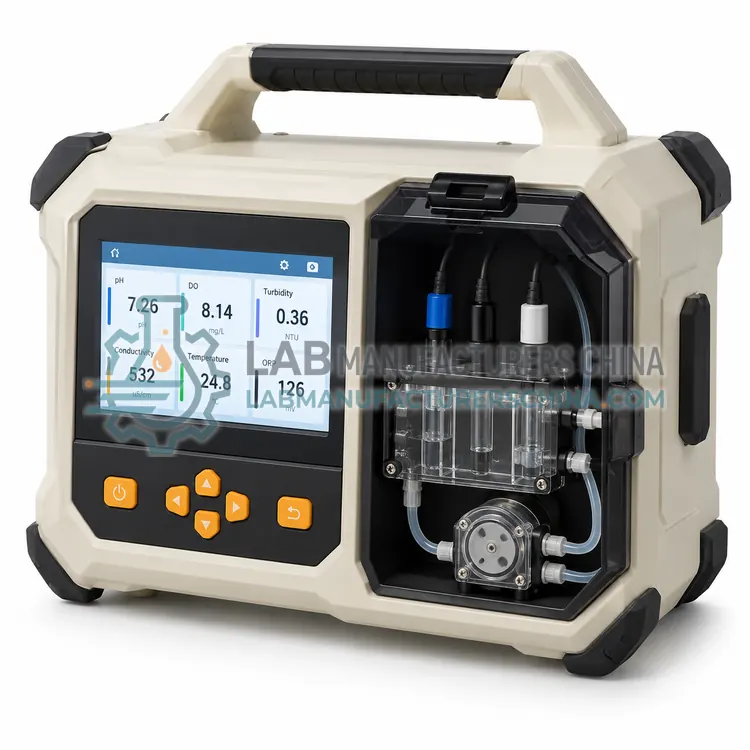
Online Multi-Parameter Water Quality Analyzer for Treatment Plants
水处理厂在线多参数水质分析仪
- CE (to be confirmed)
- +2