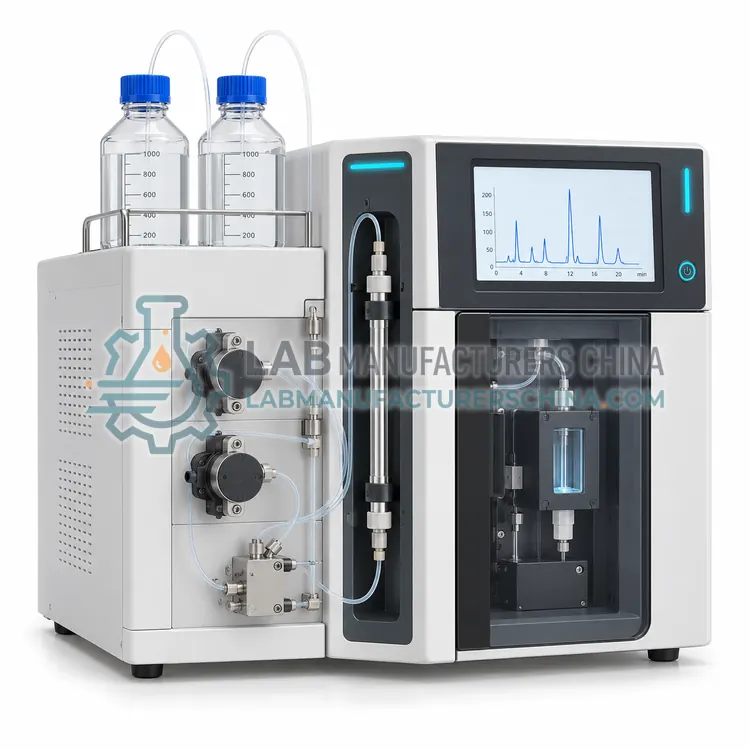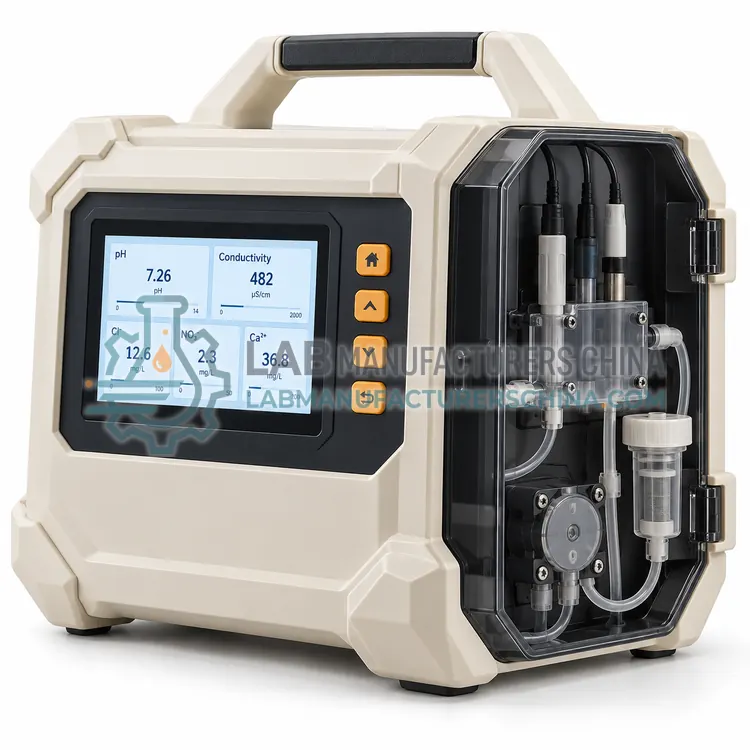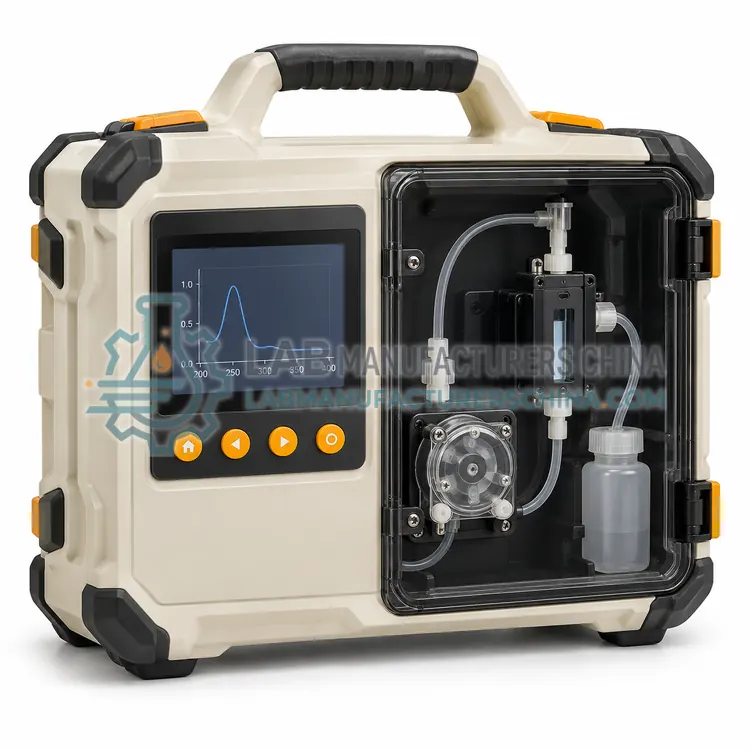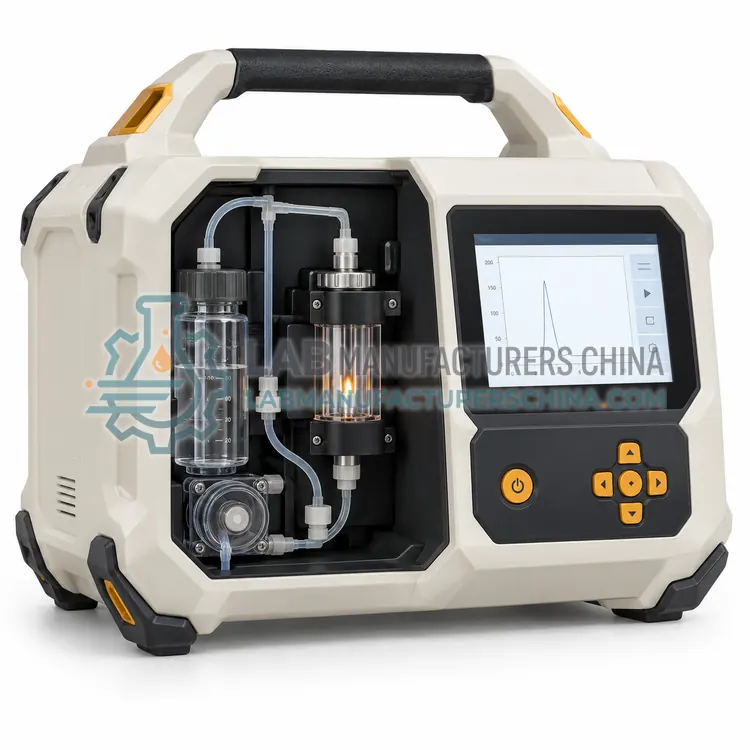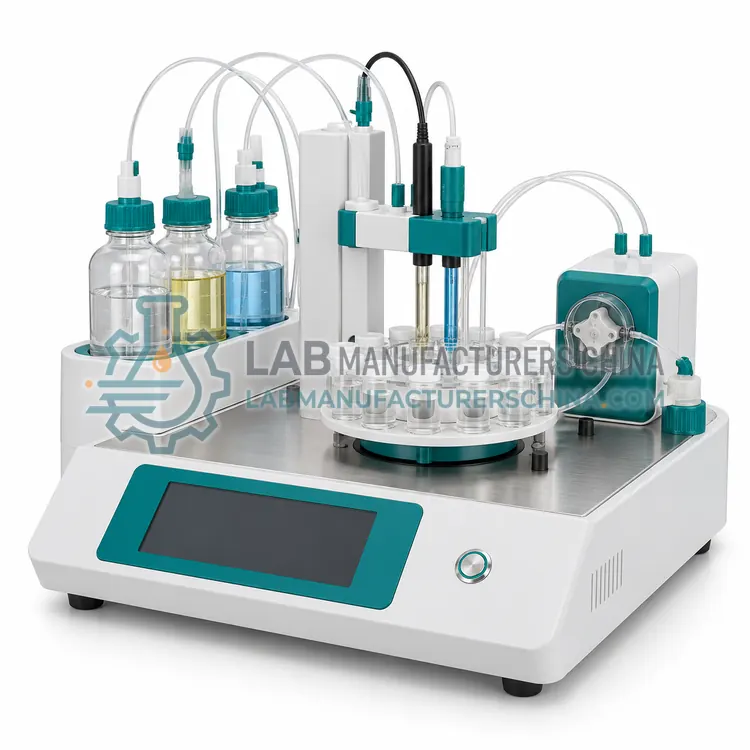
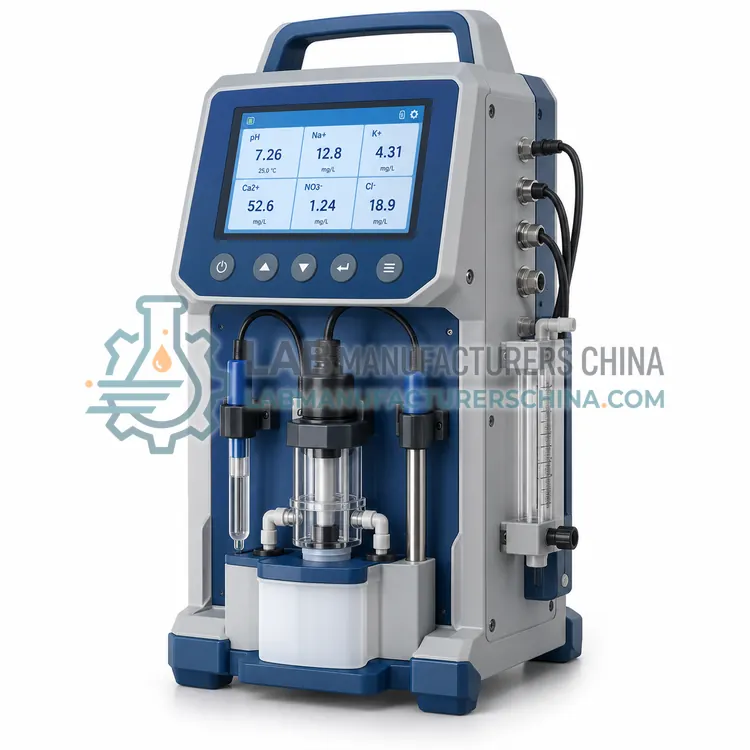
Portable Multi-Ion Meter for Field Water Testing
现场水质检测便携式多离子计
- SKU IOA-0004
- Ion Analyzers
- CE (to be confirmed)
- RoHS (to be confirmed)
Price on request — FOB / CIF quoted per order
Prices depend on configuration, quantity and destination port.
Key specifications
| Channels | 1–2 (ISE, pH, conductivity) |
|---|---|
| mV range | ± 1000 mV |
| mV resolution | 0.1 mV |
| Concentration range | 0.1–1000 mg/L (nitrate electrode) |
| Accuracy after calibration | ± 5% of reading |
| Operating temperature | −5 to 50 °C |
Request a quote Download brochure · to be provided
By Lab Manufacturers China Technical TeamLast reviewed Standards: ISO 10304-1, ISO 10304-2, EPA Method 300.1
What is the Portable Multi-Ion Meter for Field Water Testing?
A battery-powered handheld meter that reads ion-selective, pH and conductivity probes in the field. It provides rapid fluoride, nitrate, ammonium, chloride and hardness screening at wells, treatment works and aquaculture sites, where samples cannot wait for laboratory analysis.
What is the Portable Multi-Ion Meter for Field Water Testing?
A battery-powered handheld meter that reads ion-selective, pH and conductivity probes in the field. It provides rapid fluoride, nitrate, ammonium, chloride and hardness screening at wells, treatment works and aquaculture sites, where samples cannot wait for laboratory analysis.
Overview
This variant is a rugged handheld meter rated IP67, with one or two probe inputs, a backlit graphic display and 500 to 1000 stored records with GPS or time stamp. It accepts rugged combination ISEs with refillable or gel reference systems, plus pH and conductivity probes, and runs two- or three-point calibration with guided prompts. Concentration ranges follow the electrode, such as 0.1 to 1000 mg/L for nitrate, and accuracy is typically ± 5% of reading after calibration. Battery life exceeds 100 hours on AA cells, and a hard case carries probes, standards and a wash bottle. The meter is well suited to screening groundwater for fluoride and nitrate, checking ammonium in fish ponds and verifying chloride in irrigation water. Accuracy is lower than laboratory ISE or IC, and results should be confirmed on critical or regulatory samples.
How does it work?
Two technologies dominate. Ion-selective electrode (ISE) analyzers use a membrane that responds selectively to one ion, such as a LaF3 crystal for fluoride. The potential against a reference electrode follows the Nernst equation, changing about 59 mV per decade for monovalent ions at 25 °C, and concentration is found from calibration with standards and an ionic strength adjuster. Ion chromatography (IC) separates ions by injecting the sample onto an ion-exchange column, where an eluent such as carbonate-bicarbonate or hydroxide moves them at different rates. A suppressor reduces eluent background conductivity, and a conductivity detector records each ion as a peak whose retention time identifies it and whose area gives concentration. Autosamplers, eluent generators and chromatography software automate multi-ion runs.
What are the key features?
- IP67 rugged housing with backlit graphic display for outdoor use
- Supports ion-selective, pH and conductivity probes on one or two channels
- Guided two- or three-point calibration with stored calibration log
- Stores 500 to 1000 records with time and optional GPS tagging
- Runs more than 100 hours on AA batteries
- Carrying case with probes, standards and accessories for site work
What are the technical specifications?
A typical portable multi-ion meter for field water testing configuration offers channels of 1–2 (ISE, pH, conductivity), mV range of ± 1000 mV, mV resolution of 0.1 mV, concentration range of 0.1–1000 mg/L (nitrate electrode), accuracy after calibration of ± 5% of reading and operating temperature of −5 to 50 °C. Values are indicative of the product class; the exact figures for each configuration are confirmed on the quotation and the calibration documents supplied with the instrument.
Which applications is it used for?
The Portable Multi-Ion Meter for Field Water Testing is used in groundwater and well screening for fluoride and nitrate, aquaculture pond ammonium checks, irrigation water chloride testing and emergency and rapid response sampling. Across the wider Ion Analyzers class, laboratories also deploy it for drinking water anion compliance testing, fluoride and nitrate monitoring and boiler and cooling water chemistry.
Which standards and certifications apply?
Relevant standards and methods include ISO 10304-1, ISO 10304-2, EPA Method 300.1, ASTM D4327, ASTM D1179, HJ 84, GB/T 5750.5 and IEC 61010-1. Certification candidates for this model are CE and RoHS; each is to be confirmed for the specific configuration before shipment, and certificates are supplied only where they have been issued.
ISE systems need stable temperature, fresh standards and proper electrode conditioning, with slope checks in the 54–60 mV/decade range and membrane replacement when response slows. Ion chromatographs require deionized water of 18.2 MΩ·cm, filtered eluents degassed to avoid baseline noise, and sample filtration through 0.45 µm filters to protect the column. Keep guard columns in place and flush the system when storing. Calibrate with at least five standards and verify with a mid-range check standard each batch. Suppressors and columns have finite life, so track system pressure and retention times. Laboratories working to ISO/IEC 17025 should keep calibration records and control charts.
How do I select the right Portable Multi-Ion Meter for Field Water Testing?
Select the portable meter for on-site screening at multiple locations where immediate results outweigh laboratory-grade accuracy. Use benchtop ISE or IC for compliance reporting. In an RFQ, specify target ions and ranges, number of electrodes and spare membranes, calibration standards to include, data logging and GPS needs, and operating temperature.
How does it compare with other Ion Analyzers variants?
The choice starts with how many ions you need and at what limit. For one or two ions such as fluoride or ammonium in routine samples, an ISE analyzer is fast and inexpensive. For simultaneous determination of chloride, nitrate, sulfate, phosphate and other anions, or cations like sodium, potassium and calcium, ion chromatography is required because it resolves interferences and gives full profiles at µg/L levels. Consider sample throughput and whether an autosampler is needed, as well as matrix complexity, since high-salt samples may require dilution or matrix elimination. Field work favors portable ISE meters, and continuous process control favors online analyzers with automated calibration. Confirm the reference method, such as ISO 10304-1 or HJ 84, and compare running costs for eluents, suppressors, columns and electrodes.
Full specifications
| Channels | 1–2 (ISE, pH, conductivity) |
|---|---|
| mV range | ± 1000 mV |
| mV resolution | 0.1 mV |
| Concentration range | 0.1–1000 mg/L (nitrate electrode) |
| Accuracy after calibration | ± 5% of reading |
| Operating temperature | −5 to 50 °C |
| Ingress protection | IP67 |
| Data storage | 500–1000 records |
| Battery life | > 100 h (4 × AA) |
| Weight | About 0.45 kg |
Indicative values for this product class. Final specifications are confirmed on the quotation and in the calibration documents supplied with the instrument.
Applications
- Groundwater and well screening for fluoride and nitrate
- Aquaculture pond ammonium checks
- Irrigation water chloride testing
- Emergency and rapid response sampling
Key features
- IP67 rugged housing with backlit graphic display for outdoor use
- Supports ion-selective, pH and conductivity probes on one or two channels
- Guided two- or three-point calibration with stored calibration log
- Stores 500 to 1000 records with time and optional GPS tagging
- Runs more than 100 hours on AA batteries
- Carrying case with probes, standards and accessories for site work
Frequently asked questions about Portable Multi-Ion Meter for Field Water Testing
After fresh calibration, portable ISE meters typically agree with laboratory methods within ± 5–10% of reading for mid-range samples. Accuracy degrades near detection limits and in high-ionic-strength or complex matrices, so use them for screening and confirm regulatory results in a laboratory.
Store electrodes as the manufacturer directs, usually in a dilute standard or storage solution of the target ion, with reference junctions kept wet. Rinse with deionized water after use, avoid dry storage and replace reference filling solution regularly.
Yes. Electrode slope follows the Nernst equation, about 0.2 mV/decade per °C, and standards can shift with temperature. Let probes equilibrate with the sample, use automatic temperature compensation and calibrate at a temperature close to the sample.
An ion-selective electrode responds to one ion and is fast and economical for single-ion routine tests. Ion chromatography separates many ions in one run, gives full anion or cation profiles at lower limits, and resists many matrix interferences, but costs more and needs eluents and skilled operation.
Common anions are fluoride, chloride, nitrite, bromide, nitrate, phosphate and sulfate, run under ISO 10304-1 or EPA 300.1. With a cation column it also measures lithium, sodium, ammonium, potassium, magnesium and calcium. Bromate and other disinfection by-products need a dedicated method.
An electrode responds to ion activity, not concentration. Adding an ionic strength adjuster, such as TISAB for fluoride, fixes the total ionic strength of samples and standards so activity coefficients are constant, letting the measured potential correlate directly with concentration. It also controls pH and masks complexing interferents.
Related models
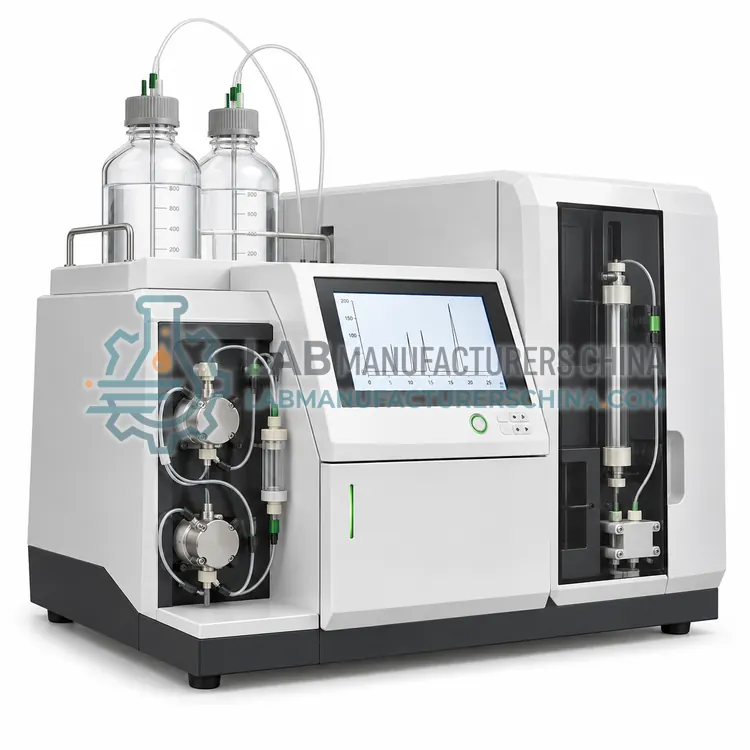
Suppressed-Conductivity Ion Chromatograph for Anion Analysis in Water
水中阴离子分析用抑制电导离子色谱仪
- CE (to be confirmed)
- +1