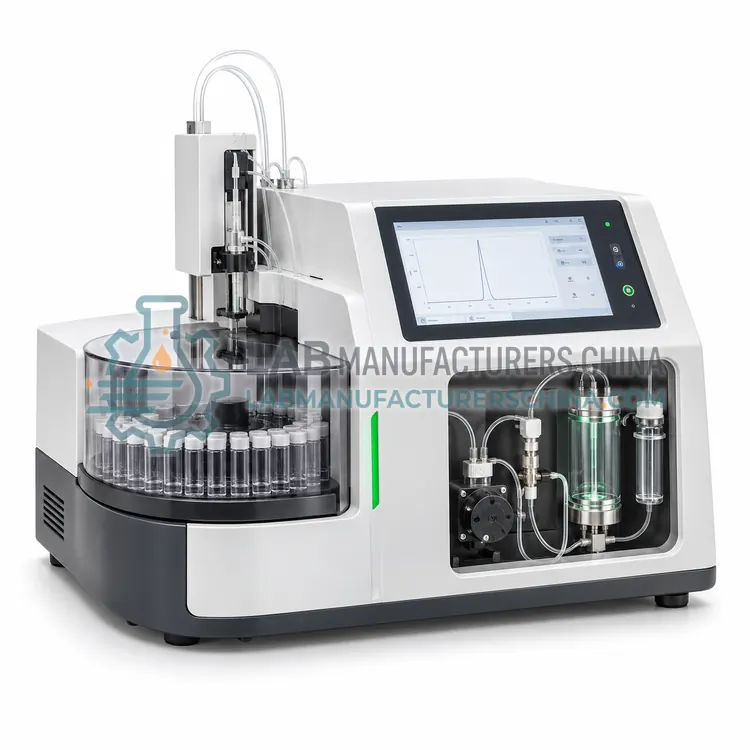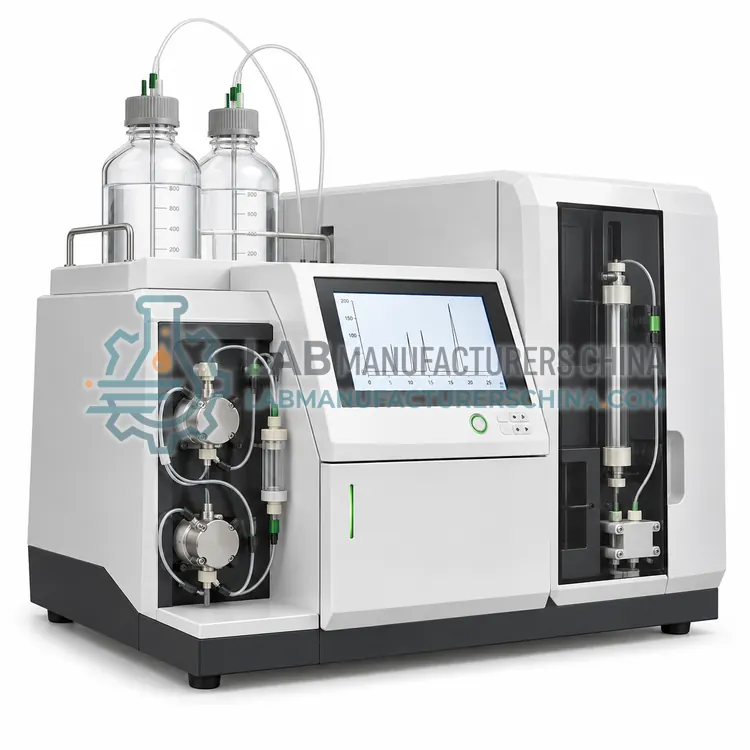
Suppressed-Conductivity Ion Chromatograph for Anion Analysis in Water
水中阴离子分析用抑制电导离子色谱仪
- CE (to be confirmed)
- +1
Welcome to Lab Manufacturers China — laboratory instruments direct from a Chinese manufacturer
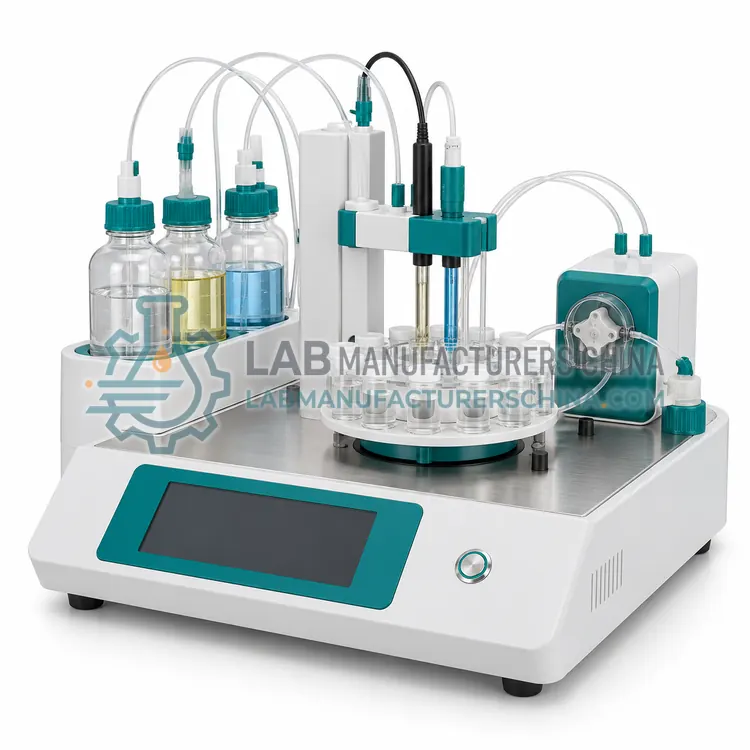
台式离子选择电极离子分析仪
Price on request — FOB / CIF quoted per order
Prices depend on configuration, quantity and destination port.
| Measuring principle | Direct potentiometry with ion-selective electrodes |
|---|---|
| Input channels | 1–4 |
| mV range | ± 2000 mV |
| mV resolution | 0.1 mV |
| mV accuracy | ± 0.1 mV |
| Concentration range | 0.02–2000 mg/L (fluoride electrode) |
By Lab Manufacturers China Technical TeamLast reviewed Standards: ISO 10304-1, ISO 10304-2, EPA Method 300.1
A laboratory potentiometric analyzer that reads ion-selective electrodes for fluoride, nitrate, ammonium, chloride and other ions with mV resolution of 0.1 mV. It is the economical choice for routine single-ion tests on drinking water, wastewater and industrial samples.
A laboratory potentiometric analyzer that reads ion-selective electrodes for fluoride, nitrate, ammonium, chloride and other ions with mV resolution of 0.1 mV. It is the economical choice for routine single-ion tests on drinking water, wastewater and industrial samples.
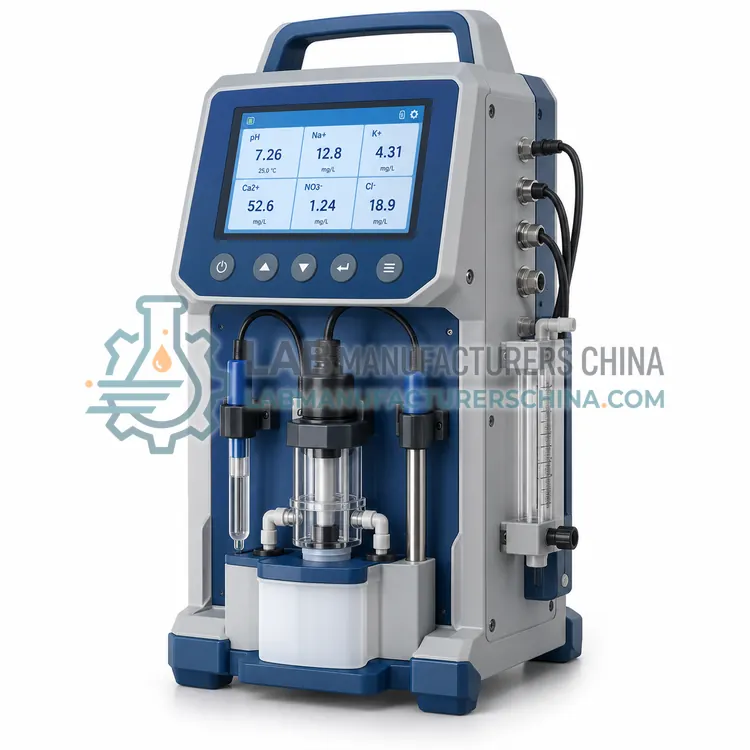
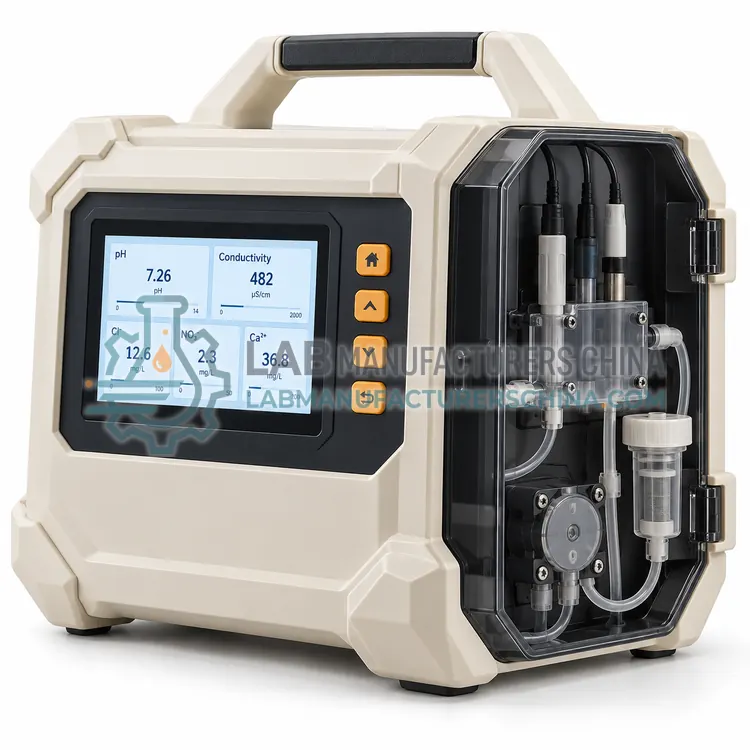
This variant is a benchtop meter with one to four input channels that connects to solid-state or polymer-membrane ion-selective electrodes plus a reference electrode. It displays concentration directly in mg/L, mol/L or pX after two- to five-point calibration, applies temperature compensation through an ATC probe and stores calibration history for review. Direct potentiometry, known addition and incremental addition methods are built in, so matrix effects can be corrected in difficult wastewater samples. A magnetic stirrer is supplied, and an optional autosampler allows unattended runs. Measurement range depends on the electrode, for example 0.02 to 2000 mg/L for fluoride and 0.1 to 14000 mg/L for nitrate. The instrument suits labs that test one or two ions regularly and need results within a minute, but it cannot resolve multiple anions in a single run and each electrode has a finite life of six to twelve months.
Two technologies dominate. Ion-selective electrode (ISE) analyzers use a membrane that responds selectively to one ion, such as a LaF3 crystal for fluoride. The potential against a reference electrode follows the Nernst equation, changing about 59 mV per decade for monovalent ions at 25 °C, and concentration is found from calibration with standards and an ionic strength adjuster. Ion chromatography (IC) separates ions by injecting the sample onto an ion-exchange column, where an eluent such as carbonate-bicarbonate or hydroxide moves them at different rates. A suppressor reduces eluent background conductivity, and a conductivity detector records each ion as a peak whose retention time identifies it and whose area gives concentration. Autosamplers, eluent generators and chromatography software automate multi-ion runs.
A typical benchtop ion-selective electrode ion analyzer configuration offers measuring principle of Direct potentiometry with ion-selective electrodes, input channels of 1–4, mV range of ± 2000 mV, mV resolution of 0.1 mV, mV accuracy of ± 0.1 mV and concentration range of 0.02–2000 mg/L (fluoride electrode). Values are indicative of the product class; the exact figures for each configuration are confirmed on the quotation and the calibration documents supplied with the instrument.
The Benchtop Ion-Selective Electrode Ion Analyzer is used in fluoride in drinking water, ammonium and nitrate in wastewater, chloride in process water and food and educational and teaching laboratories. Across the wider Ion Analyzers class, laboratories also deploy it for drinking water anion compliance testing, fluoride and nitrate monitoring and boiler and cooling water chemistry.
Relevant standards and methods include ISO 10304-1, ISO 10304-2, EPA Method 300.1, ASTM D4327, ASTM D1179, HJ 84, GB/T 5750.5 and IEC 61010-1. Certification candidates for this model are CE and ISO 9001 manufacturing; each is to be confirmed for the specific configuration before shipment, and certificates are supplied only where they have been issued.
ISE systems need stable temperature, fresh standards and proper electrode conditioning, with slope checks in the 54–60 mV/decade range and membrane replacement when response slows. Ion chromatographs require deionized water of 18.2 MΩ·cm, filtered eluents degassed to avoid baseline noise, and sample filtration through 0.45 µm filters to protect the column. Keep guard columns in place and flush the system when storing. Calibrate with at least five standards and verify with a mid-range check standard each batch. Suppressors and columns have finite life, so track system pressure and retention times. Laboratories working to ISO/IEC 17025 should keep calibration records and control charts.
Choose the benchtop ISE analyzer for routine, low-cost testing of one or two ions where fast results and easy operation matter. Move to ion chromatography when several anions must be reported at µg/L levels or where interferences are severe. In an RFQ, list target ions, expected ranges, number of channels, whether an autosampler is needed and which electrodes should be included.
The choice starts with how many ions you need and at what limit. For one or two ions such as fluoride or ammonium in routine samples, an ISE analyzer is fast and inexpensive. For simultaneous determination of chloride, nitrate, sulfate, phosphate and other anions, or cations like sodium, potassium and calcium, ion chromatography is required because it resolves interferences and gives full profiles at µg/L levels. Consider sample throughput and whether an autosampler is needed, as well as matrix complexity, since high-salt samples may require dilution or matrix elimination. Field work favors portable ISE meters, and continuous process control favors online analyzers with automated calibration. Confirm the reference method, such as ISO 10304-1 or HJ 84, and compare running costs for eluents, suppressors, columns and electrodes.
| Measuring principle | Direct potentiometry with ion-selective electrodes |
|---|---|
| Input channels | 1–4 |
| mV range | ± 2000 mV |
| mV resolution | 0.1 mV |
| mV accuracy | ± 0.1 mV |
| Concentration range | 0.02–2000 mg/L (fluoride electrode) |
| Temperature compensation | 0–100 °C, ATC probe |
| Calibration points | 2–5 |
| Interfaces | USB, RS-232 |
| Power supply | AC 100–240 V, 50/60 Hz |
Indicative values for this product class. Final specifications are confirmed on the quotation and in the calibration documents supplied with the instrument.
Solid-state crystal electrodes, such as fluoride, often last one to three years, while polymer-membrane electrodes for nitrate or ammonium typically last six to twelve months. A falling slope, slow response or drift that recalibration cannot correct indicates replacement.
Yes. A fluoride electrode with TISAB reads from about 0.02 mg/L, well below the 1.0 mg/L limit in GB 5749. Use standards bracketing the expected level, stir consistently and allow the reading to stabilize for reproducible results.
Interferences include other ions with similar selectivity, such as bicarbonate on nitrate electrodes or potassium on ammonium electrodes, plus complexing agents and temperature or pH shifts. Standard addition methods and buffers reduce these effects, but confirm with ion chromatography for critical samples.
An ion-selective electrode responds to one ion and is fast and economical for single-ion routine tests. Ion chromatography separates many ions in one run, gives full anion or cation profiles at lower limits, and resists many matrix interferences, but costs more and needs eluents and skilled operation.
Common anions are fluoride, chloride, nitrite, bromide, nitrate, phosphate and sulfate, run under ISO 10304-1 or EPA 300.1. With a cation column it also measures lithium, sodium, ammonium, potassium, magnesium and calcium. Bromate and other disinfection by-products need a dedicated method.
An electrode responds to ion activity, not concentration. Adding an ionic strength adjuster, such as TISAB for fluoride, fixes the total ionic strength of samples and standards so activity coefficients are constant, letting the measured potential correlate directly with concentration. It also controls pH and masks complexing interferents.
水中阴离子分析用抑制电导离子色谱仪
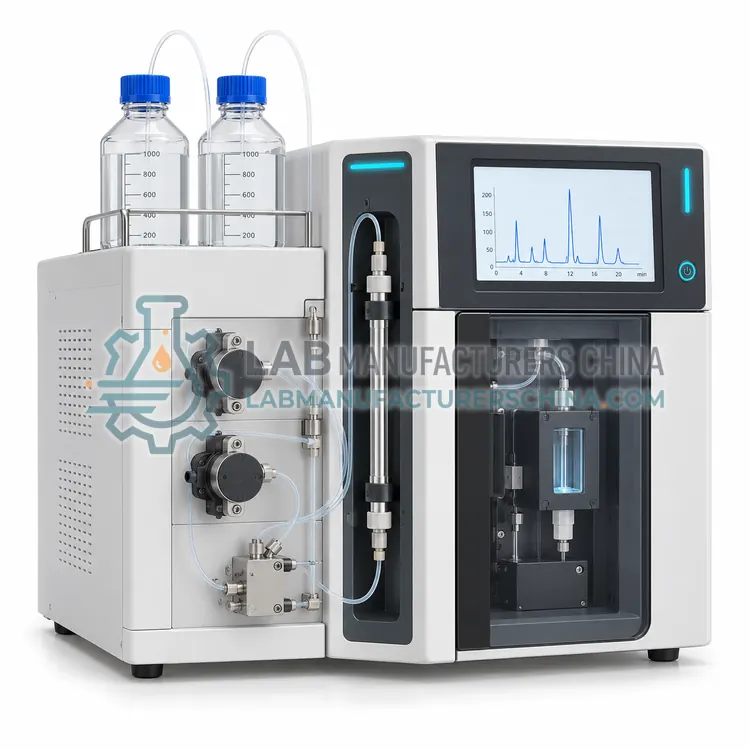
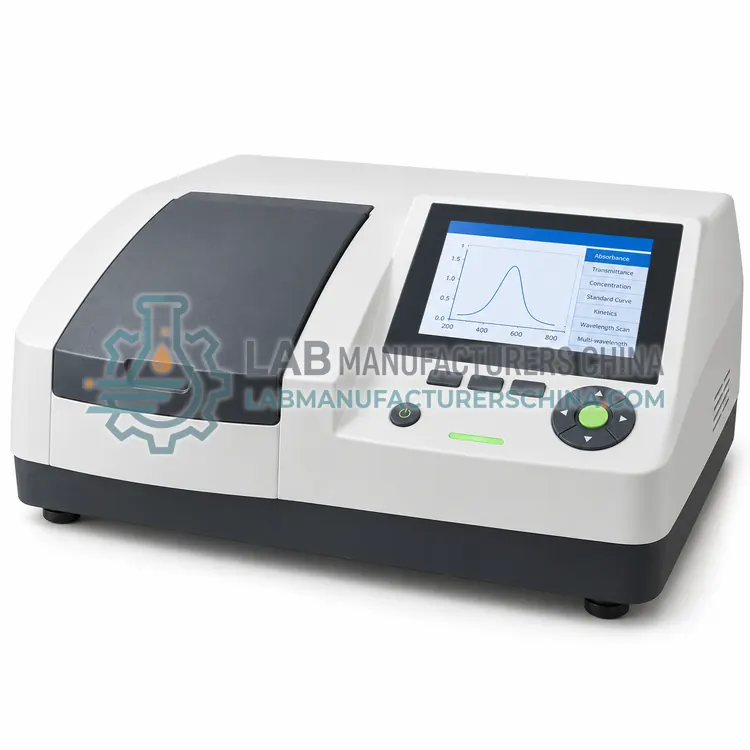
带预设方法的水质分析 UV-Vis 分光光度计