Lab Manufacturers China

Cryostats

恒冷箱切片机

CRY · Histology Equipment · 5 models

By Lab Manufacturers China Technical TeamLast reviewed Standards: IEC 61010-1, IEC 61010-2-101, IEC 61326-1

Standards referenced

  • IEC 61010-1
  • IEC 61010-2-101
  • IEC 61326-1
  • ISO 15189
  • ISO 13485

What are Cryostats?

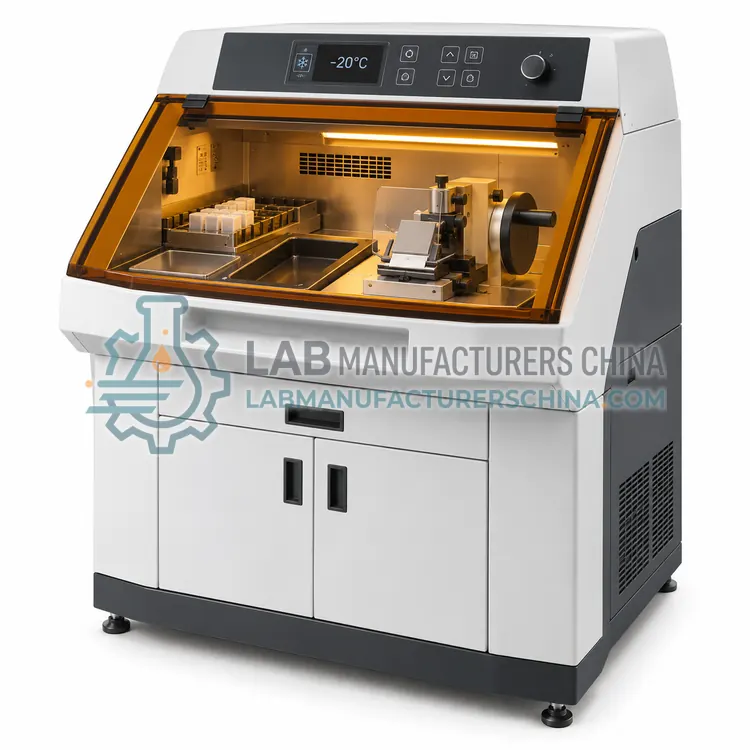
Cryostats are refrigerated microtomes that cut frozen tissue sections at about –20 °C, used for intraoperative diagnosis and for fresh tissue that must not be chemically processed. They serve surgical pathology, immunohistochemistry and research laboratories that need rapid or native-state sections.

5 models of Cryostats

The 5 models below are current configurations; specifications are confirmed on quotation.

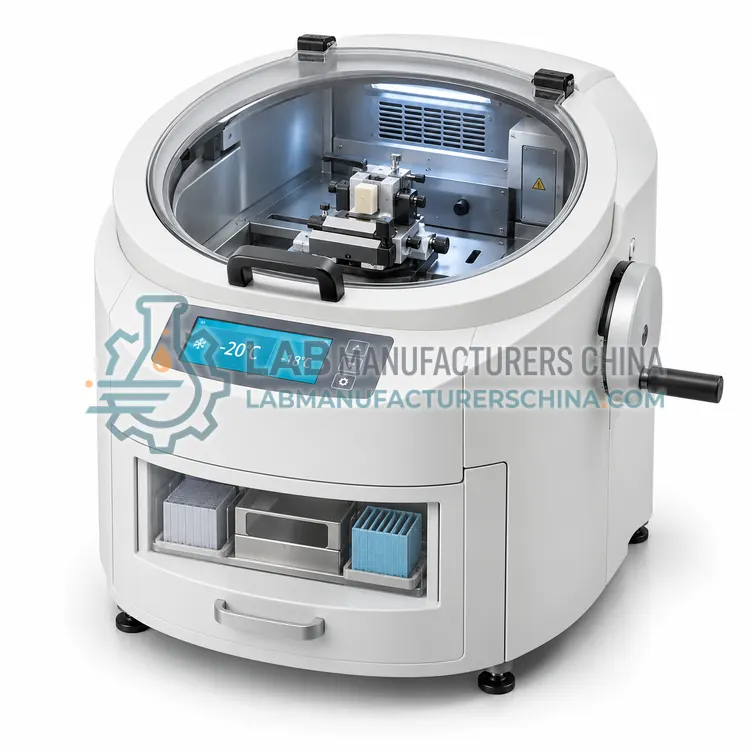
Clinical Cryostat

临床恒冷箱切片机

  • CRY-0001
  • Cryostats
  • CE (to be confirmed)
  • IEC 61010-1 compliance (to be confirmed)
  • IEC 61326-1 EMC (to be confirmed)
Chamber temperature range:
–5 to –30 °C
Typical working temperature:
–20 °C
Cool-down time:
about 1–2 h
Section thickness range:
1–60 µm
Thickness increment:
1 µm
Specimen stage:
Independent, to –40 °C

A clinical cryostat is optimised for rapid intraoperative frozen sections, with fast cool-down, a stable chamber near –20 °C and simple controls. It is the standard instrument in hospital surgical pathology suites.

Request a quote
View details

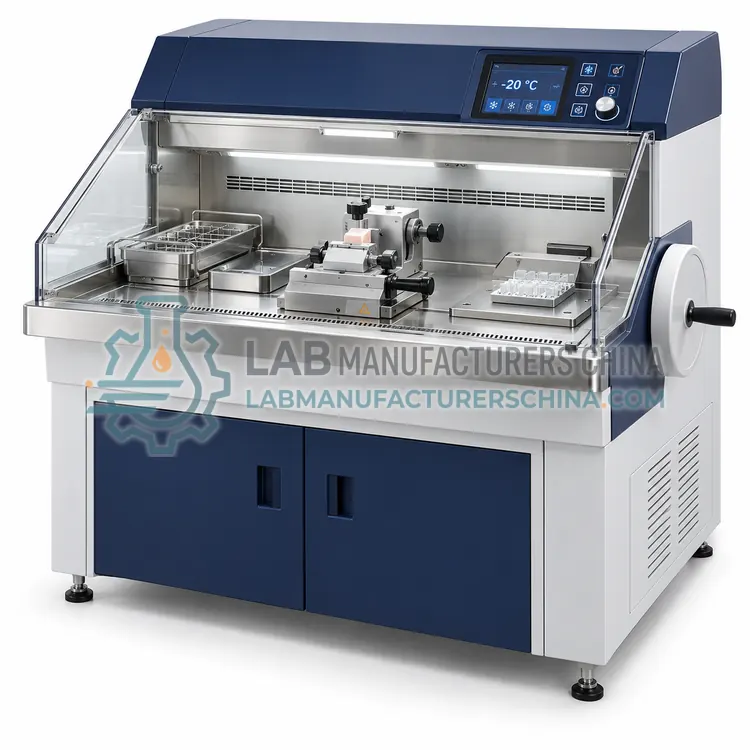
Research Cryostat

科研恒冷箱切片机

  • CRY-0002
  • Cryostats
  • CE (to be confirmed)
  • IEC 61010-1 compliance (to be confirmed)
  • IEC 61326-1 EMC (to be confirmed)
Chamber temperature range:
–5 to –35 °C
Specimen temperature range:
–10 to –40 °C
Section thickness range:
0.5–100 µm
Thickness increment:
0.5 µm below 5 µm
Cutting speed:
0–400 mm/s, adjustable
Cool-down time:
about 2–3 h

A research cryostat offers a wide temperature range for both chamber and specimen, programmable defrost and flexible cutting parameters. It suits laboratories developing new protocols, immunofluorescence and molecular work on fresh-frozen tissue.

Request a quote
View details

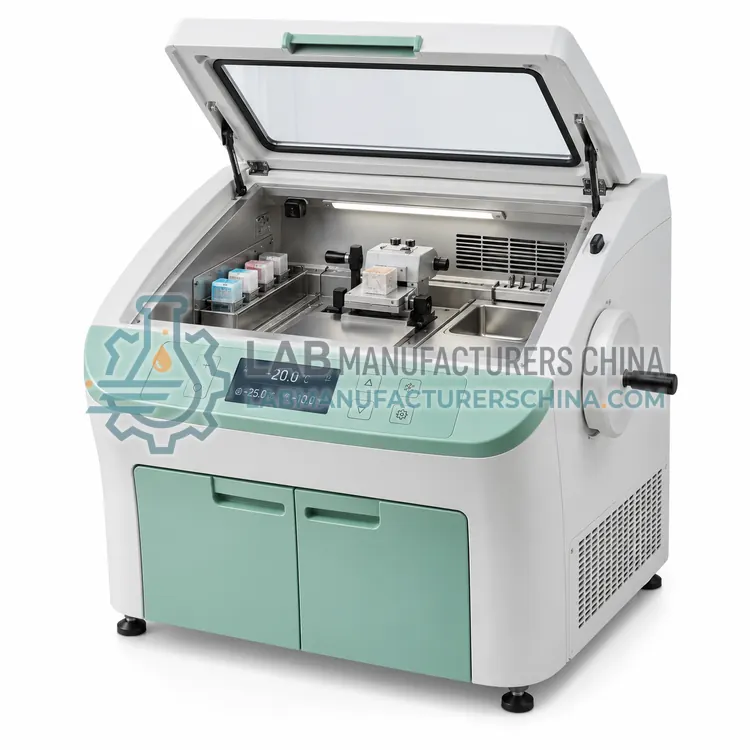
Motorized Cryostat

电动恒冷箱切片机

  • CRY-0003
  • Cryostats
  • CE (to be confirmed)
  • IEC 61010-1 compliance (to be confirmed)
  • IEC 61326-1 EMC (to be confirmed)
Chamber temperature range:
–5 to –35 °C
Specimen temperature range:
–10 to –40 °C
Section thickness range:
1–100 µm
Cutting speed:
50–400 mm/s, adjustable
Thickness increment:
1 µm
Retraction:
0–200 µm, programmable

A motorized cryostat drives the cutting stroke with a motor inside the cold chamber, reducing operator strain and improving section consistency. It is chosen for high-volume frozen section services and repetitive research sectioning.

Request a quote
View details

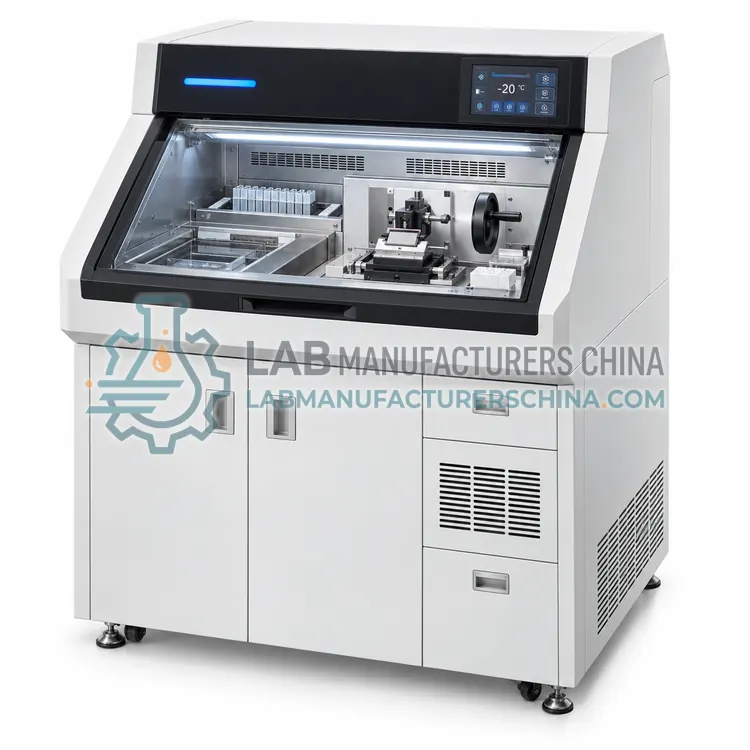
Cryostat with Independent Specimen Cooling

独立标本冷却恒冷箱切片机

  • CRY-0004
  • Cryostats
  • CE (to be confirmed)
  • IEC 61010-1 compliance (to be confirmed)
  • IEC 61326-1 EMC (to be confirmed)
Chamber temperature range:
–5 to –35 °C
Specimen temperature range:
–10 to –40 °C
Stage control accuracy:
±1 °C
Section thickness range:
1–100 µm
Stage freeze-down time:
about 15–30 min
Blade type:
Disposable low-profile

A cryostat with independent specimen cooling controls the specimen stage temperature separately from the chamber. It is chosen when tissue types with different optimal cutting temperatures must be handled in one session.

Request a quote
View details

Cryostat with Vacuum Section Transfer System

带真空转移系统的恒冷箱切片机

  • CRY-0005
  • Cryostats
  • CE (to be confirmed)
  • IEC 61010-1 compliance (to be confirmed)
  • IEC 61326-1 EMC (to be confirmed)
Chamber temperature range:
–5 to –35 °C
Specimen temperature range:
–10 to –40 °C
Section thickness range:
1–100 µm
Transfer nozzle:
Adjustable vacuum
Slide holder:
Indexed, multi-position
Blade type:
Disposable low-profile or high-profile

A cryostat with a vacuum section transfer system lifts and deposits cut sections onto slides or grids without manual handling. It is chosen for large, fragile or serial sections where manual transfer causes loss or folds.

Request a quote
View details

Compare Cryostats models

ModelChamber temperature rangeCool-down timeSection thickness rangeThickness incrementBlade type
Clinical CryostatCRY-0001–5 to –30 °Cabout 1–2 h1–60 µm1 µmDisposable low-profile
Research CryostatCRY-0002–5 to –35 °Cabout 2–3 h0.5–100 µm0.5 µm below 5 µmDisposable low-profile or high-profile
Motorized CryostatCRY-0003–5 to –35 °Cabout 2 h1–100 µm1 µm—
Cryostat with Independent Specimen CoolingCRY-0004–5 to –35 °Cabout 2 h1–100 µm—Disposable low-profile
Cryostat with Vacuum Section Transfer SystemCRY-0005–5 to –35 °Cabout 2 h1–100 µm—Disposable low-profile or high-profile

Indicative values for this product class. Final specifications are confirmed on the quotation and in the calibration documents supplied with the instrument.

How do Cryostats work?

A cryostat places a microtome inside an insulated chamber cooled by one or two refrigeration compressors. The chamber and often a separate specimen stage are brought to between –15 and –35 °C, freezing the tissue to a suitable hardness. The operator attaches the frozen block to a chuck with embedding medium and sections it with a disposable blade held at a fixed angle, producing sections typically 1 to 100 µm thick. Sections adhere to room-temperature slides and are fixed immediately in alcohol or acetone. Anti-roll plates and brush techniques guide ribbons free of curling. Because the whole cutting zone stays cold, tissue morphology is preserved without paraffin infiltration, and total turnaround from specimen to stained slide can be under 20 minutes.

Which Cryostats variants are available?

  • Clinical Cryostat — A clinical cryostat is optimised for rapid intraoperative frozen sections, with fast cool-down, a stable chamber near –20 °C and simple controls.
  • Research Cryostat — A research cryostat offers a wide temperature range for both chamber and specimen, programmable defrost and flexible cutting parameters.
  • Motorized Cryostat — A motorized cryostat drives the cutting stroke with a motor inside the cold chamber, reducing operator strain and improving section consistency.
  • Cryostat with Independent Specimen Cooling — A cryostat with independent specimen cooling controls the specimen stage temperature separately from the chamber.
  • Cryostat with Vacuum Section Transfer System — A cryostat with a vacuum section transfer system lifts and deposits cut sections onto slides or grids without manual handling.

How do I choose the right variant?

Choose a cryostat by the work it must support. Clinical laboratories doing intraoperative frozen sections need fast cool-down, a stable chamber near –20 °C, reliable blade cooling and often UV sterilisation for contamination control. Research and immunohistochemistry laboratories value accurate independent specimen cooling, wide temperature range to –35 °С and a motorised or ergonomic cutting system for repetitive work. Confirm chamber and specimen temperature ranges, cool-down time, defrost cycle, section thickness range, blade type and whether the cutting area can be cleaned with the chamber at working temperature. Also check section transfer options and the footprint of the lab bench.

Where are Cryostats used?

Cryostats are specified in intraoperative frozen sections, immunofluorescence on fresh tissue, enzyme histochemistry, research tissue banking and mohs micrographic surgery.

Which standards and certifications apply?

Work with Cryostats is commonly governed by IEC 61010-1, IEC 61010-2-101, IEC 61326-1, ISO 15189 and ISO 13485. Instrument certifications such as CE marking are confirmed per configuration and never assumed.

What are the key considerations before purchase?

Place the cryostat in a room kept below 25 °C with good ventilation, because condensers reject significant heat. Allow several hours for initial cool-down, then verify chamber and specimen temperatures against a calibrated thermometer. Defrost and clean the chamber on schedule; residual cryo-embedding medium degrades section quality. Use anti-roll plates and change blades often. Monitor for frost build-up, compressor noise and door seal condition, and service annually. Maintain temperature logs, cleaning records and staff training, since these documents support accreditation of frozen section services.

Frequently asked questions about Cryostats

A cryostat cuts frozen tissue sections inside a refrigerated chamber. It is used for rapid intraoperative diagnosis, for immunohistochemistry and enzyme work that need unfixed tissue, and for research when native morphology or antigen preservation is important.

Need help specifying Cryostats?

Request a quote