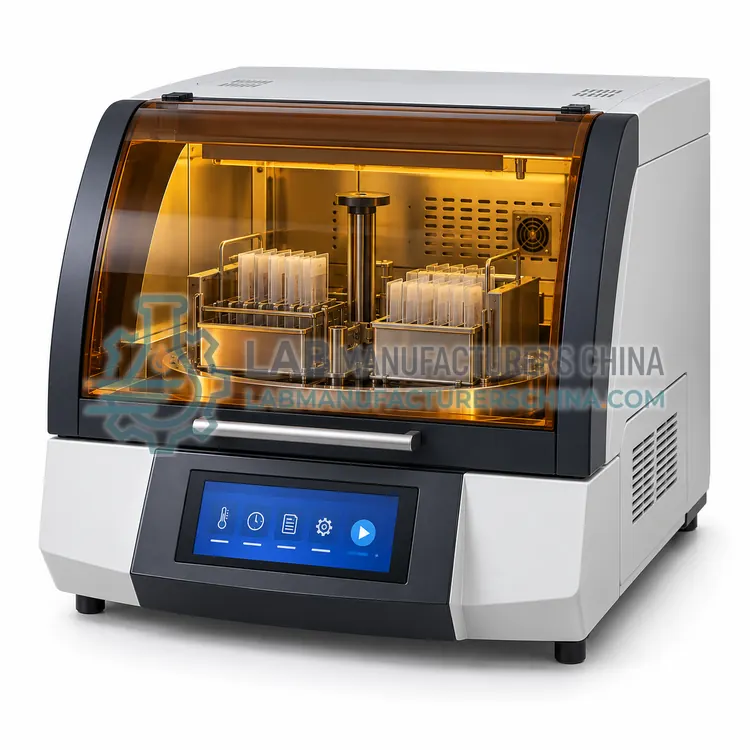
How do Slide Dryers work?
After a section is floated onto a slide, a film of water remains between the tissue and the glass, and the section is held only by weak adhesion. A slide dryer supplies controlled heat, usually 55 to 65 °C, which evaporates the water, melts the paraffin in and around the tissue and lets the softened protein-rich section conform to the glass surface. Cooling then leaves the section firmly bonded, so it resists the alcohol, xylene and aqueous reagents used in staining. A hotplate dries slides from below by conduction, while an oven dries them by circulating warm air and can hold larger batches. Some protocols use 37 °C overnight or 60 °C for 20 to 60 minutes, and immunohistochemistry baking often follows the same principle with longer or warmer cycles.
Which Slide Dryers variants are available?
- Slide Drying Hotplate — A slide drying hotplate is a flat heated surface on which racks of freshly mounted slides are warmed to melt paraffin and bond sections.
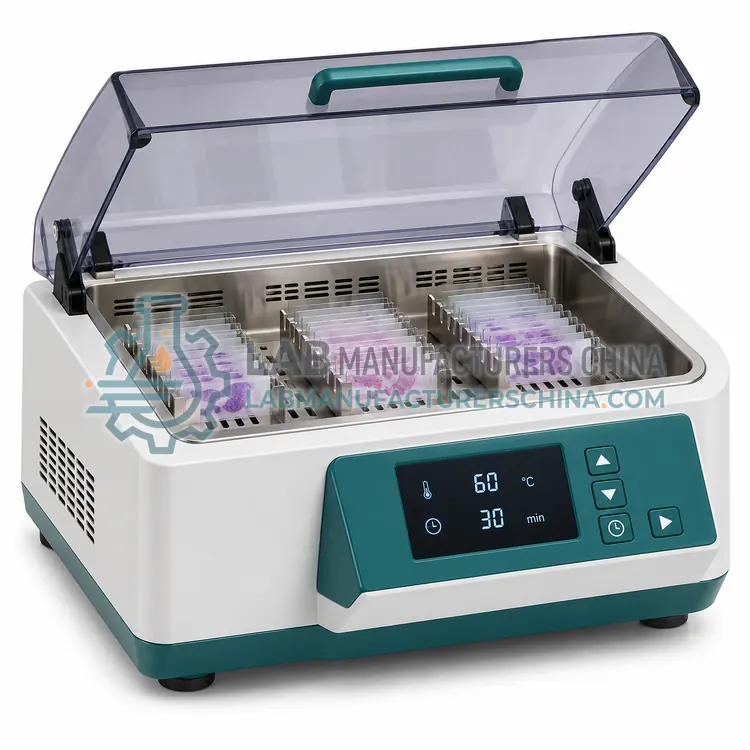
- Digital Slide Warmer — A digital slide warmer is a hotplate with a microprocessor controller and calibrated display, holding the surface within about ±1 °C of the setpoint.
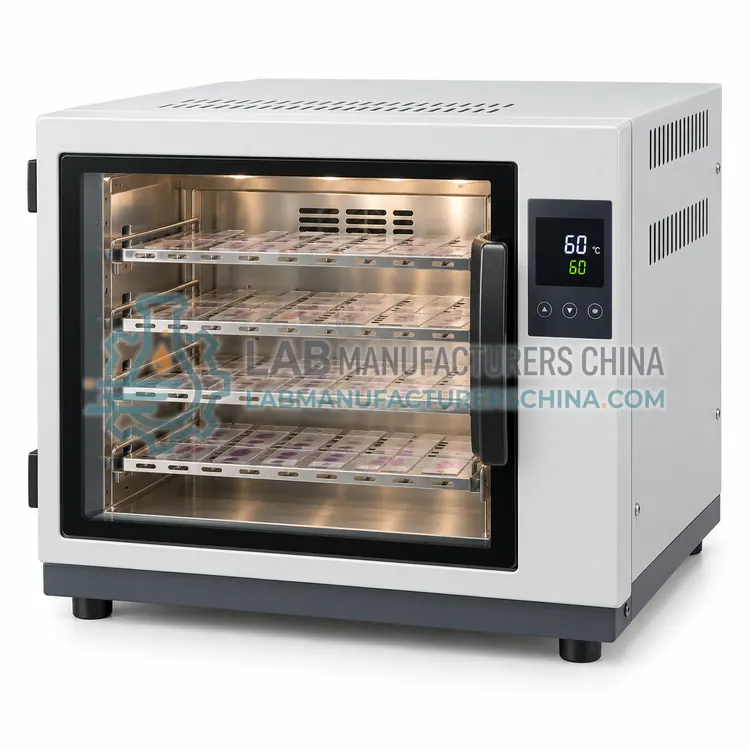
- Slide Drying Oven — A slide drying oven is a convection chamber that holds racks of slides at a controlled temperature for bulk drying.
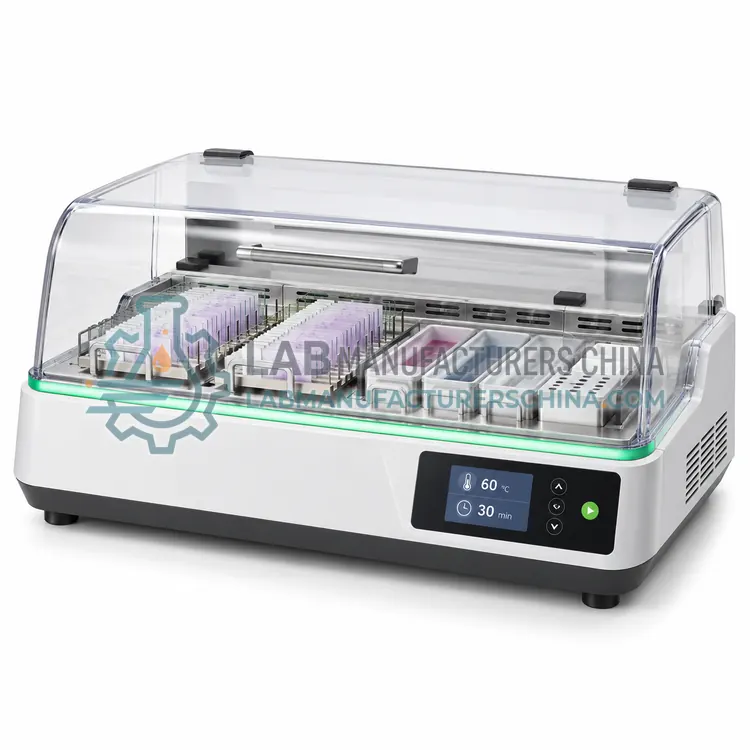
- Combined Slide Warmer and Drying Platform — A combined slide warmer and drying platform provides two heated surfaces with different temperatures in one unit, so slides can be dried and then baked without moving instruments.
- Programmable Slide Drying Oven — A programmable slide drying oven runs multi-step temperature profiles with timed ramps and soak periods.
How do I choose the right variant?
Choose a slide dryer by throughput, temperature control and workflow. A hotplate is simplest and fastest for individual racks and lets the technician watch adhesion as the water evaporates. A digital warmer adds a calibrated readout and stable setpoint, which suits laboratories that must document conditions. An oven handles large batches for hours or overnight but takes longer to load and unload. A programmable oven supports stepped profiles for immunohistochemistry. Compare plate or chamber size, slide capacity, temperature range and uniformity, warm-up time and whether a timer or alarm is available. Confirm the surface is easy to clean and resistant to wax and xylene, and that the required slide format fits the racks or slots.
Where are Slide Dryers used?
Slide Dryers are specified in histology slide drying, immunohistochemistry preparation, routine pathology, research histology and cytology slide preparation.
Which standards and certifications apply?
Work with Slide Dryers is commonly governed by IEC 61010-1, IEC 61010-2-010, IEC 61326-1 and ISO 15189. Instrument certifications such as CE marking are confirmed per configuration and never assumed.
What are the key considerations before purchase?
Set the temperature according to the validated staining protocol, because excessive heat causes tissue shrinkage, antigen loss and cracking, particularly for lymph node and fatty tissue. Verify the plate or chamber temperature with a calibrated thermometer at defined intervals, since a drifting thermostat is a common cause of sections washing off during staining. Keep the surface clean of wax, and never use the dryer as a general hotplate for chemicals or samples. Allow slides to cool before loading onto an automatic stainer, and record temperature settings, checks and maintenance in the laboratory log.