Lab Manufacturers China

Tissue Float Baths

展片水浴

TFB · Histology Equipment · 5 models

By Lab Manufacturers China Technical TeamLast reviewed Standards: IEC 61010-1, IEC 61010-2-010, IEC 61326-1

Standards referenced

  • IEC 61010-1
  • IEC 61010-2-010
  • IEC 61326-1
  • ISO 15189

What are Tissue Float Baths?

Tissue float baths are shallow heated water baths used to stretch paraffin section ribbons flat before they are picked up on glass slides. Histology and pathology laboratories rely on them to remove wrinkles and folds so sections stain evenly and can be read under the microscope.

5 models of Tissue Float Baths

The 5 models below are current configurations; specifications are confirmed on quotation.

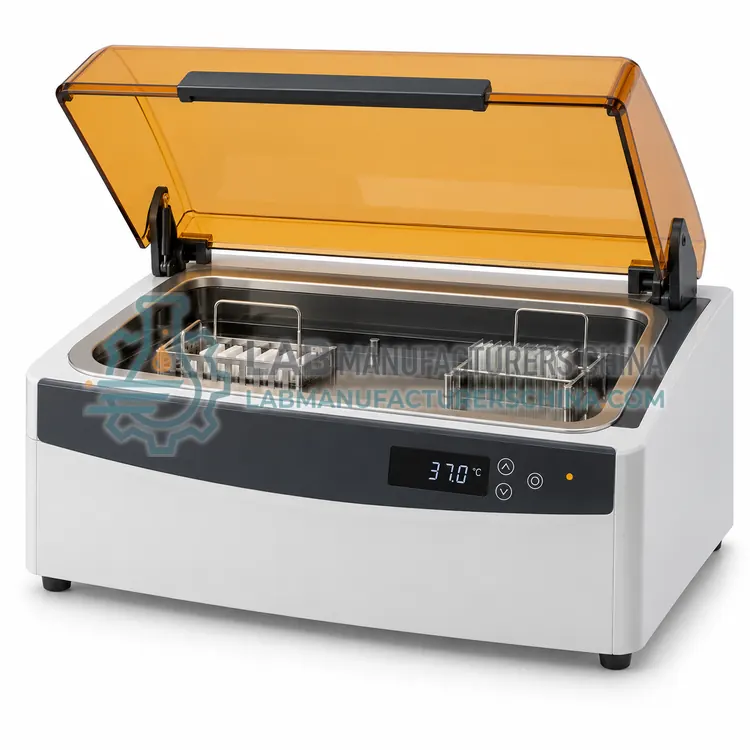
Digital Tissue Flotation Bath

数显展片水浴

  • TFB-0001
  • Tissue Float Baths
  • CE (to be confirmed)
  • IEC 61010-1 compliance (to be confirmed)
  • ISO 13485 manufacturing (to be confirmed)
Temperature range:
ambient to 90 °C
Temperature stability:
±1 °C
Display resolution:
0.1 °C
Bath volume:
about 1.5–3 L
Working area:
about 200 × 150 mm
Water depth:
40–70 mm

A digital tissue flotation bath uses a microprocessor controller and display to hold water within about ±1 °C of the setpoint. It is preferred where temperature must be documented and reproduced across operators.

Request a quote
View details

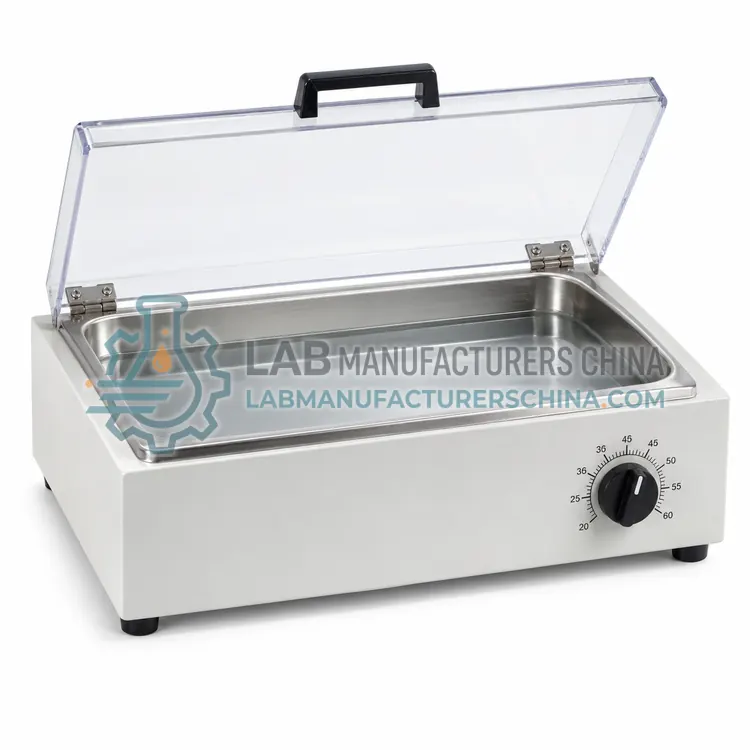
Analog Tissue Flotation Bath

模拟展片水浴

  • TFB-0002
  • Tissue Float Baths
  • CE (to be confirmed)
  • IEC 61010-1 compliance (to be confirmed)
  • ISO 13485 manufacturing (to be confirmed)
Temperature range:
ambient to 80 °C
Temperature stability:
about ±3 °C
Control:
Rotary dial thermostat
Bath volume:
about 1–2 L
Working area:
about 180 × 140 mm
Water depth:
40–60 mm

An analog tissue flotation bath uses a dial thermostat without a digital display, offering simple, low-cost section flattening. It suits small laboratories, teaching facilities and budgets where precise temperature logging is not required.

Request a quote
View details

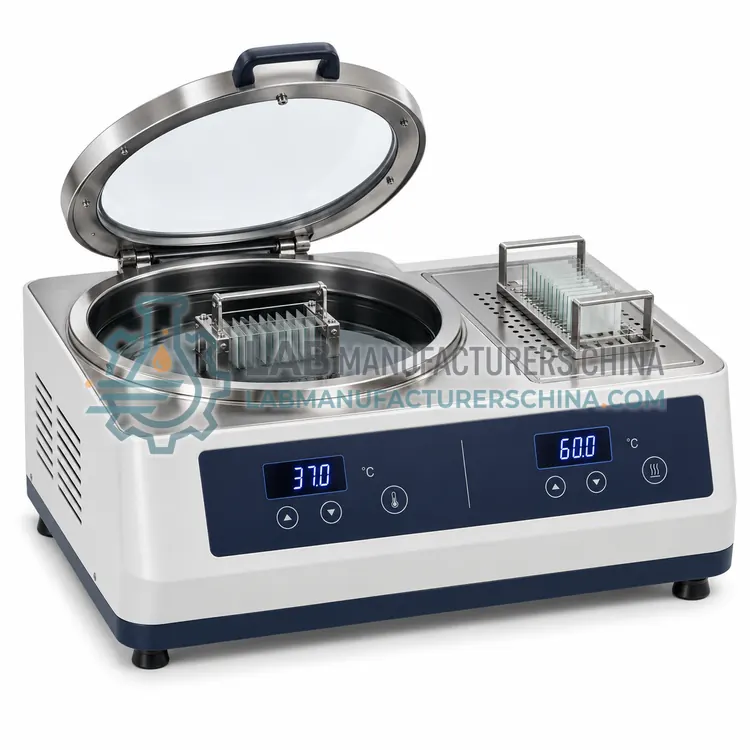
Combined Tissue Flotation Bath and Slide Warmer

展片水浴与烤片台一体机

  • TFB-0003
  • Tissue Float Baths
  • CE (to be confirmed)
  • IEC 61010-1 compliance (to be confirmed)
  • ISO 13485 manufacturing (to be confirmed)
Bath temperature range:
ambient to 90 °C
Plate temperature range:
ambient to 75 °C
Bath stability:
±1 °C
Plate stability:
±2 °C
Bath working area:
about 200 × 120 mm
Plate working area:
about 250 × 200 mm

A combined tissue flotation bath and slide warmer places a heated water bath next to a warm plate in one footprint. It suits laboratories with limited bench space that float and dry sections in the same workflow step.

Request a quote
View details

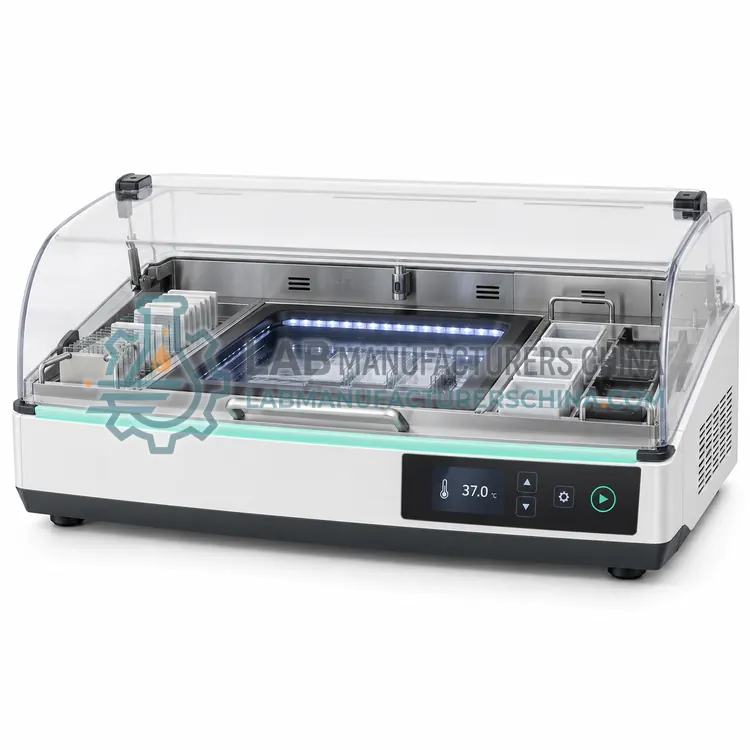
Tissue Flotation Bath with LED Illumination

带 LED 照明的展片水浴

  • TFB-0004
  • Tissue Float Baths
  • CE (to be confirmed)
  • IEC 61010-1 compliance (to be confirmed)
  • ISO 13485 manufacturing (to be confirmed)
Temperature range:
ambient to 90 °C
Temperature stability:
±1 °C
Illumination:
LED, low heat, adjustable
Bath volume:
about 1.5–3 L
Working area:
about 200 × 150 mm
Water depth:
40–70 mm

A tissue flotation bath with LED illumination lights the water surface from below or behind so thin or pale ribbons are easier to see. It helps technicians handle delicate sections and low-contrast tissue safely.

Request a quote
View details

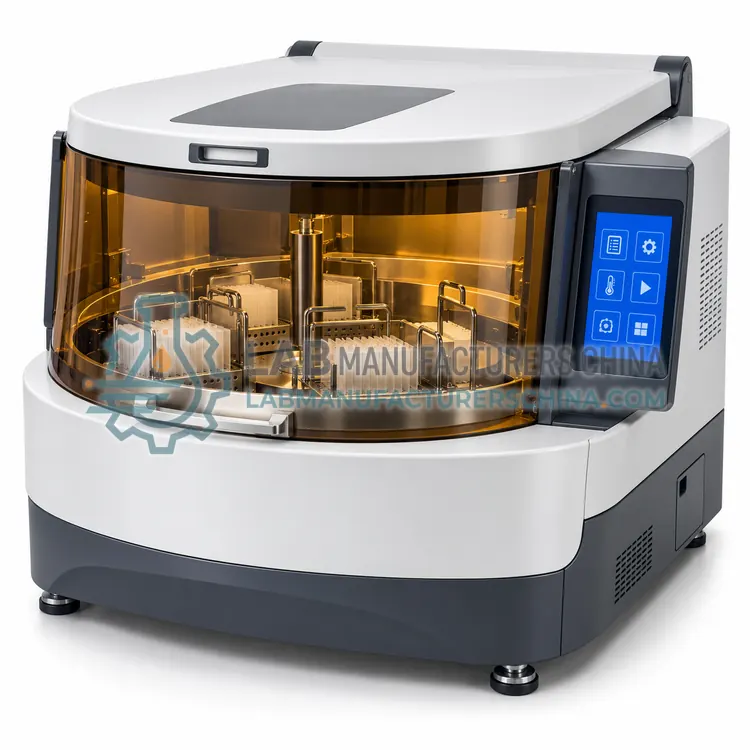
Large-Volume Tissue Flotation Bath

大容量展片水浴

  • TFB-0005
  • Tissue Float Baths
  • CE (to be confirmed)
  • IEC 61010-1 compliance (to be confirmed)
  • ISO 13485 manufacturing (to be confirmed)
Temperature range:
ambient to 90 °C
Temperature stability:
±1 °C
Bath volume:
about 6–10 L
Working area:
about 300 × 200 mm or larger
Water depth:
80–100 mm
Warm-up time:
about 40–60 min

A large-volume tissue flotation bath provides a wide, deep basin for long ribbons and large sections. It is chosen by laboratories that section whole-mount specimens, large resection blocks or long serial ribbons.

Request a quote
View details

Compare Tissue Float Baths models

ModelTemperature rangeTemperature stabilityBath volumeWorking areaWater depth
Digital Tissue Flotation BathTFB-0001ambient to 90 °C±1 °Cabout 1.5–3 Labout 200 × 150 mm40–70 mm
Analog Tissue Flotation BathTFB-0002ambient to 80 °Cabout ±3 °Cabout 1–2 Labout 180 × 140 mm40–60 mm
Combined Tissue Flotation Bath and Slide WarmerTFB-0003—————
Tissue Flotation Bath with LED IlluminationTFB-0004ambient to 90 °C±1 °Cabout 1.5–3 Labout 200 × 150 mm40–70 mm
Large-Volume Tissue Flotation BathTFB-0005ambient to 90 °C±1 °Cabout 6–10 Labout 300 × 200 mm or larger80–100 mm

Indicative values for this product class. Final specifications are confirmed on the quotation and in the calibration documents supplied with the instrument.

How do Tissue Float Baths work?

A tissue float bath is a thermostatted shallow basin, usually stainless steel or coated aluminium, heated by a resistive element under the base. Water is held at about 40 to 45 °C, comfortably above the paraffin melting point of roughly 56 to 58 °C when the water is only warming and below it when the surface is cooler, so the wax softens just enough to relax. The technician releases the section ribbon onto the water surface, where surface tension and gentle heat stretch it flat. Sections are then floated onto a clean, often albumin or polylysine-coated slide and drained. Because paraffin expands slightly on melting, the ribbon appears to relax, and gentle agitation with a brush helps remove trapped folds without tearing. Temperature stability and water purity determine whether sections spread evenly.

Which Tissue Float Baths variants are available?

  • Digital Tissue Flotation Bath — A digital tissue flotation bath uses a microprocessor controller and display to hold water within about ±1 °C of the setpoint.
  • Analog Tissue Flotation Bath — An analog tissue flotation bath uses a dial thermostat without a digital display, offering simple, low-cost section flattening.
  • Combined Tissue Flotation Bath and Slide Warmer — A combined tissue flotation bath and slide warmer places a heated water bath next to a warm plate in one footprint.
  • Tissue Flotation Bath with LED Illumination — A tissue flotation bath with LED illumination lights the water surface from below or behind so thin or pale ribbons are easier to see.
  • Large-Volume Tissue Flotation Bath — A large-volume tissue flotation bath provides a wide, deep basin for long ribbons and large sections.

How do I choose the right variant?

Select a float bath mainly by control type, size and how it will be used alongside other histology equipment. Digital models hold temperature within about ±1 °C and suit laboratories that must document controlled conditions; analog dial models cost less but need more attention. Choose a bath deep enough to submerge the ribbon fully, typically 40 to 70 mm of water, and wide enough for your largest sections. Illuminated black or blue backgrounds make pale ribbons easier to see. If space is limited or the workflow is high-throughput, a combination unit that pairs a float bath with a slide warmer saves bench space. Check warm-up time, wetted-material corrosion resistance, drain design and whether a lid is needed to limit evaporation.

Where are Tissue Float Baths used?

Tissue Float Baths are specified in paraffin section flattening, routine histology, research histology, veterinary pathology and teaching laboratories.

Which standards and certifications apply?

Work with Tissue Float Baths is commonly governed by IEC 61010-1, IEC 61010-2-010, IEC 61326-1 and ISO 15189. Instrument certifications such as CE marking are confirmed per configuration and never assumed.

What are the key considerations before purchase?

Fill with purified or demineralised water, because mineral deposits stain sections and leave residue on slides. Change water daily or more often if many sections are floated, and clean the basin to prevent biofilm and carryover. Verify the setpoint with a calibrated thermometer at defined intervals, since a drift of a few degrees can wrinkle or melt sections. Place the bath on a stable bench away from draughts and keep the cable away from water. Record temperature checks, water changes and cleaning, and do not use the bath for other laboratory purposes where cross-contamination could occur.

Frequently asked questions about Tissue Float Baths

Most laboratories set the bath between 40 and 45 °C, which softens the paraffin enough to relax the ribbon without melting it away. If sections spread poorly the water is too cool, while sections that disintegrate or show holes usually mean the water is too warm.

Need help specifying Tissue Float Baths?

Request a quote