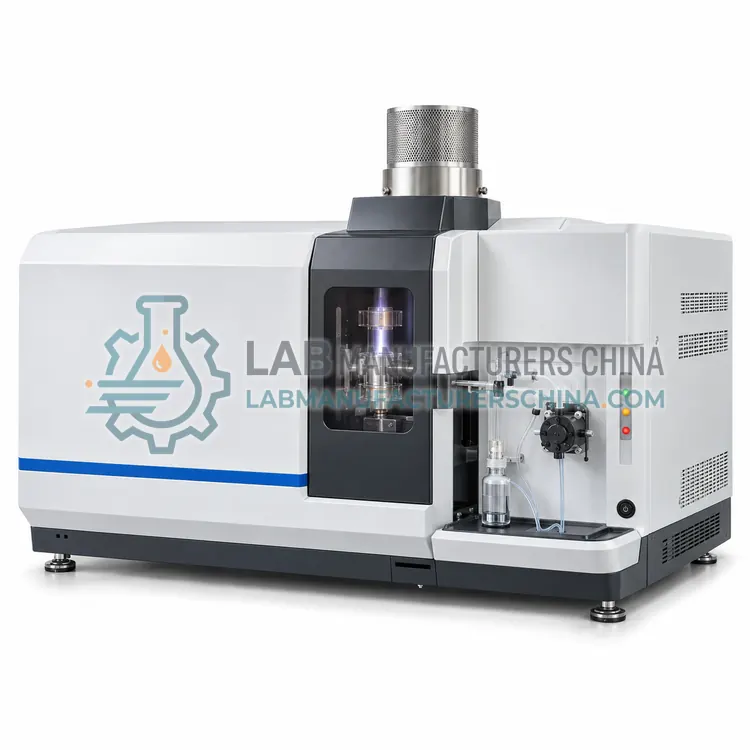
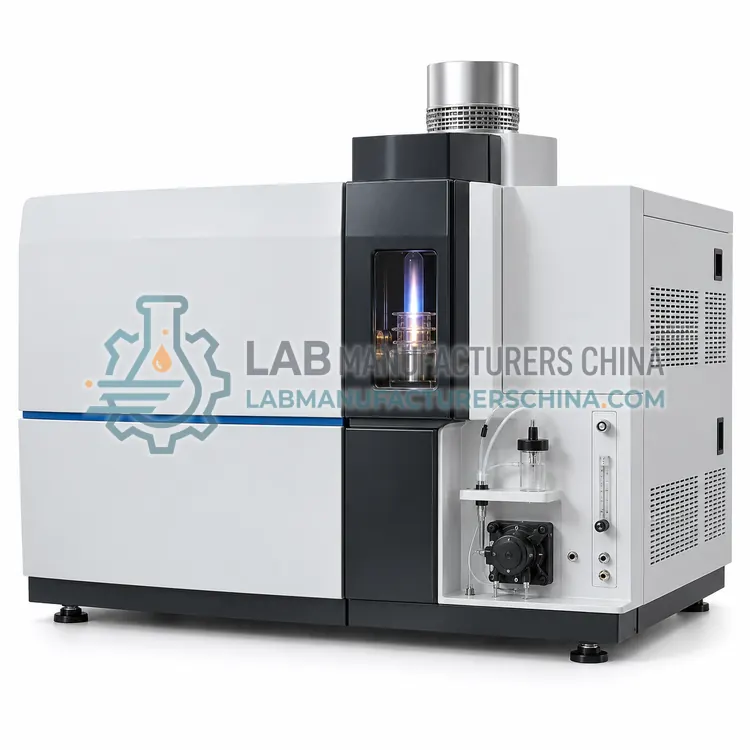
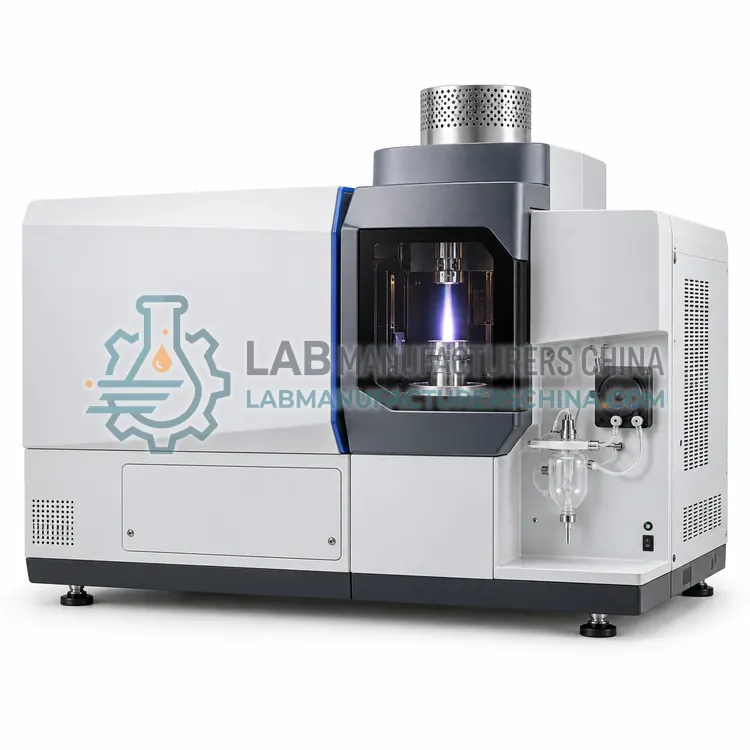
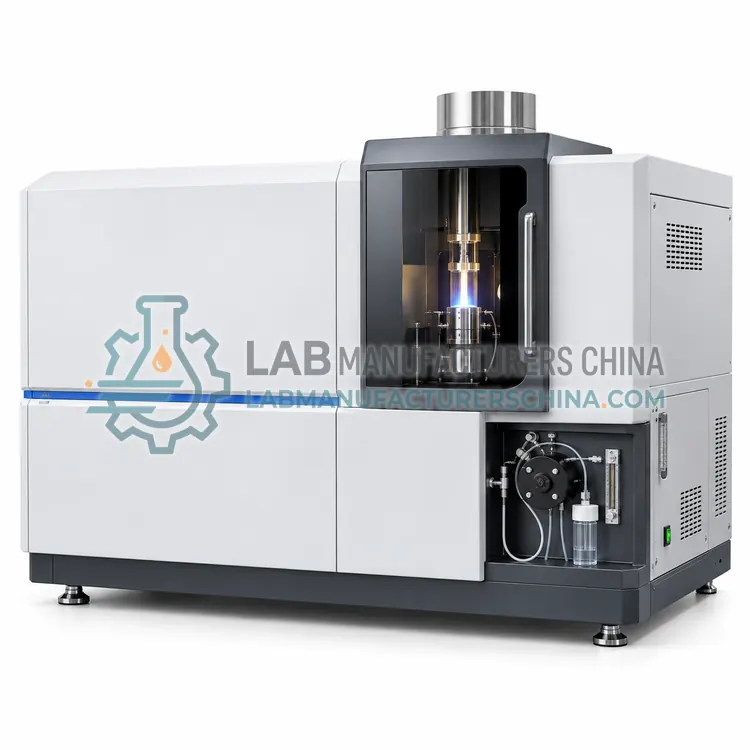
How do ICP-OES work?
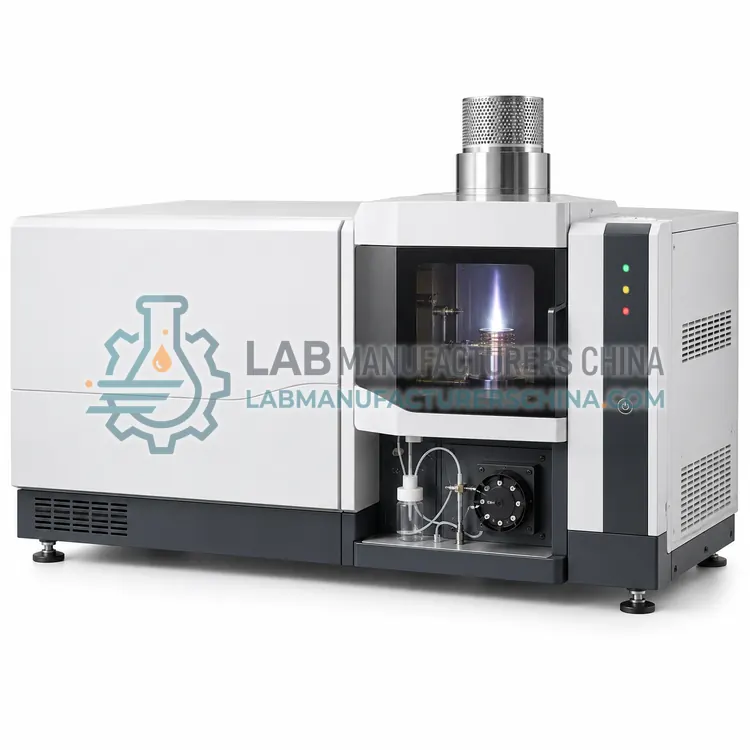
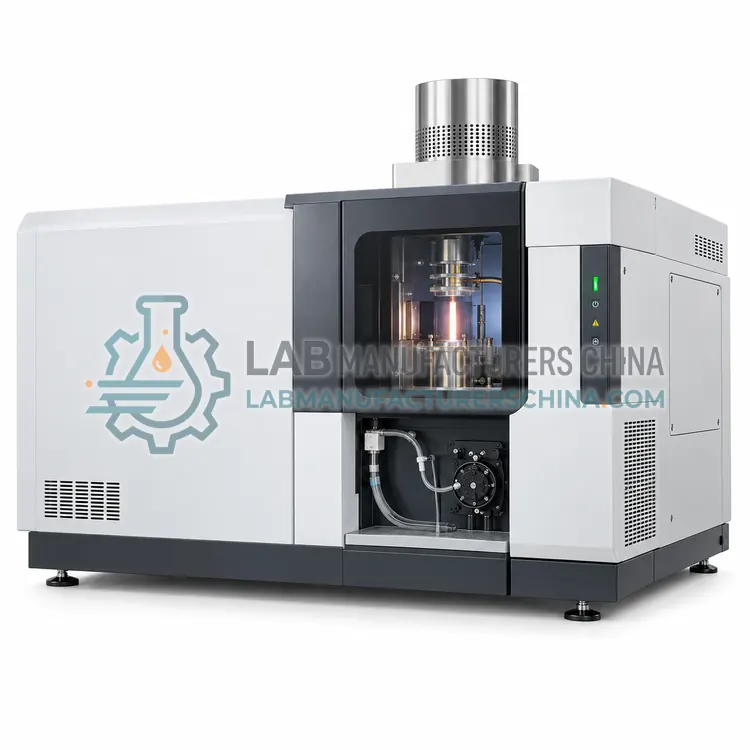
A radio-frequency generator drives a load coil around a quartz torch, sustaining an argon plasma at 6000 to 10000 K. The sample aerosol enters the plasma and is desolvated, vaporized, atomized and excited. Excited atoms and ions relax and emit light at wavelengths characteristic of each element. The emitted light is dispersed by an echelle grating or a CCD-based polychromator, and multiple lines are measured simultaneously. In radial viewing the plasma is observed from the side, which tolerates high dissolved solids and reduces self-absorption; in axial viewing the plasma is observed end-on, which lengthens the optical path and lowers detection limits. Dual-view instruments switch per element. Internal standards, background correction and interference algorithms correct for drift and overlapping lines. The wide dynamic range lets major, minor and trace elements be measured in one run.
Which ICP-OES variants are available?
- Radial-View ICP-OES Spectrometer — A radial-view ICP-OES spectrometer observes the plasma from the side, which tolerates high dissolved solids and major elements.
- Axial-View ICP-OES Spectrometer — An axial-view ICP-OES spectrometer observes the plasma end-on to extend the optical path.
- Dual-View ICP-OES Spectrometer — A dual-view ICP-OES spectrometer switches automatically between axial and radial observation for each element.
- Simultaneous Multi-Element ICP-OES Spectrometer — A simultaneous ICP-OES spectrometer records many wavelengths at once with a large array detector and no scanning.
- Sequential Scanning ICP-OES Spectrometer — A sequential scanning ICP-OES spectrometer measures one wavelength at a time with a movable grating.
- High-Resolution Echelle ICP-OES Spectrometer — A high-resolution echelle ICP-OES spectrometer resolves closely spaced emission lines in composite, line-rich spectra.
How do I choose the right variant?
Select an ICP-OES spectrometer by viewing configuration, detector type, resolution and automation. Radial viewing is the best choice for high-matrix samples and major elements, axial viewing for the lowest detection limits in clean samples, and dual view for laboratories that handle both. Simultaneous CCD instruments measure many elements and lines quickly, while sequential scanning instruments are flexible and lower in cost but slower. High-resolution echelle optics help when many emission lines overlap, as in rare-earth or iron-rich samples. Confirm the wavelength range covers the elements and lines you need, including far-ultraviolet lines for halogens. Check argon and power consumption, sample introduction options, autosampler capacity and software features such as interference correction and audit trails.
Where are ICP-OES used?
ICP-OES are specified in multi-element water and wastewater analysis, pharmaceutical elemental impurity screening, food, feed and agricultural element analysis and metals, alloys and geological sample assays.
Which standards and certifications apply?
Work with ICP-OES is commonly governed by USP <730> Plasma Spectrochemistry, USP <233> Elemental Impurities — Procedures, ICH Q3D Elemental Impurities, ISO 11885 Water quality — ICP-OES determination of elements, US EPA Method 200.7, ASTM D5185 and ISO/IEC 17025. Instrument certifications such as CE marking are confirmed per configuration and never assumed.
What are the key considerations before purchase?
ICP-OES requires high-purity argon, substantial power, exhaust ventilation and a temperature-controlled room. Torch, injector and nebulizer condition strongly affect performance, so inspection and replacement schedules are important. High dissolved solids cause salt build-up on the torch and injector, blocking the plasma and changing sensitivity, so dilution and matrix matching are used. Sample preparation by acid digestion must avoid contamination. Daily checks include wavelength calibration, torch alignment, plasma stability and a check standard. Monitor the argon supply and the chiller, and record torch and nebulizer usage. Data integrity requires calibration verification, QC samples and defined acceptance criteria.