How do ICP-MS work?
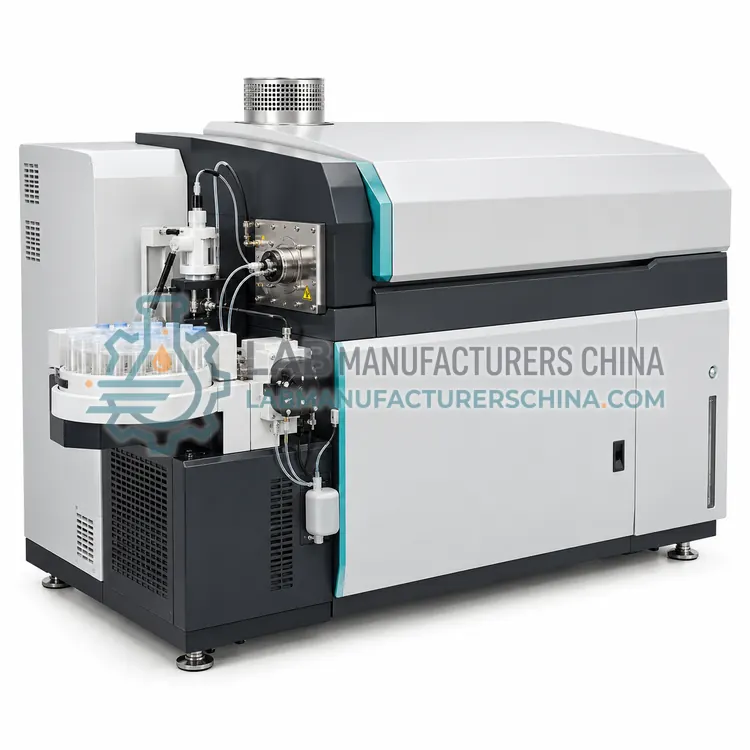
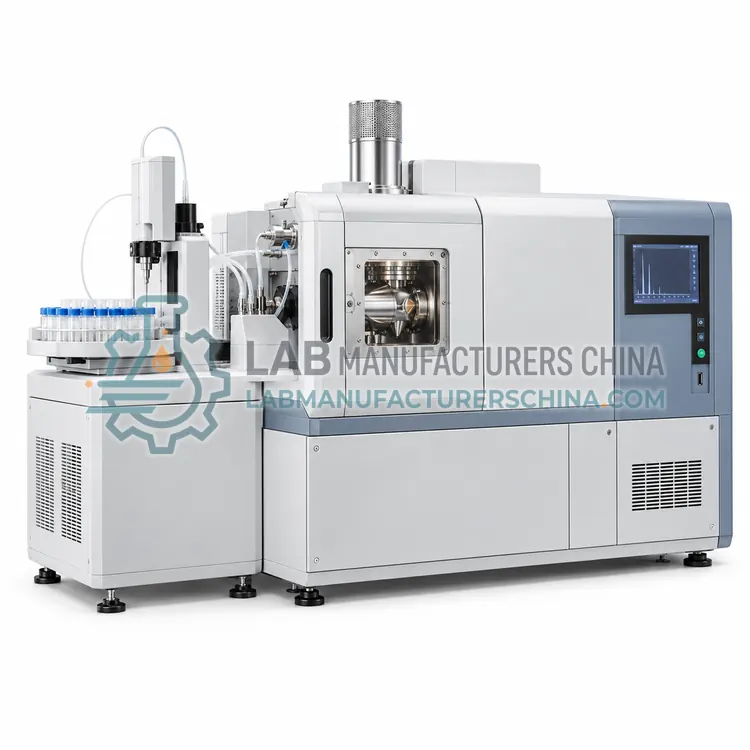
A plasma torch at atmospheric pressure ionizes the sample aerosol. Ions are extracted through a two-stage interface of sampling and skimmer cones into a vacuum region, then focused by ion optics and separated by a mass analyzer according to mass-to-charge ratio. The most common analyzer is a quadrupole, which scans rapidly across selected masses; sector field instruments provide high resolution or high sensitivity, multicollector instruments measure isotope ratios precisely, and time-of-flight analyzers record all masses simultaneously. Collision and reaction cells filled with helium, hydrogen or reactive gases suppress polyatomic interferences such as argon chloride on arsenic or argon argon on selenium. Detection uses electron multipliers with pulse counting and analog modes to cover a wide dynamic range. Calibration uses external standards, internal standards and, when needed, isotope dilution, with careful control of blanks and matrix effects.
Which ICP-MS variants are available?
- Quadrupole ICP-MS Spectrometer — A quadrupole ICP-MS spectrometer scans selected masses after plasma ionization and usually includes a collision cell.
- Triple-Quadrupole ICP-MS Spectrometer — A triple-quadrupole ICP-MS adds a reaction cell between two mass filters for interference-free measurement.
- High-Resolution Sector Field ICP-MS Spectrometer — A high-resolution sector field ICP-MS uses a magnetic and electric sector to resolve spectral overlaps.
- Multi-Collector ICP-MS Spectrometer — A multi-collector ICP-MS measures several isotopes simultaneously with dedicated detectors for high-precision ratios.
- ICP Time-of-Flight Mass Spectrometer — An ICP time-of-flight mass spectrometer records the full mass spectrum from each plasma ion pulse simultaneously.
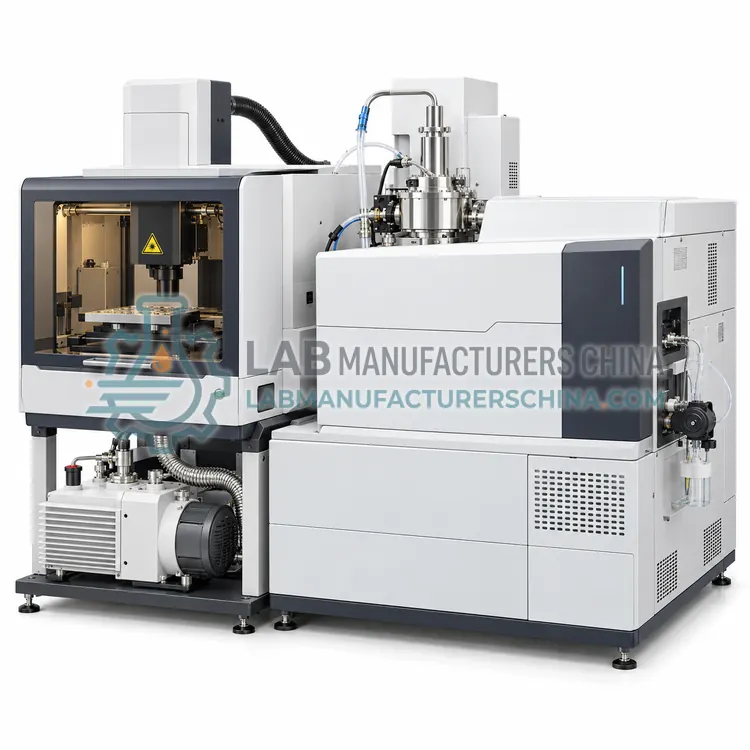
- Laser Ablation ICP-MS System — A laser ablation ICP-MS system couples a focused laser to the plasma to sample solid materials directly.
How do I choose the right variant?
Select an ICP-MS configuration by the required detection limits, the number of elements, the isotope information needed and the matrix. A single quadrupole with a collision cell handles most routine ultratrace work economically. A triple quadrupole adds reaction-cell mass selection for difficult interferences and low-level sulfur, phosphorus and halogens. High-resolution sector field instruments resolve spectral overlaps and offer higher sensitivity for semiconductor and geochemical work. Multicollector instruments provide the precision needed for isotope ratio studies. Time-of-flight instruments capture the full mass spectrum for rapid multi-element or single-particle analysis. Laser ablation adds direct solid sampling. Match the sample introduction, collision gas and software to your matrices and regulatory requirements.
Where are ICP-MS used?
ICP-MS are specified in elemental impurity testing per ICH Q3D and USP <233>, ultratrace metals in water and environmental samples, clinical and forensic trace element analysis and isotope ratio studies in geochemistry and nutrition.
Which standards and certifications apply?
Work with ICP-MS is commonly governed by ICH Q3D Elemental Impurities, USP <233> Elemental Impurities — Procedures, USP <730> Plasma Spectrochemistry, ISO 17294-2 Water quality — ICP-MS determination of elements, US EPA Method 200.8, US EPA Method 6020B and ISO/IEC 17025. Instrument certifications such as CE marking are confirmed per configuration and never assumed.
What are the key considerations before purchase?
ICP-MS requires high-purity argon, a vacuum system with roughing and turbomolecular pumps, stable power and a temperature-controlled room. Interface cones, torch and sample introduction parts wear and must be inspected and replaced, and cone condition affects sensitivity and stability. Contamination is critical at nanogram per litre levels, so clean sample preparation areas, ultrapure acids and dedicated labware are essential. Matrix effects require internal standards, dilution or matrix matching, and high dissolved solids need dilution or a robust interface. Daily tuning, mass calibration and performance checks with a multi-element standard maintain data quality. Add automation and audit trails for regulated environments and monitor collision gas and pump oil.