
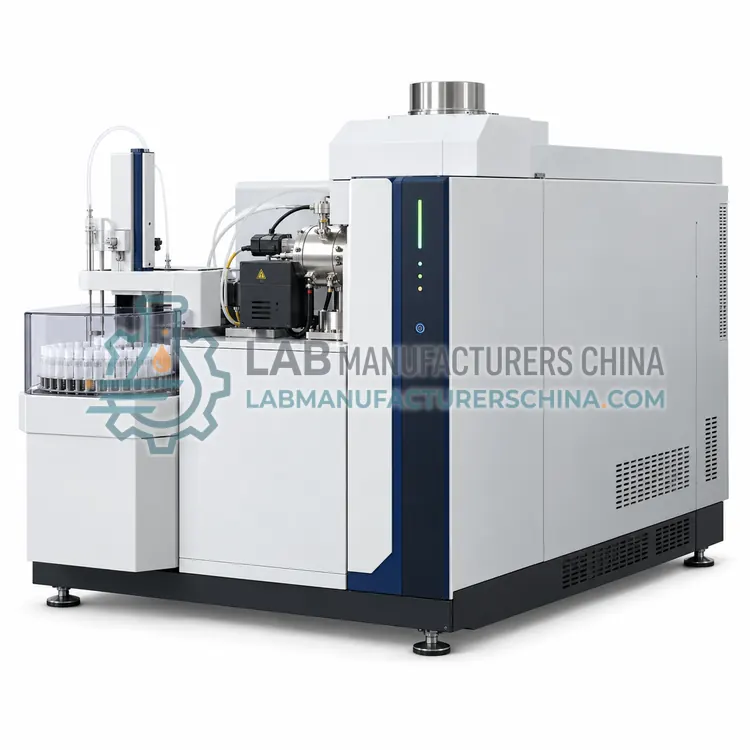
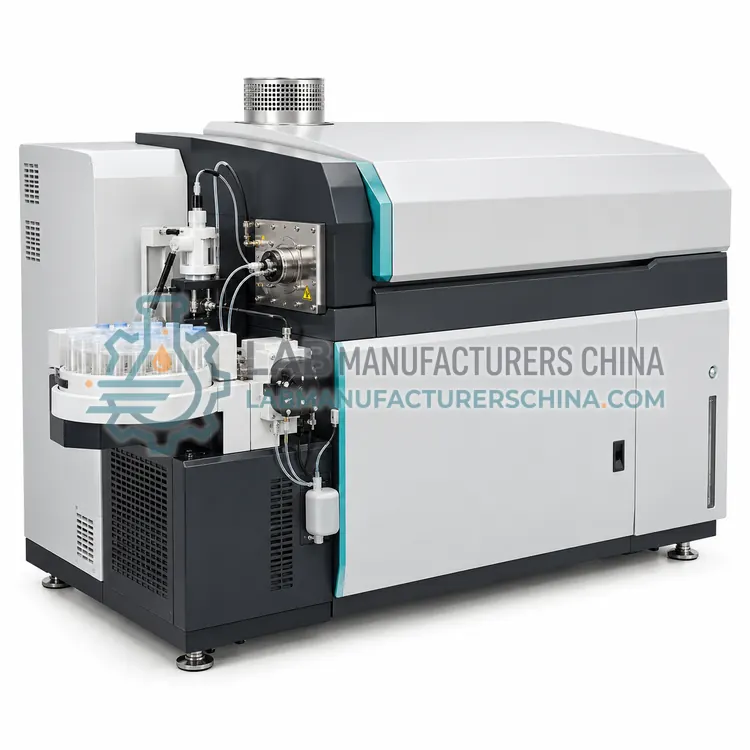
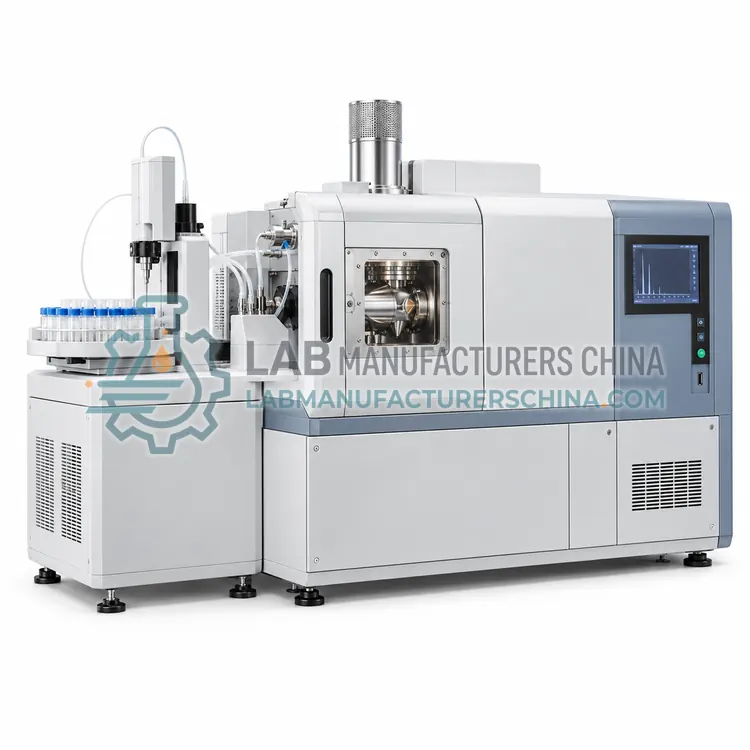
High-Resolution Sector Field ICP-MS Spectrometer
高分辨率扇形磁场电感耦合等离子体质谱仪
- SKU ICM-0003
- ICP-MS
- CE (to be confirmed)
- ISO 9001 manufacturing (to be confirmed)
- 21 CFR Part 11 software compliance (to be confirmed)
Price on request — FOB / CIF quoted per order
Prices depend on configuration, quantity and destination port.
Key specifications
| Mass range | 2–260 amu |
|---|---|
| Resolution | 300 to 10000 and higher |
| Detection limit | 0.1–10 ng/L typical |
| Analyzer | magnetic sector with electric sector |
| Dynamic range | up to 9 orders |
| Plasma power | 1500–1600 W |
Request a quote Download brochure · to be provided
By Lab Manufacturers China Technical TeamLast reviewed Standards: ICH Q3D Elemental Impurities, USP <233> Elemental Impurities — Procedures, USP <730> Plasma Spectrochemistry
What is the High-Resolution Sector Field ICP-MS Spectrometer?
A high-resolution sector field ICP-MS uses a magnetic and electric sector to resolve spectral overlaps. It is chosen for semiconductor, geochemical and nuclear work that needs high sensitivity and separation of interferences.
What is the High-Resolution Sector Field ICP-MS Spectrometer?
A high-resolution sector field ICP-MS uses a magnetic and electric sector to resolve spectral overlaps. It is chosen for semiconductor, geochemical and nuclear work that needs high sensitivity and separation of interferences.
Overview
This instrument uses a double-focusing geometry with a magnetic sector and an electrostatic analyzer to separate ions by mass with resolution that can exceed 10000, compared with about 300 for a quadrupole. At high resolution, interferences such as argon chloride on arsenic or iron hydride on potassium are physically separated from the analyte mass, so correction equations are unnecessary. The design also gives high transmission and low background, producing detection limits in the sub-nanogram per litre range for many elements. Variable resolution settings let the operator trade sensitivity for separation as needed. Sector field instruments are used for semiconductor ultratrace analysis, geochemistry, nuclear materials and reference material certification, where both sensitivity and freedom from spectral overlap are essential.
How does it work?
A plasma torch at atmospheric pressure ionizes the sample aerosol. Ions are extracted through a two-stage interface of sampling and skimmer cones into a vacuum region, then focused by ion optics and separated by a mass analyzer according to mass-to-charge ratio. The most common analyzer is a quadrupole, which scans rapidly across selected masses; sector field instruments provide high resolution or high sensitivity, multicollector instruments measure isotope ratios precisely, and time-of-flight analyzers record all masses simultaneously. Collision and reaction cells filled with helium, hydrogen or reactive gases suppress polyatomic interferences such as argon chloride on arsenic or argon argon on selenium. Detection uses electron multipliers with pulse counting and analog modes to cover a wide dynamic range. Calibration uses external standards, internal standards and, when needed, isotope dilution, with careful control of blanks and matrix effects.
What are the key features?
- Double-focusing magnetic and electric sectors
- Resolution variable up to 10000 and beyond
- Physical separation of spectral interferences
- Sub-nanogram per litre detection limits
- No correction equations needed at high resolution
- High transmission with low background
What are the technical specifications?
A typical high-resolution sector field icp-ms spectrometer configuration offers mass range of 2–260 amu, resolution of 300 to 10000 and higher, detection limit of 0.1–10 ng/L typical, analyzer of magnetic sector with electric sector, dynamic range of up to 9 orders and plasma power of 1500–1600 W. Values are indicative of the product class; the exact figures for each configuration are confirmed on the quotation and the calibration documents supplied with the instrument.
Which applications is it used for?
The High-Resolution Sector Field ICP-MS Spectrometer is used in semiconductor and electronic grade materials, geochemical and isotope studies, nuclear and radiological materials and certified reference material characterization. Across the wider ICP-MS class, laboratories also deploy it for elemental impurity testing per ICH Q3D and USP <233>, ultratrace metals in water and environmental samples and clinical and forensic trace element analysis.
Which standards and certifications apply?
Relevant standards and methods include ICH Q3D Elemental Impurities, USP <233> Elemental Impurities — Procedures, USP <730> Plasma Spectrochemistry, ISO 17294-2 Water quality — ICP-MS determination of elements, US EPA Method 200.8, US EPA Method 6020B and ISO/IEC 17025. Certification candidates for this model are CE, ISO 9001 manufacturing and 21 CFR Part 11 software compliance; each is to be confirmed for the specific configuration before shipment, and certificates are supplied only where they have been issued.
ICP-MS requires high-purity argon, a vacuum system with roughing and turbomolecular pumps, stable power and a temperature-controlled room. Interface cones, torch and sample introduction parts wear and must be inspected and replaced, and cone condition affects sensitivity and stability. Contamination is critical at nanogram per litre levels, so clean sample preparation areas, ultrapure acids and dedicated labware are essential. Matrix effects require internal standards, dilution or matrix matching, and high dissolved solids need dilution or a robust interface. Daily tuning, mass calibration and performance checks with a multi-element standard maintain data quality. Add automation and audit trails for regulated environments and monitor collision gas and pump oil.
How do I select the right High-Resolution Sector Field ICP-MS Spectrometer?
Select a sector field instrument when spectral interferences cannot be resolved chemically, when detection limits below a nanogram per litre are needed, or when the application is semiconductor, nuclear or geochemical ultratrace analysis. Specify the elements, resolution requirements and matrices, and budget for the larger vacuum system and service needs.
How does it compare with other ICP-MS variants?
Select an ICP-MS configuration by the required detection limits, the number of elements, the isotope information needed and the matrix. A single quadrupole with a collision cell handles most routine ultratrace work economically. A triple quadrupole adds reaction-cell mass selection for difficult interferences and low-level sulfur, phosphorus and halogens. High-resolution sector field instruments resolve spectral overlaps and offer higher sensitivity for semiconductor and geochemical work. Multicollector instruments provide the precision needed for isotope ratio studies. Time-of-flight instruments capture the full mass spectrum for rapid multi-element or single-particle analysis. Laser ablation adds direct solid sampling. Match the sample introduction, collision gas and software to your matrices and regulatory requirements.
Full specifications
| Mass range | 2–260 amu |
|---|---|
| Resolution | 300 to 10000 and higher |
| Detection limit | 0.1–10 ng/L typical |
| Analyzer | magnetic sector with electric sector |
| Dynamic range | up to 9 orders |
| Plasma power | 1500–1600 W |
| Argon consumption | 15–20 L/min |
| Resolution modes | low, medium, high |
| Sample introduction | nebulizer and spray chamber |
| Interface | Ethernet |
Indicative values for this product class. Final specifications are confirmed on the quotation and in the calibration documents supplied with the instrument.
Applications
- Semiconductor and electronic grade materials
- Geochemical and isotope studies
- Nuclear and radiological materials
- Certified reference material characterization
Key features
- Double-focusing magnetic and electric sectors
- Resolution variable up to 10000 and beyond
- Physical separation of spectral interferences
- Sub-nanogram per litre detection limits
- No correction equations needed at high resolution
- High transmission with low background
Frequently asked questions about High-Resolution Sector Field ICP-MS Spectrometer
Resolution is defined as mass divided by the mass difference at which two peaks are separated, so a resolution of 10000 distinguishes ions differing by 1 part in 10000 of their mass. Higher resolution separates interfering species from the analyte, at some cost to transmission and sensitivity.
A quadrupole with a collision cell handles the great majority of routine ultratrace methods at much lower cost. Sector field instruments are justified when interferences are severe, when detection limits must be extremely low, or when high resolution removes the need for correction equations in regulated methods.
High resolution lowers transmission, so counting times may need to be longer to reach the same precision, reducing throughput somewhat. Methods often use low resolution for clean elements and switch to high resolution only for the affected isotopes, balancing speed and accuracy.
Plasma and matrix species form polyatomic ions that share mass with analyte ions, such as argon chloride with arsenic and argon argon with selenium. A cell filled with helium or a reactive gas removes or shifts these interferences before mass analysis, lowering background and improving accuracy at ultratrace levels.
Elements such as mercury, iodine and boron stick to tubing and cones, causing carry-over. Rinsing with dilute acid, adding complexing agents such as gold or ammonia to rinse solutions, and running blanks between samples control memory effects. Method development defines rinse time and composition for each problematic element.
Common internal standards are lithium-6, scandium, germanium, rhodium, indium, terbium, holmium and bismuth, chosen to bracket the mass range of the analytes. They correct for signal drift, matrix suppression and nebulization differences. The standard must not be present in the sample and should have similar ionization behavior.
Related models
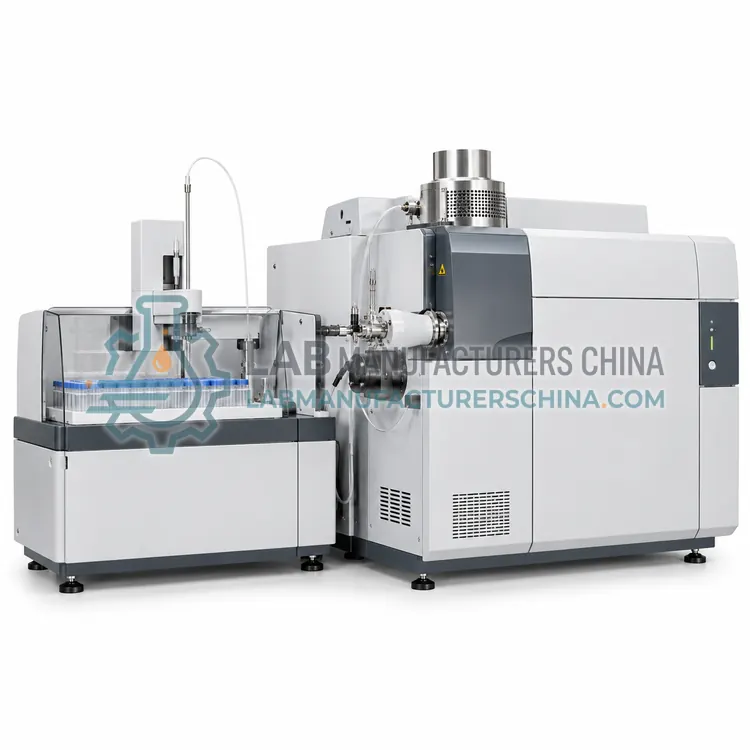
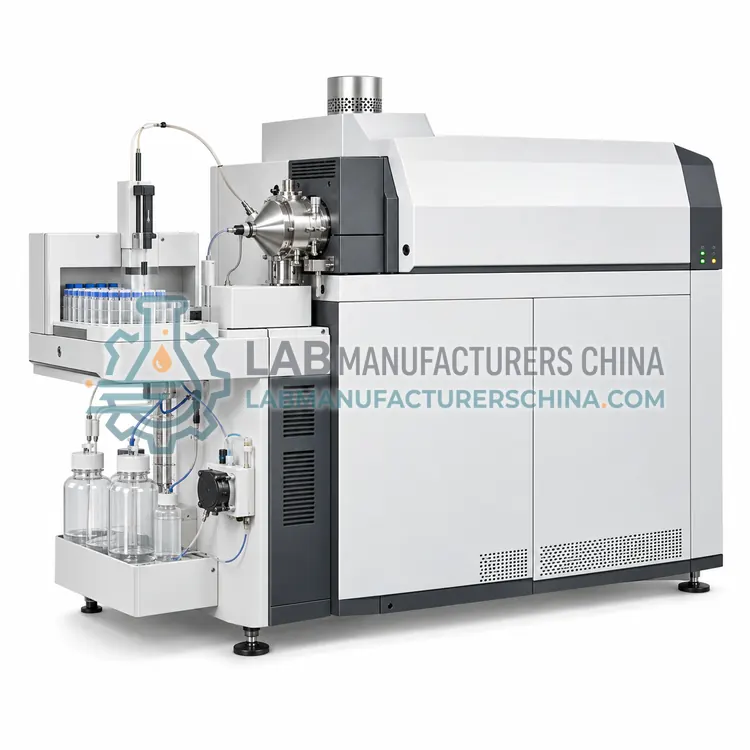
ICP Atomic Emission Spectrometer for Organic Solvent Analysis
有机溶剂分析用电感耦合等离子体原子发射光谱仪
- CE (to be confirmed)
- +2