
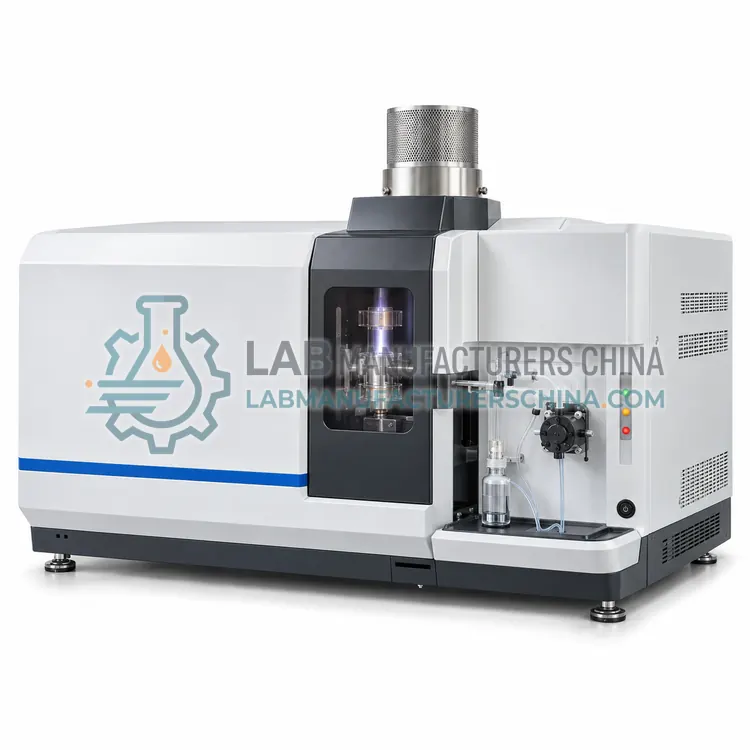
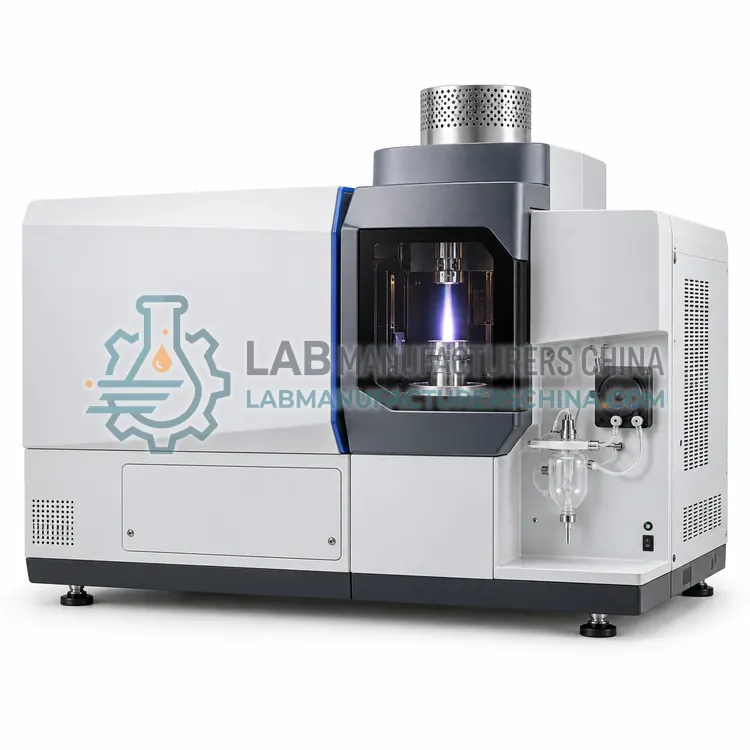
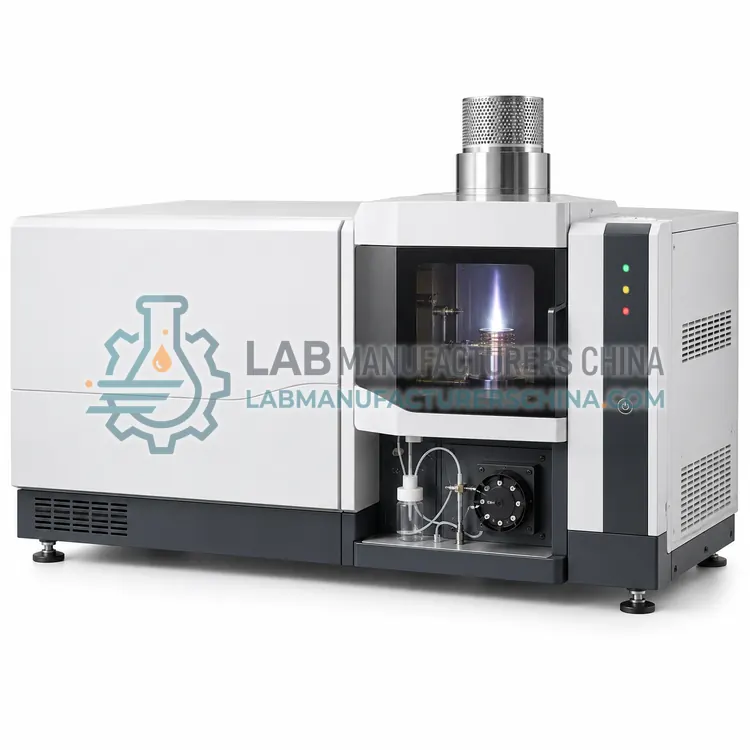
Dual-View ICP-OES Spectrometer
双向观测电感耦合等离子体发射光谱仪
- SKU ICO-0003
- ICP-OES
- CE (to be confirmed)
- ISO 9001 manufacturing (to be confirmed)
- 21 CFR Part 11 software compliance (to be confirmed)
Price on request — FOB / CIF quoted per order
Prices depend on configuration, quantity and destination port.
Key specifications
| Wavelength range | 165–900 nm |
|---|---|
| Viewing modes | axial and radial, switchable |
| Detection limit (axial) | 0.1–2 µg/L typical |
| Detection limit (radial) | 1–20 µg/L typical |
| Dissolved solids tolerance | up to 20% (radial) |
| Detector | CCD or CMOS array |
Request a quote Download brochure · to be provided
By Lab Manufacturers China Technical TeamLast reviewed Standards: USP <730> Plasma Spectrochemistry, USP <233> Elemental Impurities — Procedures, ICH Q3D Elemental Impurities
What is the Dual-View ICP-OES Spectrometer?
A dual-view ICP-OES spectrometer switches automatically between axial and radial observation for each element. It is chosen when a single instrument must handle both ultratrace and high-matrix major-element measurements in one busy laboratory.
What is the Dual-View ICP-OES Spectrometer?
A dual-view ICP-OES spectrometer switches automatically between axial and radial observation for each element. It is chosen when a single instrument must handle both ultratrace and high-matrix major-element measurements in one busy laboratory.
Overview
This configuration uses a movable mirror or optical switching to direct light from either the side or the end of the plasma to the spectrometer. The software selects the view per element and line, so a single method can measure ultratrace elements in axial mode and major or high-matrix elements in radial mode. This combines the low detection limits of axial viewing with the robustness of radial viewing without manual changes. The instrument is more complex and costly, and view alignment must be maintained, but the flexibility suits laboratories with varied sample types. Typical spectral coverage is 165 to 900 nanometres with a CCD detector, simultaneous multi-element measurement and internal standard correction. It is widely used in environmental, food, pharmaceutical and industrial laboratories that must cover the full concentration range.
How does it work?
A radio-frequency generator drives a load coil around a quartz torch, sustaining an argon plasma at 6000 to 10000 K. The sample aerosol enters the plasma and is desolvated, vaporized, atomized and excited. Excited atoms and ions relax and emit light at wavelengths characteristic of each element. The emitted light is dispersed by an echelle grating or a CCD-based polychromator, and multiple lines are measured simultaneously. In radial viewing the plasma is observed from the side, which tolerates high dissolved solids and reduces self-absorption; in axial viewing the plasma is observed end-on, which lengthens the optical path and lowers detection limits. Dual-view instruments switch per element. Internal standards, background correction and interference algorithms correct for drift and overlapping lines. The wide dynamic range lets major, minor and trace elements be measured in one run.
What are the key features?
- Optical switching between axial and radial view
- Per-element and per-line view selection in software
- Combines low detection limits with matrix tolerance
- No manual changeover during a run
- CCD detection and simultaneous multi-element analysis
- Suited to laboratories with varied sample types
What are the technical specifications?
A typical dual-view icp-oes spectrometer configuration offers wavelength range of 165–900 nm, viewing modes of axial and radial, switchable, detection limit (axial) of 0.1–2 µg/L typical, detection limit (radial) of 1–20 µg/L typical, dissolved solids tolerance of up to 20% (radial) and detector of CCD or CMOS array. Values are indicative of the product class; the exact figures for each configuration are confirmed on the quotation and the calibration documents supplied with the instrument.
Which applications is it used for?
The Dual-View ICP-OES Spectrometer is used in environmental samples across wide concentration ranges, pharmaceutical impurity and assay testing, food and agricultural multi-element analysis and industrial and metallurgical quality control. Across the wider ICP-OES class, laboratories also deploy it for multi-element water and wastewater analysis, pharmaceutical elemental impurity screening and food, feed and agricultural element analysis.
Which standards and certifications apply?
Relevant standards and methods include USP <730> Plasma Spectrochemistry, USP <233> Elemental Impurities — Procedures, ICH Q3D Elemental Impurities, ISO 11885 Water quality — ICP-OES determination of elements, US EPA Method 200.7, ASTM D5185 and ISO/IEC 17025. Certification candidates for this model are CE, ISO 9001 manufacturing and 21 CFR Part 11 software compliance; each is to be confirmed for the specific configuration before shipment, and certificates are supplied only where they have been issued.
ICP-OES requires high-purity argon, substantial power, exhaust ventilation and a temperature-controlled room. Torch, injector and nebulizer condition strongly affect performance, so inspection and replacement schedules are important. High dissolved solids cause salt build-up on the torch and injector, blocking the plasma and changing sensitivity, so dilution and matrix matching are used. Sample preparation by acid digestion must avoid contamination. Daily checks include wavelength calibration, torch alignment, plasma stability and a check standard. Monitor the argon supply and the chiller, and record torch and nebulizer usage. Data integrity requires calibration verification, QC samples and defined acceptance criteria.
How do I select the right Dual-View ICP-OES Spectrometer?
Select a dual-view instrument when one platform must measure both ultratrace and major or high-matrix elements, or when sample matrices vary widely within a laboratory. Specify the element list, concentration ranges and matrices, and confirm that view switching is reliable and validated for the lines you use.
How does it compare with other ICP-OES variants?
Select an ICP-OES spectrometer by viewing configuration, detector type, resolution and automation. Radial viewing is the best choice for high-matrix samples and major elements, axial viewing for the lowest detection limits in clean samples, and dual view for laboratories that handle both. Simultaneous CCD instruments measure many elements and lines quickly, while sequential scanning instruments are flexible and lower in cost but slower. High-resolution echelle optics help when many emission lines overlap, as in rare-earth or iron-rich samples. Confirm the wavelength range covers the elements and lines you need, including far-ultraviolet lines for halogens. Check argon and power consumption, sample introduction options, autosampler capacity and software features such as interference correction and audit trails.
Full specifications
| Wavelength range | 165–900 nm |
|---|---|
| Viewing modes | axial and radial, switchable |
| Detection limit (axial) | 0.1–2 µg/L typical |
| Detection limit (radial) | 1–20 µg/L typical |
| Dissolved solids tolerance | up to 20% (radial) |
| Detector | CCD or CMOS array |
| View selection | automatic per element |
| RF power | 1000–1600 W |
| Argon consumption | 14–20 L/min |
| Simultaneous elements | up to 70 |
Indicative values for this product class. Final specifications are confirmed on the quotation and in the calibration documents supplied with the instrument.
Applications
- Environmental samples across wide concentration ranges
- Pharmaceutical impurity and assay testing
- Food and agricultural multi-element analysis
- Industrial and metallurgical quality control
Key features
- Optical switching between axial and radial view
- Per-element and per-line view selection in software
- Combines low detection limits with matrix tolerance
- No manual changeover during a run
- CCD detection and simultaneous multi-element analysis
- Suited to laboratories with varied sample types
Frequently asked questions about Dual-View ICP-OES Spectrometer
The method defines the view for each element and wavelength line, and the software moves the optical element automatically before measurement. For high-concentration lines the radial view is selected, and for low-level lines the axial view. Analysts can also set the view manually when needed.
Switching takes a fraction of a second and is usually hidden within the measurement cycle, so throughput is barely affected. The main overhead is periodic alignment and verification. For very large element lists, some methods group elements by view to reduce switching.
It has more optical components than a fixed-view instrument, so alignment and mechanical checks are part of scheduled maintenance. Otherwise the torch, nebulizer and spray chamber care is the same. Keeping the instrument on a stable bench and verifying alignment after service prevents performance loss.
Radial viewing observes a thin section of the plasma, which reduces self-absorption and tolerates high dissolved solids and major elements without saturating the detector. Axial viewing looks through the plasma length for lower detection limits in clean samples. Dual-view instruments combine both, and the operator selects the view per element.
Excited atoms and ions have many energy levels, so each element emits numerous lines, some strong and some weak. The analyst selects a line free from overlap and within the working range for the expected concentration. Weak lines suit high concentrations, and strong lines suit trace levels.
Yes, in principle, using far-ultraviolet emission lines, for example chlorine at 134.7 and 135.2 nanometres, bromine and iodine lines, and sulfur and phosphorus lines. These lines require a vacuum or purged optical path because air absorbs far-ultraviolet light. Sensitivity is lower than for metals, and ICP-MS may be preferred.
Related models
ICP Atomic Emission Spectrometer for Organic Solvent Analysis
有机溶剂分析用电感耦合等离子体原子发射光谱仪
- CE (to be confirmed)
- +2