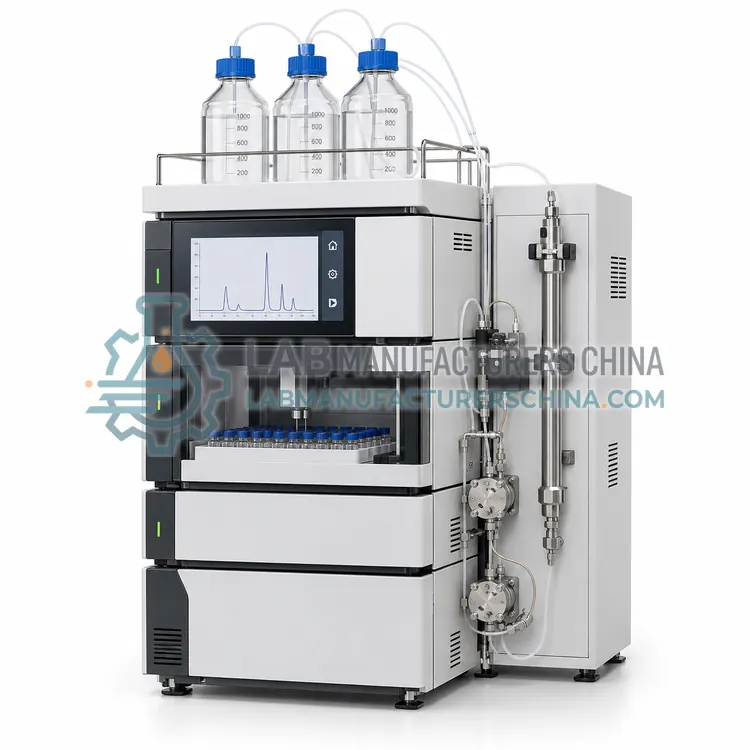
How do HPLC work?
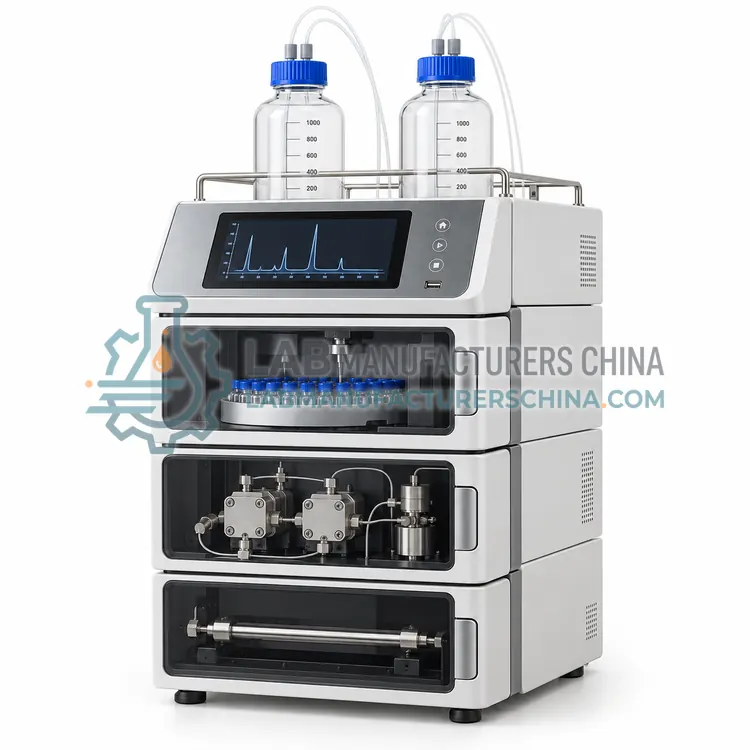
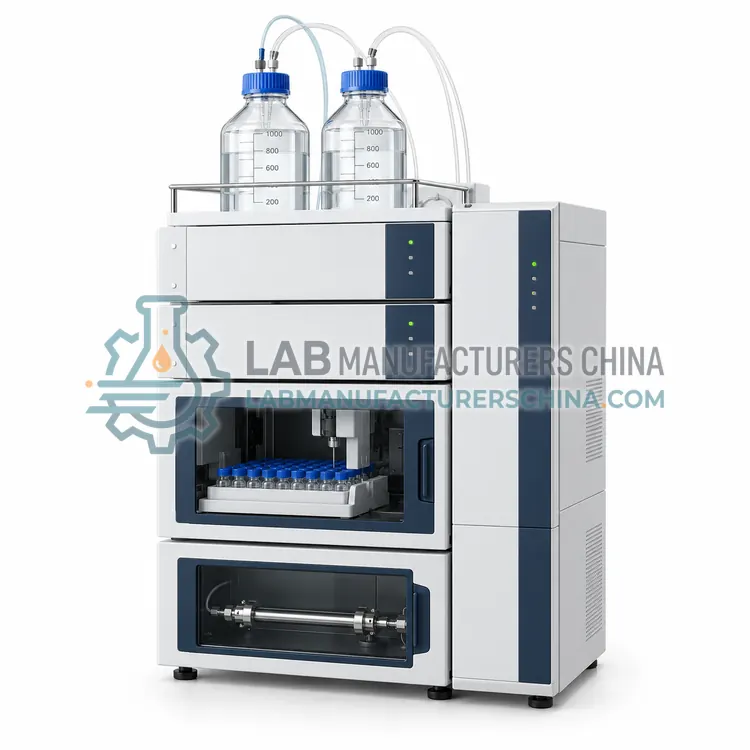
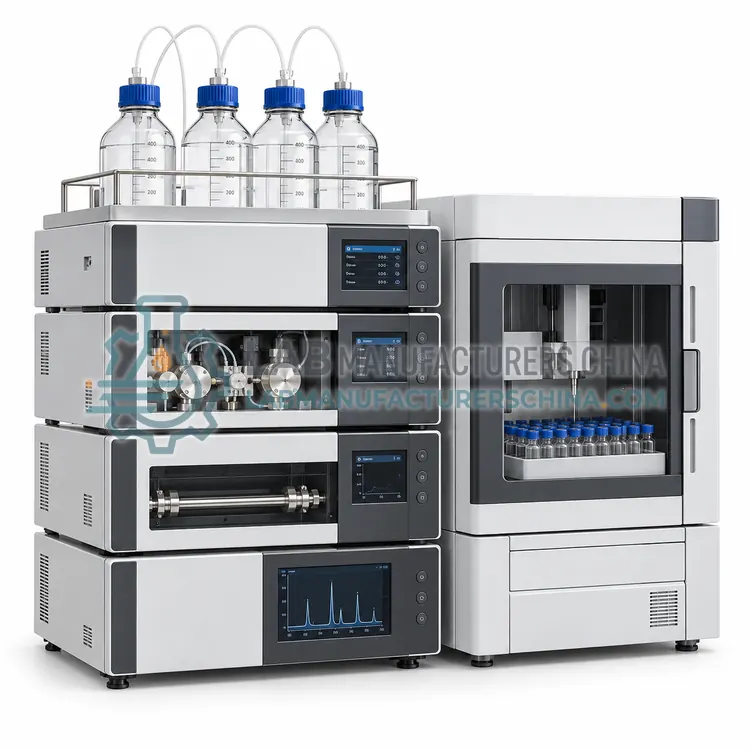
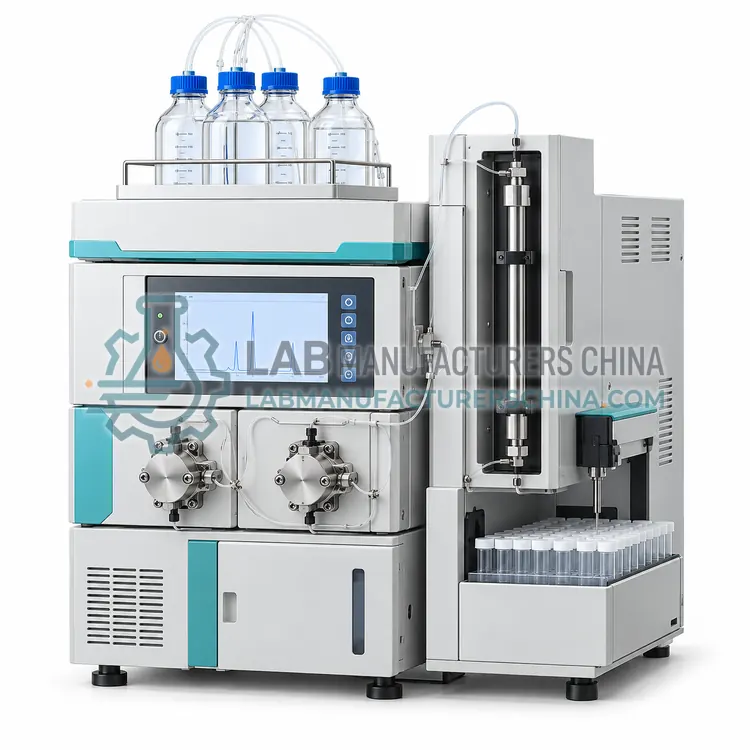
An HPLC system pumps solvent through an injector and a packed column, typically 50–250 mm long with 3–5 µm particles. The sample is injected as a narrow band and analytes partition between the mobile phase and the stationary phase, most commonly bonded C18 silica in reversed-phase mode. Retention depends on polarity, pH, temperature and solvent strength. Isocratic operation keeps composition constant; gradient operation changes it over time to elute compounds with widely different retention. Key modules are the solvent delivery pump with degasser, the autosampler, the thermostatted column compartment and the detector, commonly UV-Vis, diode-array, fluorescence or refractive index. Chromatography data software integrates peaks, applies calibration curves and reports retention time, area, plate count and tailing factor for system suitability.
Which HPLC variants are available?
- Isocratic HPLC System — An isocratic HPLC system delivers a single premixed mobile phase at constant composition through a single-piston or dual-piston pump.
- Binary Gradient HPLC System — A binary gradient HPLC system uses two high-pressure pumps, or one dual-channel pump, to mix two solvents under programmed composition change.
- Quaternary Gradient HPLC System — A quaternary gradient HPLC system blends up to four solvents on the low-pressure side of a single pump using a proportioning valve.
- Preparative HPLC System — A preparative HPLC system is designed to isolate and purify compounds rather than only measure them, running flow rates of 10–200 mL/min on columns of 20–50 mm internal diameter or larger.
- Bio-Inert HPLC System — A bio-inert HPLC system replaces stainless-steel wetted parts with titanium, PEEK, ceramic or MP35N alloy so that high-salt buffers, extreme pH and metal-sensitive biomolecules do not corrode the flow path or adsorb onto it.
How do I choose the right variant?
Within a chromatography laboratory, HPLC configurations differ mainly in pump design, detector options and scale. Isocratic systems suit single-solvent routine assays at the lowest cost. Binary gradient systems cover most method development and impurity work, while quaternary systems add on-line solvent blending for screening and pH or modifier adjustment. Preparative systems are chosen when the goal is to isolate milligrams to grams of a compound, and bio-inert systems are needed when mobile phases contain high salt or extreme pH, or when proteins must not contact stainless steel. Decide on maximum pressure, flow range, dwell volume, autosampler capacity, detector types, column oven range and data-integrity features. Check that column dimensions in your validated methods are supported without extensive re-plumbing.
Where are HPLC used?
HPLC are specified in assay and purity testing of drug substances, food additive and vitamin analysis, environmental pollutant monitoring, polymer additive and chemical QC and method development and validation.
Which standards and certifications apply?
Work with HPLC is commonly governed by USP <621>, Ph. Eur. 2.2.29, USP <1058>, ICH Q2(R2), ChP 0512, IEC 61010-1, ISO/IEC 17025 and 21 CFR Part 11. Instrument certifications such as CE marking are confirmed per configuration and never assumed.
What are the key considerations before purchase?
Install the system on a stable bench away from drafts, with a steady power supply and ventilated solvent waste storage. Degas and filter mobile phases through 0.22–0.45 µm membranes to protect check valves and columns. Qualify the instrument (IQ/OQ/PQ) following USP <1058>, verifying flow accuracy, gradient composition accuracy, injection precision, detector linearity, wavelength accuracy and column oven temperature. Establish preventive maintenance for pump seals, piston washes, lamps and autosampler needle seats. Flush buffers with water before storing, and follow column manufacturer pH and pressure limits. For regulated work, configure audit trails and user roles in the data system.