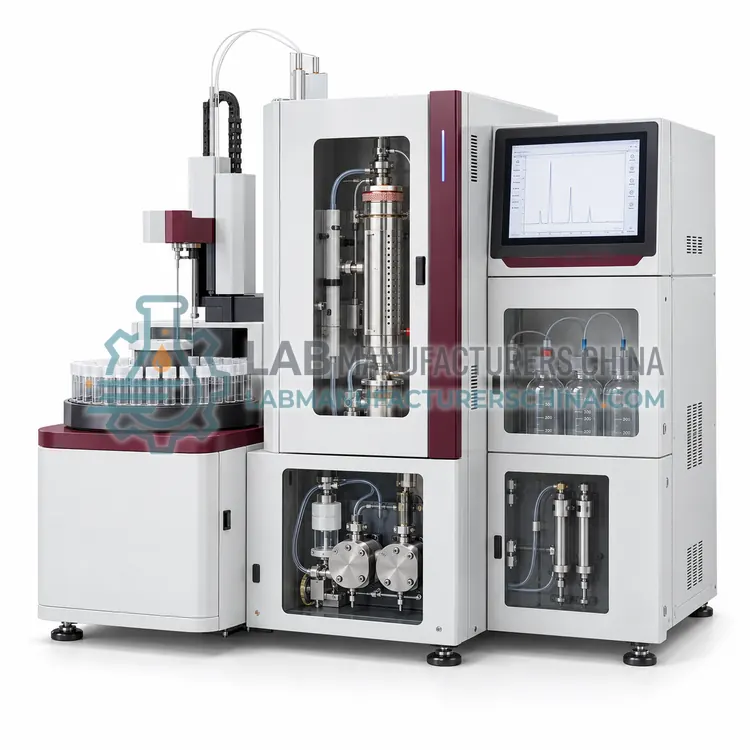
How do Ion Chromatography work?
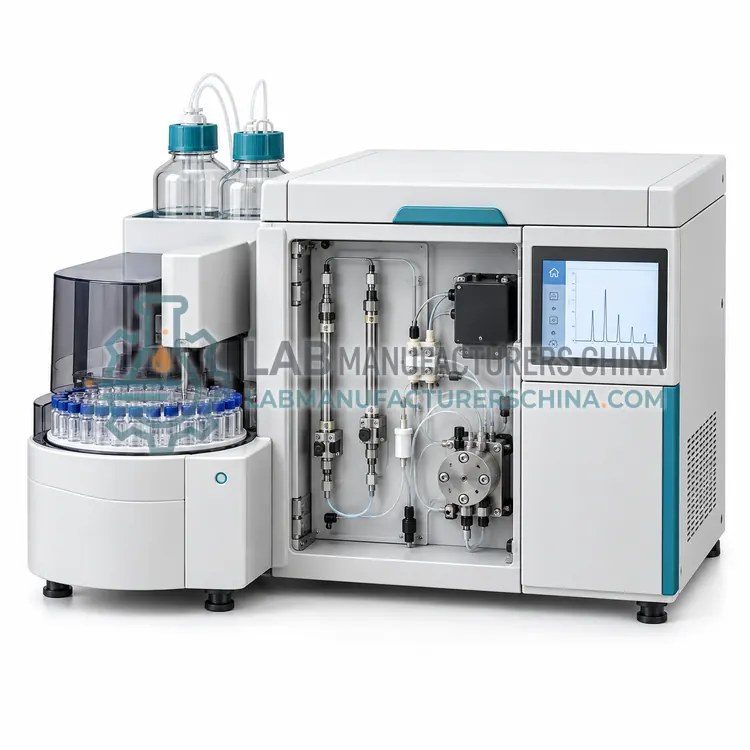
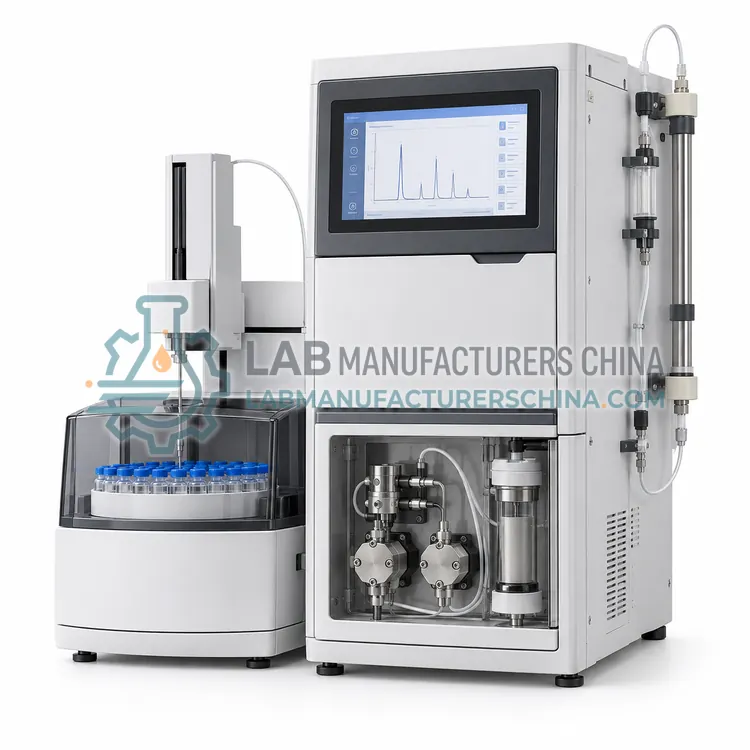
An ion chromatograph pumps an aqueous eluent, such as carbonate/bicarbonate or hydroxide for anions and methanesulfonic acid for cations, through a guard and analytical column containing a resin with fixed charged functional groups. Sample ions compete with eluent ions for the exchange sites, and ions with higher affinity are retained longer. After the column, a suppressor, either a chemically regenerated or electrolytic membrane device, converts the eluent to water or a weakly conducting form and converts analytes to their highly conducting acid or base forms, sharply reducing background conductivity and improving sensitivity. A conductivity cell then measures the signal. Other detectors include UV at 210 nm for bromide and nitrate, pulsed amperometry for carbohydrates, and post-column reaction for transition metals. Gradient elution with an eluent generator extends the range of ions per run. Software integrates peaks against multi-point calibrations.
Which Ion Chromatography variants are available?
- Suppressed Conductivity Ion Chromatograph — A suppressed conductivity ion chromatograph uses a chemical or electrolytic suppressor before a conductivity cell to lower background signal.
- Reagent-Free Ion Chromatography System — A reagent-free ion chromatography system generates high-purity hydroxide or methanesulfonic acid eluent electrolytically from deionized water, and controls eluent concentration by current.
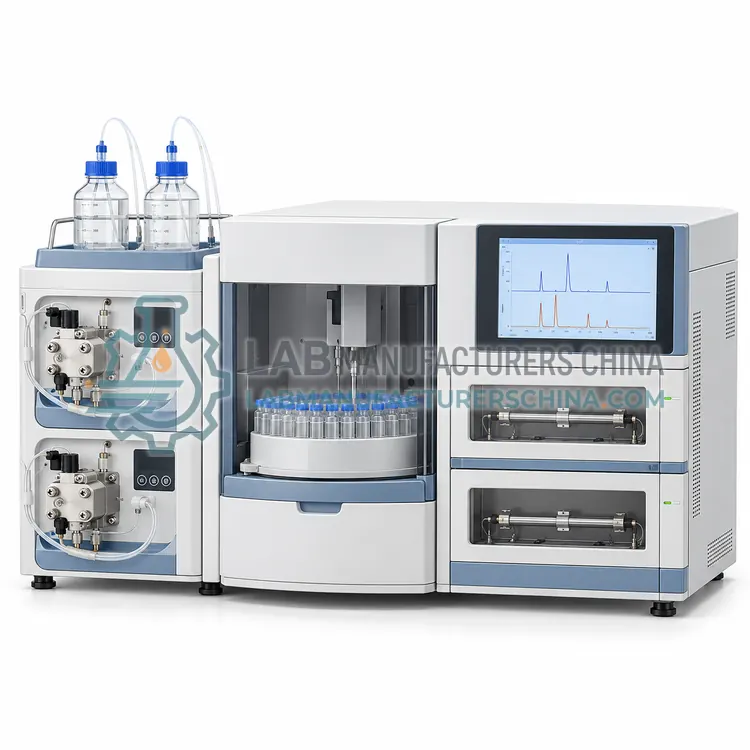
- Dual-Channel Anion and Cation Ion Chromatograph — A dual-channel ion chromatograph has two independent flow paths, one configured for anions and one for cations, sharing an autosampler or running in parallel.
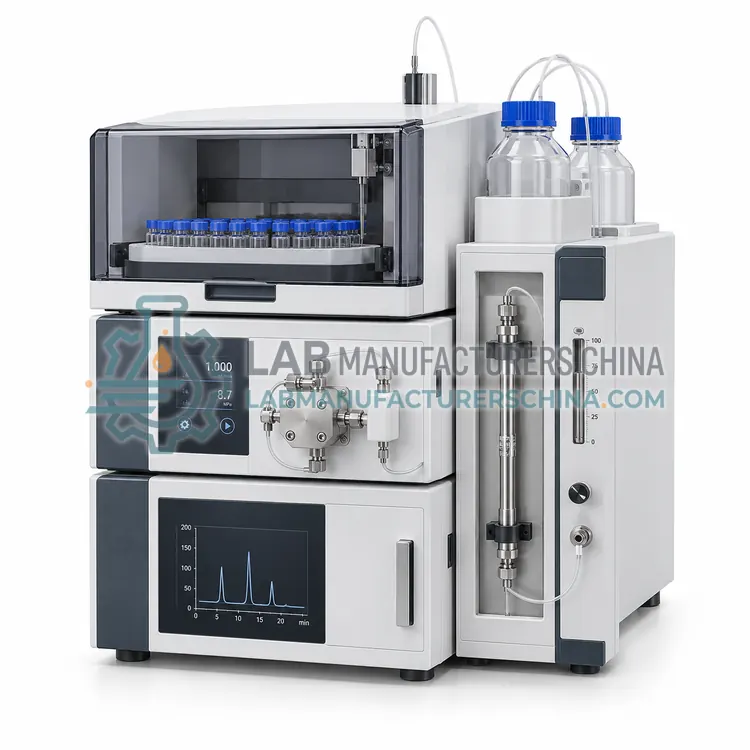
- Compact Non-Suppressed Ion Chromatograph — A compact non-suppressed ion chromatograph measures conductivity directly using low-conductivity eluents such as phthalate, benzoate or dilute nitric acid, without a suppressor.
- Combustion Ion Chromatography System — A combustion ion chromatography system couples a pyrohydrolytic furnace and gas absorption module with an ion chromatograph to determine total halogens and sulfur in solid, liquid and gaseous samples.
How do I choose the right variant?
Key decisions are suppression type, eluent supply and detector range. Suppressed conductivity gives the lowest detection limits, often sub-µg/L for common anions, and is preferred for trace or regulated work. Non-suppressed systems cost less and suit routine mg/L screening. Reagent-free systems generate hydroxide or methanesulfonic acid electrolytically from deionized water, which improves retention-time reproducibility and gradient capability without manual eluent preparation. Dual-channel systems run anions and cations in parallel from one autosampler to double throughput. Combustion IC adds an automated furnace for halogens and sulfur in solids and liquids. Also evaluate autosampler capacity, sample preparation inline such as matrix elimination, column compatibility with your methods, and software features for compliance with USP <1065> and EPA 300.1.
Where are Ion Chromatography used?
Ion Chromatography are specified in anions and cations in drinking and wastewater, trace ions in power plant and semiconductor ultrapure water, counter-ion and impurity analysis in pharmaceuticals, organic acids and anions in food and beverages and halogens and sulfur in fuels and polymers.
Which standards and certifications apply?
Work with Ion Chromatography is commonly governed by US EPA Method 300.0, US EPA Method 300.1, ISO 10304-1, ISO 14911, ASTM D4327, USP <1065> Ion Chromatography, ASTM D7359, GB/T 8538 and IEC 61010-1. Instrument certifications such as CE marking are confirmed per configuration and never assumed.
What are the key considerations before purchase?
Use 18.2 MΩ·cm deionized water and filter samples to 0.45 µm or 0.2 µm, since particulates and organic contamination damage columns. Keep eluent containers under CO₂-protective traps when using hydroxide, as carbonate uptake changes retention. Regenerate or replace suppressors and eluent generator cartridges following manufacturer guidance, and never run a suppressor dry. Verify conductivity cell temperature stability, typically controlled to 35 °C. Qualify the system with OQ tests for flow accuracy, conductivity response and injection precision per USP <1058>. Prepare standards from certified reference materials and run a calibration check standard every 10–20 samples.