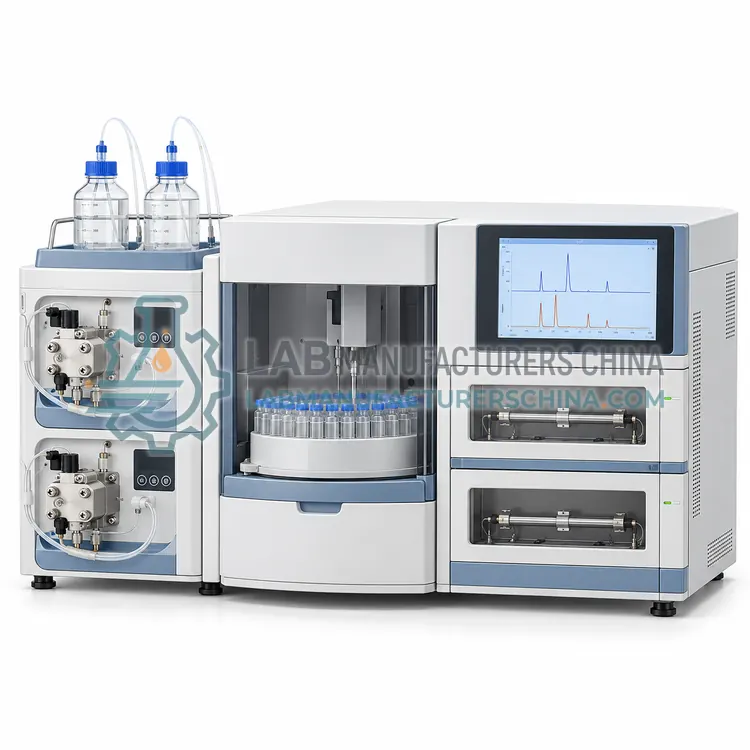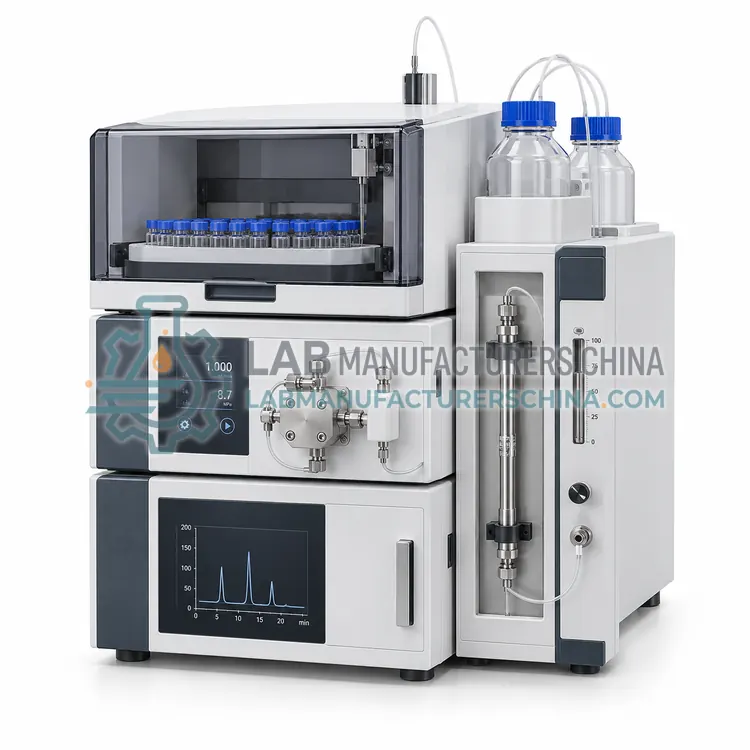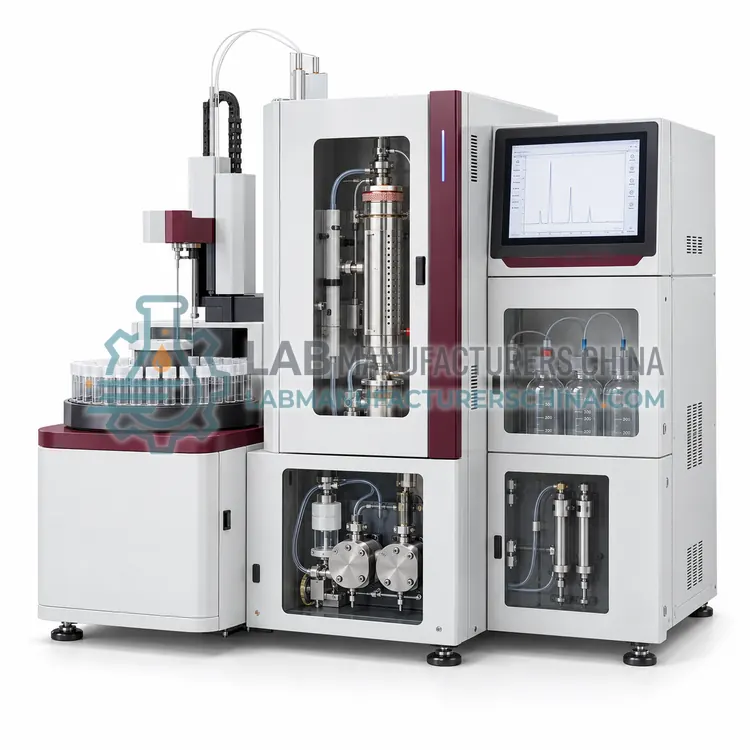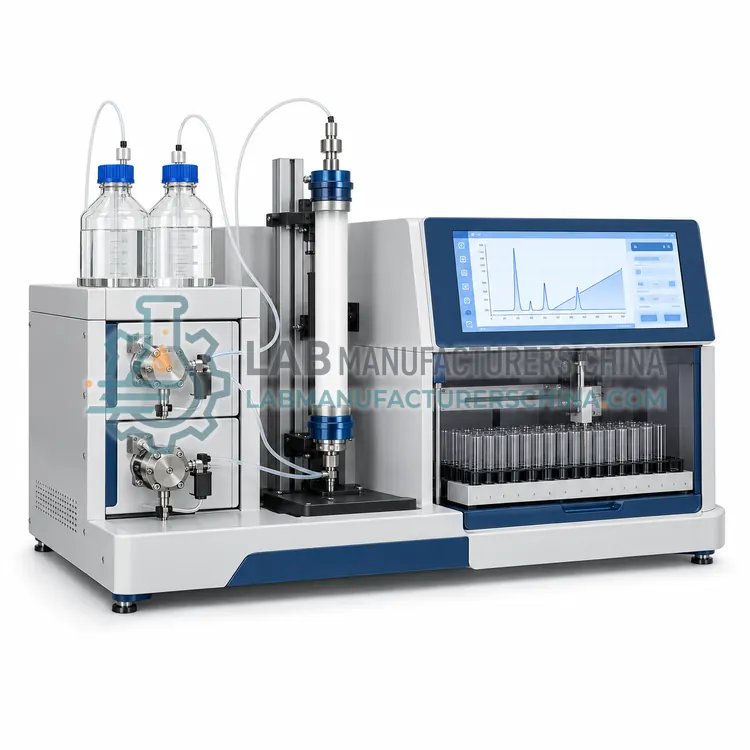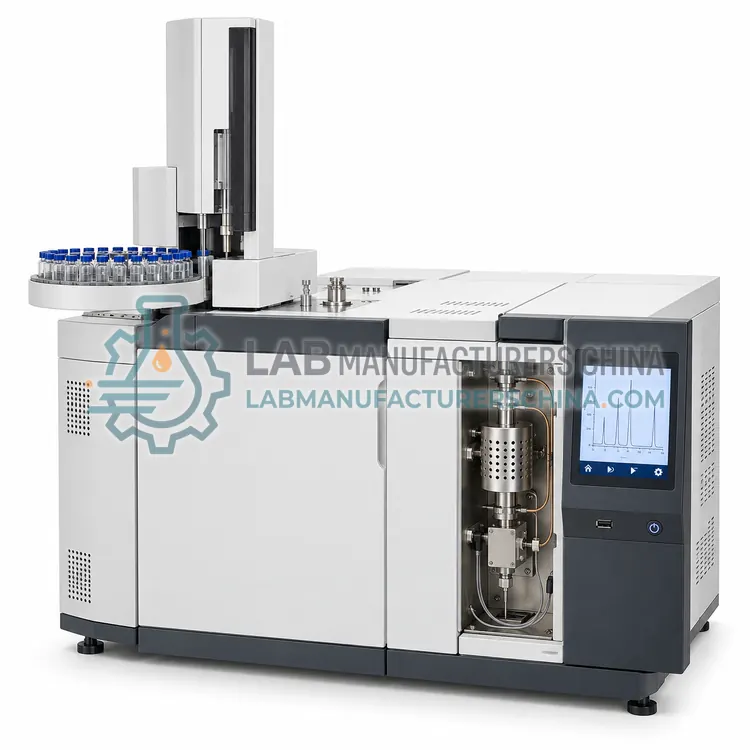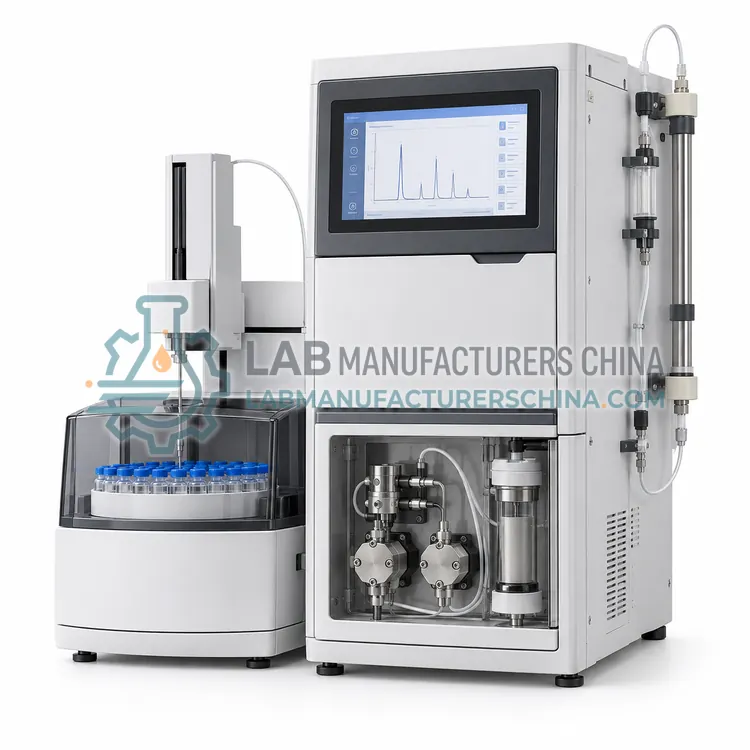
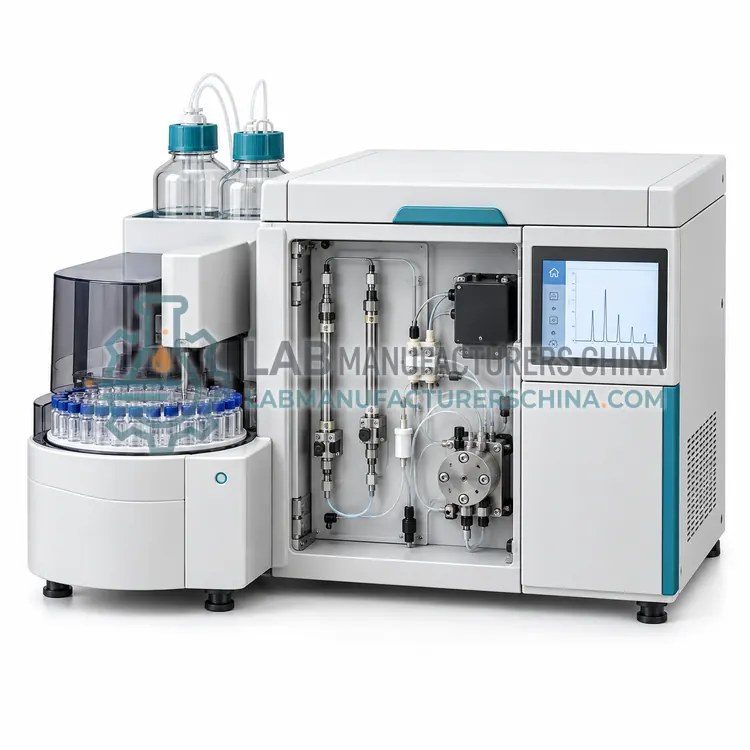
Suppressed Conductivity Ion Chromatograph
抑制电导离子色谱仪
- SKU IOC-0001
- Ion Chromatography
- CE (to be confirmed)
- ISO 9001 manufacturing (to be confirmed)
- RoHS (to be confirmed)
Price on request — FOB / CIF quoted per order
Prices depend on configuration, quantity and destination port.
Key specifications
| Flow rate range | 0.1–2.5 mL/min |
|---|---|
| Maximum operating pressure | 35 MPa |
| Flow precision (RSD) | ≤0.1% |
| Conductivity detector range | 0–15,000 µS/cm |
| Detector noise (suppressed) | ≤1 nS/cm |
| Cell temperature control | 30–45 °C, ±0.01 °C |
Request a quote Download brochure · to be provided
By Lab Manufacturers China Technical TeamLast reviewed Standards: US EPA Method 300.0, US EPA Method 300.1, ISO 10304-1
What is the Suppressed Conductivity Ion Chromatograph?
A suppressed conductivity ion chromatograph uses a chemical or electrolytic suppressor before a conductivity cell to lower background signal. It is the standard configuration for trace anion and cation analysis in drinking water, wastewater and process streams, meeting methods such as EPA 300.0 and ISO 10304-1.
What is the Suppressed Conductivity Ion Chromatograph?
A suppressed conductivity ion chromatograph uses a chemical or electrolytic suppressor before a conductivity cell to lower background signal. It is the standard configuration for trace anion and cation analysis in drinking water, wastewater and process streams, meeting methods such as EPA 300.0 and ISO 10304-1.
Overview
This configuration combines an isocratic pump delivering 0.1–2.5 mL/min at up to 35 MPa, a six-port injection valve with 10–100 µL loops, guard and analytical columns, a membrane suppressor, and a temperature-controlled conductivity detector. Manual eluents such as 3.6 mM sodium carbonate and 1.0 mM sodium bicarbonate are prepared in the laboratory for anions, and methanesulfonic acid for cations. Suppression reduces background from about 500–700 µS/cm to 10–25 µS/cm for carbonate eluents, giving low noise below 1 nS. Electrolytic suppressors regenerate continuously using water, avoiding acid regenerant. Detection limits of 0.01–0.05 mg/L for common anions are typical with a 25 µL loop. The system is robust and suited to laboratories with standardized isocratic methods. Gradient operation requires hydroxide eluent generation, which is offered in reagent-free variants, so this model is best for isocratic routine analysis.
How does it work?
An ion chromatograph pumps an aqueous eluent, such as carbonate/bicarbonate or hydroxide for anions and methanesulfonic acid for cations, through a guard and analytical column containing a resin with fixed charged functional groups. Sample ions compete with eluent ions for the exchange sites, and ions with higher affinity are retained longer. After the column, a suppressor, either a chemically regenerated or electrolytic membrane device, converts the eluent to water or a weakly conducting form and converts analytes to their highly conducting acid or base forms, sharply reducing background conductivity and improving sensitivity. A conductivity cell then measures the signal. Other detectors include UV at 210 nm for bromide and nitrate, pulsed amperometry for carbohydrates, and post-column reaction for transition metals. Gradient elution with an eluent generator extends the range of ions per run. Software integrates peaks against multi-point calibrations.
What are the key features?
- Electrolytic or chemically regenerated membrane suppressor reducing background below 25 µS/cm
- Isocratic pump rated to 35 MPa with flow accuracy of ±1% from 0.1–2.5 mL/min
- Temperature-controlled conductivity cell at 35 °C with noise below 1 nS
- Six-port injection valve with replaceable 10–100 µL loops for wide concentration range
- Metal-free PEEK flow path preventing corrosion and contamination of trace samples
What are the technical specifications?
A typical suppressed conductivity ion chromatograph configuration offers flow rate range of 0.1–2.5 mL/min, maximum operating pressure of 35 MPa, flow precision (RSD) of ≤0.1%, conductivity detector range of 0–15,000 µS/cm, detector noise (suppressed) of ≤1 nS/cm and cell temperature control of 30–45 °C, ±0.01 °C. Values are indicative of the product class; the exact figures for each configuration are confirmed on the quotation and the calibration documents supplied with the instrument.
Which applications is it used for?
The Suppressed Conductivity Ion Chromatograph is used in drinking water compliance testing, wastewater and surface water analysis, boiler and cooling water monitoring and fertilizer and soil extract analysis. Across the wider Ion Chromatography class, laboratories also deploy it for anions and cations in drinking and wastewater, trace ions in power plant and semiconductor ultrapure water and counter-ion and impurity analysis in pharmaceuticals.
Which standards and certifications apply?
Relevant standards and methods include US EPA Method 300.0, US EPA Method 300.1, ISO 10304-1, ISO 14911, ASTM D4327, USP <1065> Ion Chromatography, ASTM D7359, GB/T 8538 and IEC 61010-1. Certification candidates for this model are CE, ISO 9001 manufacturing and RoHS; each is to be confirmed for the specific configuration before shipment, and certificates are supplied only where they have been issued.
Use 18.2 MΩ·cm deionized water and filter samples to 0.45 µm or 0.2 µm, since particulates and organic contamination damage columns. Keep eluent containers under CO₂-protective traps when using hydroxide, as carbonate uptake changes retention. Regenerate or replace suppressors and eluent generator cartridges following manufacturer guidance, and never run a suppressor dry. Verify conductivity cell temperature stability, typically controlled to 35 °C. Qualify the system with OQ tests for flow accuracy, conductivity response and injection precision per USP <1058>. Prepare standards from certified reference materials and run a calibration check standard every 10–20 samples.
How do I select the right Suppressed Conductivity Ion Chromatograph?
Select the suppressed conductivity model for isocratic anion or cation methods where sensitivity matters and manual eluent preparation is acceptable. Choose the reagent-free variant if gradients or high reproducibility are required. In an RFQ specify target ions and ranges, column chemistry, loop volumes, autosampler capacity and required compendial or EPA methods.
How does it compare with other Ion Chromatography variants?
Key decisions are suppression type, eluent supply and detector range. Suppressed conductivity gives the lowest detection limits, often sub-µg/L for common anions, and is preferred for trace or regulated work. Non-suppressed systems cost less and suit routine mg/L screening. Reagent-free systems generate hydroxide or methanesulfonic acid electrolytically from deionized water, which improves retention-time reproducibility and gradient capability without manual eluent preparation. Dual-channel systems run anions and cations in parallel from one autosampler to double throughput. Combustion IC adds an automated furnace for halogens and sulfur in solids and liquids. Also evaluate autosampler capacity, sample preparation inline such as matrix elimination, column compatibility with your methods, and software features for compliance with USP <1065> and EPA 300.1.
Full specifications
| Flow rate range | 0.1–2.5 mL/min |
|---|---|
| Maximum operating pressure | 35 MPa |
| Flow precision (RSD) | ≤0.1% |
| Conductivity detector range | 0–15,000 µS/cm |
| Detector noise (suppressed) | ≤1 nS/cm |
| Cell temperature control | 30–45 °C, ±0.01 °C |
| Injection volume | 5–250 µL |
| Retention time repeatability (RSD) | ≤0.3% |
| Peak area repeatability (RSD) | ≤1.0% |
| Typical detection limit, chloride | ≤0.02 mg/L |
Indicative values for this product class. Final specifications are confirmed on the quotation and in the calibration documents supplied with the instrument.
Applications
- Drinking water compliance testing
- Wastewater and surface water analysis
- Boiler and cooling water monitoring
- Fertilizer and soil extract analysis
Key features
- Electrolytic or chemically regenerated membrane suppressor reducing background below 25 µS/cm
- Isocratic pump rated to 35 MPa with flow accuracy of ±1% from 0.1–2.5 mL/min
- Temperature-controlled conductivity cell at 35 °C with noise below 1 nS
- Six-port injection valve with replaceable 10–100 µL loops for wide concentration range
- Metal-free PEEK flow path preventing corrosion and contamination of trace samples
Frequently asked questions about Suppressed Conductivity Ion Chromatograph
Chemical suppressors use a regenerant solution, typically dilute sulfuric acid, flowing countercurrent to the eluent and require reagent handling. Electrolytic suppressors generate the regenerant ions by water electrolysis, run with only deionized water and give lower noise and simpler operation.
Sodium carbonate and bicarbonate at roughly 3.5 mM and 1.0 mM is the classic eluent for EPA 300.0 separations. Hydroxide eluents, generated electrolytically, give lower background and support gradients that resolve more anions, including weakly retained organic acids.
High-salt samples overload the column and mask small peaks. Dilute the sample, use a higher-capacity column, or apply inline matrix elimination. Verify by spike recovery that results remain within 90–110%.
Common anions include fluoride, chloride, nitrite, bromide, nitrate, phosphate and sulfate; common cations include lithium, sodium, ammonium, potassium, magnesium and calcium. With suitable columns it also measures organic acids, amines, carbohydrates, bromate, perchlorate and transition metals.
A suppressor removes eluent ions and converts analytes to more conductive forms, reducing background conductivity from hundreds of µS/cm to under 1 µS/cm. This lowers noise and raises signal, giving detection limits at the µg/L level or below for common ions.
Ion chromatography is a form of liquid chromatography that uses ion-exchange stationary phases, aqueous eluents and usually conductivity detection, optimized for ionic analytes. Its flow path is typically metal-free to avoid corrosion and contamination, whereas HPLC commonly uses stainless steel, organic solvents and UV detection.